
November 17, 2026
The issue of November 17, 2026
Every question from this issue, with the answers, the hints and the reading behind them.
Play the November 17, 2026 issue
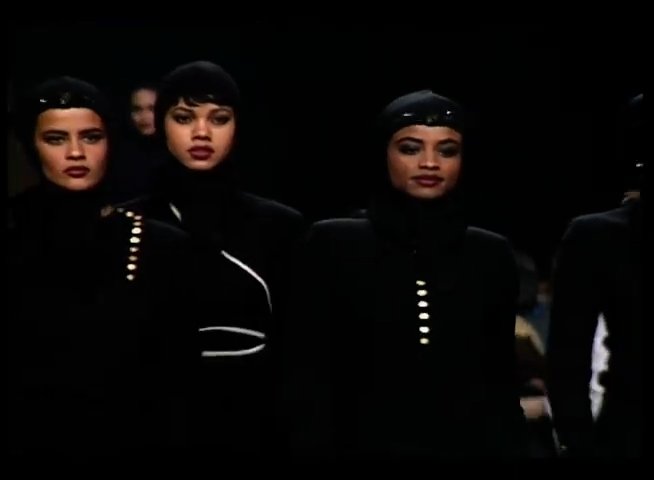
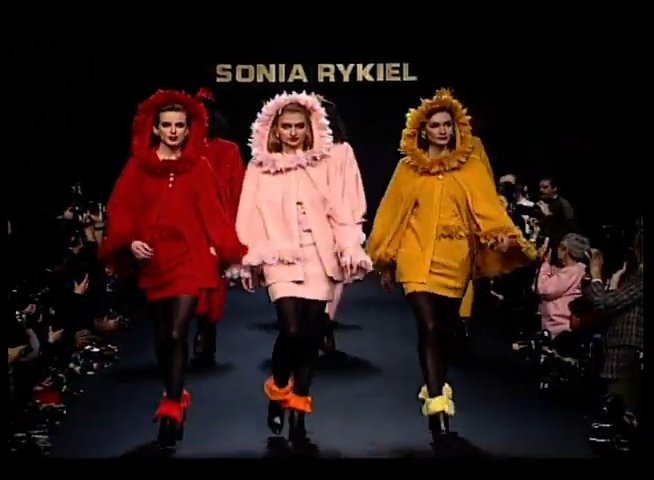
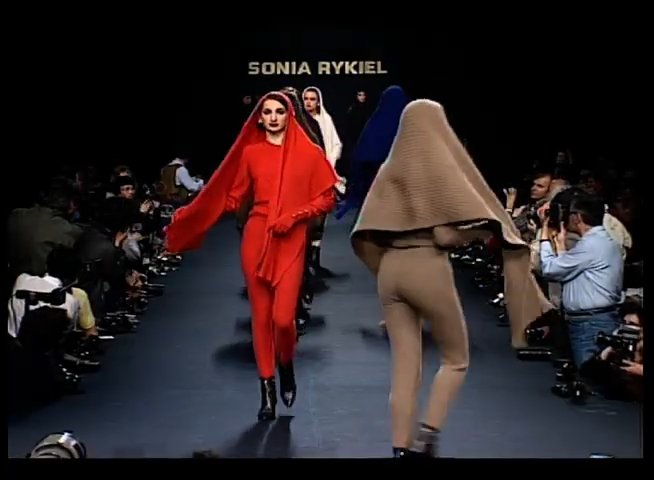
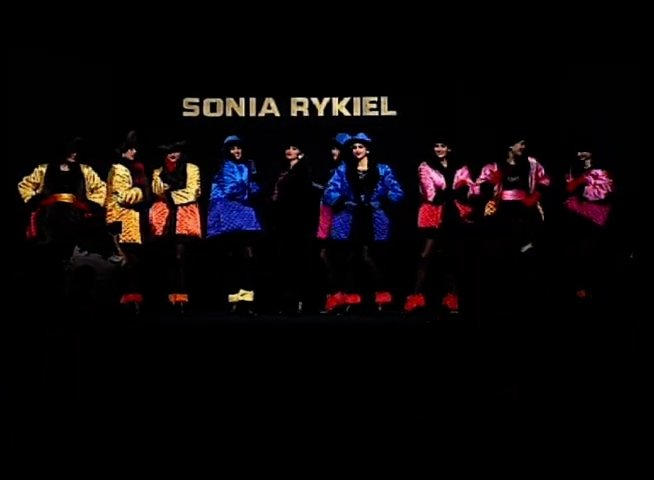
House: Sonia Rykiel · Designer: Sonia Rykiel · Season: Fall/Winter 1991
Looking back at Sonia Rykiel’s career in 2016, W noted that her Fall/Winter 1991 collection was mostly gray and black, with bright fur added for pops of color. Her shows were known for supermodels smiling and walking arm in arm down the runway, then gathering for a group pose at the end (Emilia Petrarca, W) [1].
Sonia Rykiel was born Sonia Flis in Paris in 1930 and started out designing knit maternity dresses for herself (Angela Charlton, AP) [2]. Her earliest designs were sold under the name Laura, after her family’s Left Bank boutique. Pursuing the perfectly fitted sweater, she sent the sample back to the Italian manufacturer again and again until it was narrow with high armholes and cut short at the waist. The manufacturers doubted it, but fashion editors were drawn to it right away. It became known as the “poor boy” sweater, likely because when worn, it looked like a boy wearing a sweater he had outgrown. It was a major hit, one of the defining designs of the 1960s, and she became known as the “Queen of Knits” (The Museum at FIT) [3]. In 1968, she opened her first boutique on Rue de Grenelle, selling youthful ready-to-wear while Paris was still known for formal couture (Clare Press, Marie Claire) [4]. She stitched seams inside out and left hems unfinished (AP) [2], and she was one of the first designers to put words on a sweater (W) [1]. She played herself in Robert Altman’s Prêt-à-Porter in 1994 (AP) [2], and her daughter, Nathalie, became the house’s creative director in 1995. Rykiel died in 2016, aged 86, after a long battle with Parkinson’s disease (Marie Claire) [4].
This show popped up in my YouTube recommendations and caught my eye. High degree of quality, and the pops of color really pop against the muted grey and black pieces. Well-crafted, classy, and whimsical!
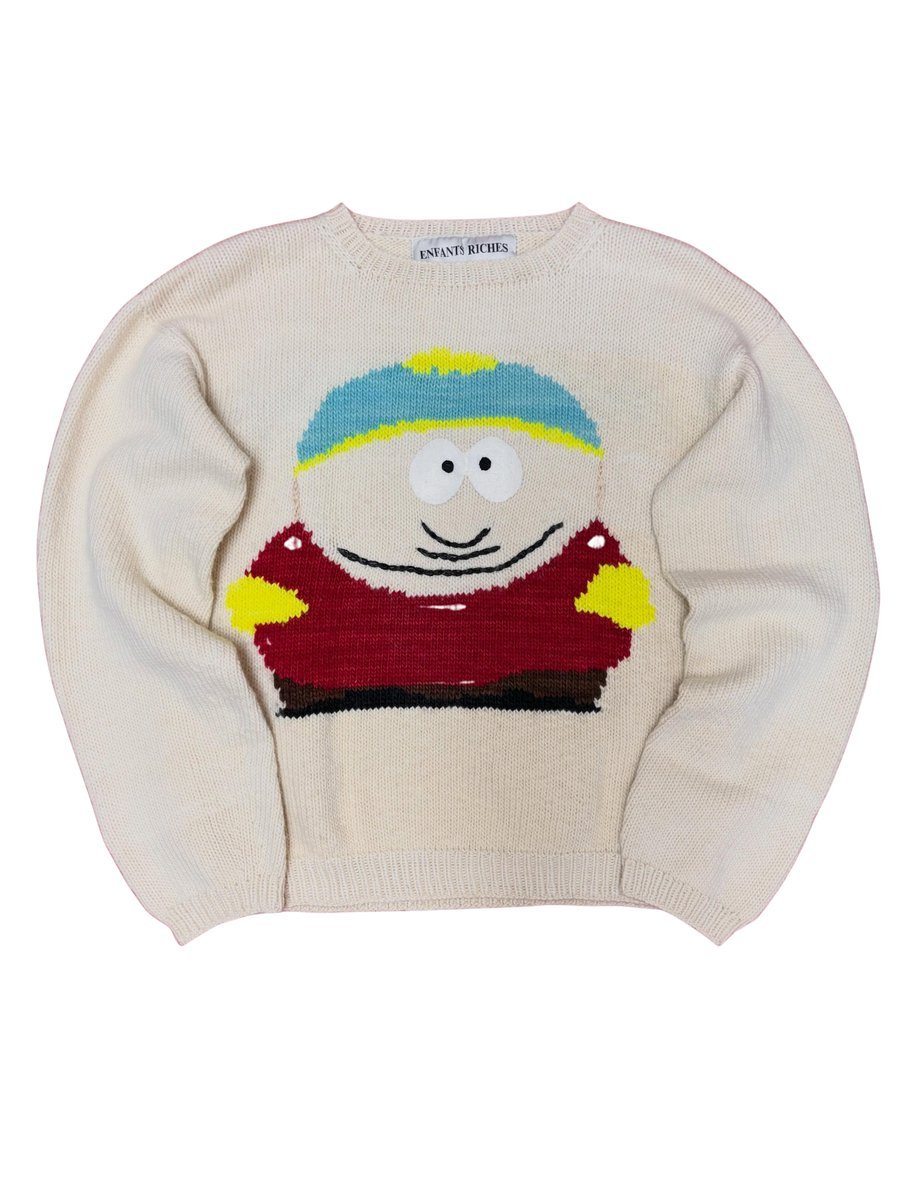
Answer: Eric Cartman
Enfants Riches Déprimés, French for “depressed rich kids,” was founded in 2012 by Henry Levy, who sometimes goes by Henri Alexander. Levy started the label while in school at UCLA. Early pieces included shredded T-shirts with the crest of the Swiss boarding school Le Rosey, a Parliament Lights cigarette pack and a defaced Hermès logo. Since 2012, no punk-influenced design has been made in a quantity of more than 100, and T-shirts have sold for up to $320. Levy described the brand as “elitist, nihilist couture” (Steve Dool and Alex Bortz, Complex) [1]. “No pieces are alike and everything is limited. I have no interest in making affordable pieces for the masses,” he told The Guardian in 2015. Fans of the label include Rihanna, Travis Barker, Gunna, Jared Leto and Courtney Love (Lauren Cochrane, MR PORTER) [2].
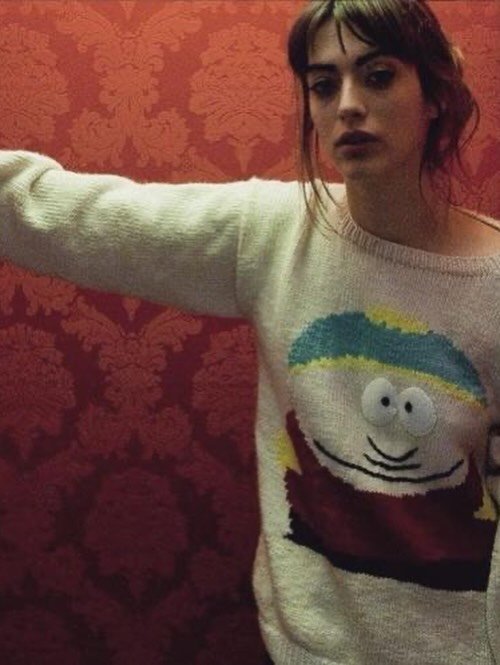
The writer John’s Ghost counts “Eric Cartman knits” among the brand’s first designs, from the years before it “found its feet” (John’s Ghost) [3]. This Cartman sweater was made for ERD’s Autumn/Winter 2015 season as an exclusive for Maxfield, the luxury boutique on Melrose Avenue in Los Angeles, and collectors believe fewer than 10 exist (r/EnfantsRichesDeprime) [4]. It was hand-knitted by Krista Ann, the knitter behind Knitsyknits, who made custom pieces for the brand in its early years (Knitsyknits) [5][6]. In July 2017, Maxfield turned its store into a pawn shop for an ERD pop-up (Felson Sajonas, Hypebeast) [7].
Fun fact about me: The first video game I ever played was South Park Rally for the Nintendo 64. It was released in 2000 and was basically just Mario Kart with a South Park skin over it. You could play as all the characters from the show, and what I remember most was that, like in Mario Kart where you get the power-ups when you drive through the box things, one of the power-ups in this game was a bomb, and when you used it to deter the other racers, Saddam Hussein would pop up on the screen and laugh. Formative gaming experience for me!


Answer: The Fame Monster (2009) → Born This Way (2011) → Chromatica (2020) → Mayhem (2025)
Lady Gaga has often turned to fashion photographers for her album covers. The designer and photographer Hedi Slimane shot the cover of her 2009 EP The Fame Monster (Dale Eisinger, Complex) [1]. The Born This Way artwork, by Nick Knight and the Haus of Gaga, shows her as half motorcycle, half pop star (Matt Cole, Complex) [2]. Norbert Schoerner shot Chromatica in 2020, with Gaga stretched across a metal grating in a menacing metal outfit with fashion direction by Nicola Formichetti (Tim Heap, Attitude) [3]. His studio, DAYFORNIGHT, credits Marta Del Rio with the styling and Andy Harman with the set design (DAYFORNIGHT) [4]. For Mayhem in 2025, Frank Lebon shot Gaga in black and white, gazing into a fractured mirror. She described making the album as “reassembling a shattered mirror” (Gary Grimes, Attitude) [5]. Lebon is the son of the photographer Mark Lebon (Violet Conroy, AnOther) [6]. His debut book, One Blood, includes portraits lit by his fingers pressed over the flash, so that “the light would shine through my finger and project the red of my blood upon my subject” (Maxine Wally, W) [7].
Answer: Printed Fabrics
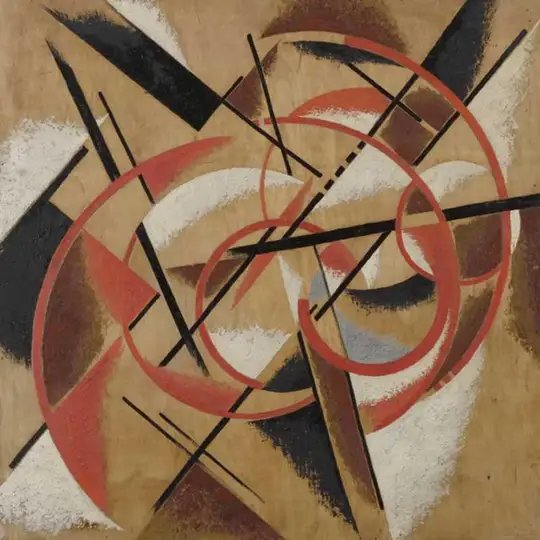
Constructivism was an art movement about building art the way engineers build machines: from industrial materials, with no trace of personal style, narcissism, or hubris. It began in Russia around 1915, after Vladimir Tatlin saw Picasso’s Cubist constructions in Paris in 1913 and started making abstract works from industrial materials. By 1921, the artists following his ideas, including Aleksandr Rodchenko, were calling themselves Constructivists. A 1923 manifesto in the magazine Lef argued that an artwork should be treated like “a product of an industrial order like a car, an aeroplane and such like” (Tate) [4]. After the 1917 Revolution, Constructivists believed the new society needed “a radically new artistic language.” They rejected painting as individualist and bourgeois, saw the artist as an “engineer of a new society,” and wanted art to serve “a greater social or utilitarian purpose” (MoMA) [5]. That meant designing everyday objects for mass production.
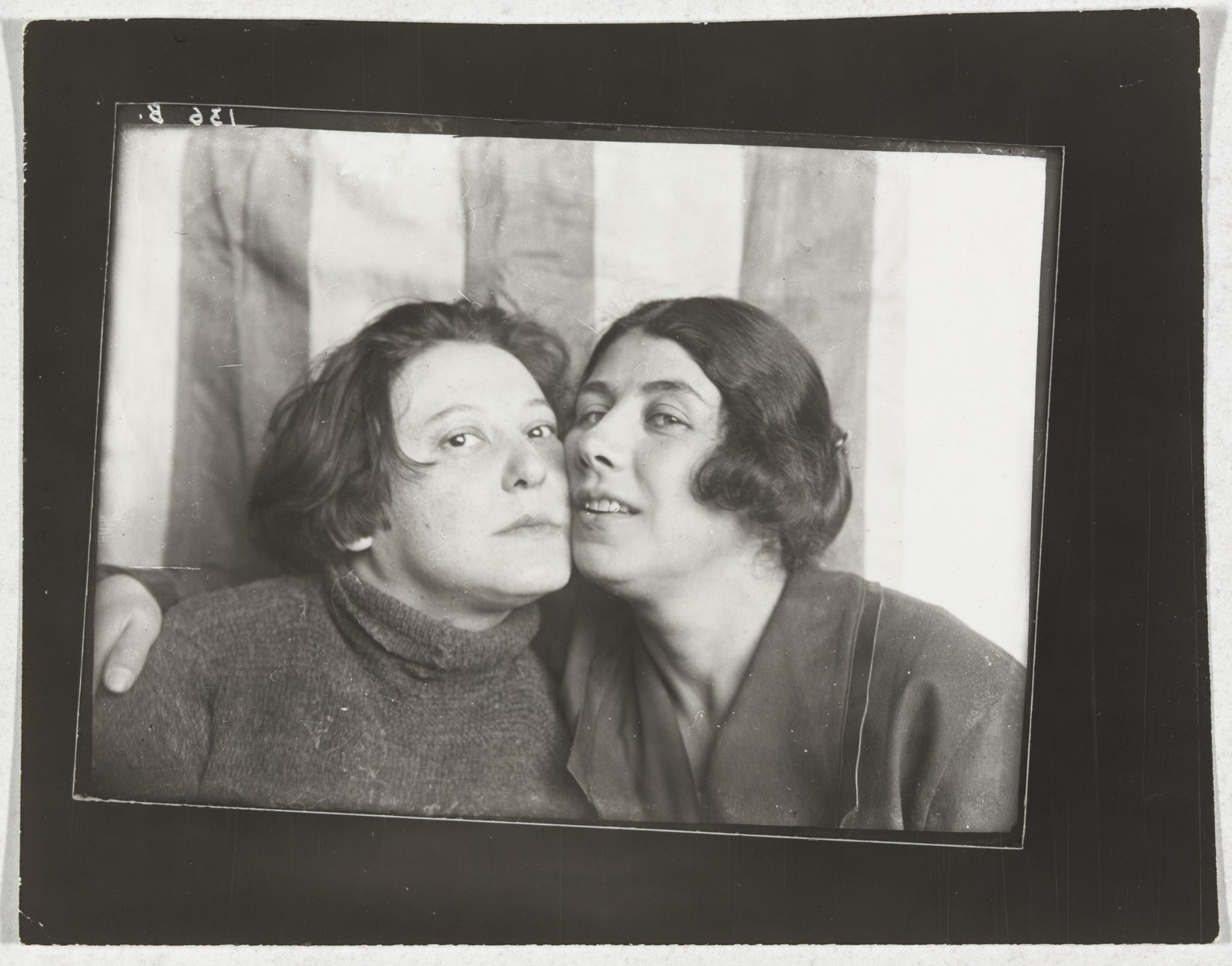
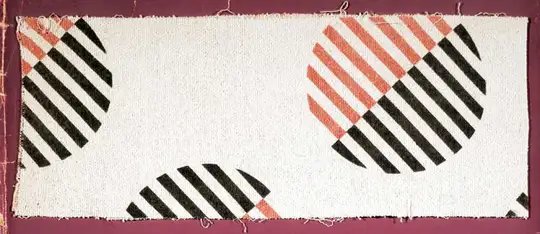
Moscow’s First State Textile Printing Works, formerly the Emile Zindel factory, had shut down in March 1919 for lack of fuel. In June 1923, its new director, Aleksandr Arkhangelskii, and Professor Petr Viktorov of the Vkhutemas art school published an open letter in Pravda inviting artists to work there. The industry needed designs because its ties to Paris, the source of most prerevolutionary patterns, had been cut. Liubov Popova, who had taken up the Constructivist position in 1921, and Varvara Stepanova likely started that autumn. Popova wanted fabrics for women “both in the countryside and in the worker districts” (Christina Lodder, Tate Papers) [1].
The two women knew the industry treated artists as decorators, so they sent the factory management a memo asking to take part in the whole process. They wanted a vote on production plans, models, design purchases and hiring, a place in the chemistry lab to watch how colors were made, and contact with sewing workshops, fashion houses and magazines. They also offered to write the factory’s press ads and design its store windows. There is no evidence that management took any of it seriously. In January 1924, Stepanova reported to Inkhuk, Moscow’s Institute of Artistic Culture, that the factory’s drawing department was isolated from production and marketing, and that consumer taste and fashion ruled the industry. Her Constructivist fix was to fight handicraft in the artist’s work, fuse the artist with real production, build ties with fashion magazines, fashion houses and tailors, and “raise consumer taste,” bringing shoppers “into the active fight for rational cloth and clothing.” The goal was to end the idea that a hand-drawn design was valuable as an imitation of painting, and to replace naturalistic patterns with “the geometricisation of form” (Christina Lodder, Tate Papers) [1].
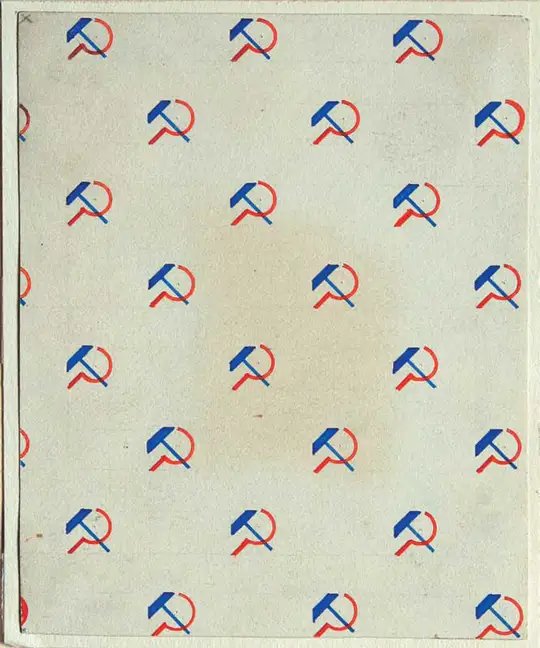
Management took their compass-and-ruler geometry as proof they couldn’t draw, and argued that customers were used to flowers, not triangles. Outdated machines and scarce dyes held them back, and only a few dozen of their fabrics were produced and sold (Natasha Frost, HISTORY) [2]. Each artist had about 20 designs chosen for production, using only straight and circular lines and two or three flat colors. The theorist Osip Brik called textile work “the peaks of artistic labor,” and Popova took great satisfaction in seeing a village woman buy her fabric to sew a dress (Garage Museum of Contemporary Art) [3]. Popova died of scarlet fever on May 25, 1924, two days after her son, from whom she had caught it (Britannica) [6]. That December, her Lef colleagues, notably Rodchenko and Stepanova, hung numerous fabric designs alongside her paintings in a posthumous exhibition (Tate Papers) [1]. Its catalogue, with a cover by Rodchenko, called her a “khudozhnik-konstruktor,” an artist-constructor (Van Abbemuseum) [7].

Nike Air Mag (2011)