
November 16, 2026
The issue of November 16, 2026
Every question from this issue, with the answers, the hints and the reading behind them.
Play the November 16, 2026 issue
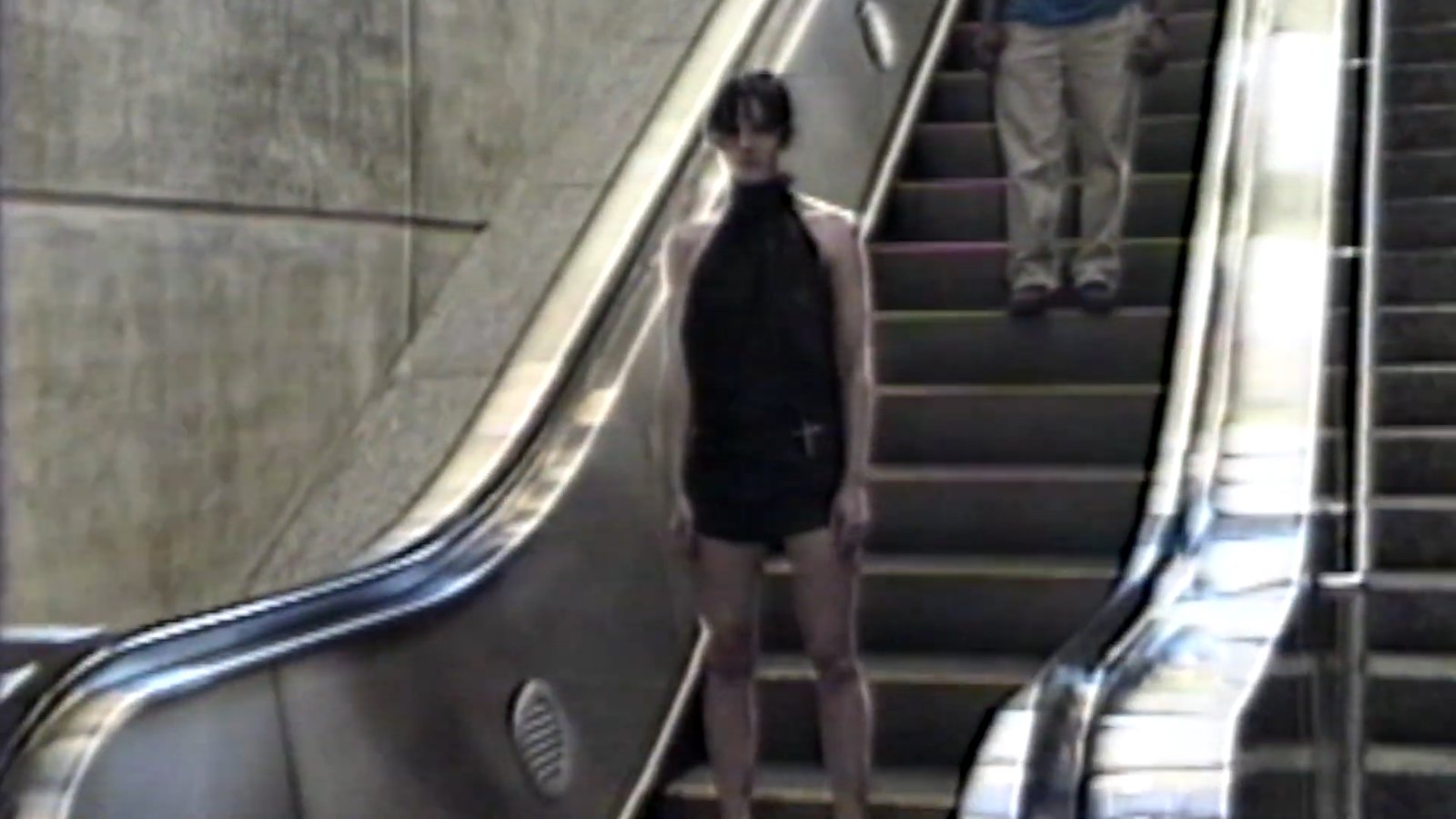
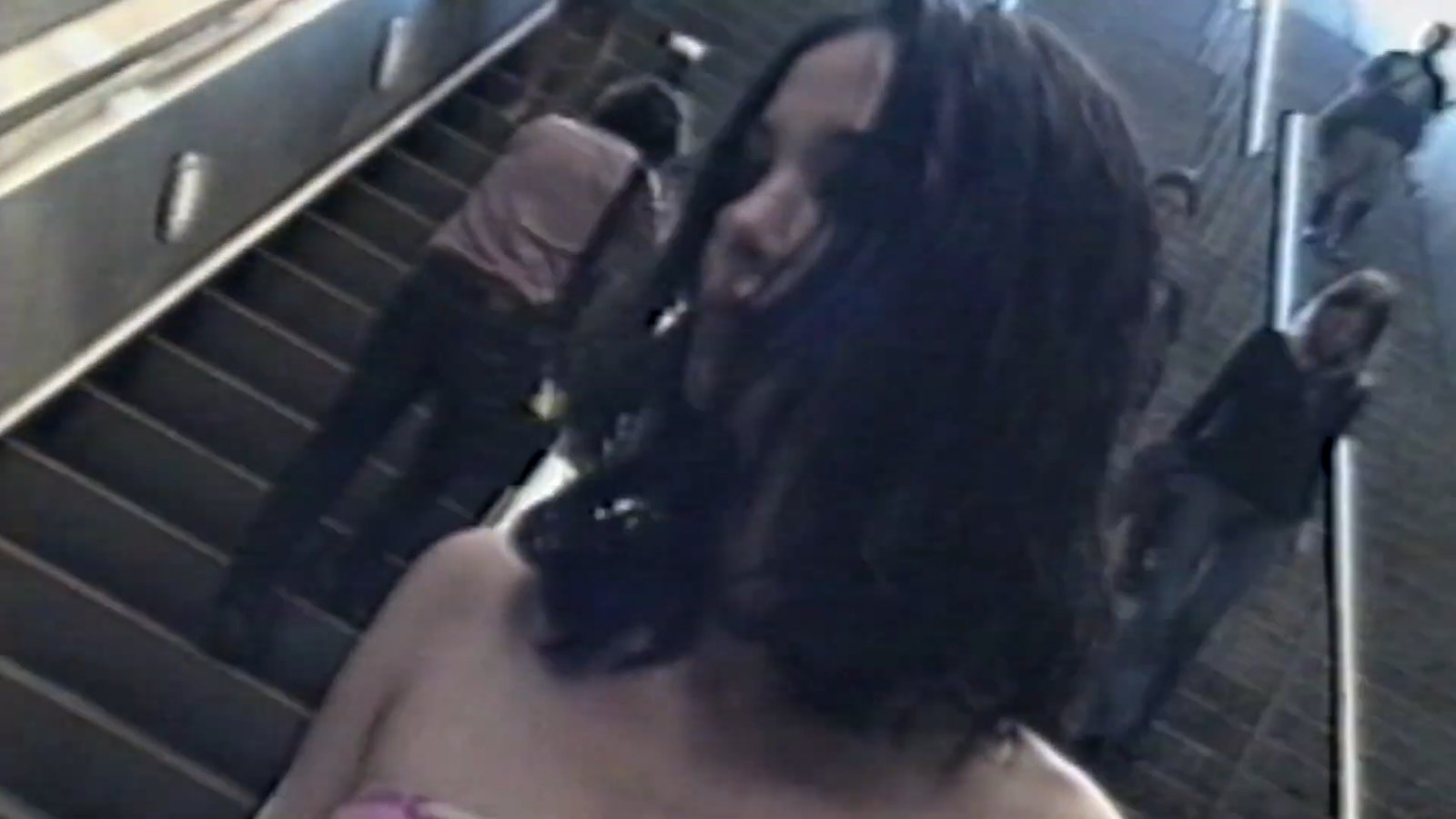
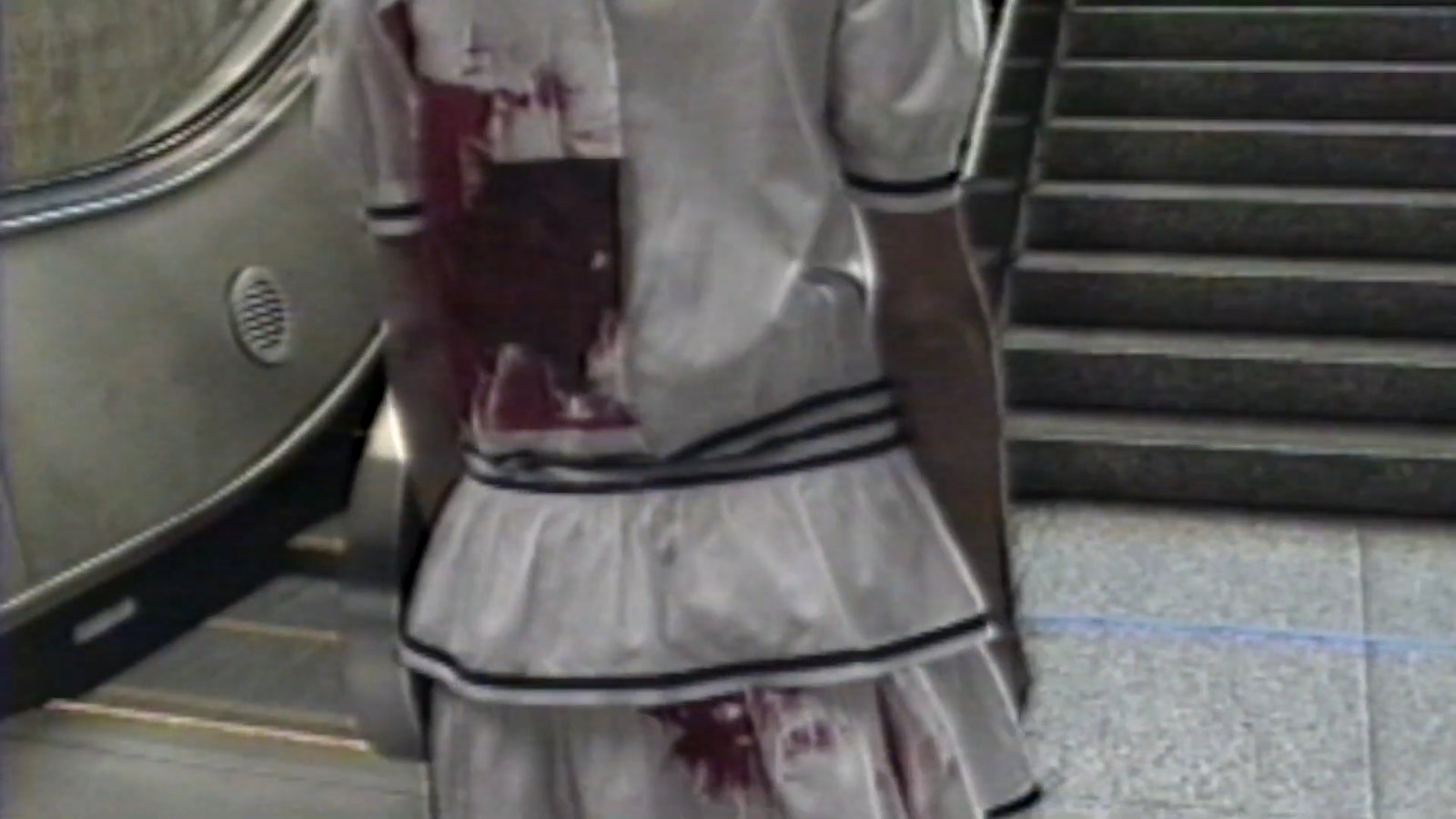
House: Imitation of Christ · Designer: Tara Subkoff and Matt Damhave · Season: Circa 2000–2001 (Debut Show)
Imitation of Christ’s first presentation took place in a Los Angeles subway station, where “a 150-foot escalator served as a catwalk.” Chloë Sevigny, who modeled in the show and served as the label’s creative director, called it “renegade, dangerous, and fun” (Zoë Kendall, i-D) [1]. Matt Damhave remembered setting up a tent for the models to change in. They rode a long escalator down, turned, and rode the ascending escalator back up to the street. He said a Vetements show later did something similar, and that nearly everything the label did was copied (Graeme Campbell, Highsnobiety) [2]. Jill Abrams, who filmed the show on a small Hi-8 camera for a celebrity website, wrote that Sheryl Crow, Owen Wilson and Wes Craven were in the audience, and that Jenny Shimizu walked alongside Sevigny.
Subkoff and Damhave started the label in Los Angeles in 2000 (Lynn Hirschberg, W) [3]. On Abrams’s camera, Subkoff declared, “We’re anti-computer, we’re anti-technology,” and described the idea as “taking old things and putting the human hand back into them by hand-sewing the ‘unwanted.’” Damhave’s manifesto aimed “to put the human hand back into a world that reeked of the mass-produced manufacturing of disposable clothing” (i-D) [1]. The name comes from The Imitation of Christ, a devotional book Thomas à Kempis wrote in the 15th century (Lesley Arfin, VICE) [4]. The next season, the label held its first New York show in an East Village funeral parlor, where models in reworked black dresses circled a casket (i-D) [1]. Lynn Yaeger reviewed it in October 2000 and wrote that the show “shut up critics by making its old dresses look great” (The Village Voice) [5].
The exact date of the subway show is unclear. Abrams labeled her footage 2001 when she posted it 20 years later. But i-D and Damhave both place the subway show before the September 2000 funeral parlor show [1][2], and Design and Culture by Ed wrote in 2020 that it had been “twenty years after the brand’s first show on the escalators in a subway station” [6]. The show most likely took place in 2000, so 2000 and 2001 both count as correct answers.
What drew me to the show was the escalator motif. The models go down and then come back up, repeat and repeat; a cycle that matches the ethos of the brand. The cycles of life and of clothing. A big part of their brand was the sustainability of it all, clothes that were once coveted become trash, get recycled, and are reborn, coveted again. Reincarnation of the garment, and by extension of its wearer. If we are all derived from Christ, the escalator is a conveyor belt of that image; righteous clones following trends in search of sartorial salvation. It’s a metaphor for life and time, which keep moving no matter how we react. You can stand on the escalator and let things happen, or you can run towards your fate, or run against it to avoid it, but it keeps going regardless. Like a train station, we either ascend into the light or descend into the darkness. An enigma!


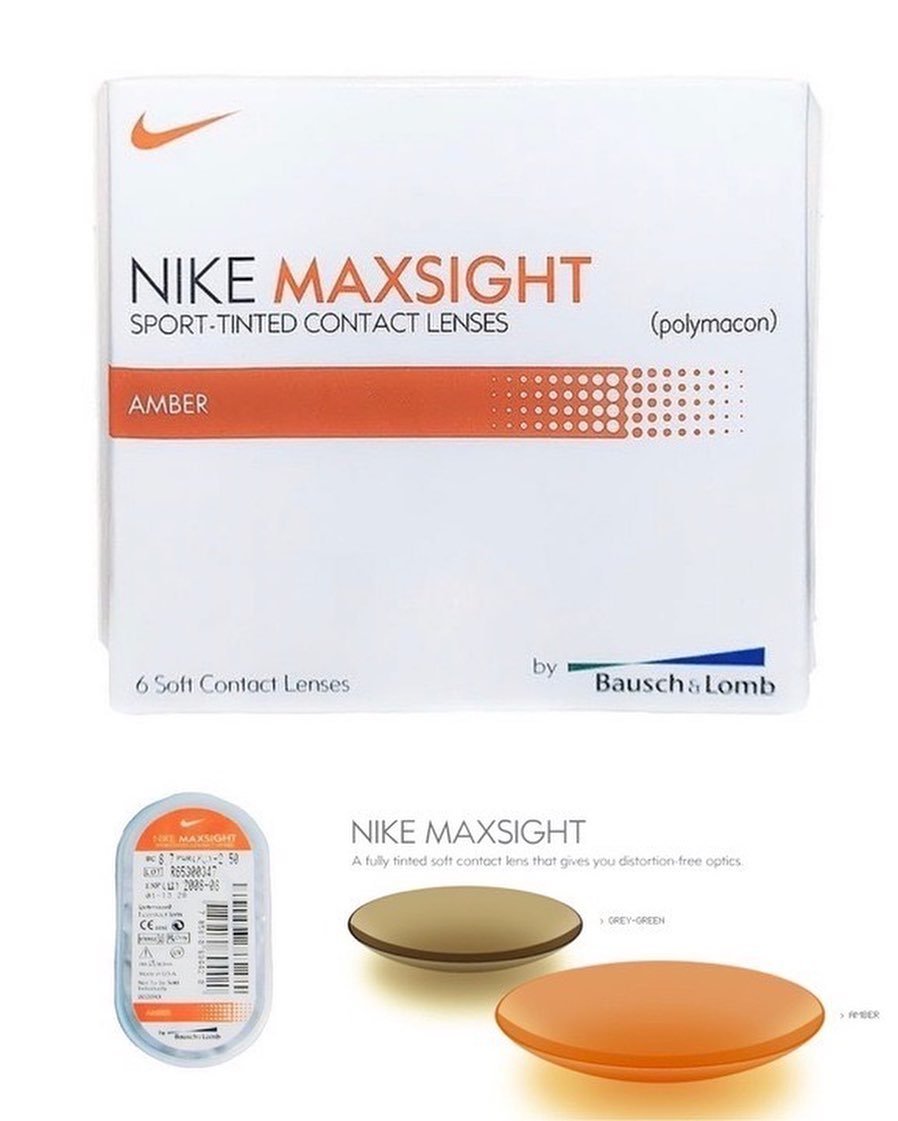
Answer: Bausch & Lomb
Bausch & Lomb in collaboration with Nike developed the 'Nike MaxSight', soft daily-wear contact lenses that filter ultraviolet light and boost contrast to help athletes track fast-moving objects. After FDA approval, the lenses were set to reach vision-care centers in late summer 2005, in amber for sports with fast-moving balls in changing light (soccer, tennis, baseball, football, etc.) and in gray-green for sports played in bright sun (golf, running). Brian Roberts of the Baltimore Orioles was already wearing them in games (Review of Optometry) [1]. The lenses filtered about 95 percent of blue and UV light to cut glare and sharpen contrast. Amber made objects like red baseball seams and yellow tennis balls stand out, while gray-green brought out details like the contours of a golf course. They also gave wearers what the Washington Times called “an intimidating crimson stare.” Ohio State and Texas football players, Manchester United and the U.S. men’s soccer team all wore them, and they cost $50 to $60 a pair, replaced monthly. Doctors were divided: one ophthalmologist called them “a mixed bag” and warned that poor cleaning could cause corneal ulcers (The Washington Times) [2]. The lenses were bigger than the iris to block light from leaking in, which created what the Lawrence Journal-World called a “spooky halo effect,” a red or muted green glow around the eye. A Lawrence optometrist estimated that about 50 University of Kansas athletes used them, and said that in a Nike test, baseball players hit 35 to 40 points higher in the half of the season they wore them (Andrew Hartsock, Lawrence Journal-World) [3].
Nike quietly stopped selling MaxSight around 2007 or 2008; it's not clear. It seems it was a somewhat quiet wind-down. Even the trade magazine Contact Lens Spectrum has given both years [4][5]. Rumors online say leagues banned the lenses for working too well, but there’s no record of a ban. Dr. Alan Reichow, whose team developed MaxSight with Nike and Bausch & Lomb, told ABB Optical that the lens launched with about 2,500 eye care providers in the U.S. He said it came bundled with a care solution that “unfortunately turned out to be incompatible with the eye,” and that “Nike chose not to continue down this path” [6]. He didn’t name the solution. In May 2006, Bausch & Lomb permanently pulled its ReNu with MoistureLoc solution from the worldwide market after an outbreak of fungal eye infections (CDC) [7]. The optometrists Patrick Caroline and Mark André saw it differently. They wrote that MaxSight sold only modestly, and they named four problems: the lenses weren’t single-use daily disposables, they fit too flat on many athletes, the edge-to-edge tint caused “significant cosmetic issues,” and both companies marketed them poorly [4]. Reichow is now CEO of ALTIUS, a daily disposable tinted lens from Performance Vision Technologies that reached the market in 2022 [5][6]. Members of the U.S. women’s water polo team wore ALTIUS lenses at the 2024 Paris Olympics (InVision) [8]. Visionary!
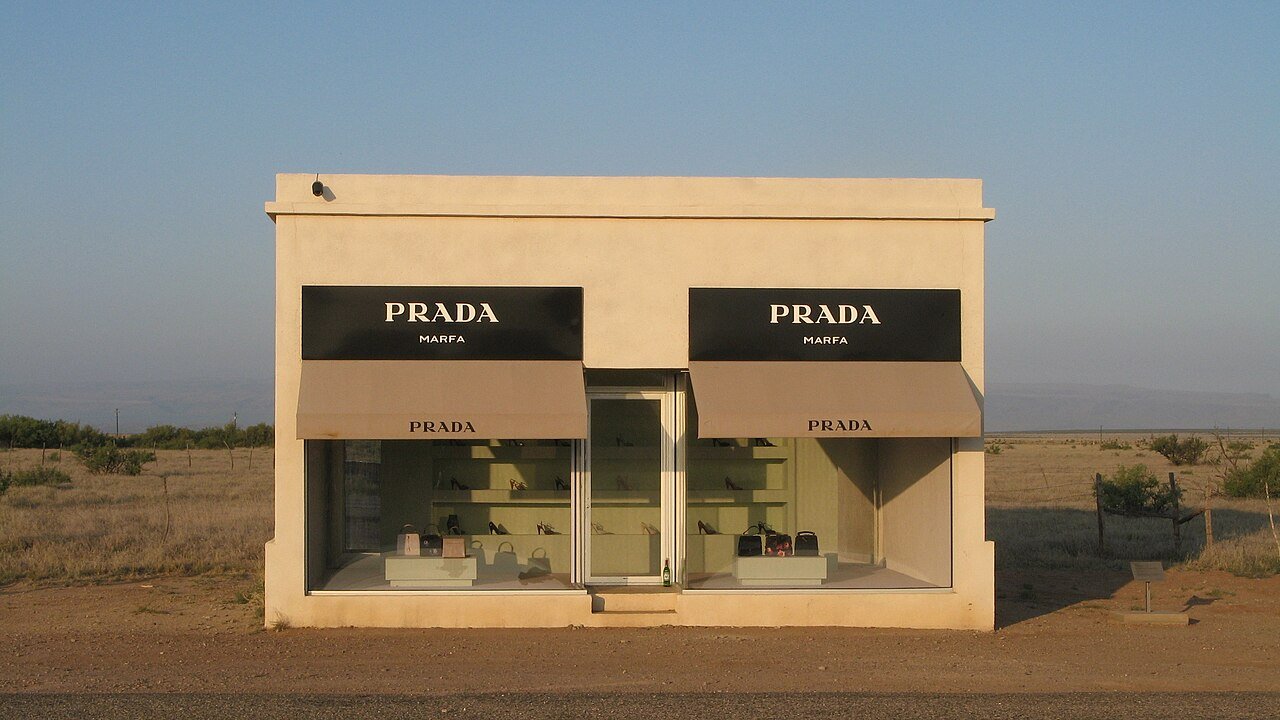
Answer: Texas
Artists Michael Elmgreen and Ingar Dragset first proposed “to place a life size model of a Prada boutique, permanently, in the middle of the Nevada desert.” Art Production Fund took on the project, and when Nevada didn’t work out, the nonprofit Ballroom Marfa built it in West Texas instead. Construction began in early 2005, and it opened that fall on the south side of U.S. Highway 90, outside Valentine. It’s an adobe building covered in white stucco, and at night its pistachio-green interior glows onto the highway. Adobe was chosen so the building would naturally decay over time. Miuccia Prada chose the merchandise herself from the Autumn/Winter 2005 collection, picking earth tones to match the desert: 20 high heels, all for the right foot, on three shelves, plus handbags on two small pedestals. Prada also supplied the paint colors and the carpet. It's not a functioning store; no employees or managers, the door is sealed, so no one can go in or buy anything. This didn't deter vandals though, as just days after it opened, it was spray-painted, shot at, and someone even pulled off the door with a truck and a chain and stole the merchandise. Prada donated six new bags, and holes were cut into their bottoms to discourage theft (Ballroom Marfa) [1]. The artists had planned for what Dragset called “creative and generative decay,” but they rebuilt the store because it had been destroyed before enough people could see it (Ilaria Bonvicini, Domus) [3]. In June 2013, Playboy put up a 40-foot neon bunny and a 1972 Dodge Charger, designed by the artist Richard Phillips, about a mile northwest of Marfa on the same highway. The Texas Department of Transportation declared the bunny an illegal outdoor advertisement, then said the same about Prada Marfa because it displays the Prada logo. Elmgreen pushed back, saying the piece was “a critique of the luxury goods industry” (Francesca Mari, Texas Monthly) [4]. After about a year of negotiations, Prada Marfa was allowed to stay as a museum (Ballroom Marfa) [1]. In March 2014, the Waco artist Joe Magnano painted it blue, covered the windows with TOMS logos, and posted a manifesto on it. He pleaded guilty to two misdemeanor counts of criminal mischief and was ordered to pay Ballroom Marfa $10,700 for the restoration, plus a $1,000 fine (Artnet News) [5]. The architects Ronald Rael and Virginia San Fratello worked on the building with the artists, and Prada didn’t commission it, though it let the artists use its logo. The title refers to Marfa, about 37 miles away, where the minimalist artist Donald Judd settled in 1971. “Museums are where art goes to die, while public art takes on a life of its own,” Elmgreen & Dragset said (nss magazine) [2].
I don't know; I think it would've been cooler to let the place get broken into and robbed occasionally. What's a bigger statement and critique of the fashion industry than building a store in the middle of nowhere and having it attract people looking for fortune? And then they keep restocking the place every month, and then eventually they stop and let the place decay. It ends up being someone's shelter and home before it falls apart. That would've been cool.
Answer: Veruschka
Veruschka was born in 1939 as Vera von Lehndorff in Prussia. Her model name means “little Vera” in Russian. She was six feet tall, and her cameo in Michelangelo Antonioni’s classic fashion film 'Blow-Up', writhing on the floor in front of a photographer, made her famous. Richard Avedon called her “the most beautiful woman in the world.” She appeared on 11 Vogue covers and quit modeling in the 1970s: “It was time to go” (Natalie Rigg, Dazed) [1]. Born in Prussia, she embodied the newly liberated woman of the 1960s. She did her own makeup, which led her into body painting, using her athletic body as the canvas. In 1975, she retired to focus on her art, working under her birth name, and with the artist Holger Trülzsch, she created avant-garde nude self-portraits. In 2017, at 78, she appeared in an Acne Studios campaign (Gillian Brett, PORTER) [2]. Her father was hanged for leading an assassination attempt against Hitler, and she spent the last part of World War II in German labor camps. In 1967, Life put her on its cover and called her “the girl everybody stares at” (Natasha Wolff, DuJour) [3]. Avedon expanded on his description of her in the May 1972 issue of Vogue. In the mid-1960s, under Diana Vreeland, Vogue also published the photographer Franco Rubartelli’s pictures of her in nothing but body paint, including a Pucci body-paint image in May 1966 (Condé Nast Archive, Google Arts & Culture) [4]. She's still alive and well!

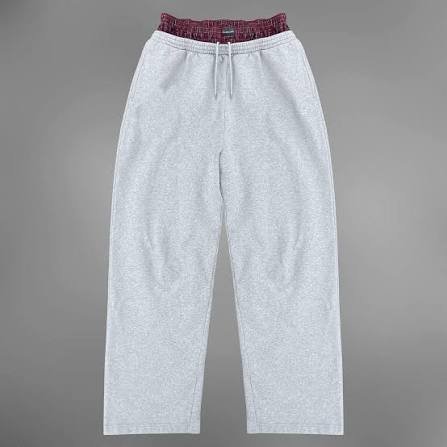
Balenciaga Trompe-l’oeil sweatpants (2021)