
November 15, 2026
The issue of November 15, 2026
Every question from this issue, with the answers, the hints and the reading behind them.
Play the November 15, 2026 issue
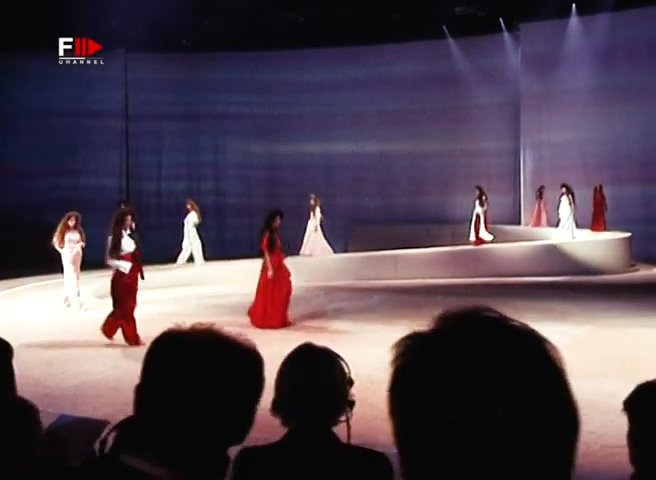
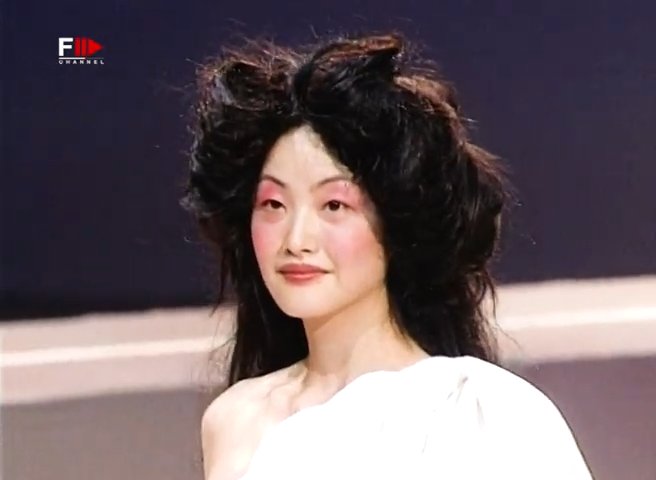
House: Kenzo · Designer: Kenzo Takada · Season: Spring/Summer 2000
Asiaweek reported that Kenzo Takada ended his legendary career with a fashion spectacular in Paris on October 7, 1999, with collections drawing on cultures from around the world and spanning his career from his first collection to his last. Yohji Yamamoto called him “the first designer from Japan to have touched and moved the fashion world” (Asiaweek) [1]. The Fashion DB describes the show as his final seasonal runway, folded into a retrospective farewell with a mixed cast of men and women and returning house imagery, “both clothing body and succession ceremony” (The Fashion DB) [2]. Matthieu Jacquet of Numéro called it “this breathtaking runway show,” with musicians, dancers and even animals taking an audience of 4,000 on a journey around the globe (Numéro) [3].
Kenzo Takada was born in 1939 in Himeji, near Osaka. He briefly studied English literature at Kobe City University of Foreign Studies, then became one of the first male students at Tokyo’s Bunka Fashion College when it opened to men. In 1965, after a long boat trip, he arrived in Marseille and soon moved to Paris, where a short visit became a long stay. He opened his first boutique, Jungle Jap, in the Galerie Vivienne, decorated after the work of Henri Rousseau, whose painting 'The Dream' inspired the tiger that became the brand’s symbol. His first collection came out in 1970 (Clémence Leleu, Pen) [4]. He became known as the “poet of cotton,” introduced the idea of “anti-couture” in 1971, drawing on the kimono, and presented his collections in the season they were meant to be worn, rather than months ahead. In 1977, he showed at Studio 54 in New York and in a circus tent in Zurich [3]. When he retired, he was 60 and felt he had achieved what he could in fashion: “So many of my friends have died before they could enjoy life,” he said. “I never thought I’d be able to work in Paris fashion.” The brand had been part of LVMH since 1993, and after his exit, Roy Krejberg took over menswear and Gilles Rosier took over womenswear [1]. Kenzo Takada died of COVID-19 in October 2020, shortly after launching K-3, a lifestyle brand he co-founded with Jonathan Bouchet Manheim [4].
What a wonderful stage: a wavy, winding ramp on an endless vignette, a road, a timeline, connecting the history of fashion to its future. When we traverse this road, with violent winds and rough terrain, detours, wrecks, scenery broad and narrow, other passengers, travellers, sight-seers, and enthusiasts, we may find that where we end up, isn't so different from where we started. I do enjoy a good bus and train, however, so let's build that infrastructure up. And one day I may be viewing this road from 40,000 feet in the air from my environmentally friendly private jet. I guess this road may need some sidewalks and biking lanes too...Legacy!


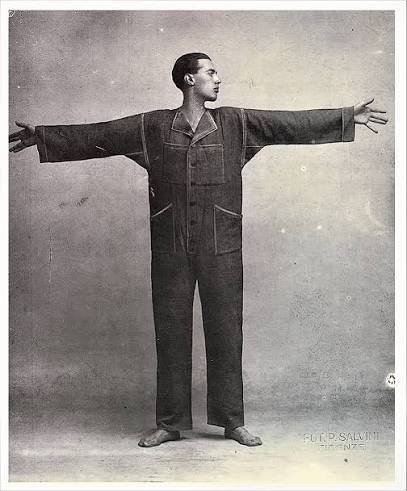
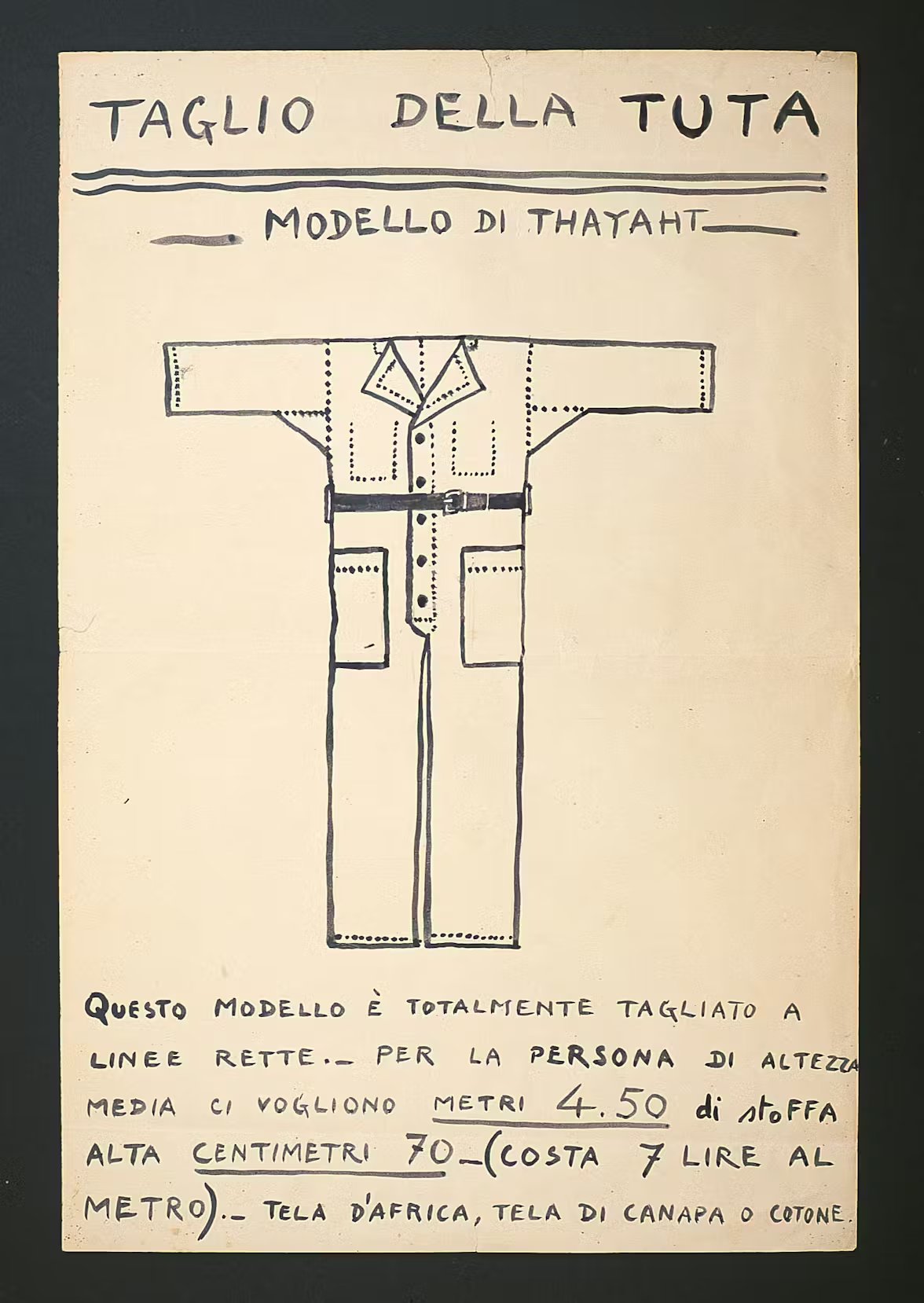
Answer: The Jumpsuit
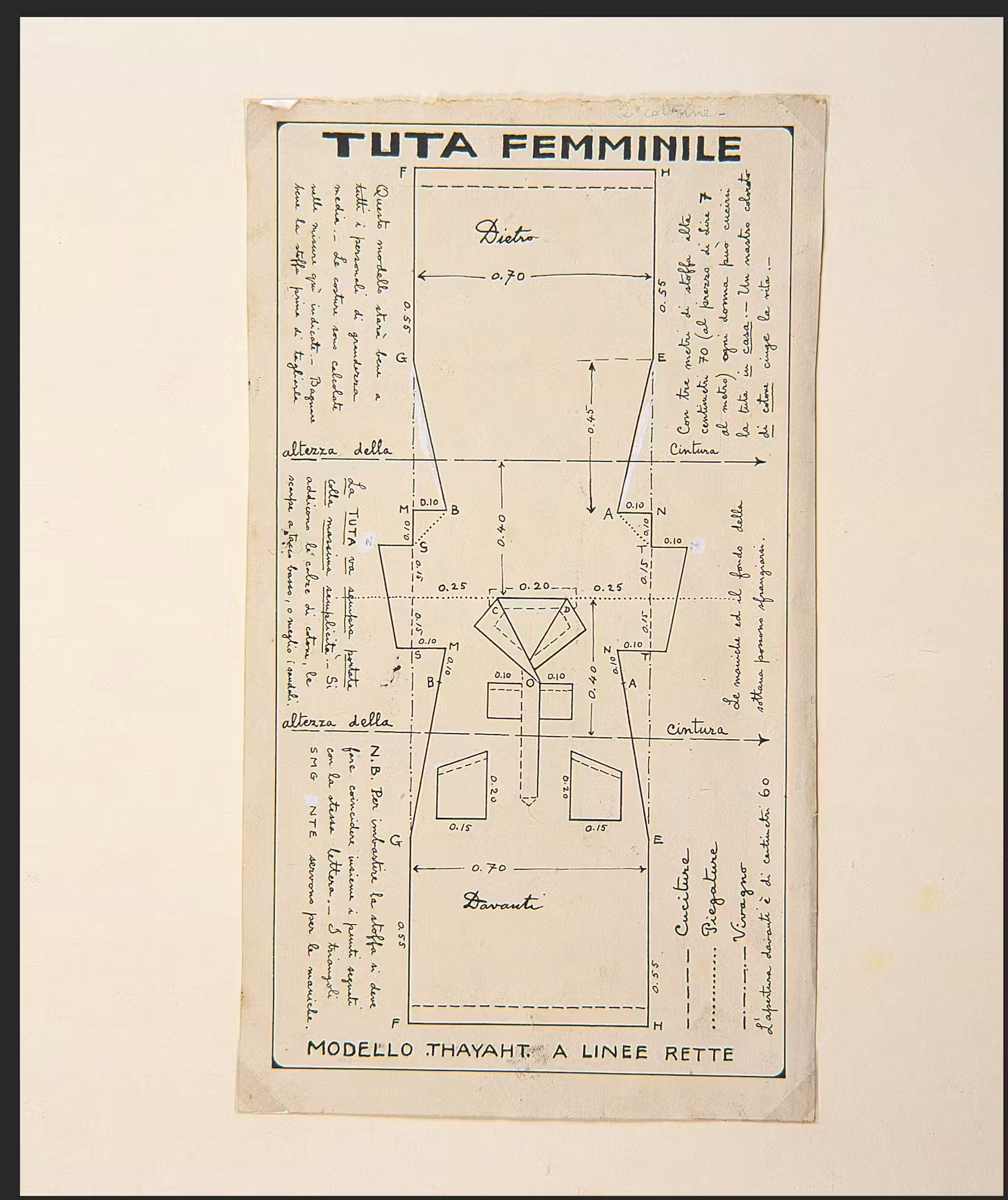
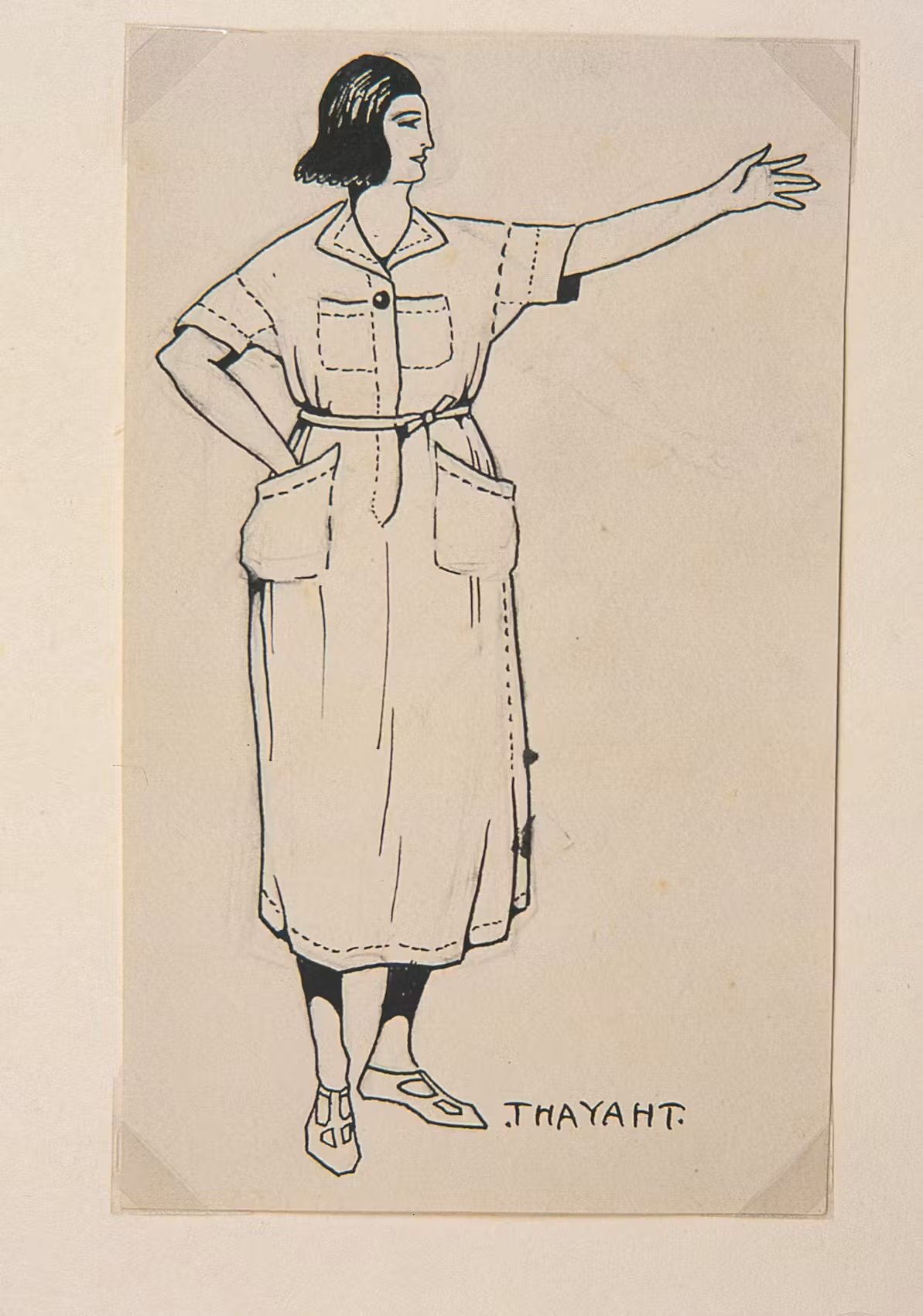
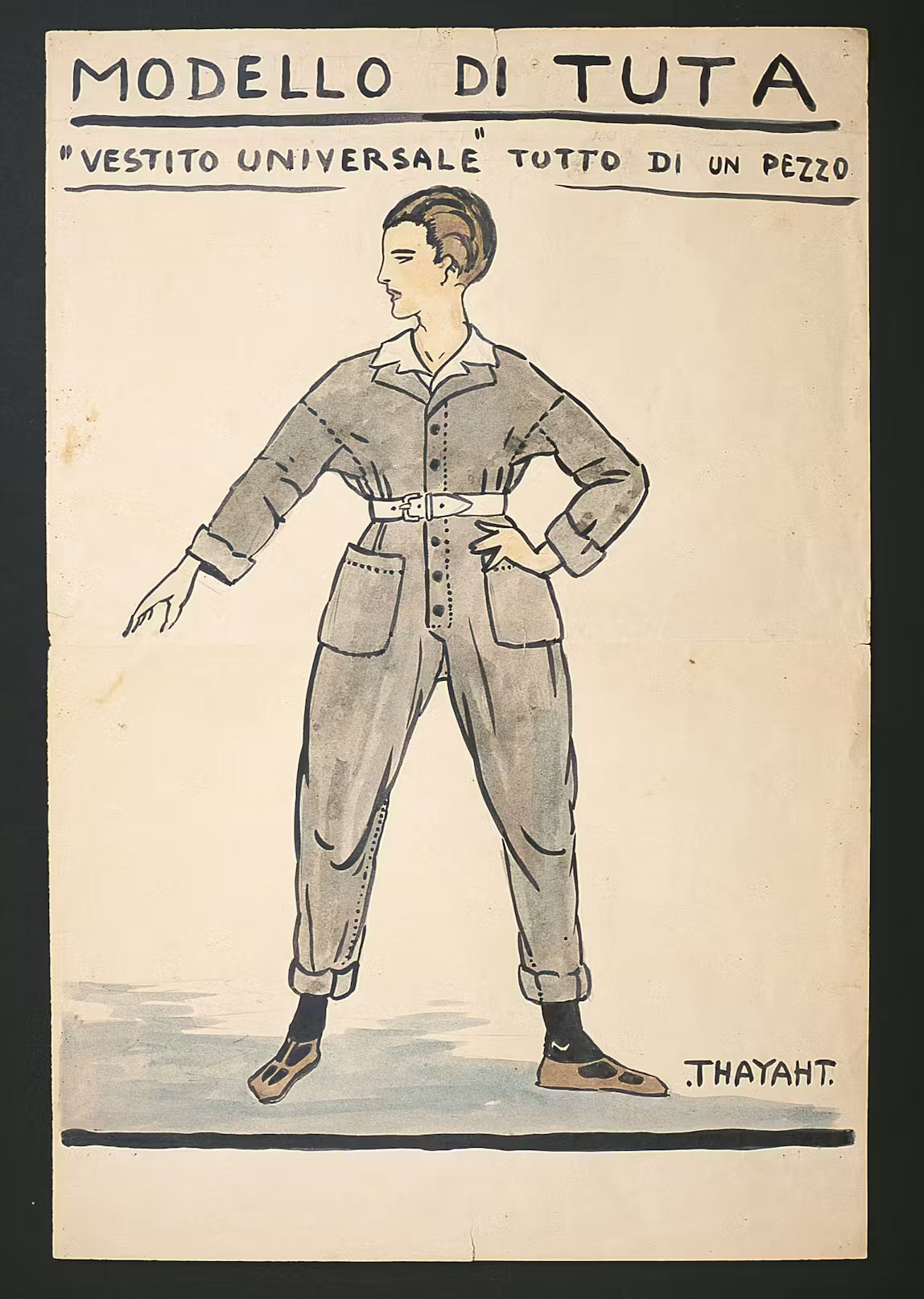
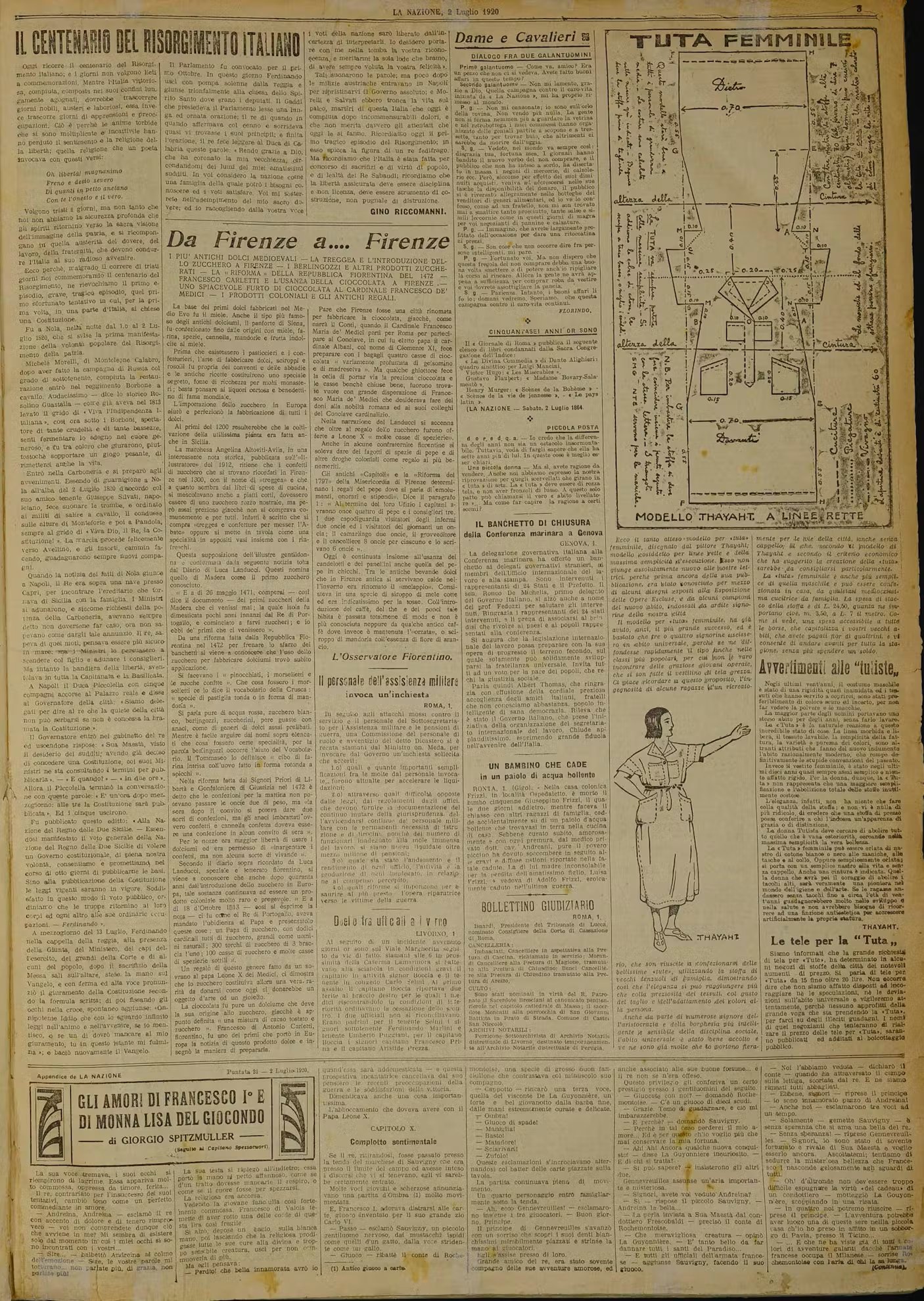
Ernesto Michahelles, known as Thayaht, launched the TuTa in Florence in June and July 1920. He was inspired by the cheap, brightly colored cotton and hemp he saw in a shop window: “I took a few samples and set to work.” His brother Ruggero helped design the first pattern with a few tailor friends. The men’s pattern ran in the Florence newspaper La Nazione on June 17, 1920, and the women’s version on July 2, and the first 1,000 readers who paid an extra 50 cents got a printed pattern. The name played on the Italian tutta, meaning “everyone,” since he predicted that everyone would wear one. “With just seven buttons and a simple belt you’re ready to go,” he said, and the T-shaped cut used all 4.5 meters of fabric without wasting “even a slither.” Despite its democratic aim, it was an immediate hit with upper-middle-class and aristocratic clients (Uffizi Galleries) [1]. In a 1958 interview with La Nazione, Thayaht said, “We needed something that would break the habit of dull colors” (Olga Mugnaini, La Nazione) [2]. The cutting instructions were designed for easy home sewing with little fabric waste, in contrast to the hand-finished, individually fitted haute couture of the time, and in 1921 Thayaht followed it with the Bituta, a two-piece version (Garage Museum of Contemporary Art) [3]. Thayaht also worked for the Paris couturier Madeleine Vionnet for several months, designing clothing, objects, jewelry, and bookplates for her [1], and in the 1920s, his illustrations of her designs filled the pages of the Gazette du Bon Ton (Cornell University Library) [4].
Futurism was a fascinating movement all about movement, speed, dynamism, rejecting the past, going 1 million MPH through a brick wall named society. I think if not for its political underpinnings (a lot of Mussolini supporters), it would be remembered much more fondly because, in my opinion, the art that came out of it was fantastic.
Answer: André the Giant
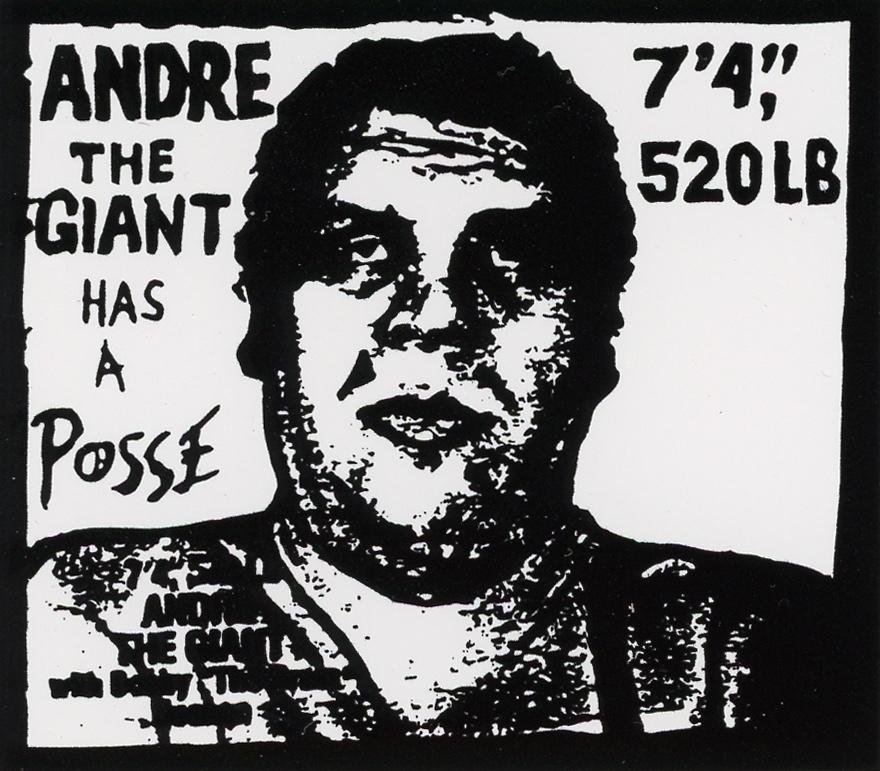
Shepard Fairey started the campaign in 1989 with a sticker that read “Andre the Giant Has a Posse.” He expected “only a few weeks of mischief,” aimed mostly at his art-school and skateboard friends in Providence, but the stickers spread far beyond the city. About five years in, the national media took notice, and Fairey began selling posters and T-shirts. “I actually have always thought that the command to ‘obey’ would cause people to do the exact opposite,” he said (Steven Heller, AIGA) [1]. In a 1990 manifesto, Fairey called the campaign “an experiment in Phenomenology,” borrowing Heidegger’s description of phenomenology as “the process of letting things manifest themselves.” The sticker, he wrote, “has no meaning but exists only to cause people to react,” so how people interpret it says more about them than about the sticker (OBEY Giant) [2]. The campaign grew out of the skateboarding scene, and Fairey officially founded OBEY Clothing in 2001 (The Creative Independent) [3].

Answer: It gave swimmers an unfair advantage.
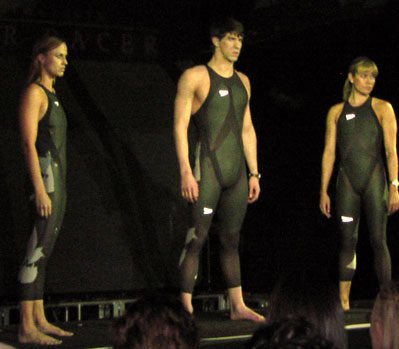
Shortly after the 2004 Olympics, Speedo asked NASA’s Langley Research Center to help design a low-drag swimsuit. NASA tested fabrics in a small wind tunnel and compared traditionally sewn seams with ultrasonically welded ones. Speedo ended up joining the suit’s pieces with welded seams, which removed drag and added compression, and a low-profile zipper bonded into the fabric produced 8 percent less drag than a standard one. In March 2008, before the Olympics, swimmers wearing the LZR Racer broke 13 world records (NASA) [1]. At the Beijing Games that summer, 23 of the 25 swimming world records were set by athletes wearing the LZR. NASA said its fabric reduced skin friction drag 24 percent more than Speedo’s previous racing fabric. The Olympics later called those Games “a moment when technology went too far,” saying that suits made of polyurethane and other non-textile materials gave larger athletes a bigger advantage. Polyurethane is a synthetic polymer, think plastic. Synthetic means made in a lab through some chemical process, different than, for example, getting wool from a sheep, an organic being, and making a suit out of that. Polymer just means many parts, as in the many molecules are lined up like Lego parts. In 2009, FINA, now World Aquatics, banned polyurethane suits, and the textile-only rules took effect in 2010. Men’s suits now can’t go above the navel or below the knee, and women’s suits can’t cover the neck, go past the shoulders or extend below the knee (Aliza Chasan, CBS News) [2]. The LZR’s thin, stiff polyurethane panels could “reject water,” and the suit compressed the body to reduce drag. In 2009, Arena released the X-Glide, a full-body polyurethane suit that compressed the body even more, and Paul Biedermann wore it to beat Michael Phelps at the 2009 World Championships. That race sealed FINA’s decision. Today’s suits must be “textile fabrics,” meaning woven, knitted, or braided, and by 2019, 16 world records had fallen without plastic panels (Emma Betuel, Inverse) [3].
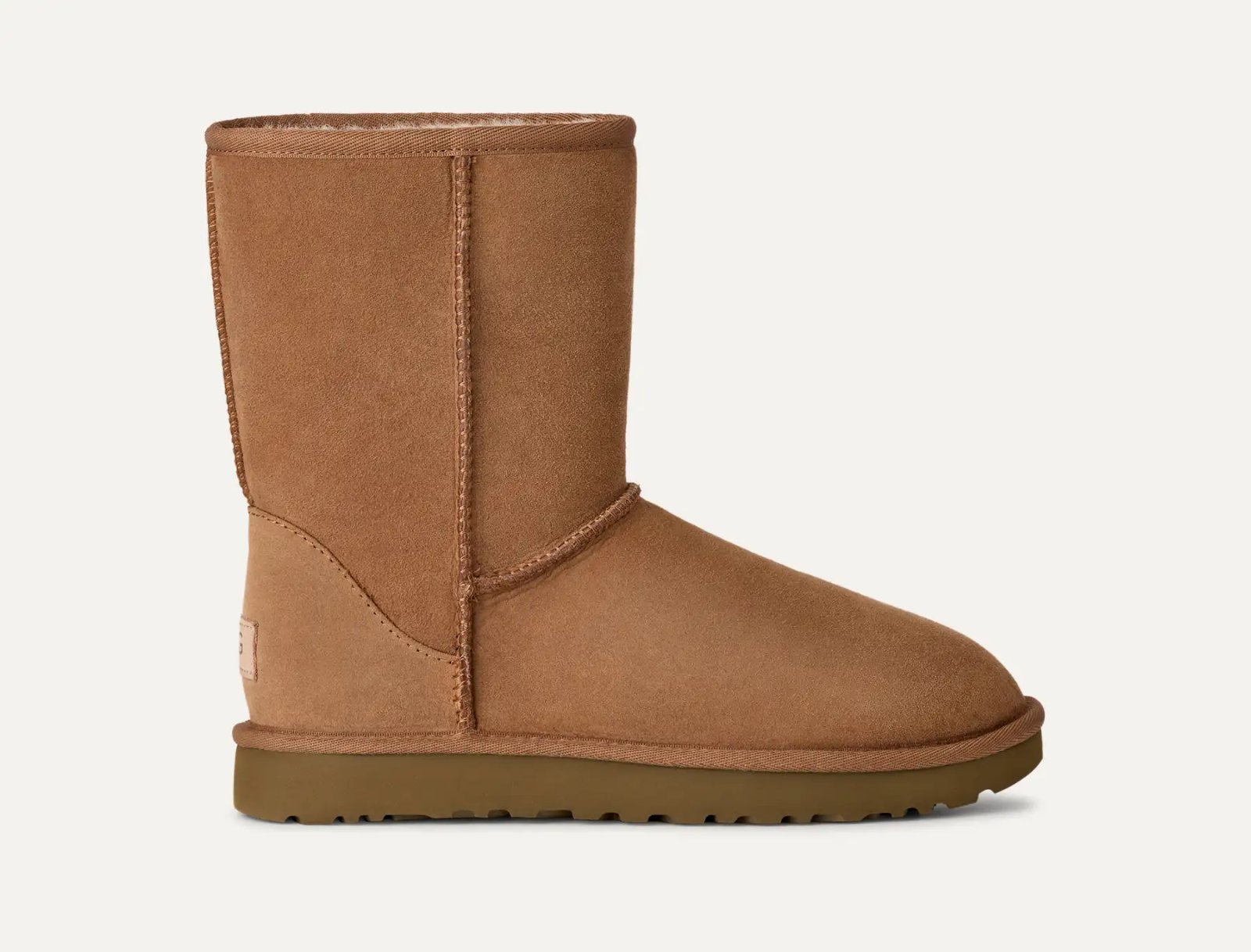
Classic UGG Boots. It's that time of year.