
November 12, 2026
The issue of November 12, 2026
Every question from this issue, with the answers, the hints and the reading behind them.
Play the November 12, 2026 issue
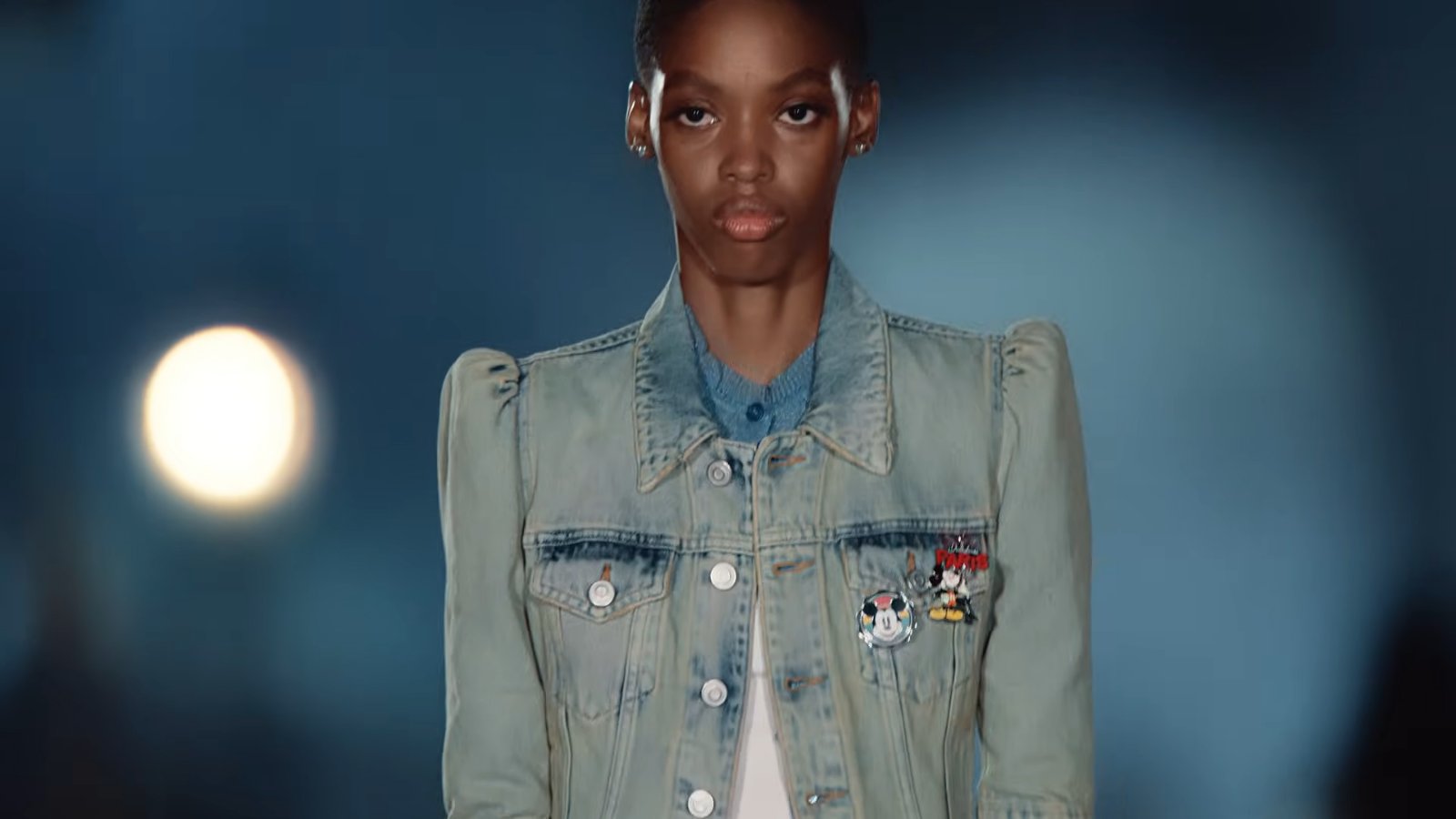
House: Coperni · Designer: Sébastien Meyer and Arnaud Vaillant · Season: Spring/Summer 2025
“We grew up with Disney as an important part of our childhood,” said Coperni’s Sébastien Meyer and Arnaud Vaillant, who credited Disney’s fairy tales with guiding them through adolescence, ushering in lessons on friendship, love, and courage through carefully animated stories. The show, in front of Sleeping Beauty Castle, followed the journey from childhood to adulthood in three acts (Disney Parks Blog) [1]. Dylan Kelly of Hypebeast described the acts: “Park Tribes,” with vintage Disney T-shirts and Victorian tops trimmed with organza butterflies; “The Villains,” with an all-black palette of horned hoodies, wicked gowns and leather coats; and “The Princess Transformation,” with floral-decal blazers, billowing pastel sleeves and bodysuits with satin poufs [2]. Halie LeSavage of Marie Claire called Irina Shayk’s black trench coat “Maleficent-approved,” described the lineup as “Disney-adult-gone-bad” in spirit, and wrote that Kylie Jenner’s strapless black ballgown, worn with opera gloves, fit a “dark princess agenda” [3]. Cassie Anderson of Cosmopolitan UK wrote that the show “healed my inner child.” She called the Mickey Mouse-style shoes the highlight, though she “wasn’t as into the taffeta bell bottoms” [4]. Not everyone was charmed. On The Fashion Spot’s forum, one member wrote that “the setting swallowed the collection,” and another predicted that “the only thing people will remember is the location” [5].
Coperni was the first fashion brand to hold a fashion week show at Disneyland Paris. The looks referenced the apple from Snow White and the Seven Dwarfs, everyday clothes turning into ball gowns from Cinderella, the enchanted rose from Beauty and the Beast, Ariel’s underwater world from The Little Mermaid, and Maleficent’s silhouette and Aurora’s crown from Sleeping Beauty. Mickey Mouse inspired a pair of heels, and Mickey, Minnie, and Donald appeared on T-shirts. Lila Moss, Irina Shayk and Paloma Elsesser walked, and Cole Sprouse sat front row [1]. Guests entered the park at 9:30 p.m., Coperni’s Swarovski crystal Swipe bags took the place of glass slippers, and fireworks burst from the castle to end the show [2]. No models rode any rides, but the guests did: after the show they stayed past midnight, dancing, meeting Disney characters and riding Hyperspace Mountain and Buzz Lightyear Laser Blast [2][4].
A piece from this collection might cost less than a trip to Disney nowadays. I actually looked this up, one Coperni X Disney tee is about $182 and a ticket to the Magic Kingdom is between $200-230. For a family of three, you're looking about $1000 more often than not. I went to Disney World in Florida once as a kid (when it was much cheaper), and it was amazing. As a kid I was really into wrestling so, alongside my actual wrestling action figures, I would take my stuffed animals and other toys and make them wrestle as well. I got a Mickey Mouse plushy on that trip and for years he was my top heel.
It’s a cool show, but it would’ve been cooler if they’d found a way to use the rides. Put a couple of models on one of those little train rides, or the spinning teacups; those were fun. Expensive! A Goofy Movie was a classic! Now you're a goofy for paying for any of it.
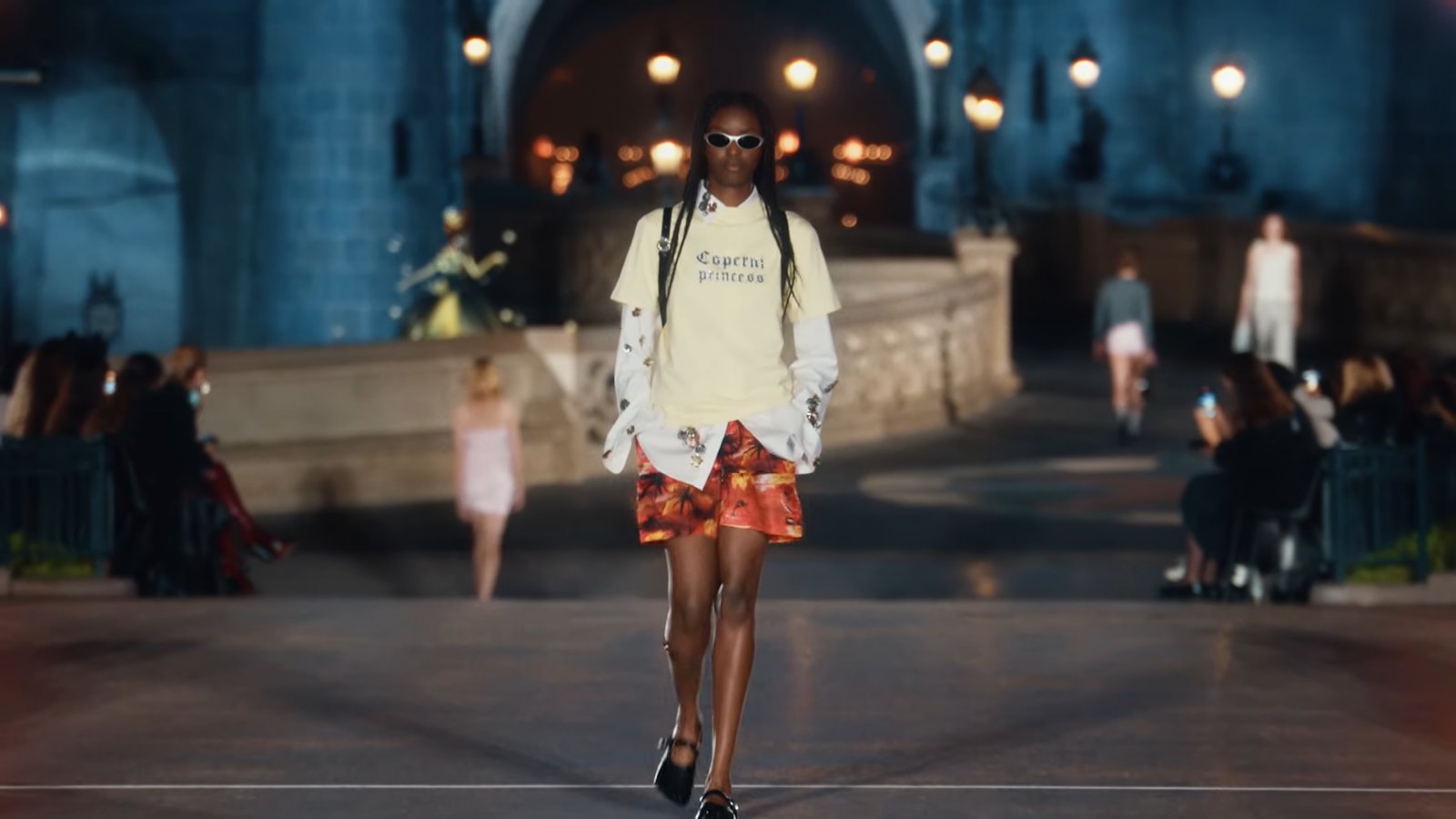
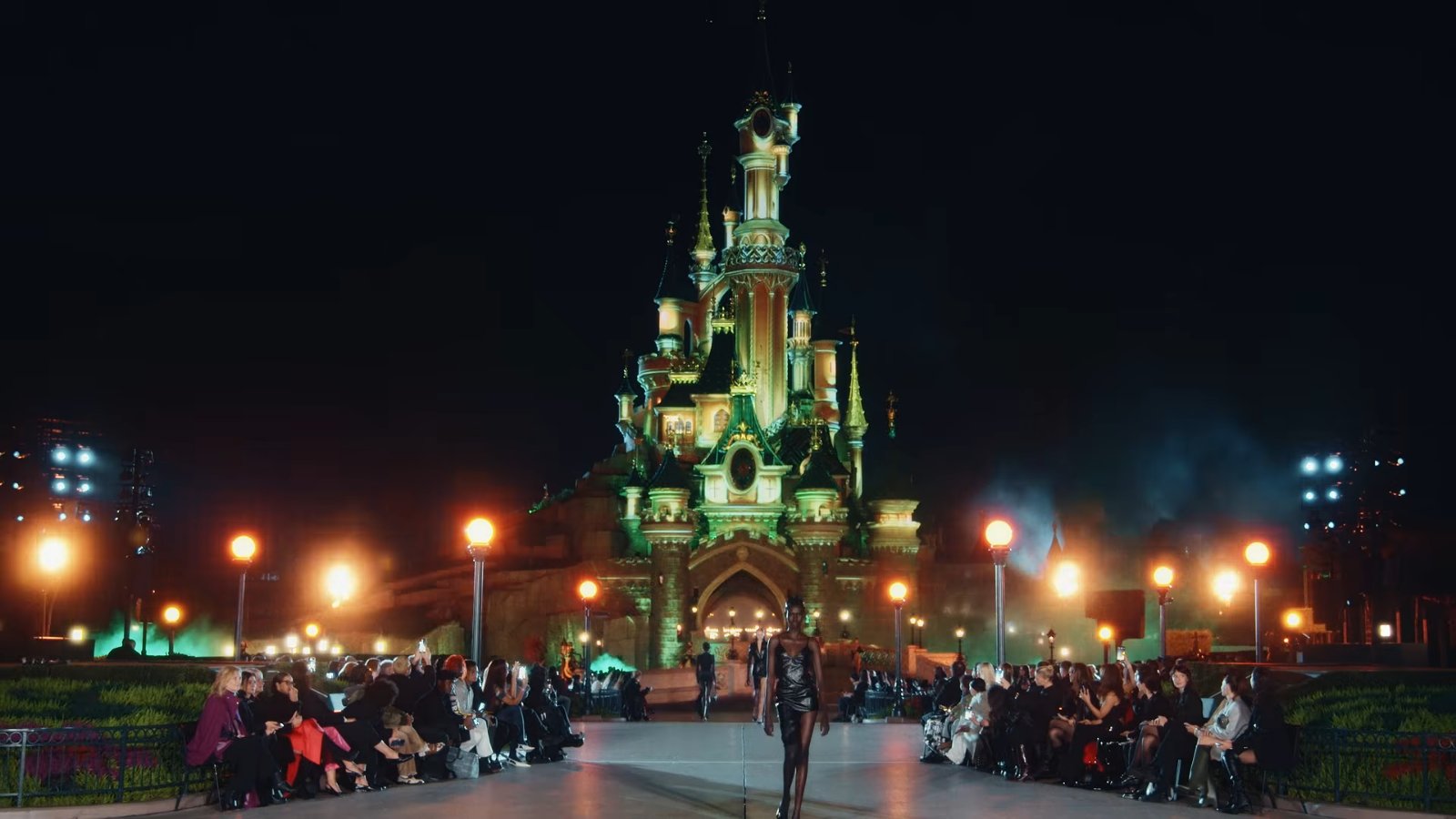
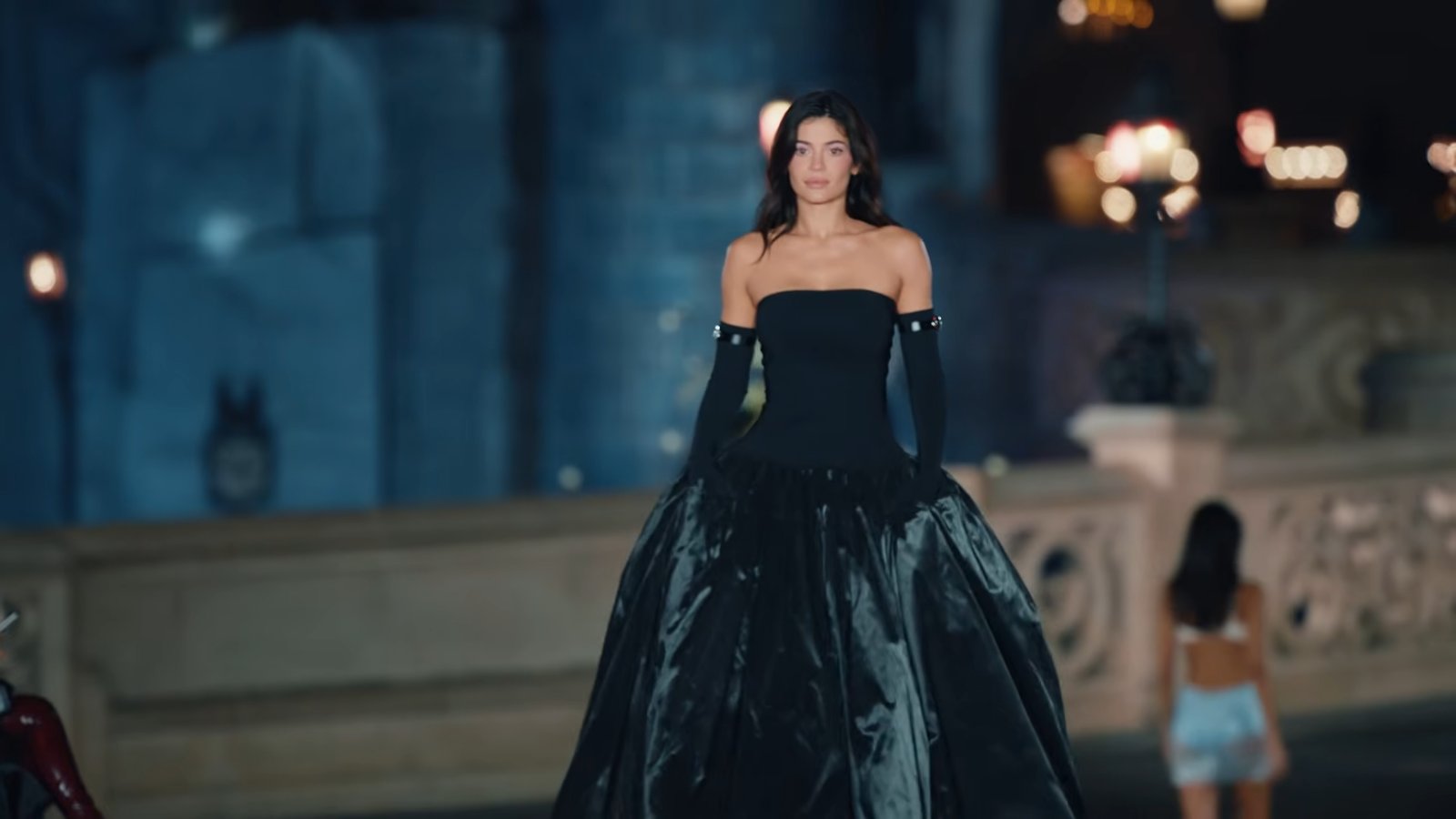
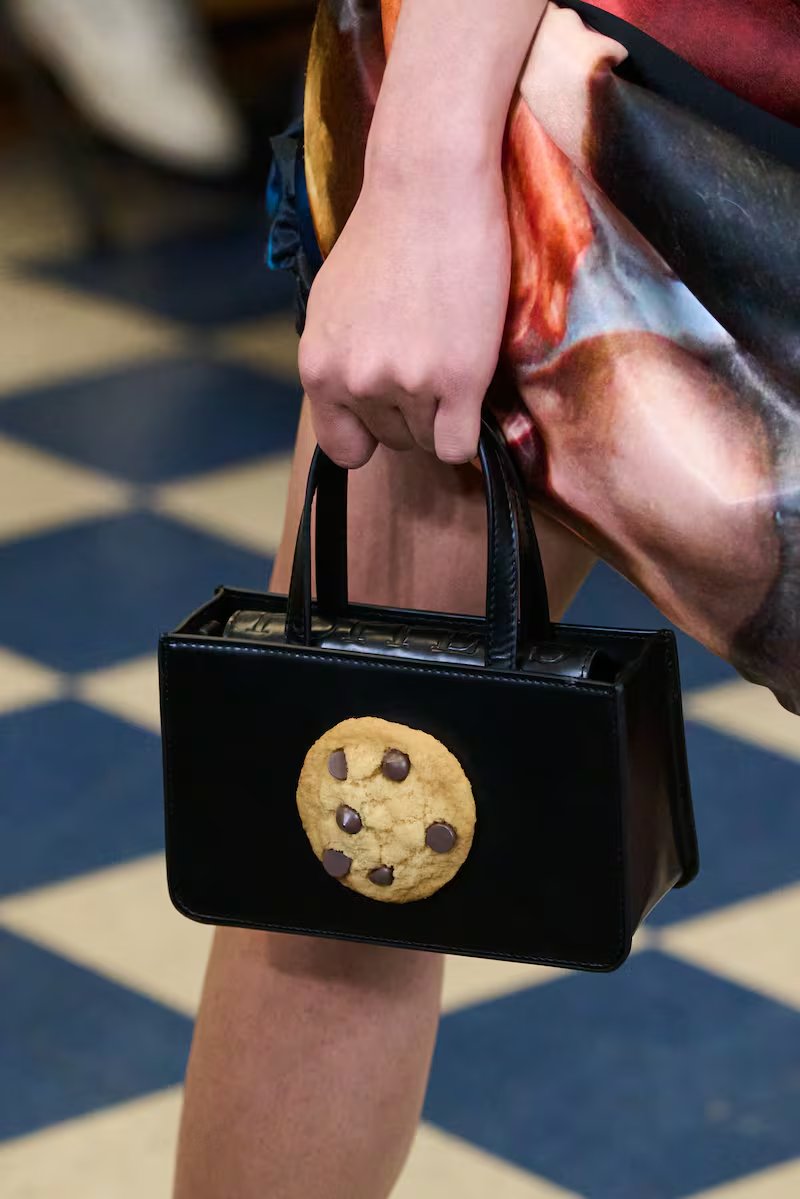
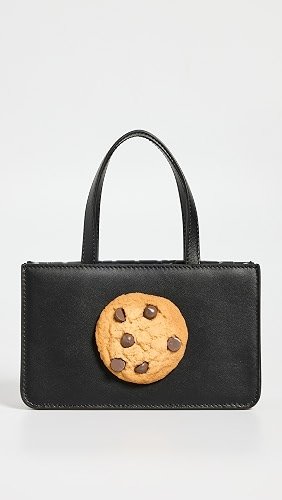
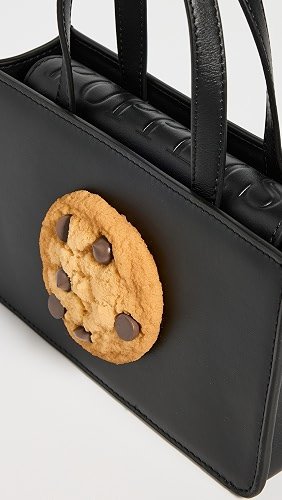
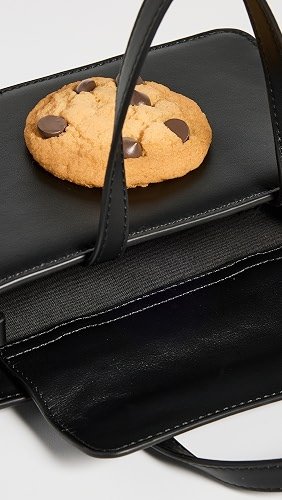
Answer: A Chocolate Chip Cookie
Carly Mark founded Puppets and Puppets in New York in 2018 with Ayla Argentina (Jessica Testa, The New York Times via Artdaily) [1]. The label is named after Mark’s rescue dog, Puppet, whom she named after the Puppet Master in 'Ghost in the Shell' (1995). She calls it “his brand, not mine.” She came to fashion from fine art: “A step in my [fine art] process was always costume-making,” she said. The label first showed at New York Fashion Week in February 2019 (Charles Manning, Adopt a Pet) [2]. The Cookie bag, a handbag with a hyperrealistic chocolate chip cookie on the front, first released for Fall/Winter 2021. For Spring/Summer 2023, it came back in metallic pink, leopard print and green velvet, alongside resin bags with fake bananas, fried eggs, brownies and a goblin eating macaroni and cheese. “People are very viscerally responsive to seeing a realistic-looking cookie on a bag,” Mark said (Alexandra Pauly, Highsnobiety) [3]. The bags use 3D objects such as cookies, roses, fried eggs and spiders in place of a logo. “The cookie bag has become more recognizable than the name of the brand,” Mark said in February 2024. At that point, the brand had about eight months of operating funds left, and investment talks had gone nowhere. Mark announced she would stop making ready-to-wear and move the label to London as an accessories brand [1]. The label had been nominated for the CFDA’s Emerging Designer of the Year and won a Fashion Trust US prize. Its Fall/Winter 2024 show was its last, and the sample sale that followed included runway pieces, cookie bags, resin food, dog statues and cheese-wedge shoes (The Business of Fashion) [4]. BTW Love my chocolate chip cookies soft, heavy on the chips.
Answer: Artists
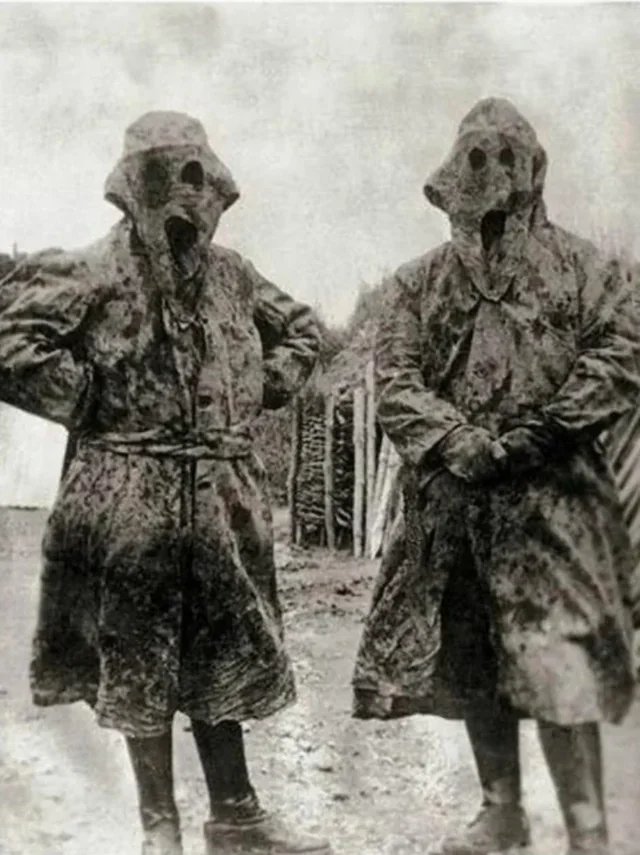
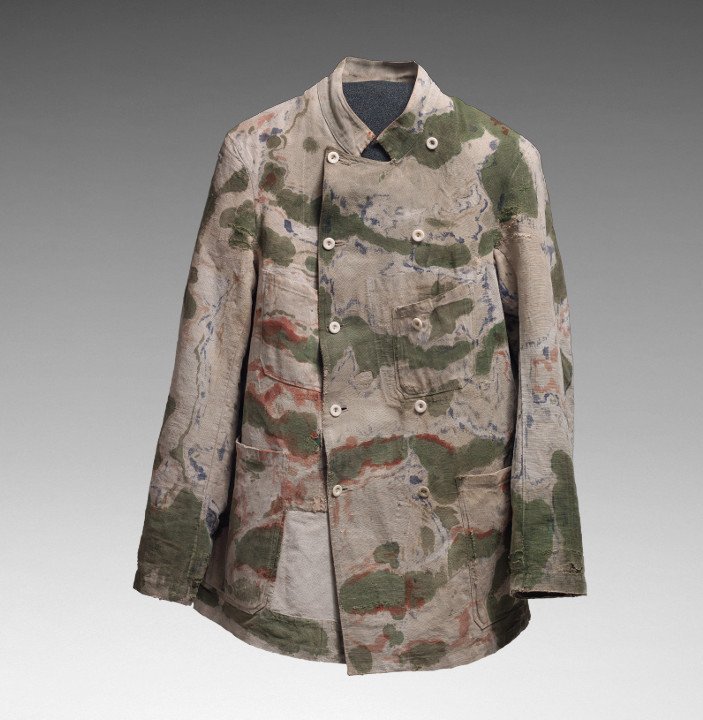
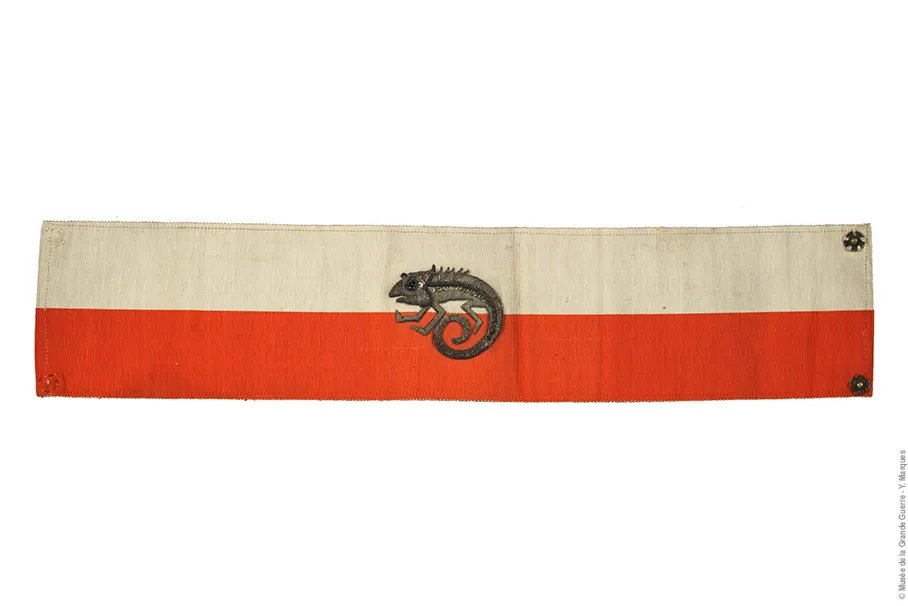
The French army created its camouflage section on August 14, 1915, led by the painter Lucien-Victor Guirand de Scévola. Its members included painters, an architect, Paris Opera set designer Georges Mouveau, an engraver, a cabinetmaker, and Eugène Corbin, who designed camouflage outfits for troops. They painted artillery with patterns that broke up the guns’ outlines, hid trenches under painted canvas and netting, and installed fake trees at night to hide observation posts. The unit’s emblem was a chameleon. Sixteen camoufleurs were killed before the section was dissolved in December 1918 (Musée de l’Armée) [1]. Guirand de Scévola, a graduate of the École des Beaux-Arts, explained his method: “In order to deform totally the aspect of the object, I had to employ the means that cubists use to represent it.” Cubists including Georges Braque, Jacques Villon, André Dunoyer de Segonzac, and Roger de La Fresnaye joined, along with many other traditional painters. The unit started with 30 artists and grew to about 3,000 people, using about 7 million square yards of fabric by the end of the war. The name “camoufleurs” comes from the French word for veiling or disguising (The Artist’s Road) [2]. The idea started in August 1914, when Guirand de Scévola and Louis Guingot, both painters in the 6th Artillery Regiment, used canvas painted in natural colors to hide their guns from enemy spotters. At the time, French artillery uniforms were a conspicuous blue, and the artists also made cloaks in natural colors to blend into the mud (Christopher Hoitash, War History Online) [3]. Britain, the United States, and Italy formed their own camouflage units in 1916 and 1917 [2].


Answer: Balenciaga, Bottega Veneta, Boucheron, Brioni
Kering’s fashion and leather goods houses are Gucci, Saint Laurent, Bottega Veneta, Balenciaga, McQueen and Brioni. Its jewelry houses are Boucheron, Pomellato, DoDo and Qeelin, and it also owns the porcelain maker Ginori 1735. Kering Eyewear makes glasses for many brands Kering doesn’t own, including Cartier, Chloé, Alaïa, dunhill, Montblanc and PUMA (Kering) [1]. Cartier belongs to Richemont, along with Chloé, Alaïa, dunhill and Montblanc (Richemont) [2]. In its May 2026 letter to shareholders, Kering said it was gradually integrating the jewelry maker Raselli Franco, and that Kering Eyewear had 15 brands in its portfolio (Kering) [3]. On March 31, 2026, L’Oréal completed its purchase of Kering Beauté, including the fragrance house Creed. L’Oréal also signed 50-year exclusive licenses for Bottega Veneta and Balenciaga beauty, which if you don't know means they have the rights to develop products using these brand names, but they don't own them outright. Kering would do this so they can outsource the manufacturing and not have to worry about building infrastructure, and can basically sit back and collect a check. L’Oréal will take over Gucci beauty once Coty’s license ends (L’Oréal) [4]. Versace has never belonged to Kering. Capri Holdings (American fashion group that owns Michael Kors and Jimmy Choo) sold it to Prada Group (yes, that Prada) for €1.25 billion in December 2025 (AFP via Gulf News) [5]. Kering also owns a 30 percent stake in Valentino, bought from Mayhoola (Qatari money, owns Balmain) in 2023, but the two sides have postponed any full buyout. Kering’s earliest chance to buy the rest is now 2029 (The Impression) [6]. Kering bought Puma in 2007 for €5.3 billion, and in 2018 it gave 70 percent of its Puma shares to its own shareholders to focus on luxury (CNBC) [7]. Wow, money laundering gets complicated doesn't it?
“I ♥ NY” t-shirt designed by Milton Glaser in 1977.