
November 11, 2026
The issue of November 11, 2026
Every question from this issue, with the answers, the hints and the reading behind them.
Play the November 11, 2026 issue
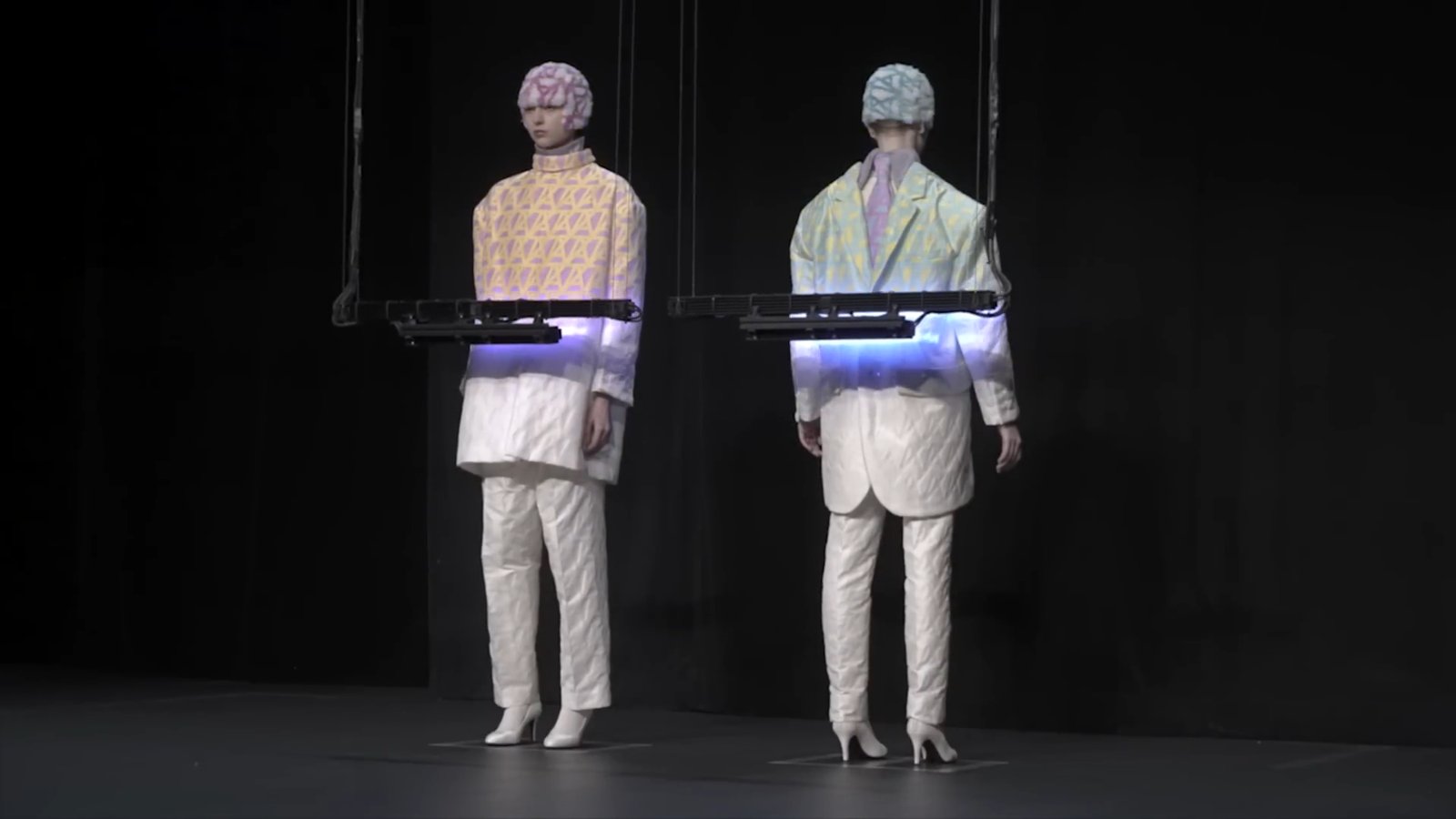
House: Anrealage · Designer: Kunihiko Morinaga · Season: Autumn/Winter 2023 - =
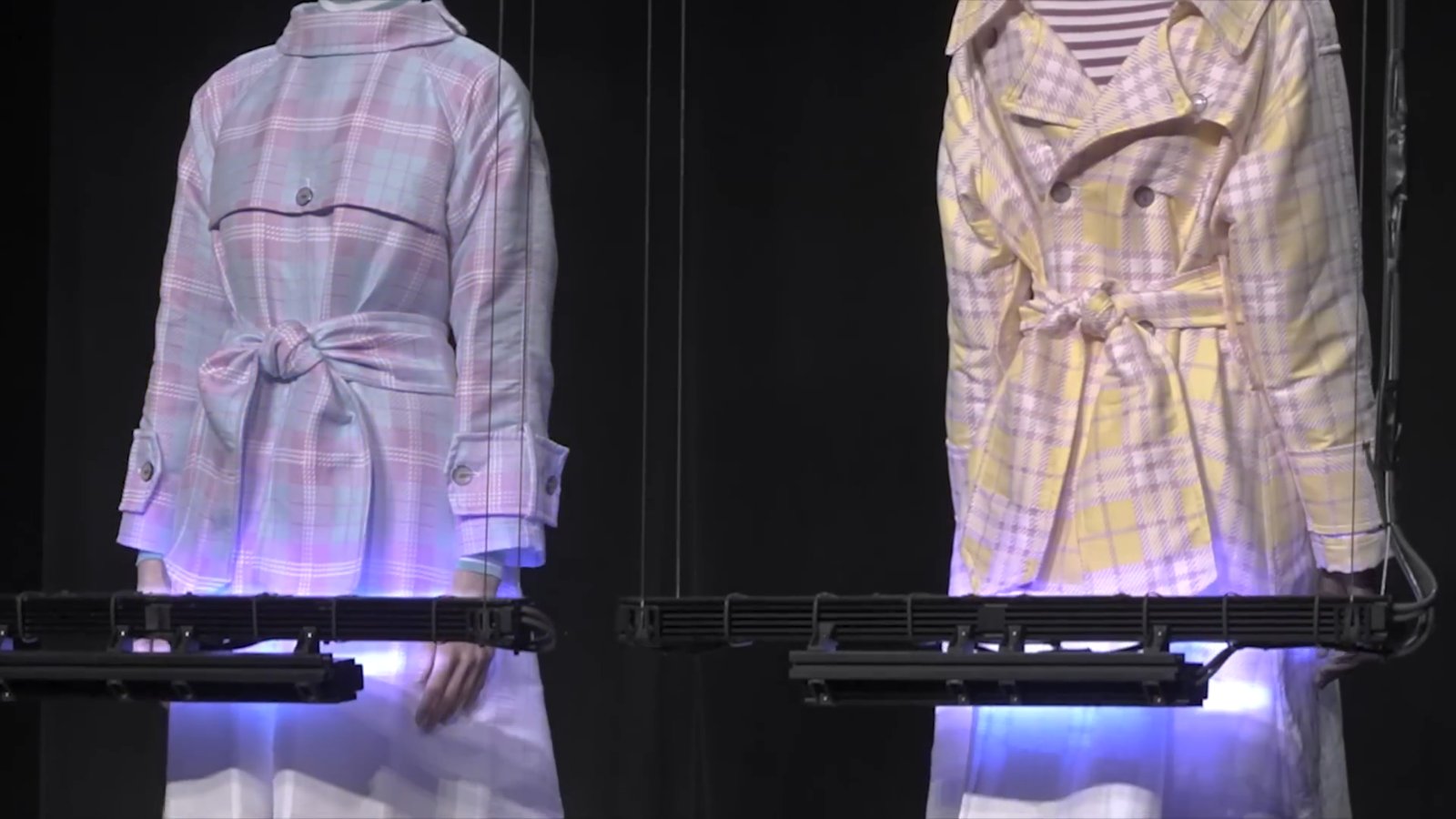
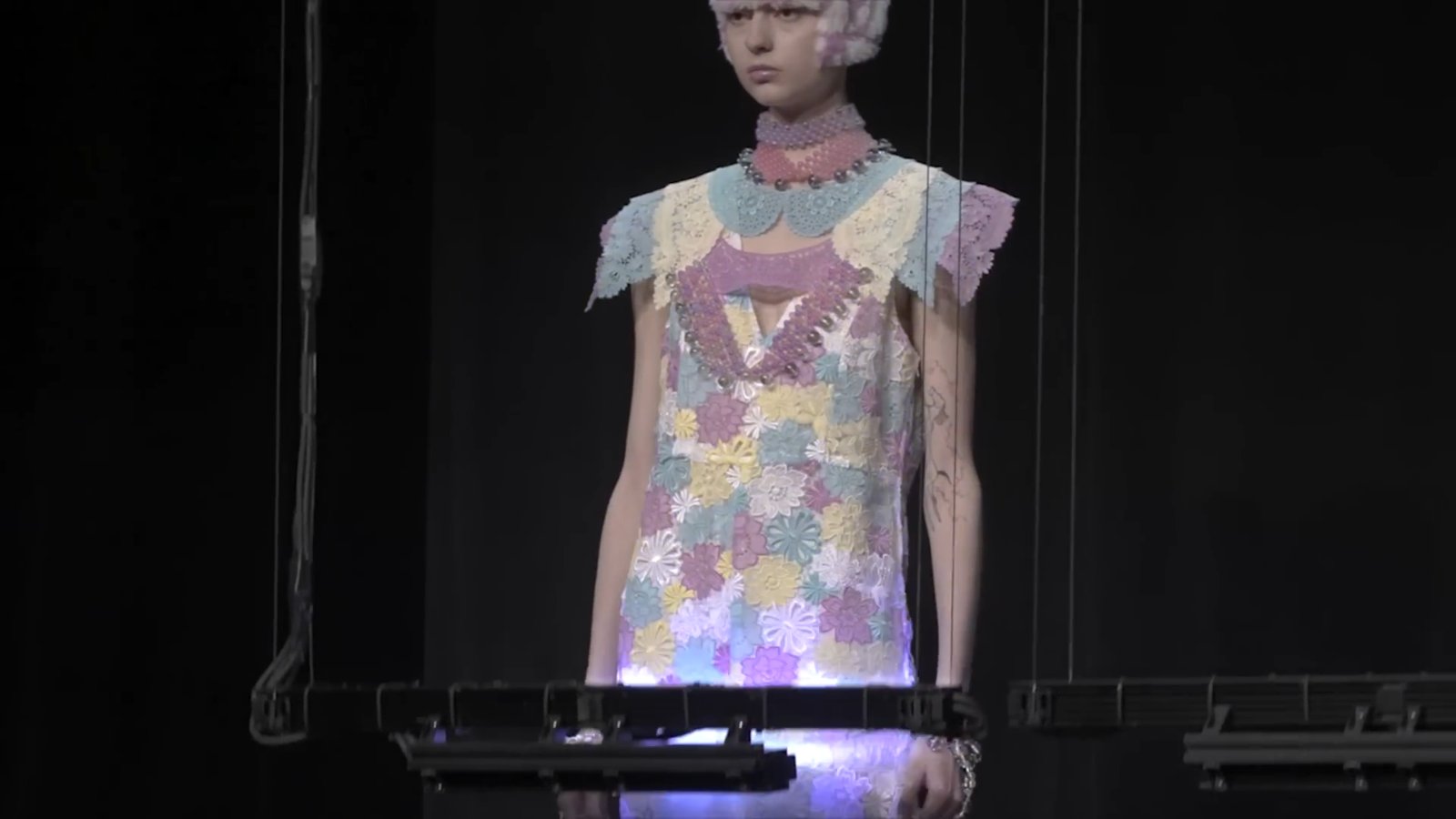
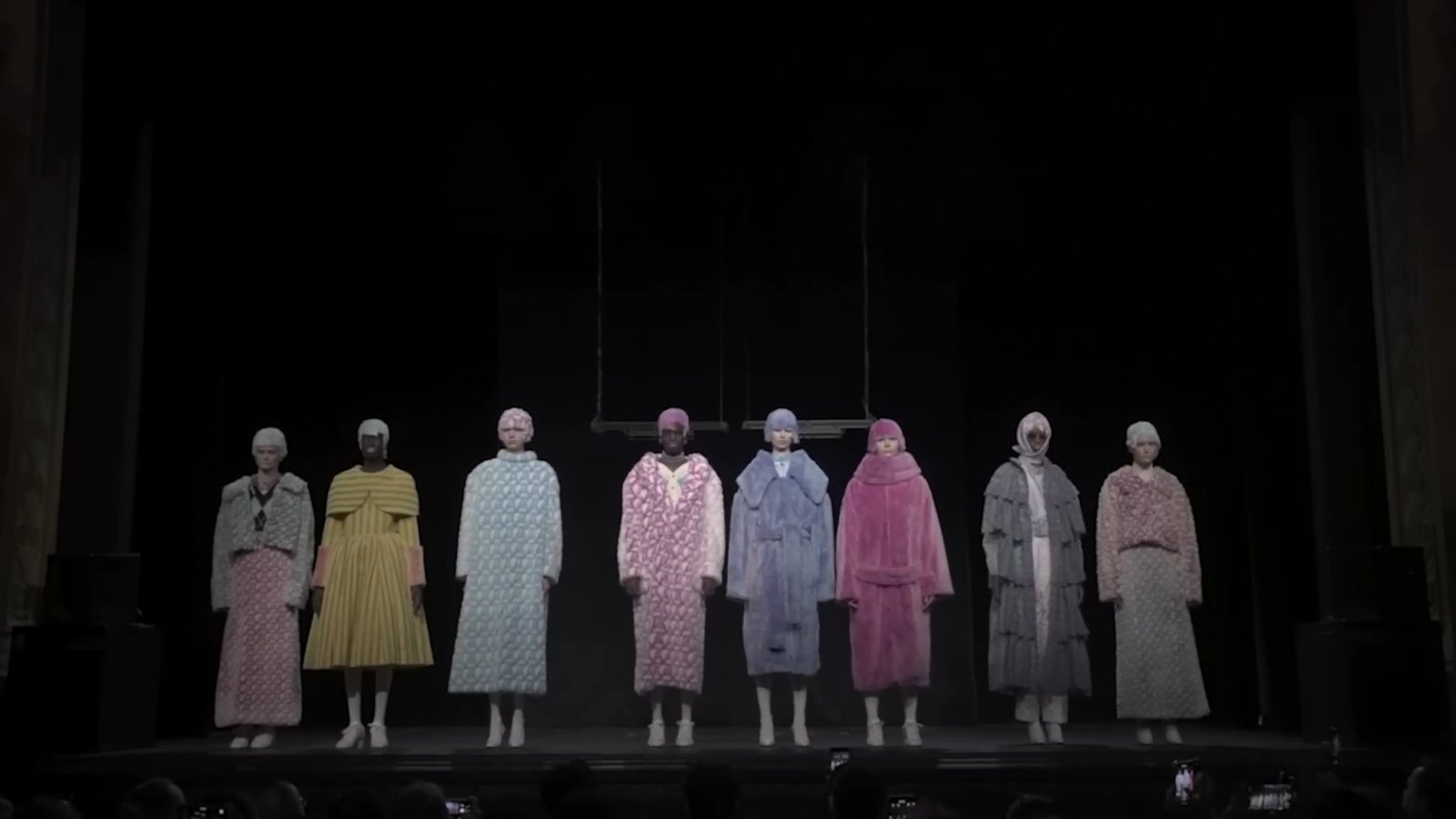
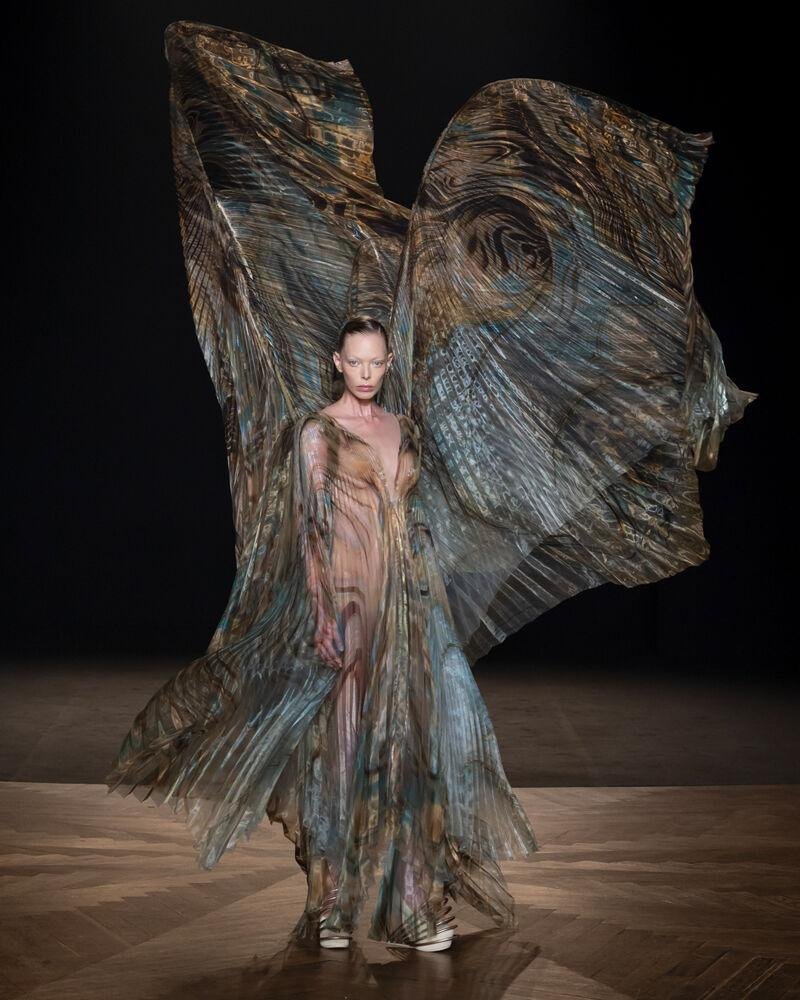
Kunihiko Morinaga founded Anrealage in 2003, the year he graduated from Waseda University’s Faculty of Social Sciences in Japan (Anrealage) [1]. The name combines “A REAL,” for everyday life, “UN REAL,” for the extraordinary, and “AGE,” for an era (Japan Fashion and Lifestyle Foundation, Google Arts & Culture) [2]. The show’s description on the ANREALAGE channel frames the collection, titled “=,” as “Two equal worlds. Two different worlds,” and ends with “Wear equal. But not equal.” Anna Battista of Irenebrination linked it to Umwelt, a concept from the biologist Jakob Johann von Uexküll: the same garment would look different in the sun of Rome, the light of London or Tokyo, or under artificial light. She quoted Morinaga’s notes saying “we are indeed all one race,” but that people “see the world differently.” She described his “front/front” and “back/back” constructions with two sets of lapels, 1950s-style boxy suits and dresses, and UV tubes scanning each model from head to toe while Ravel’s “Boléro” built to a crescendo [3]. When Culted posted the show on TikTok, it passed 500,000 views, and one commenter said it felt like jumping into the future (Juliette Eleuterio, Culted) [4].
I don’t have any deep, melodramatic insights today; this show is just cool as hell. It’s what I imagined clothes would be like in the future when I was a kid. The idea was that people would buy blanks, stand in front of a special mirror, and project designs onto their clothes. I imagined an app or website where you’d buy designs from specific brands, which would give you access to print them onto your clothes. But what does counterfeit fashion look like then? Fake access codes? Fake UV light rigs? Would every brand sell its own blanks that only work with its own lights and designs? Would the clothes look different in the sun and realer in the dark? It’s interesting to think about how much technology has changed and shaped our relationship to fashion, and it’s cool to see that kind of idea come to life and be explored a little. This is one of the rare shows where I’m really interested in the technical side of how it was done.
The collection used Anrealage’s own photochromic materials, which change color when exposed to sunlight and UV light, made into faux fur, velvet, lace, knits, jacquard, and satin. Models walked out in pairs in what looked like an all-white collection. When the fourth pair came out, two light strips lowered from the ceiling, and a beam of UV light swept up and down their bodies to reveal the colors. Once the UV light was gone, the garments faded back to white in about three minutes. “As the intensity of natural sunlight is ever-changing, the colors are constantly shifting,” the brand said (James Parkes, Dezeen) [5]. Photochromic dyes, such as the spironaphthoxazines and naphthopyrans used in eyeglass lenses that darken in the sun, work by changing shape. UV light breaks a bond in the molecule, which rotates and re-forms, so the molecule goes from folded to flat. In its flat form, it absorbs visible light, which is what makes the color appear. When the UV light is removed, the bond re-forms, the molecule folds back, and the color fades. This happens faster in the cold (Penn State Materials Research Science and Engineering Center) [6]. The stronger the UV light, the darker the color, so the same piece looks different in the sun and in the shade (Irene Dong, Inside Retail Asia) [7]. Battista traced the idea back to Alexander Wang’s Autumn/Winter 2014 photochromic designs and to Cinzia Ruggeri, whose Spring/Summer 1982 skirt suit used liquid crystal prints that shifted color [3]. Morinaga has been working with light-reactive clothing since his first Paris show in 2014, when he stood two models in white back to back under a light. “Ten years ago, the material that changed color in light could only be made with a cotton-like hand,” he said in 2026. For Spring/Summer 2027, he went further with “SKIN,” a collection built from scale-shaped pixels of electronic paper about 30 millimeters across, with roughly 1,000 to 2,000 on each garment, which change color one by one (Cait Monahan, Hypebae) [8]. Futurama!
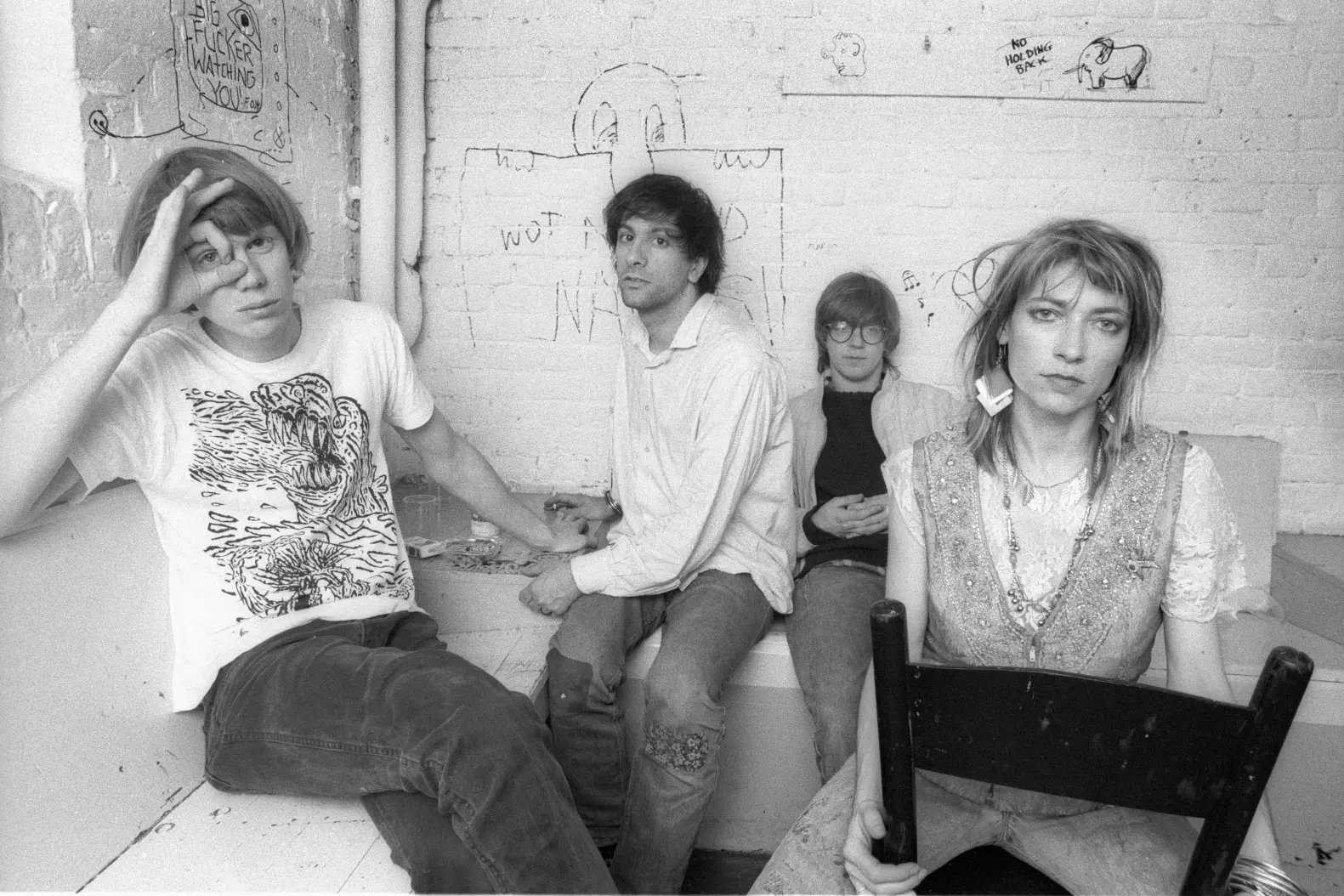
Answer: X-Girl
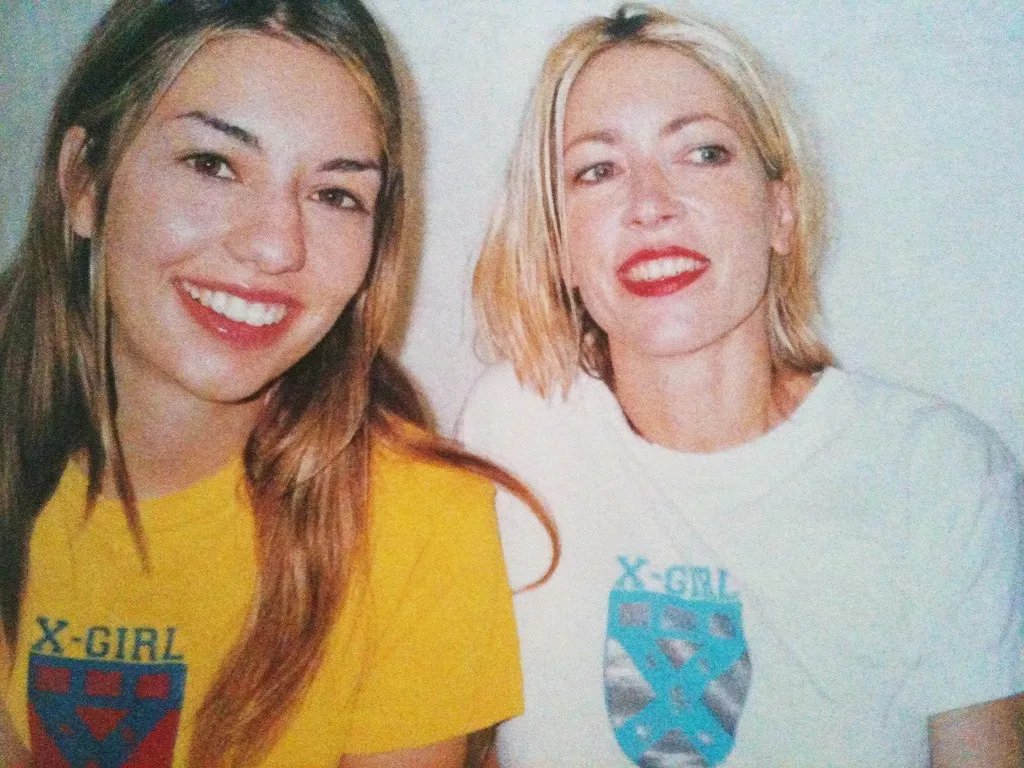
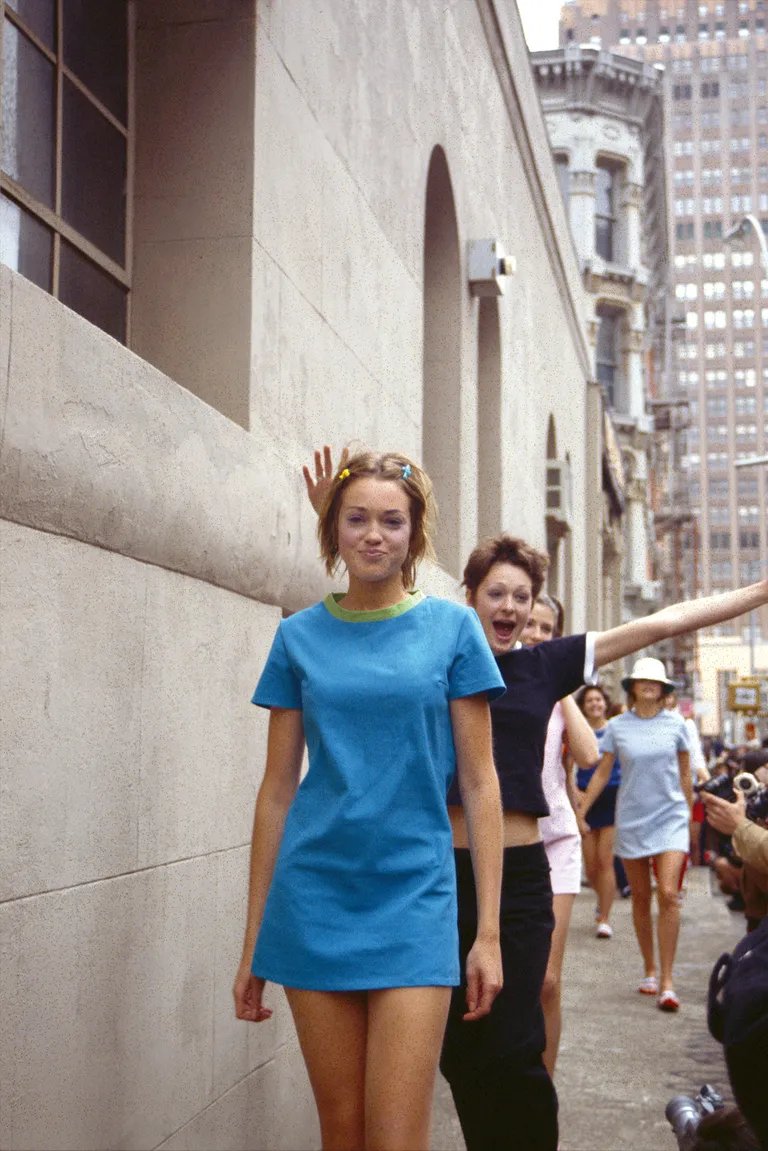
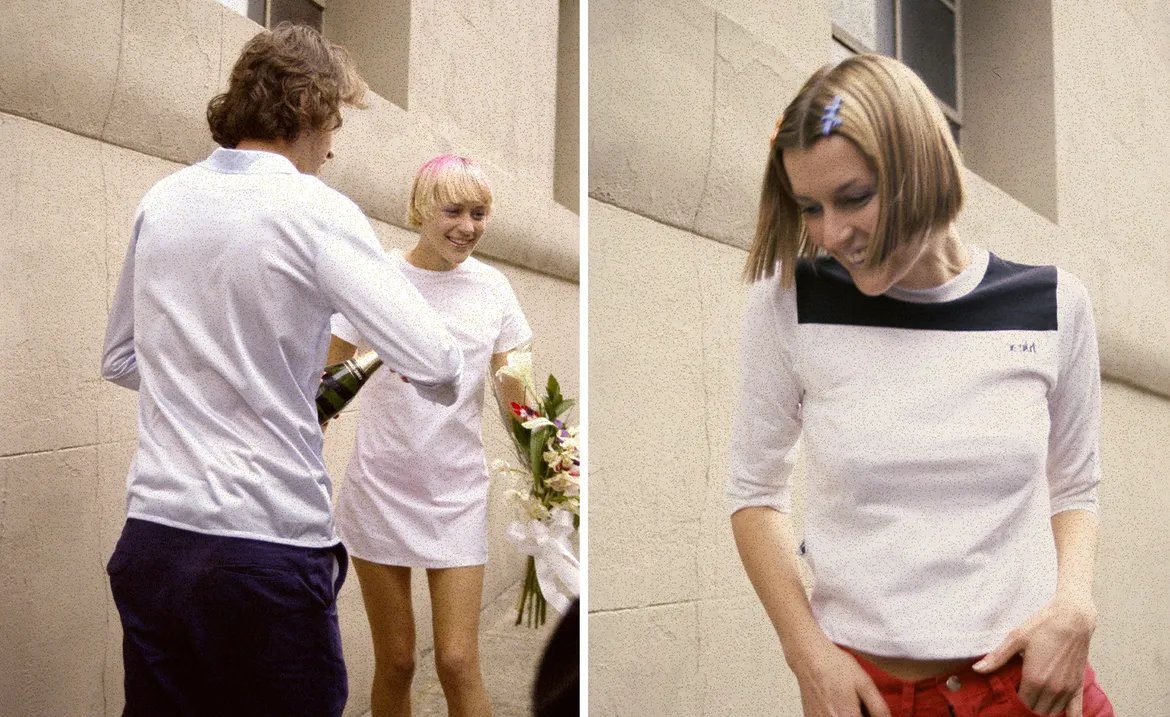
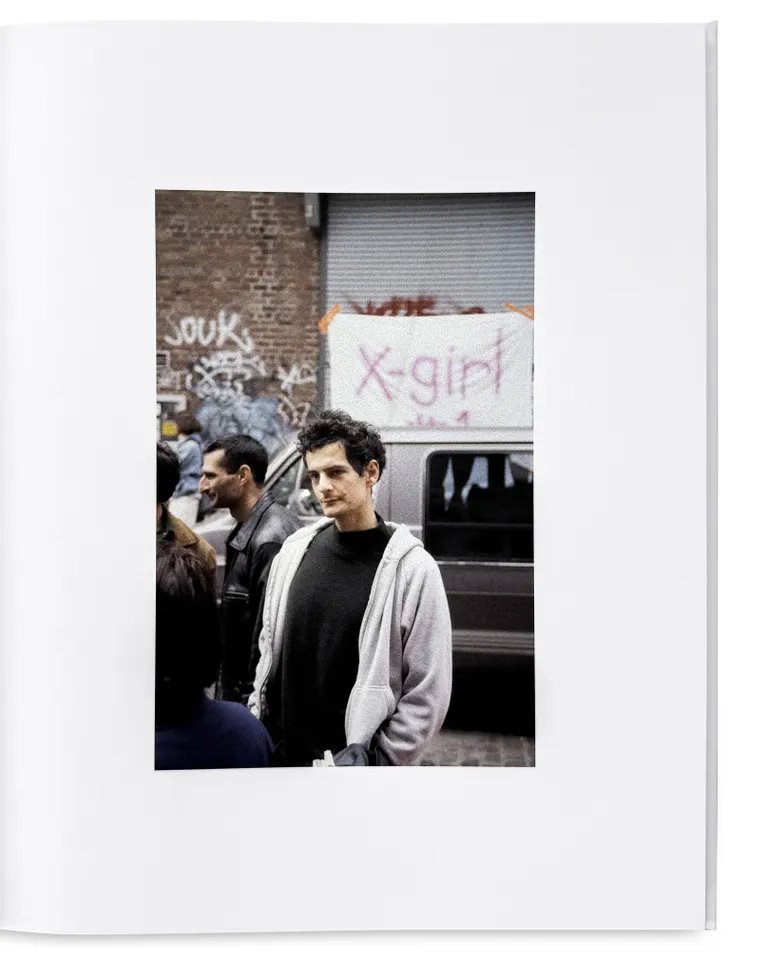
Sonic Youth bassist Kim Gordon and stylist Daisy von Furth founded X-Girl in 1993 as a companion to the boys-only streetwear brand X-Large. Filmmaker Mike Mills designed the graphics, and the brand started in Los Angeles before opening a New York store on Lafayette Street. “The store was so Helvetica,” von Furth said, and Gordon and von Furth’s lookbook declared, “X-Girls = women curves up and down.” The label’s first runway outing was a guerrilla fashion show on a sidewalk in SoHo, held a few days after Kurt Cobain’s death. In her memoir Girl in a Band, Gordon wrote that “X-Girl gave me far more notoriety than Sonic Youth ever did.” The company closed its shop and sold the brand to a Japanese company in 1998 (Claire Marie Healy, Dazed) [1]. The 1994 show took place on a cold spring morning during New York Fashion Week. Gordon and von Furth timed it so that the crowd leaving Marc Jacobs’s show would walk into it. Sofia Coppola and Spike Jonze ran the production, and the models were artists from Gordon’s circle, including Pumpkin Wentzel, Luisa Reichenheim and Chloë Sevigny. Kyle MacLachlan, Linda Evangelista, the Beastie Boys and Francis Ford Coppola were among the crowd (Orla Brennan, AnOther) [2]. The show had 20 looks, and its sign was a spray-painted bedsheet reportedly stolen from the Paramount Hotel. Steven Meisel and Bill Cunningham came too. Sevigny wore a white mini-dress with a pink-tinged bob and carried a bouquet wrapped in ribbon. In 2025, photographer Angela Hill published X-girl Show, a book of her photos of the day, in a limited edition of 500 copies from IDEA Books (Zoe Whitfield, Wallpaper) [3]. She had found the negatives at the bottom of a box at the end of 2024, about 30 years after she took them, and Sevigny wrote the introduction: “We did it without permits or permission, we broke the ‘fashion’ rules, a few city rules too” [2].
Answer: The Crow
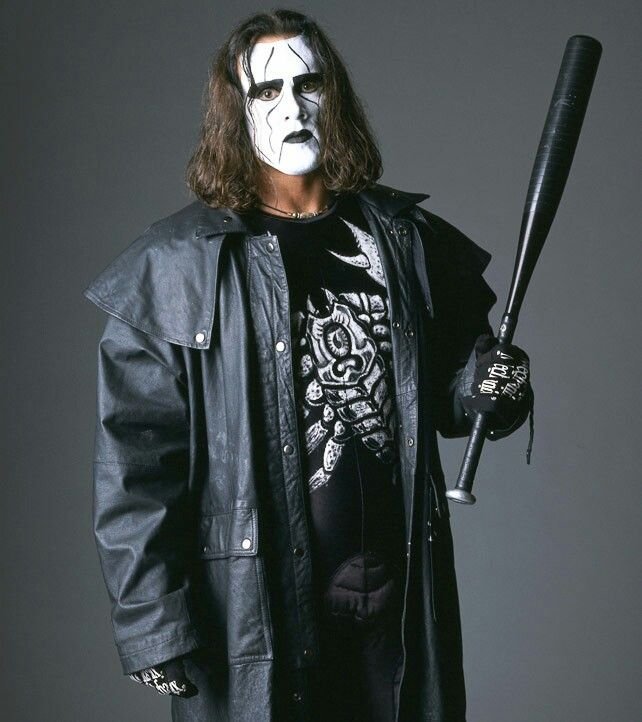
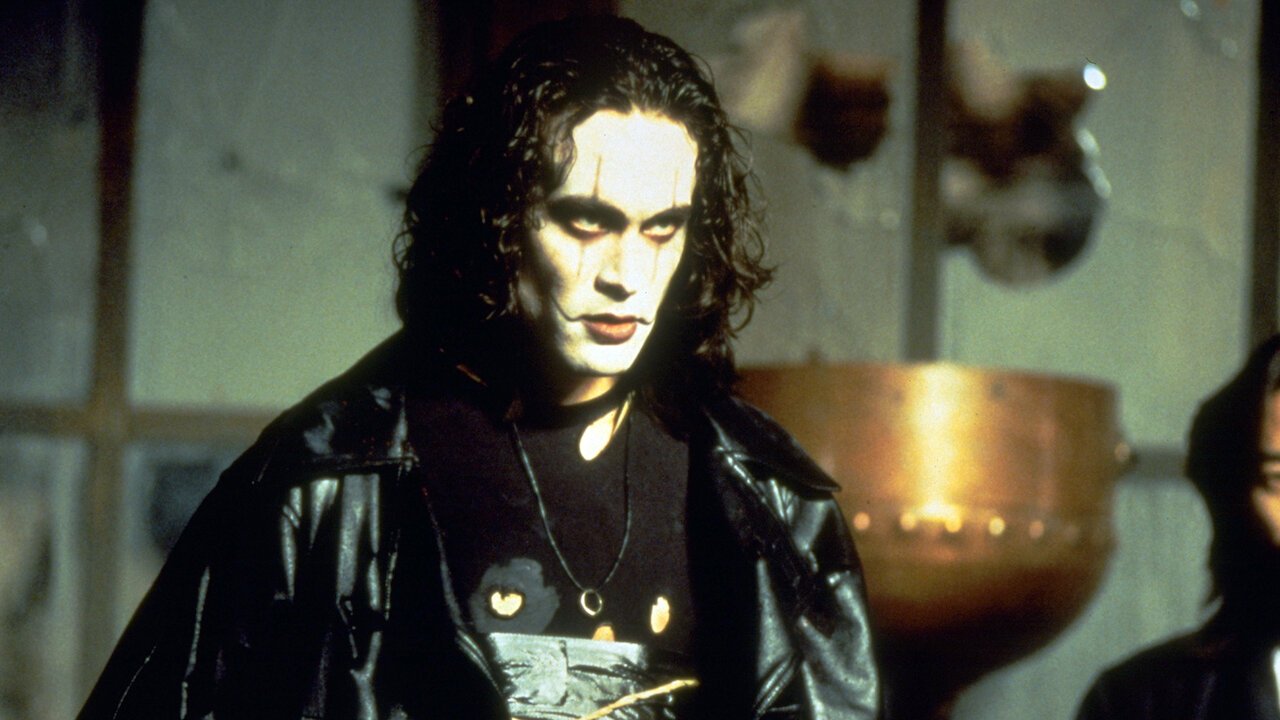
From the late 1980s until 1996, Sting wrestled under his “Surfer Sting” gimmick. With bleached-blond hair and bright tights, he resembled the sun-kissed surfers of Southern California where he grew up. In the summer of 1996, Scott Hall and Kevin Nash arrived in WCW from WWE, and when Hulk Hogan introduced the New World Order at Bash at the Beach, Sting became the group’s biggest threat. Crowds had turned on Hogan, and Sting felt he needed to change too. He let his hair grow long and dark, and on Scott Hall’s advice he modeled his new look on Eric Draven, the hero of The Crow (Daisy Ruth, Wrestling Inc) [1]. Brandon Lee, who played Draven, died after being shot with a misloaded prop gun while making the film, which came out in 1994 (Britannica) [2]. In the storyline, the nWo sent out an imposter Sting, and the real Sting declared himself a free agent on September 16, 1996. He reappeared on Nitro on October 21, 1996, dressed in black with a leather trench coat and Crow-inspired face paint. His last words that night, “The real Sting may or may not be in your price range,” were the last he spoke on TV for more than a year. He was first seen watching from the rafters on October 28, carried a black baseball bat by November 18, and rappelled down to the ring for the first time on January 20, 1997 (Chris Toplack, The Signature Spot) [3]. Eric Bischoff later said Hall pitched the idea, and Hall’s advice to Sting was, “I’m not saying to rip off Taker, but rip off Taker” (SEScoops) [4]. Sting has said Bischoff told him his merchandise made up 52 percent of WCW’s merchandise sales during that period (Cameron Hawkins, The Ringer) [5]. At Starrcade on December 28, 1997, he made Hollywood Hogan submit to the Scorpion Death Lock and won the WCW World Heavyweight Championship [3]. He kept the Crow look when he joined TNA in 2003 and later developed it into “Joker” Sting [5].
If you want to know why Sting likely didn't go to the WWE until way later in his career, check out the Deadlock PW clip in the sources section :)
Answer: High sewing
“Haute couture” is French for “high sewing,” and its first known use in English dates to 1908 (Merriam-Webster) [1]. A couture house is traditionally split into two workrooms: the 'flou', for dressmaking, and the 'tailleur', for tailoring (Richard Martin and Harold Koda, The Metropolitan Museum of Art) [2]. Charles Frederick Worth opened what is considered the first true couture house in 1858, at 7 rue de la Paix in Paris. The trade body now called the Fédération de la Haute Couture et de la Mode traces its roots to 1868, when the Chambre Syndicale de la Couture, des Confectionneurs et des Tailleurs pour Dame was founded. Couture collections are shown twice a year, in January and July (Fédération de la Haute Couture et de la Mode) [3]. In France, 'haute couture' is a legally protected label, not just another way of saying 'high fashion.' On January 23, 1945, a committee under the Ministry of Industry separated couture houses from mass-market producers. An order on April 6, 1945, set the rules: garments made entirely in-house to each client’s exact measurements, with multiple fittings, and two collections a year in Paris, each with at least 25 original looks. Only houses approved by a commission under the ministry, on a list updated every year, can use the title. In 1946 there were 106 accredited houses, in 1967 there were 19, and in 2020 there were 16. Couture’s regular clientele fell from an estimated 20,000 in 1943 to about 200 by 1990 (Louis Gilbert, Library of Congress) [4]. Fancy!
Kangol 504 Hat