
November 9, 2026
The issue of November 9, 2026
Every question from this issue, with the answers, the hints and the reading behind them.
Play the November 9, 2026 issue
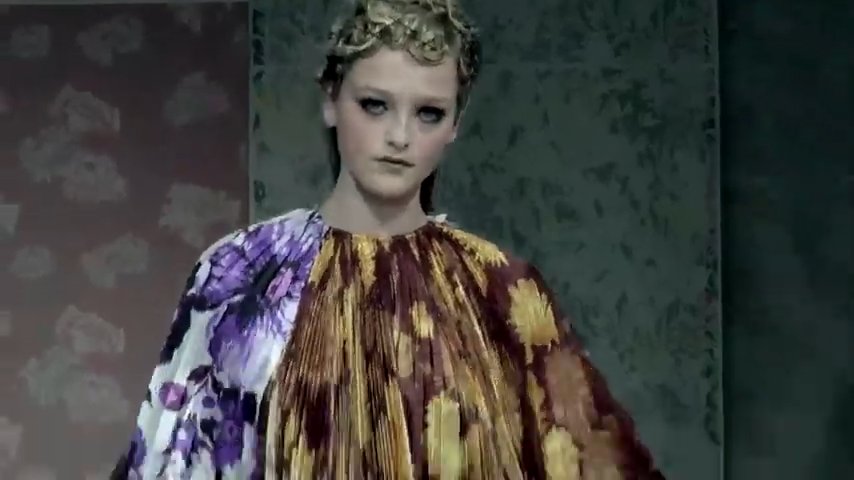
House: Richard Quinn · Designer: Richard Quinn · Season: Autumn/Winter 2018
On February 20, 2018, Queen Elizabeth II presented Richard Quinn with the first Queen Elizabeth II Award for British Design. The award was created to recognize fashion’s role in society and diplomacy, and each year it goes to an emerging British designer who adds value to the community or has strong sustainable policies. Quinn qualified partly through his open-access print studio in Peckham, which offers affordable printing to students and emerging designers and sampling to houses like Burberry and JW Anderson. The trophy itself was designed by Angela Kelly, the Queen’s dresser, and inspired by the Queen Elizabeth rose (Danielle Wightman-Stone, FashionUnited) [1]. The Queen, 91, wore a duck-egg blue suit and sat on a cushioned Lucite chair between Anna Wintour, Caroline Rush of the British Fashion Council, and Kelly. Quinn said he’d “add a few Queeny touches,” meaning the headscarves and extra florals of what he called the Balmoral segment, and he expanded the collection from about 20 looks to 30 (Morwenna Ferrier, The Guardian) [2]. At the last minute, he added more silk headscarves than he’d planned, a nod to the ones the Queen wore. Within 24 hours, his Instagram following grew from 18,000 to 50,000. “The scale of my label just blew up,” he said (Kati Chitrakorn, The Business of Fashion) [3].
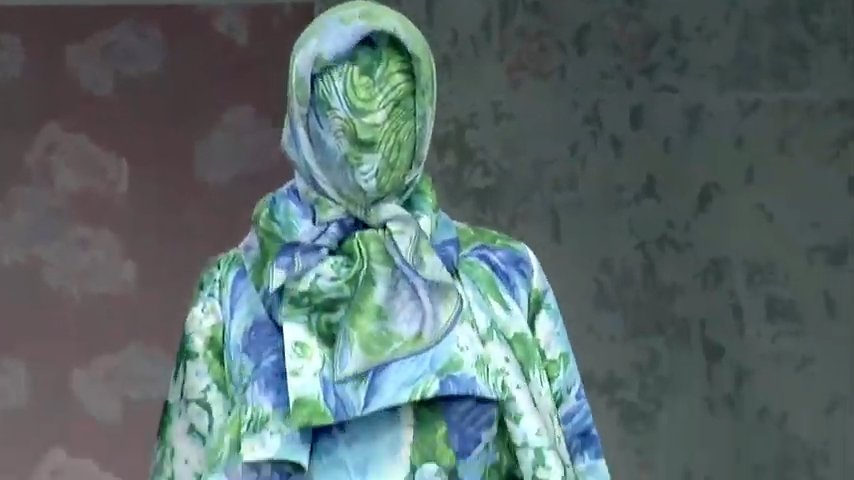
For me, the show looks like a series of royal portraits: every look is posed, wrapped, and framed in print, with a scarf over the hair the way the Queen wore hers at Balmoral. The faces covered in fabric reminded me of René Magritte’s 'The Lovers' (1928), where two figures kiss with their heads wrapped in cloth. Here the covering is floral and pretty instead of unsettling, which gives the whole show a dreamy feeling, like those dreams that use the likeness of people you've known or seen and turn them into these indiscriminate NPCs that you share this world with. There's a familiarity and a distance in that. Like only seeing your monarch from afar, or through a screen, or on your money as you spend it. They are a constant symbol hanging above you, what that symbol means...idk ask the British. I also briefly thought of the Romanovs before they were shot for some reason. Like if their ghosts were still in the cellar, this is what the spirits would wear.
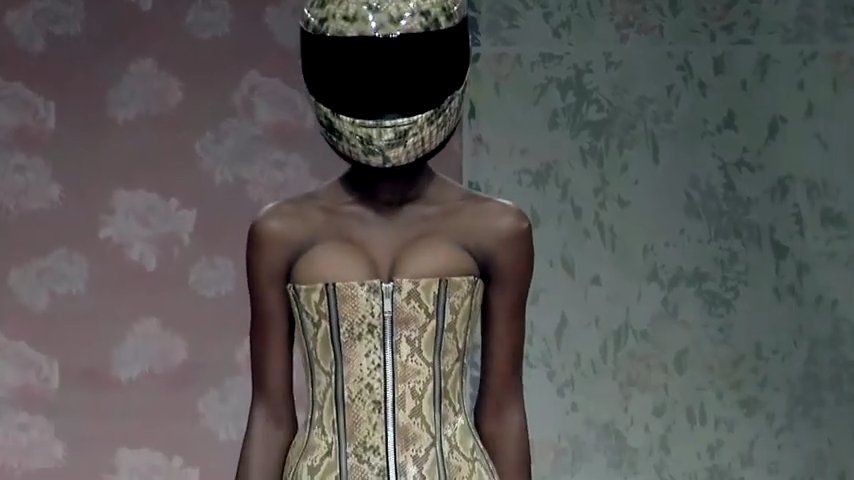
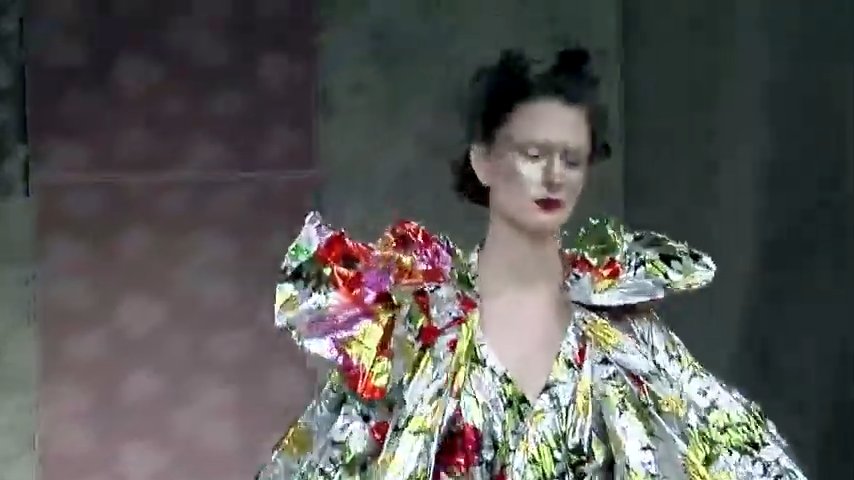
Critics noticed the faces too. Anna Battista of Irenebrination called the models “faceless,” with “quite a few of them wearing scarves as a tribute to the Queen’s Balmoral attire.” She traced the covered faces and floral boots to Maison Margiela, the foil capes to Alexander McQueen’s billowing black cape and Balenciaga’s 1950s bubble dress, and one floral look to Balenciaga’s baby-doll dress. She also pointed out a snake print body-con dress worn with a motorcycle helmet and elbow-length PVC gloves [4]. Jess Wood of Marie Claire UK described his “particular penchant for covering models’ faces in matching fabrics” as “eerie, but fabulous” [5]. Georgina Evans of SHOWstudio picked out the “Balmoral-ready headscarves,” long floral gloves that merge into polo necks, and metallic foil coats and ball gowns in acid yellow, bright blue and hot pink [6]. The covered faces go back to Quinn’s MA collection, which paired acid florals with gimp masks and drew comparisons to Leigh Bowery (Christopher Barnard, Paper) [7]. The show closed to Sufjan Stevens’s “Visions of Gideon,” from Call Me by Your Name [4]. Let them eat bangers and mash!
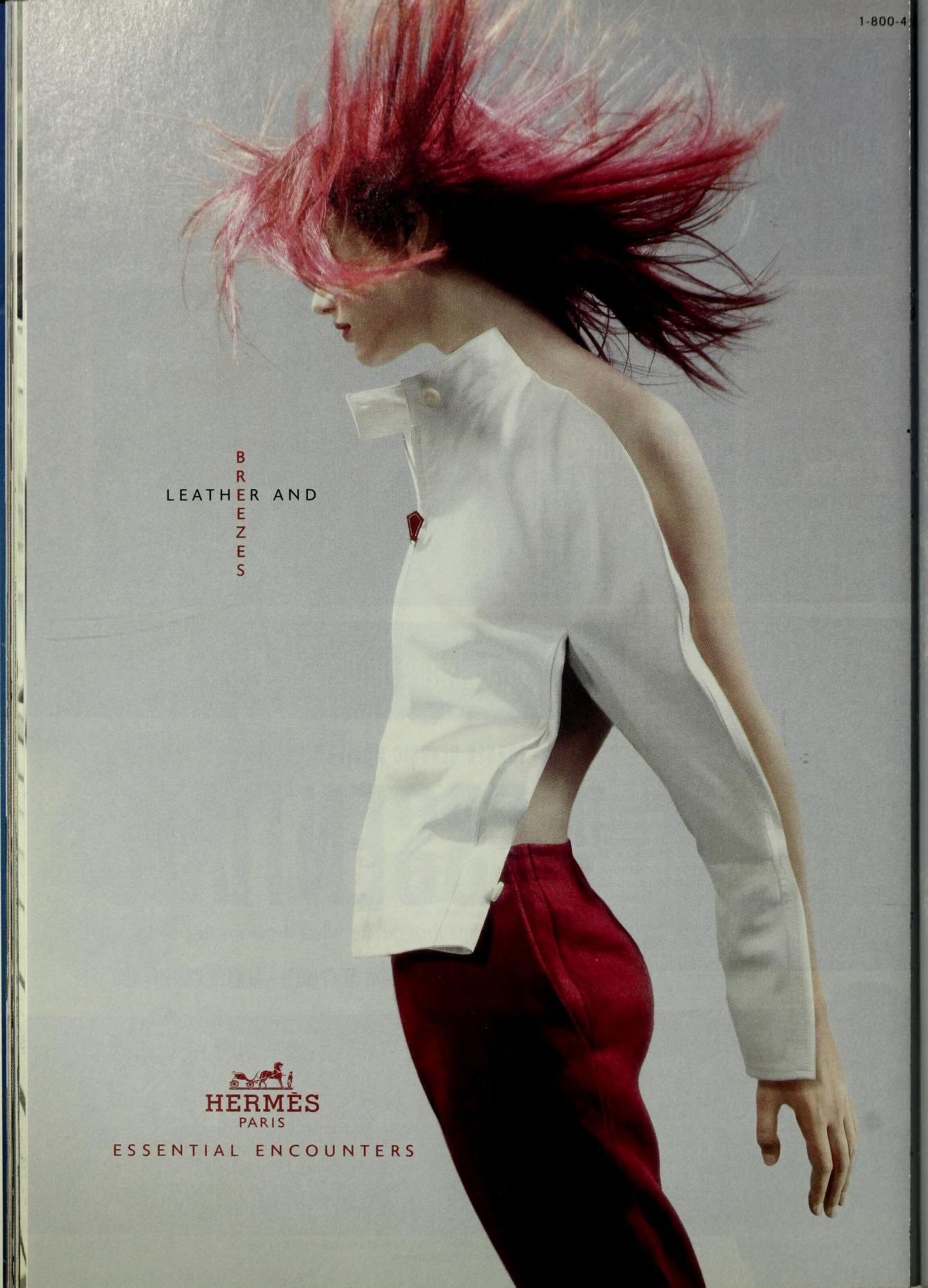
Answer: Martin Margiela
Hermès named Martin Margiela creative director of womenswear in April 1997. “They were having fantasies of Martin cutting the Kelly in two,” curator Kaat Debo said of the early speculation (Emma Hope Allwood, Dazed) [1]. Jean-Louis Dumas made the hire on the suggestion of his daughter Sandrine, who had modeled for Margiela (Maria Stanchieri, nss magazine) [2]. His first collection, for Autumn/Winter 1998, was inspired by 1920s sports and leisure clothing. Instead of avant-garde concepts, he aimed for a timeless ensemble built on menswear staples like the trench coat, blouson and white shirt, with many pieces wearable two, three or four ways [1]. His Hermès pieces included the deep V-neck vareuse and the losange scarf, and he avoided logos by sewing six-hole buttons in the shape of a small H. He showed at the historic Hermès boutique at 24 Faubourg Saint-Honoré, set to Erik Satie’s Gymnopédies [2], and cast women “of all ages, from 25 to even 65” [3]. One of his first successes was the Double Tour watch strap, introduced in 1998, which wraps twice around the wrist and became a signature Hermès offering (Marc Bain, Quartz) [4].
The ad in this question is from Hermès’s Spring 2001 campaign, photographed by John Clang with model Zoe Hawkins (shrubrub, Style Registry) [5].
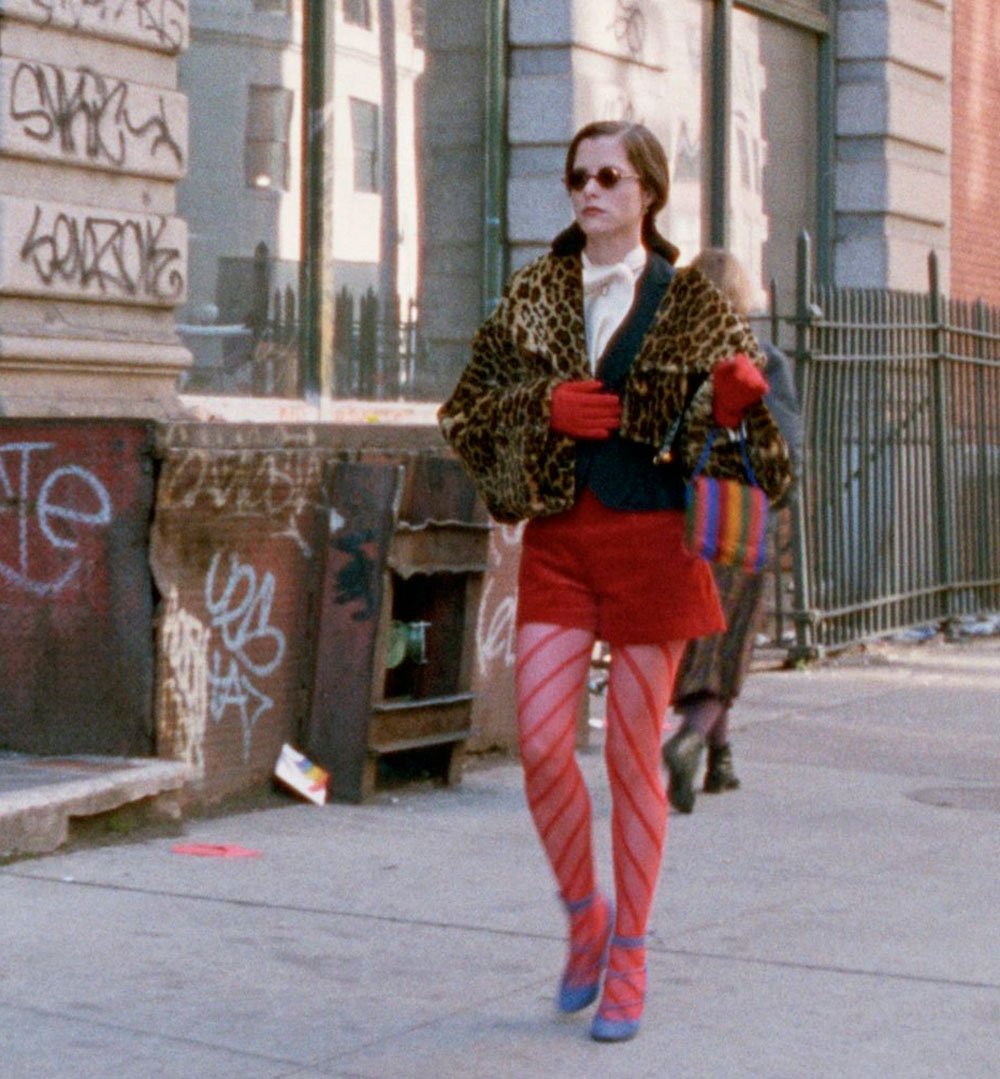
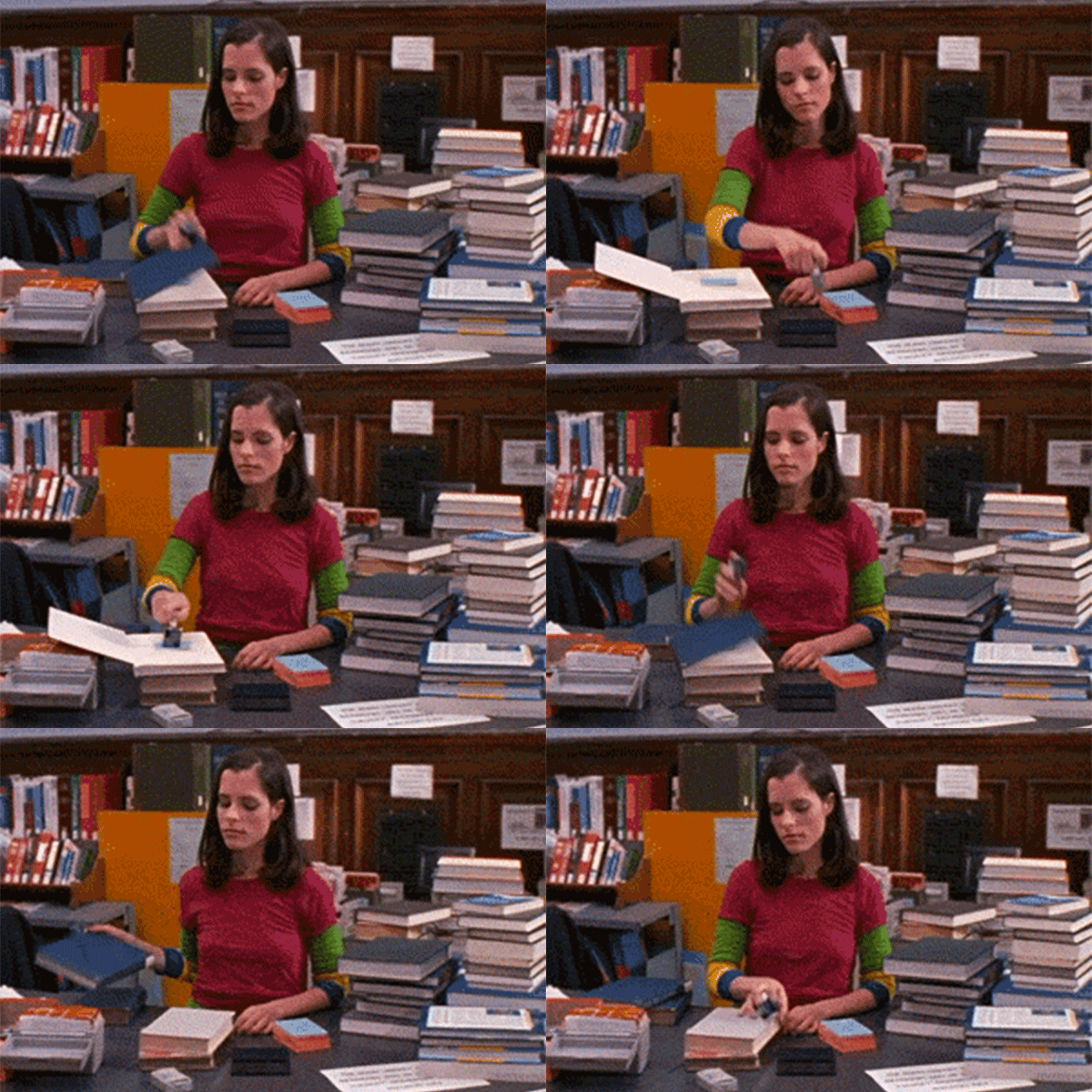
Answer: Librarian
In Party Girl (classic), directed by Daisy von Scherler Mayer, Parker Posey plays Mary, a fashionable young lady who is trying to figure out what to do with her life in NYC. When she's caught charging admission to one of her parties (Academy of Motion Picture Arts and Sciences) [1], her godmother Judy bails her out, and, out of spite, Mary takes a job as a library clerk (David Kobe, Byline) [2]. She finds the job boring at first, but she becomes absorbed in the Dewey Decimal System and the structure that comes with it and decides that becoming a librarian is her calling [1]. She starts organizing her apartment and her roommate’s records by Dewey and plans to earn a master’s degree in library science. Her wardrobe follows the same arc. It starts with downtown maximalism, like cerulean heels, candy-stripe tights and a leopard-print coat, plus a red Vivienne Westwood corset on the night of her arrest. Later it moves to striped tees, cropped blazers over lavender shirts and, in the finale, a black pantsuit with a gold brooch [2]. Working with costume designer Michael Clancy, Posey mixed Chanel, Comme des Garçons and Todd Oldham with thrift-store finds on a film made for $150,000. Vogue’s Hamish Bowles lent a Chanel couture jacket, and Oldham, an old friend of Clancy’s, lent his designs directly (Kyle Munzenrieder, W) [3]. Posey reportedly said the role was hers because she had “80 pairs of shoes.” On June 3, 1995, Party Girl became the first feature film to premiere online. While it screened at the Egyptian theater for the Seattle International Film Festival, it was also streamed through the video-conferencing program CU-SeeMe from the offices of Point of Presence Company in Seattle, and Posey introduced the stream (Soraya Roberts, Defector) [4]. The stream was black and white, at 320x240 resolution and only a few frames per second, and several hundred people watched it worldwide (René Meyer, heise) [5].
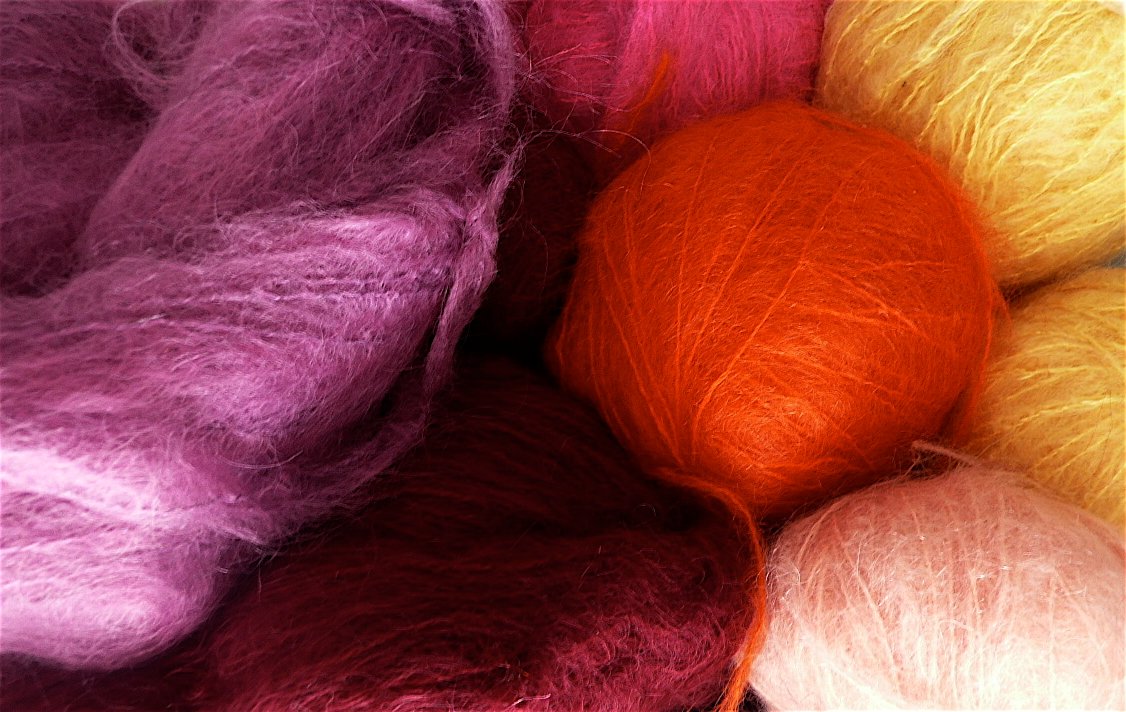
Answer: False
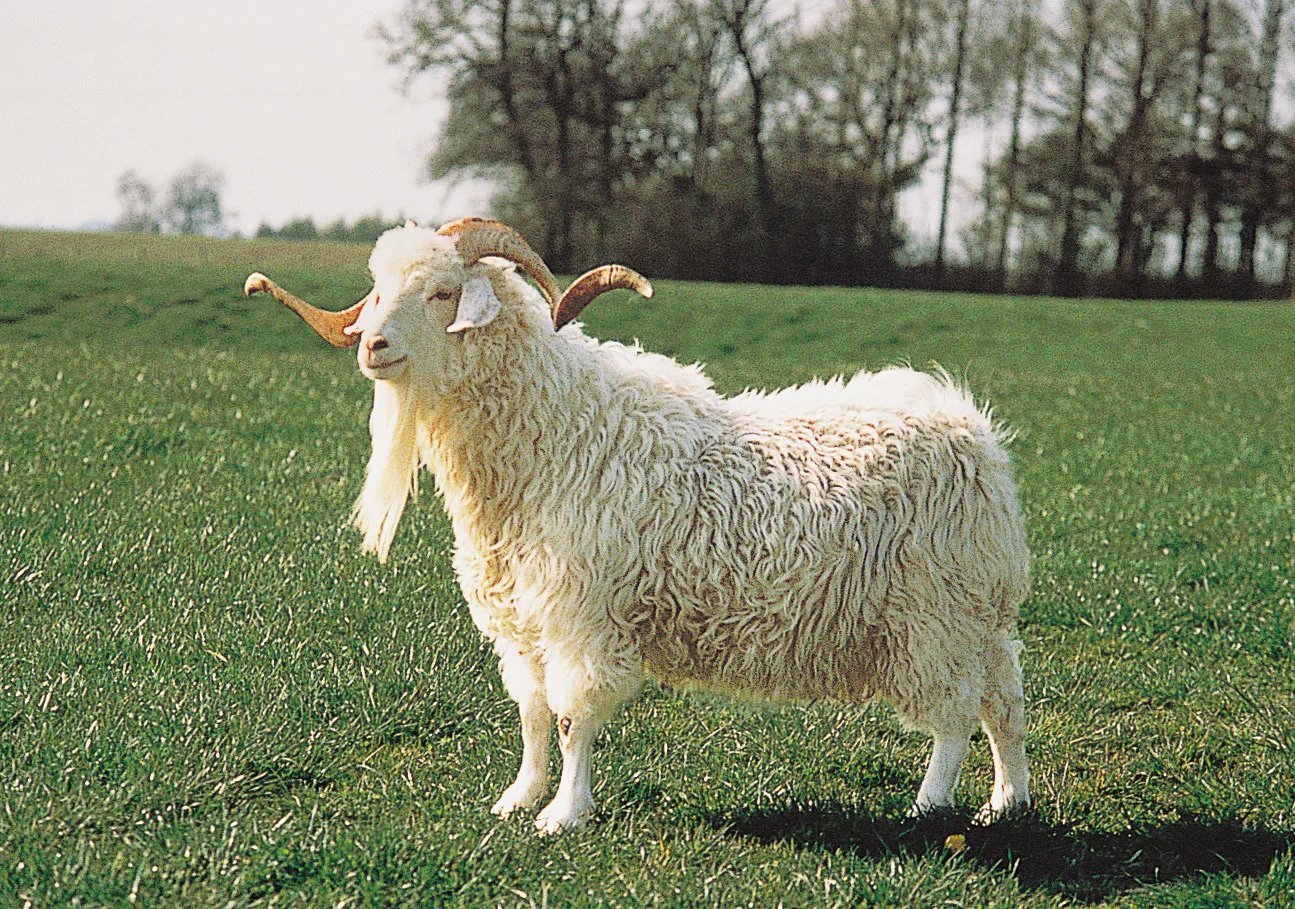
Mohair is the fleece of the Angora goat (Mohair South Africa) [1]. The Angora rabbit produces a different fiber, that inherits its name, angora, and the shared name is why the two get confused. “Mohair” comes from the Arabic mukhayyar, a cloth made of goat’s hair. The Angora goat is thought to have originated in Tibet, and Turkey was the center of mohair textile production until the goats were introduced to southern Africa and the United States in the 19th century. In Turkey, Angora goats are sheared twice a year and yield about 7 to 11 pounds of mohair each. The fiber starts at about 23 microns thick at the first shearing and grows to 38 microns in older animals. Like wool, it has scales, but they’re thinner, which makes mohair smooth with a natural sheen. World production is about 5,500 tons a year, down from about 27,500 tons in the 1990s, when it ranked second only to wool (Discover Natural Fibres Initiative) [2]. South Africa is the largest producer, with about 51 percent of the world’s mohair, and most of its Angora goats are farmed in the Karoo region of the Eastern Cape. Mohair also takes dye well, “retaining even the most brilliant colours over time” [1]. Angora, the rabbit fiber, comes mostly from China, which produces 90 percent of the world’s supply, according to PETA. In November 2013, PETA footage of workers on Chinese farms pulling fur from live rabbits led H&M to halt production of angora products (AFP via The Local) [3]. More than 300 fashion companies dropped angora after that investigation. In May 2018, PETA Asia released footage from 12 goat farms and a slaughterhouse in South Africa, and H&M, Inditex, Gap Inc. and Arcadia Group (Topshop’s owner) pledged to stop using mohair. It wasn’t clear whether any of those brands had bought mohair from the farms shown in the footage (Vivian Hendriksz, FashionUnited) [4]. The GOAT!

Kobe 9 Low - Bruce Lee