November 6, 2026
The issue of November 6, 2026
Every question from this issue, with the answers, the hints and the reading behind them.
Play the November 6, 2026 issue
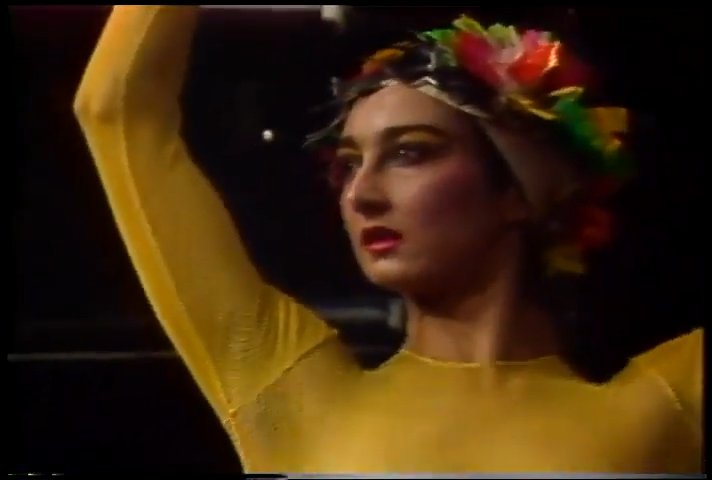
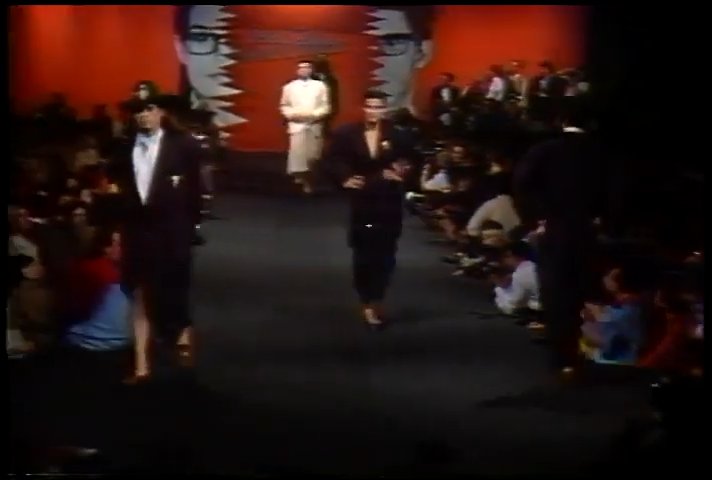
House: Jean Paul Gaultier · Designer: Jean Paul Gaultier · Season: Spring/Summer 1985 - Une Garde-Robe pour Deux
Jean Paul Gaultier’s Spring/Summer 1985 ready-to-wear collection, “A Wardrobe for Two,” is where he introduced his ideas for androgynous clothing [1]. One piece from it, a black and white gingham jumpsuit with suspenders, was later sold at Artcurial under the collection’s French name, “Une Garde-Robe pour Deux” [2]. His menswear that season, “Et Dieu créa l’homme” (“And God Created Man”), put men in trousers with a skirt-like wrap attached, based on the aprons of Parisian bistro waiters. “Wearing a skirt doesn’t mean you’re not masculine,” Gaultier said. Selma Weiser, owner of the New York boutique Charivari, called the skirts “revolting,” but customers disagreed, and he sold 3,000 men’s skirts that season (Charlie Porter, nss magazine) [3]. He told the New York Times that “men and women can wear the same clothes and still be men and women” (Catawiki) [4].
This show is about societal norms, and agency, and how we can handle, and subvert, and confront and contort the suggestions the world presents us with. Today most people understand that gender roles are social constructs, so there’s no need to belabor the point. But this show came out in the mid-’80s, when things were a lot more conservative, and putting men and women in the same clothes was a real statement. Those norms were constructed for a reason. They were meant to make life easier, or more so, to make the uncomfortable parts of our being easier to accept, easier to recite. But they didn’t and don’t allow for the best stories.
Gaultier’s own house describes the skirts as “challenging masculinity and questioning clothing stereotypes” (Jayne Mountford, FashionUnited) [5]. In an interview on French television in October 1985, he said he wasn’t trying to shock anyone; he had designed skirts for men because some men wanted them [6].
Many of the looks are mirrored between the male and female models, a wardrobe built for two. Instead of dressing men and women as opposites, he dresses them as partners. It suggests that men and women can have a symbiotic relationship, one that doesn’t need to be adversarial or in opposition, but can be a gestalt relationship of equals, where two poles can use their gravity to keep the world together.
Clothes are how we present our values, our worth and the respect we feel we’re owed, or feel we must beg for. When we share a wardrobe, we can also share those things, and learn from each other how to be ourselves. That only happens if we let ourselves be unshackled from the overbearing conservatism of the times. This liberation comes with its own pitfalls, and not everyone can catch themselves before the pavement does, but whatever comes from it, we have to support each other and find the best pathways to freedom for everyone. Woke 3.0!
Answer: Prada
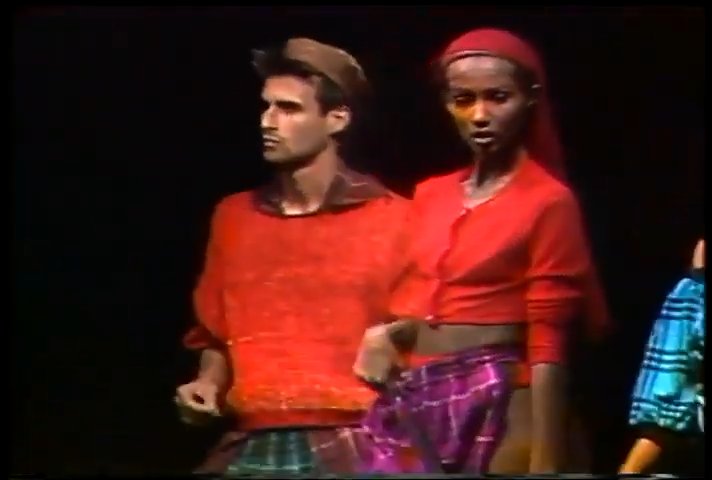
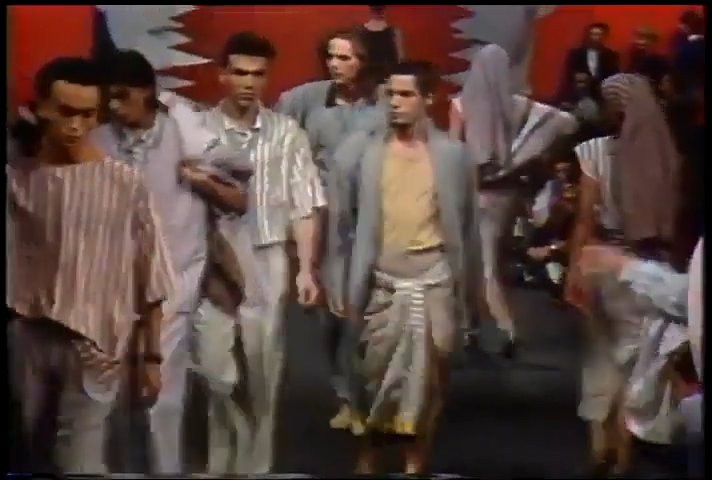
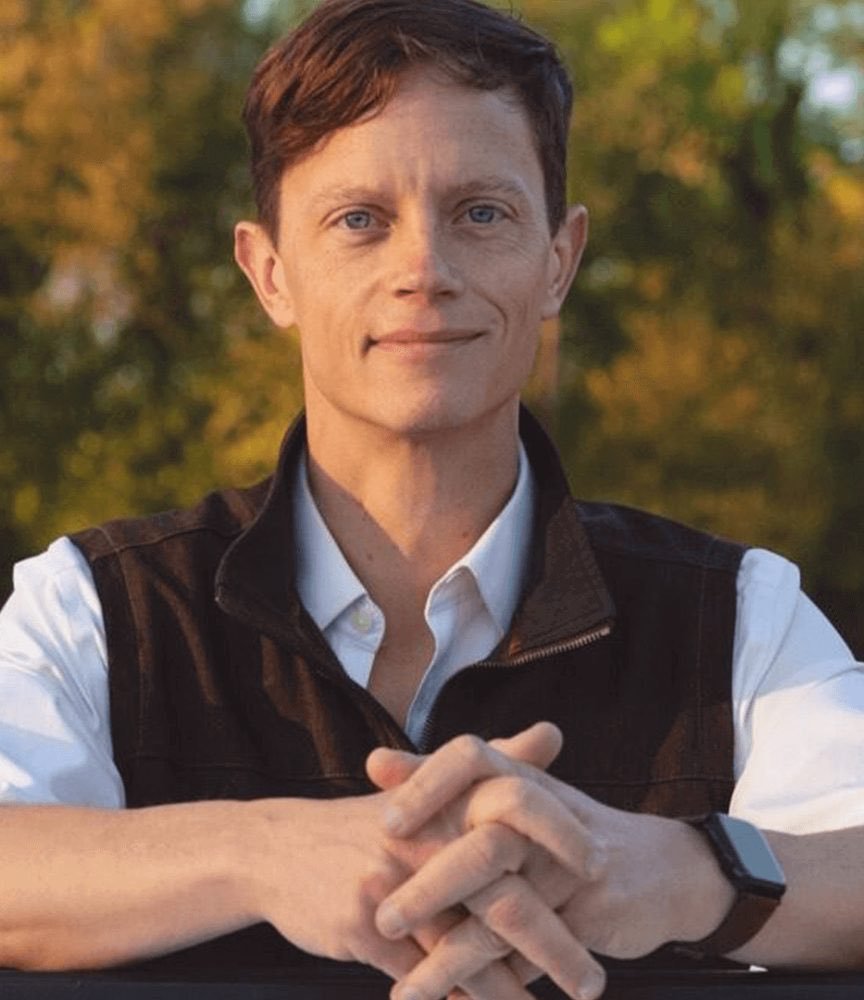
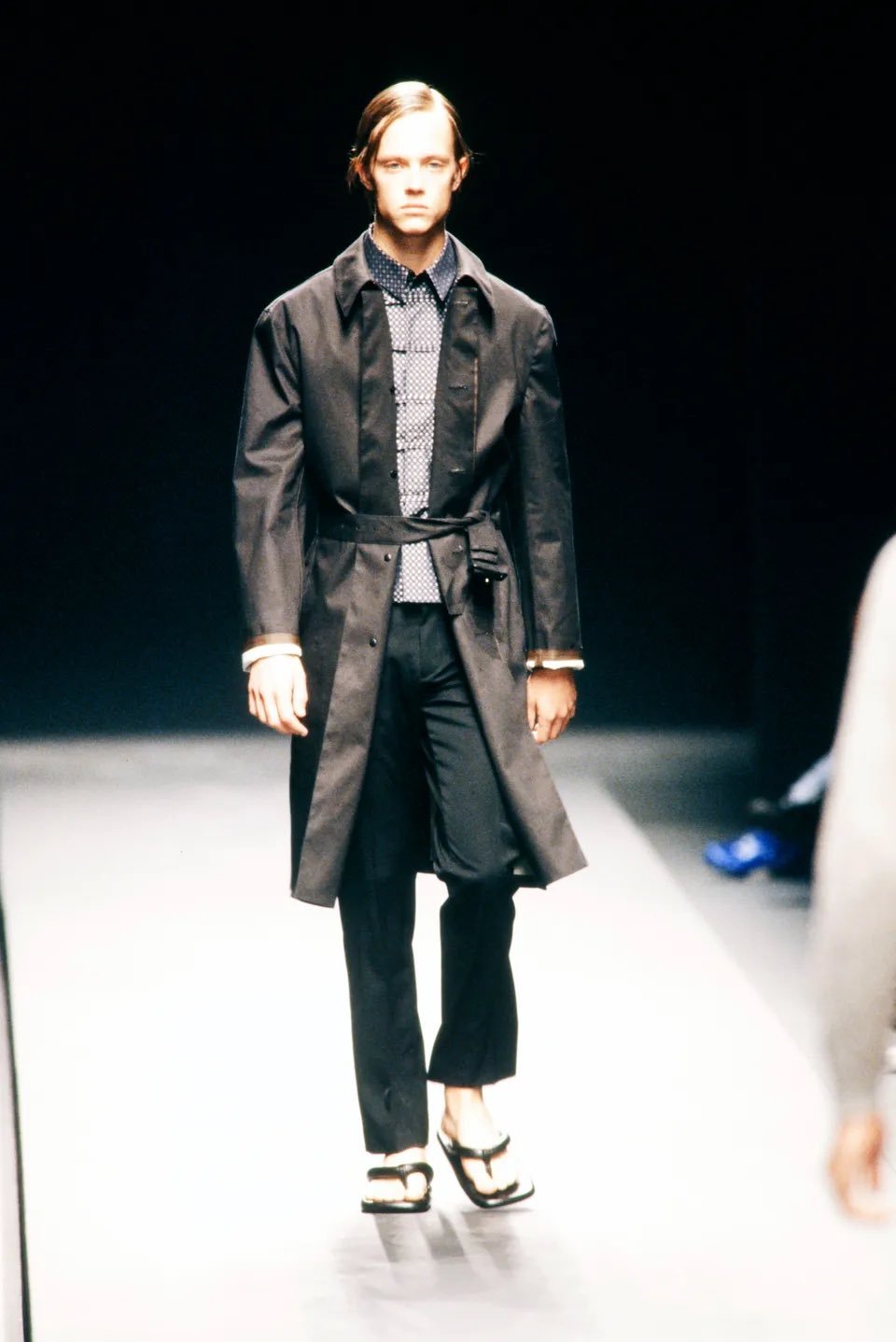
Rob Sand, a Democrat, beat Republican Zach Lahn on November 3, 2026, to become Iowa’s first Democratic governor-elect since 2006. Long before politics, Sand modeled as a side job while studying political science at Brown University, and he actually walked in Prada’s Spring 2003 menswear show in Milan, designed by Miuccia Prada. He also walked for Number (N)ine, Takahiro Miyashita’s Japanese label, and for Giuliano Fujiwara, and shot editorials for Arena Homme+, Vogue Italia and AnOther, including a 2002 shoot by Terry Richardson. Modeling in Milan made him miss the January 2004 Iowa Democratic caucuses in his hometown of Decorah, where he’d hoped to support Howard Dean. “It had to be one or the other,” he told Newsweek. “I chose to go to Europe” (Maggie Clancy, WWD) [1]. He was signed to Elite Model Management, and according to Harper’s Bazaar, modeling helped pay for his degrees from Brown and the University of Iowa College of Law (Catherine Santino, People) [2]. When Vogue asked its Instagram followers whether they knew he had modeled for Prada, a verified account for Sand replied, “Yes, I knew that.” A 2019 New York Times profile reported that he had briefly modeled in Paris and Milan in college but didn’t like to talk about it (Eric Henderson, CBS Minnesota) [3]. I don't even know man; I just want healthcare, and some free designer wouldn't hurt I suppose. His politics are actually pretty moderate (it is Iowa), but hopefully after the BLUE BATH (Check out the WhoNews posts on this past midterm election on Who'Studios), he and other Democrats will make some strides in getting the country back on the right track.

Answer: The number of ways to cook an egg.
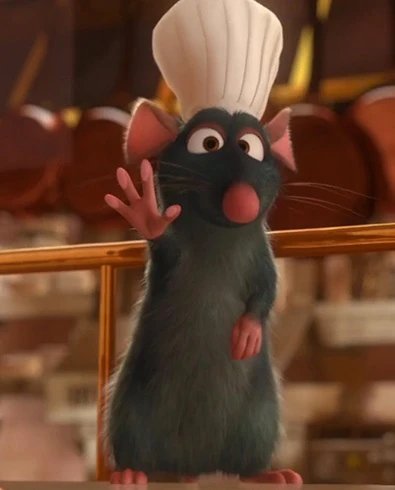
The tall white chef’s hat is called a toque, and it traditionally has 100 folds. According to Bon Appétit, the folds are said to represent the number of ways you can prepare an egg, and in early French cooking, pleats were said to stand for mastered recipes, so 100 pleats signaled a master chef (Jake Rossen, Mental Floss) [1]. No one has found where the egg story started. Bon Appétit found no mention of it in Escoffier’s 1903 Guide Culinaire or in Larousse Gastronomique, even though the Guide has over a hundred egg recipes, and Jacques Pépin and Alain Ducasse didn’t know its origin either. Food historian Maryann Tebben calls it a story passed down by chefs; she counted about 25 visible pleats on one of Paul Bocuse’s toques [2]. It seems it’s an oral history where every bit is a word, and every tastebud a chapter.
When researching, I would notice two types of toque: a tall version and a scrunched-up version. I thought this was merely a stylistic difference, which for the most part it is, but it can also be a signal of seniority and skill. The puffy one is closer to what the hat originally looked like, and to stand out, some chefs would put cardboard in the hat to make it stand taller. If two chefs were ever in the same kitchen, the one with the taller hat would be seen as the boss, or in some cases, the better cook.
Antonin Carême’s early version of the toque, shown in his 1822 writings, was a floppy hat with a cardboard insert [2], and his own reportedly stood about 18 inches tall, propped up with cardboard [1]. Auguste Escoffier later popularized the idea that a taller toque means a higher rank [3]. Today, the Culinary Institute of America says most pleated toques stand about 8 inches tall, while the chefs in charge may wear them 10 to 12 inches high [2].
Answer: Interview
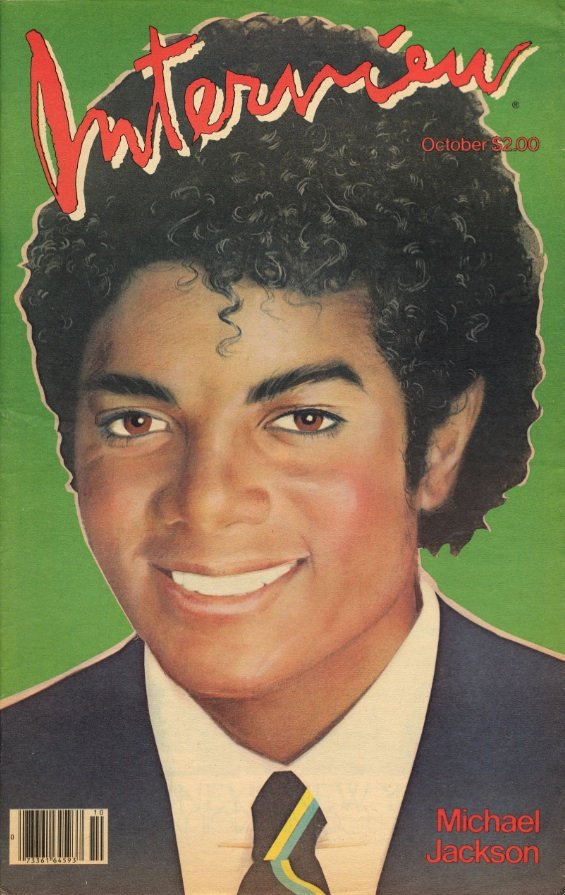
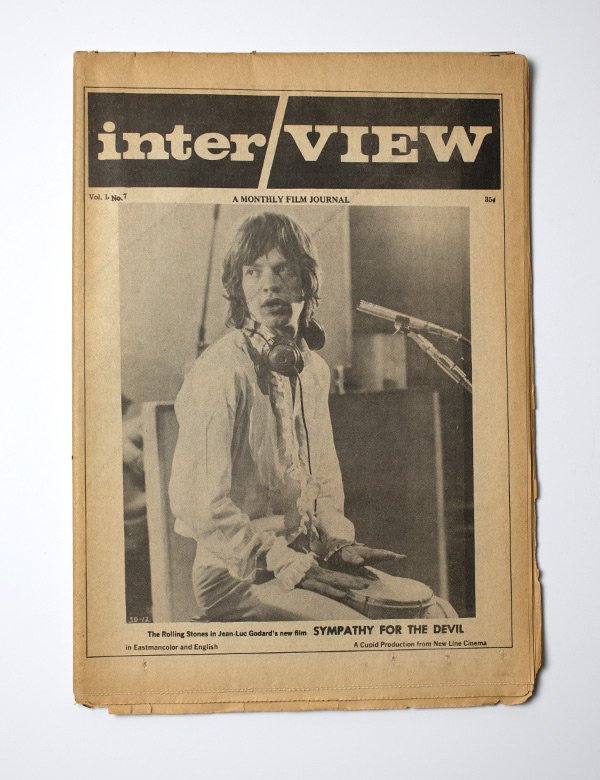
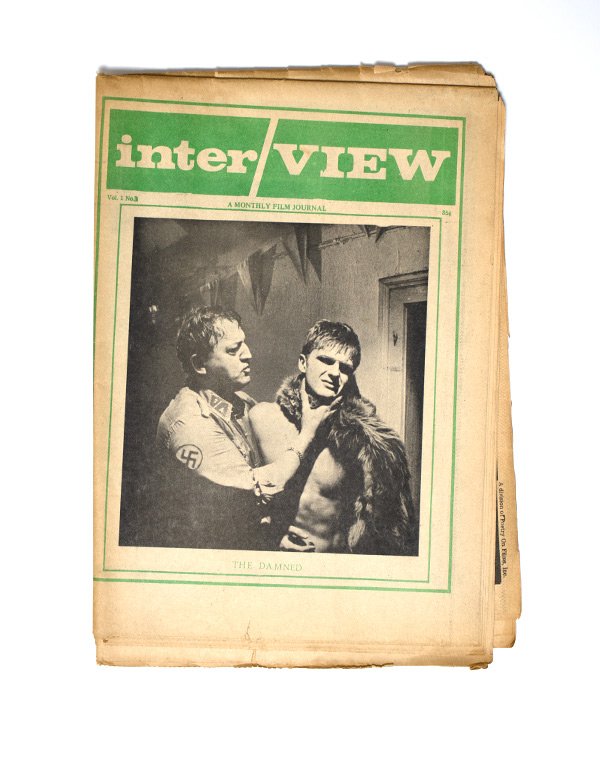
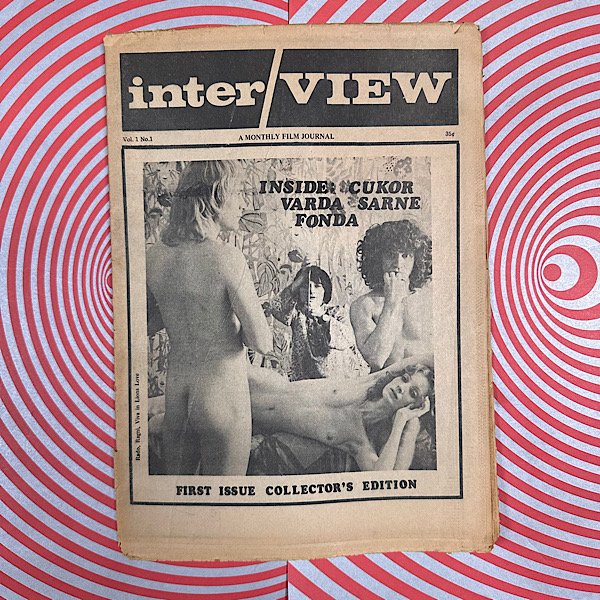
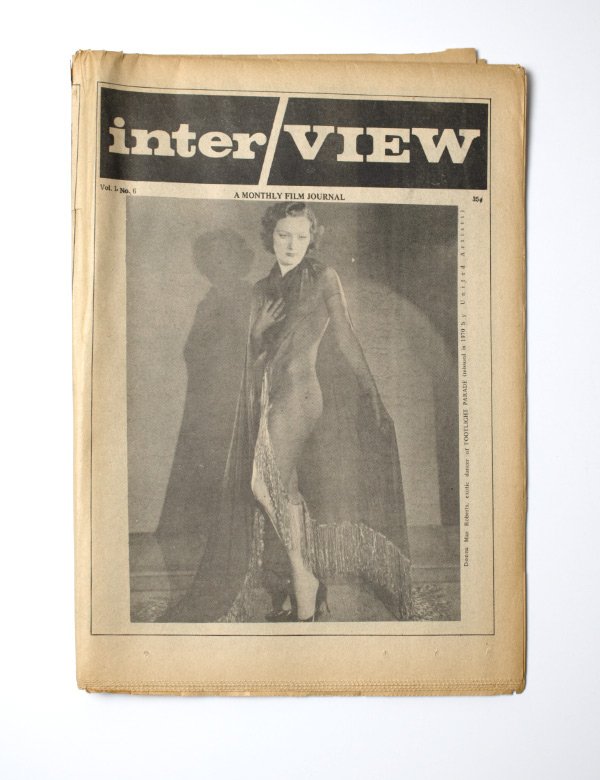
Andy Warhol started publishing Interview Magazine in 1969 as an underground publication about movies, reportedly as a way to get into film premieres and other events he wasn’t invited to. Its original name was inter/VIEW, and Gerard Malanga ran it at first; Glenn O’Brien and Bob Colacello were later brought in to revamp it into a glossy monthly about celebrity culture, built on long, rambling conversations in which famous people interviewed other famous people [1]. The first issue’s masthead listed four editors: Warhol, Malanga, Paul Morrissey and John Wilcock, a cofounder of the Village Voice. Wilcock found a cheap printer and handled the typesetting, and Warhol paid the printing bill (Zachary Hooker, Bidoun) [2]. From 1972 to 1989, Richard Bernstein made the covers, turning silver gelatin photographs of stars like Cher, Diana Ross, Michael Jackson and Grace Jones into collages of paint, airbrush and gouache (Miss Rosen, AnOther) [3]. The Andy Warhol Museum in Pittsburgh holds 204 issues published between 1969 and 1987, the year Warhol died [4].
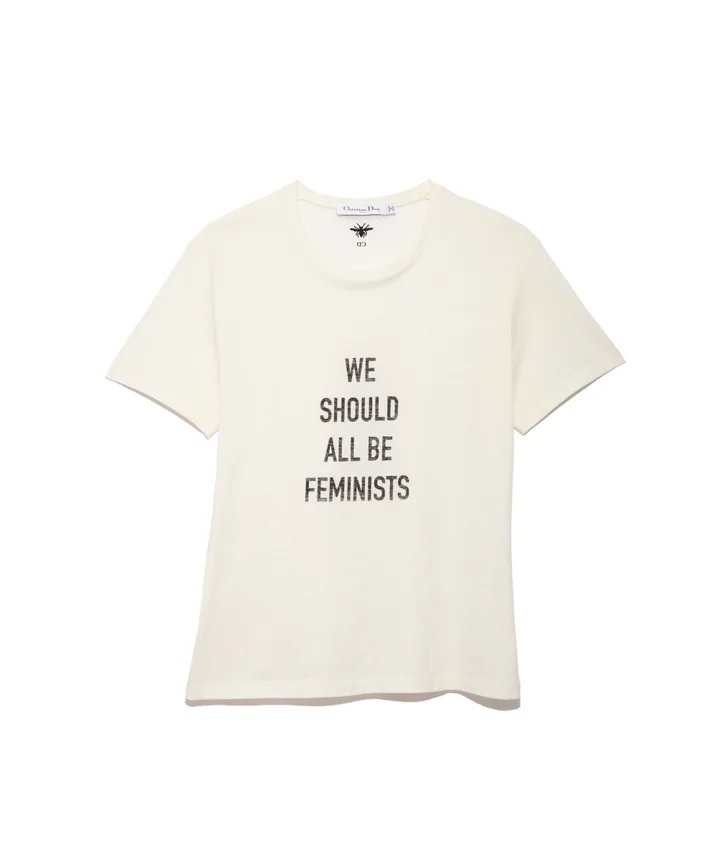
Dior “We Should All Be Feminists” T-shirt (Spring/Summer 2017)