
November 4, 2026
The issue of November 4, 2026
Every question from this issue, with the answers, the hints and the reading behind them.
Play the November 4, 2026 issue

House: Worlds End · Designer: Vivienne Westwood & Malcolm McLaren · Season: Spring/Summer 1982 - Savage
Vivienne Westwood and Malcolm McLaren showcased their Savage collection for Spring/Summer 1982 at the Pillar Hall in Olympia, London, on Thursday, October 22, 1981 [1]. According to Ben Westwood, who posted the footage, it was their second fashion show, and no one at the office knew a video of it existed until a collector named Simon, who archives early Westwood and McLaren memorabilia, sent it over. Personal video cameras were brand-new technology at the time. The show’s invitation used a controversial photo of Bow Wow Wow, the band McLaren managed, recreating Manet’s Le Déjeuner sur l’herbe (one of those old paintings of a naked lady with some guys around, I guess). It was shot for the cover of the band’s 1981 record 'See Jungle! See Jungle! Go Join Your Gang, Yeah. City All Over! Go Ape Crazy!', (It seems they went minimalist on the name). But because singer Annabella Lwin was 15 when it was taken, her mother blocked its use and prompted a Scotland Yard investigation. The photo was only cleared in 1982, when it became the cover of The Last of the Mohicans and the show’s invitation.
The house’s own history lists flat cutting from Japan, Matisse and Picasso among the collection’s influences, along with slashed sleeves, contrast linings and Foreign Legion hats inspired by David Lynch’s The Elephant Man. Westwood framed the borrowing herself: “In taking from other cultures I’m just doing what Picasso did in his painting Demoiselles d’Avignon” [2]. McLaren’s biographer Paul Gorman traced much of the collection to Mable Morrow’s Indian Rawhide, an anthropologist’s study of Native American painted rawhide, which McLaren picked up while recording his album Duck Rock. Its designs went straight onto the clothes: a Fish Clan motif from a Fox (Meskwaki) trunk became a sweater, and a design by an Oglala woman in South Dakota was printed across dresses. Some members of Bow Wow Wow traded their Pirate clothes for Savage pieces while promoting “I Want Candy” [3]. The Museum at FIT notes that early Worlds End designs could be worn by women and men, with asymmetrical cuts that alternately drifted to and from the body [4].
Savages are resourceful, savages must occupy their minds with something to drown out their sorrow. A savage doesn’t reject their humanity and resort to anti-social behavior, they do everything in their power to hold onto it while the world stomps on their fingers. The savage is a liberated person, but to others a liberated person is feral and needs to be subdued. To what extent, the who and where of it all, the right and the line drawn is incomprehensible, we are all tasked with parsing the blur and contributing to a vision of the world that is less afraid of feeling than it is of not. Adroitly Raucous!



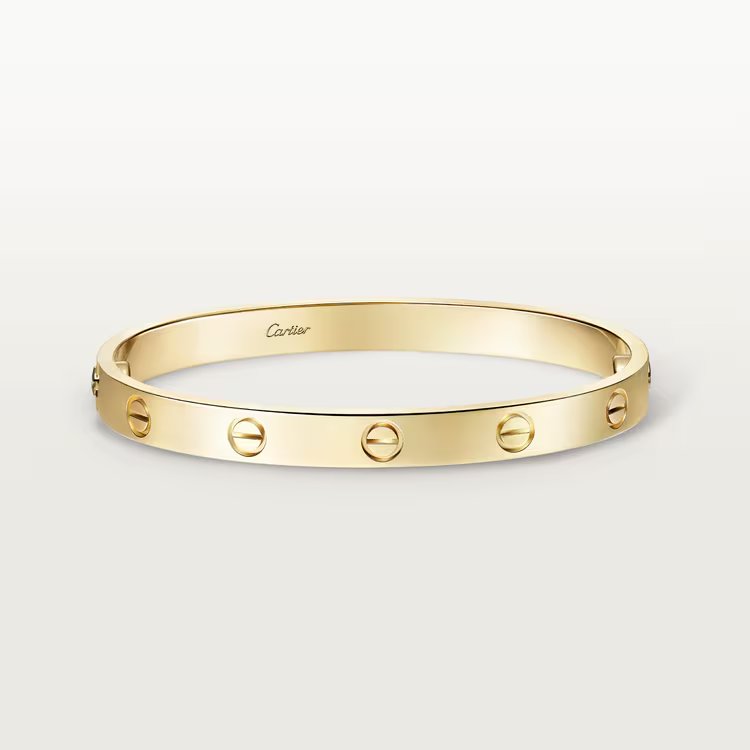
Answer: A Screwdriver
The Love bracelet is an oval bracelet designed by Aldo Cipullo for Cartier New York in 1969. Cartier left the screws visible and used a screwdriver to secure them [1]. Cipullo said the idea came to him at 3 a.m. after a relationship ended, while he was searching for “a permanent symbol of love.” The bracelet came with a small vermeil screwdriver, a nod to the bench tools Cipullo used as a working jeweler, and it was the first thing he made for Cartier after stints with David Webb and Tiffany [2]. Because it comes in two rigid halves that screw together, one person can fasten it onto another’s wrist [3]. On the original, two of the screws actually work, one on each side of the wrist, and both come all the way out. From 2012 to 2021, Cartier switched to screws that stay in the bracelet. Some newer versions skip the tool altogether: the diamond Full Pave bracelet closes with a snap latch, and the Love Unlimited, Flexible, released in 2025, opens with a hidden button. Fashionphile adds that the bracelet became so iconic that hospitals kept Cartier screwdrivers on hand for emergencies [4]. Couples took the idea seriously: Elizabeth Taylor kept on the one Richard Burton gave her even while posing for Cecil Beaton in diamonds, and in 1970 Frank Shields and Didi Lippert swapped Love bracelets instead of wedding rings [2].

Answer: Wear wool caps on Sundays.
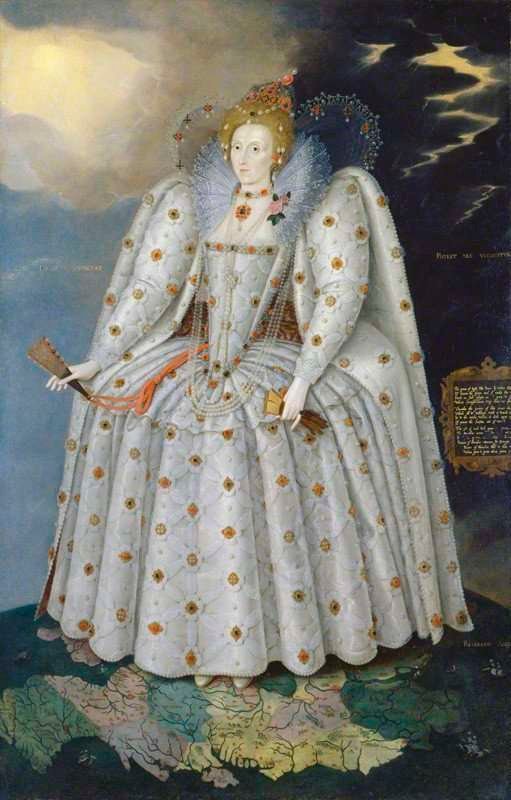
England’s 1571 Cap Act required everyone over the age of six, apart from “maids, ladies, gentlewomen, noble personages” and landed gentlemen, to wear a wool cap on Sundays and holidays. The cap had to be made in England and finished by members of the cappers’ trade, and anyone who went without was fined 3 shillings and 4 pence for every day. Cap laws had existed before: an act of 1488 fixed the price of knitted wool caps at 2 shillings and 8 pence [1]. People who were traveling were excused. Caps were already outmoded by 1571, and the law was meant to keep English cap makers in business as demand fell [2]. These knitted caps are sometimes called “statute” or “apprentice” caps. Workmen digging building foundations in London in the early 20th century turned up many of them, and the London Museum notes that some may have been thrown away once they went out of fashion around 1570 [3]. The truth of the matter is that they simply could not stop the cap!
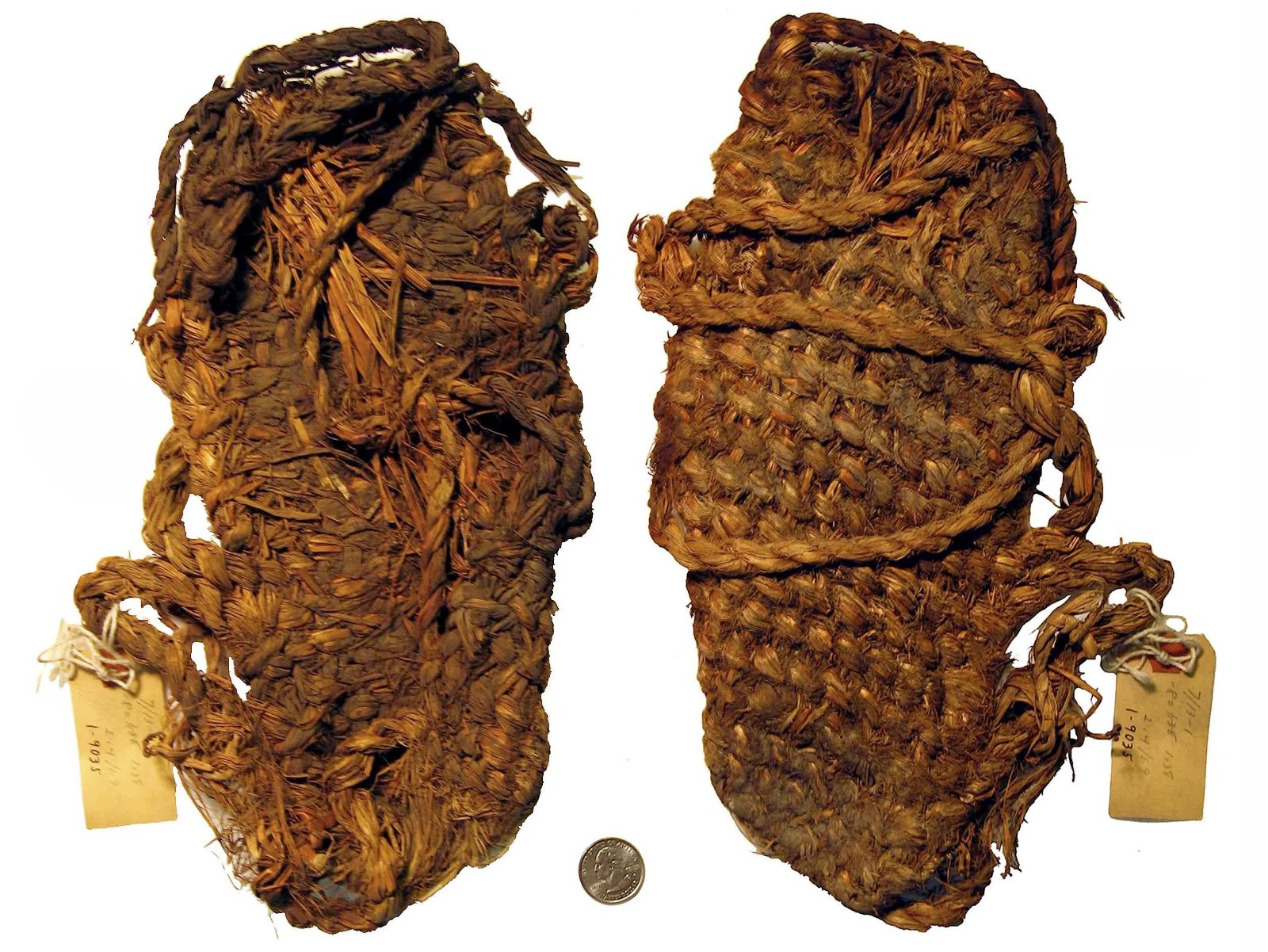
Answer: 10400 Years
The oldest dated shoes in the world are sandals woven from shredded sagebrush bark. They were found in Fort Rock Cave in Oregon, where archaeologist Luther Cressman recovered dozens of them in 1938, buried under ash from the eruption of Mount Mazama. Radiocarbon dating hadn’t been invented yet, so his belief that they were ancient wasn’t confirmed until 1951. Sandals in the same style have since been dated to between about 10,400 and 9,100 years old. Each one has a flat, tightly twined sole, a toe flap over the top of the foot and a tie that cinched around the ankle [1]. They come in sizes from small children’s to large adults’, and most are badly worn, which suggests people threw them away. Thomas Connolly of the University of Oregon’s Museum of Natural and Cultural History notes that Cressman’s crew found them scattered in an arc around a living area, and that one well-worn pair has tiny char marks on the toe flaps, as if from sparks at a hearth [2]. The sandals may have been winter wear: Klamath people told the ethnographer Samuel Barrett that woven shoes let them walk through freezing marshes in the dead of winter. A roughly 10,600-year-old mummy found in Nevada’s Spirit Cave wears hide moccasins that may be older still, but they haven’t been dated directly [3]. A shoe that lasts thousands of years sounds like a good deal to me!
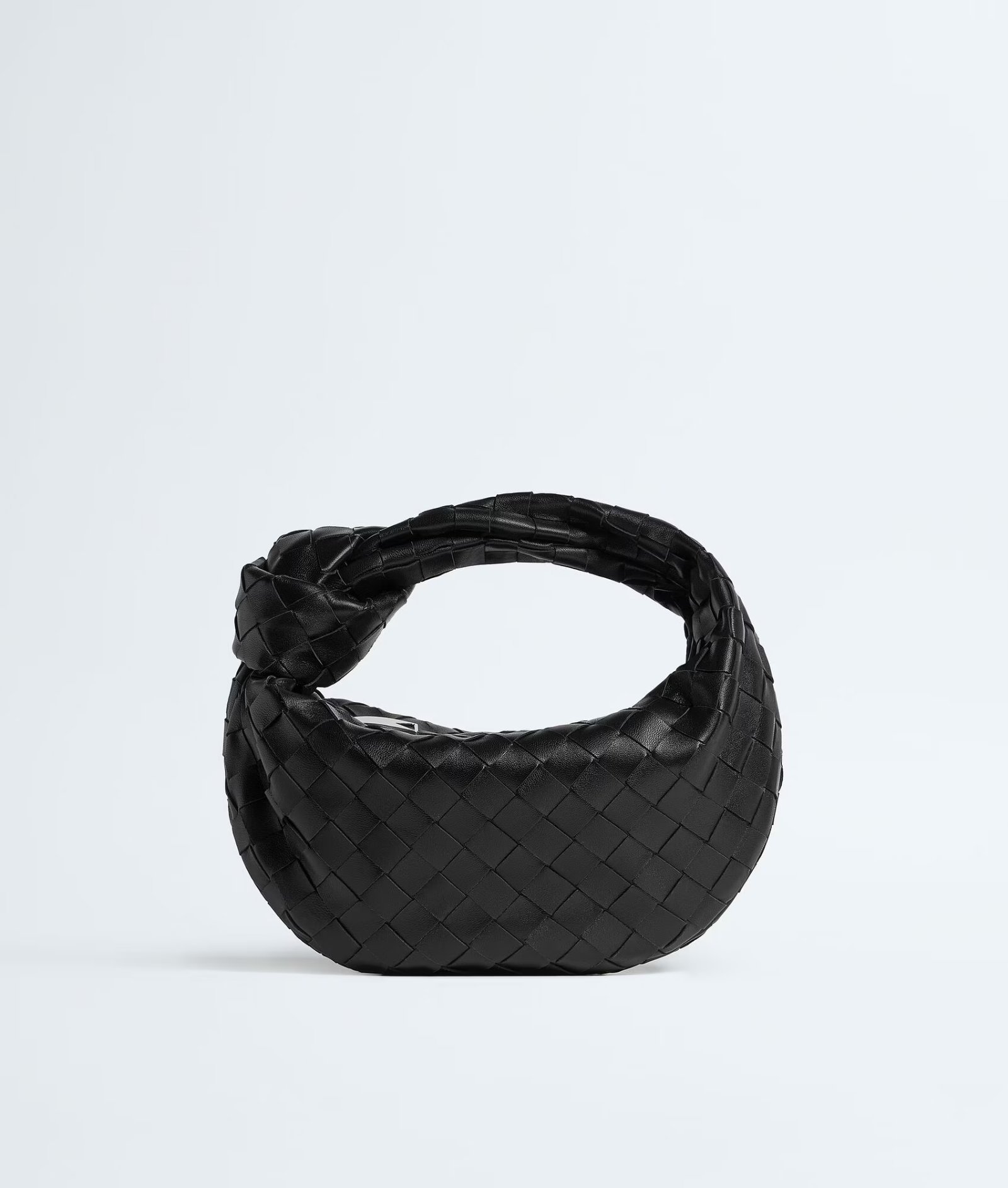
Bottega Veneta Mini Jodie