November 3, 2026
The issue of November 3, 2026
Every question from this issue, with the answers, the hints and the reading behind them.
Play the November 3, 2026 issue
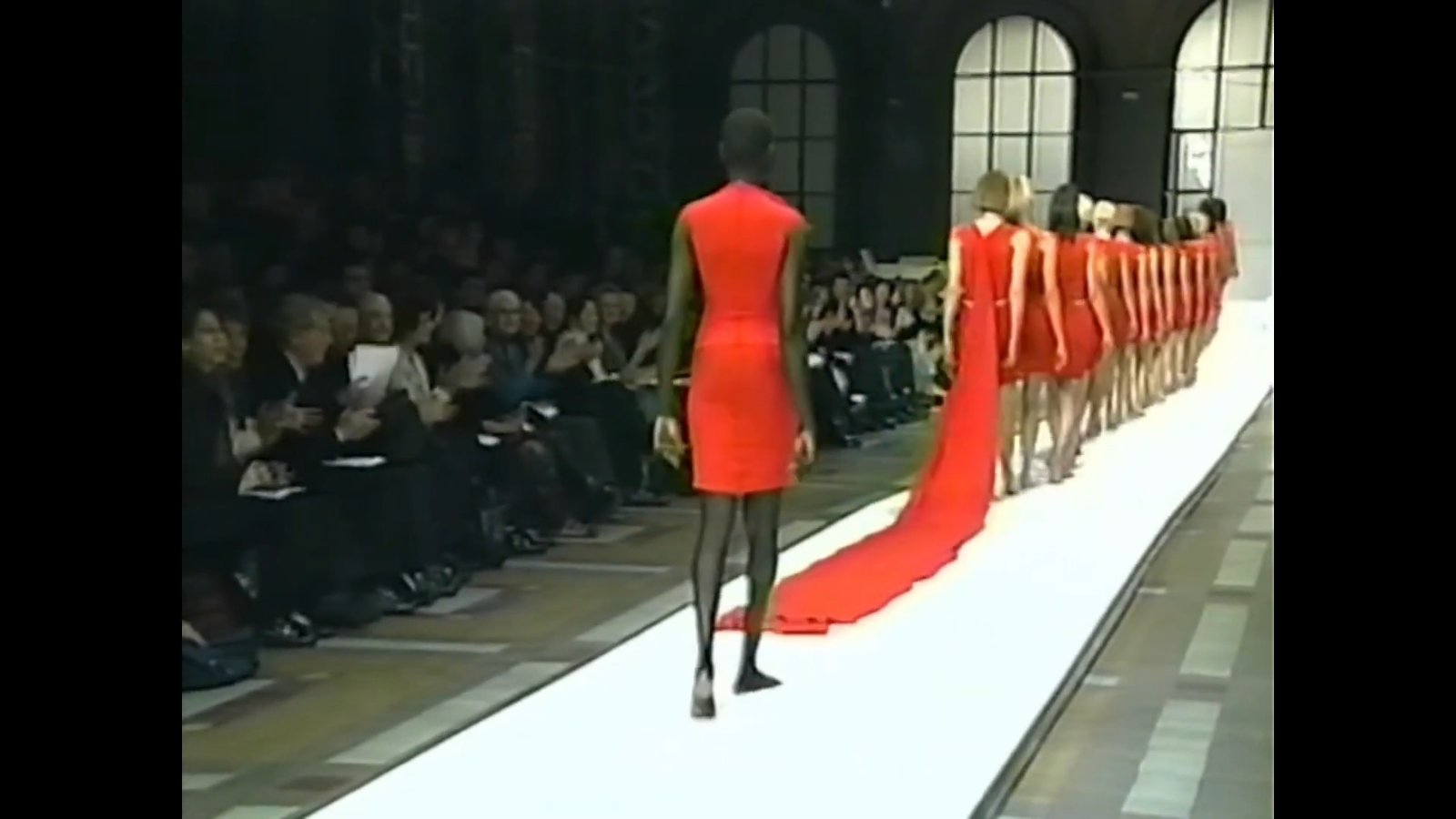
House: Issey Miyake · Designer: Issey Miyake · Season: Spring/Summer 1999 - A-POC King & Queen, A-POC Le Feu
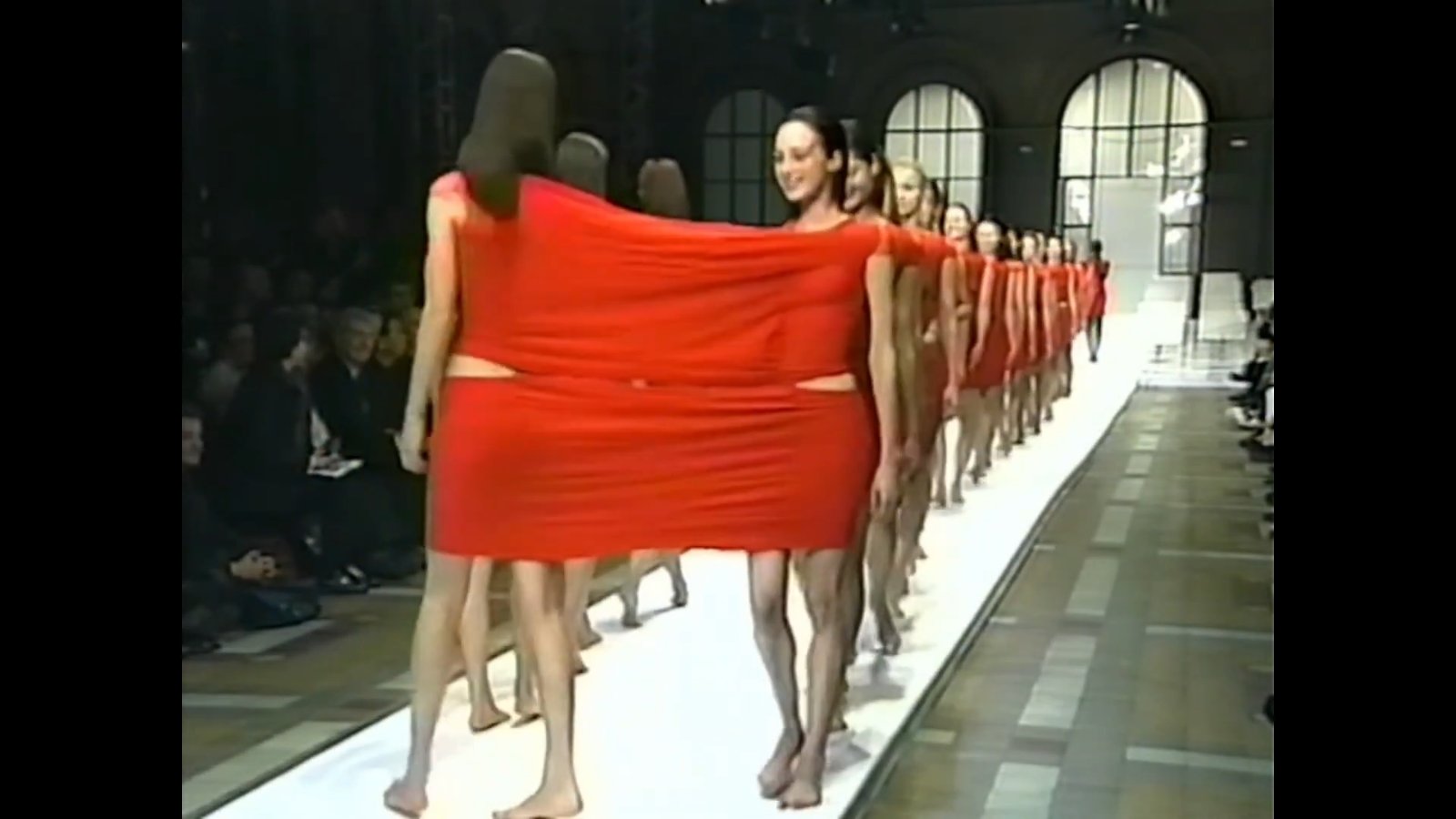
Issey Miyake’s Spring/Summer 1999 show in Paris, listed in the Bloomsbury Fashion Video Archive as “A-POC King & Queen, A-POC Le Feu,” introduced the designer’s new knitwear technology and ended with a continuous, joined set of dresses [1]. Writing in The Observer Magazine in April 1999, Tamsin Blanchard described how the Paris show turned a single strip of fabric into a capsule wardrobe in front of the audience: assistants laid lengths of white fabric on the floor and cut out knickers, a bra top, a skirt, a hat and socks [2].
A-POC stands for “A Piece of Cloth.” Miyake developed it with Dai Fujiwara in 1998 to highlight the flat, two-dimensional quality of cloth and to cut down on waste. Each piece came as a roll of cloth marked with lines for a dress, a shirt, a skirt and more, so the wearer could cut out their own wardrobe. The season’s lookbook unfolded like an accordion to show the finale, with models connected by a single piece of bright red cloth [3]. LACMA, which owns a red “A-POC Queen” ensemble from the collection, credits it to both Fujiwara and Miyake [4]. That same season, the Fondation Cartier in Paris opened Making Things, an exhibition curated by Miyake himself that ran from October 13, 1998, to February 28, 1999 [5].
A lot of the looks in this show had an adjacent look that mirrored it. As the models walked past each other, for a few frames they were opposite each other, one walking towards the crowd, one walking away. I think of this as the yin and yang, the balance, the idea that there may be multiple versions of each of us that on any given day walk a different path, or the same path to a different beat. It also makes me think of the idea that the adjacency we see in the world may be signaling to each other, that there is a hive mind, that subconsciously we’re following the same trends and interpreting the same source material slightly differently. A piece of cloth is a single strand of thought, of emotion, and being. It implies that we are one form, one entity that pushes and pulls against itself. That we are one collective domino effect. I think we need to be more considerate of how we affect others as sometimes we don’t know how much impact we have and just how strong the social fabric is. What happens when it breaks? Who chooses to break it? And at the end, as they wrap around the catwalk, each model pulling the next, the black model lets go, and walks back independently. Seems we all have choices in this world. If you’re American like I am, this issue is live on election day, exercise your right to choose and go vote!

Answer: Clip D
Shoutout to Westside Gunn!
You can hear the name in his iconic song “Margiela Split Toes,” featuring Mach-Hommy [1]. Richard Mille is French, and so is the pronunciation: REE-shar MEEL. Say “Richard” with a soft “sh” in the middle, not “RICH-ard” [2], and drop the final “d.” Mille gets a long “e,” so it rhymes with “meal” [3]. In French, mille means “a thousand” [4].
In 1999, Mille teamed up with Dominique Guenat, whose family watchmaking company has been based in the Swiss village of Les Breuleux for more than 110 years. Their first watch, the RM 001 tourbillon, came out in 2001 with a six-figure price, and Mille threw it on the floor at Baselworld that year to show dealers it could take the shock. The brand pitched its watches as a “racing machine on the wrist.” The RM 27-04, made for Rafael Nadal, can withstand more than 12,000 G’s, and in 2022 the one-off RM 52-01 Skull Tourbillon sold at auction for about 6.66 million Swiss francs. In 2023 the brand made 5,600 watches and brought in 1.54 billion Swiss francs, sixth among Swiss watch brands [5].
I can't even afford to say it the wrong way.
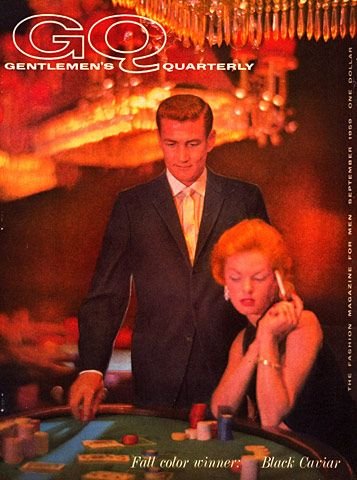
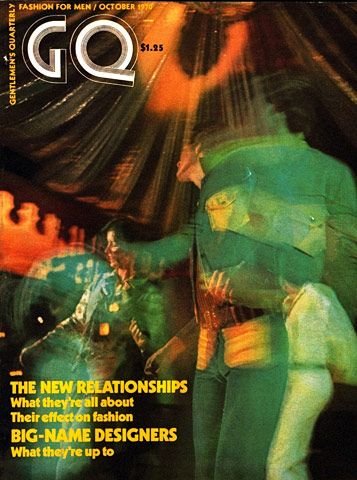
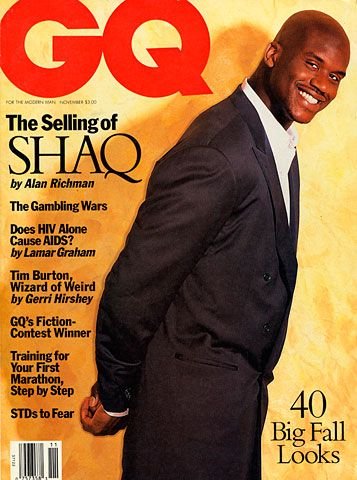
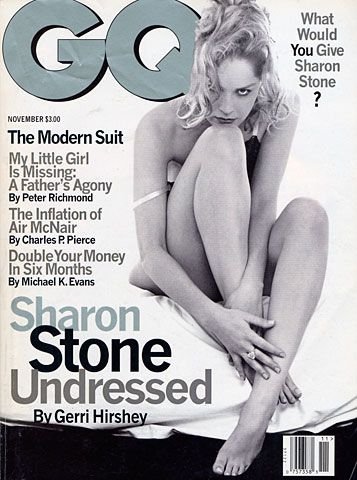
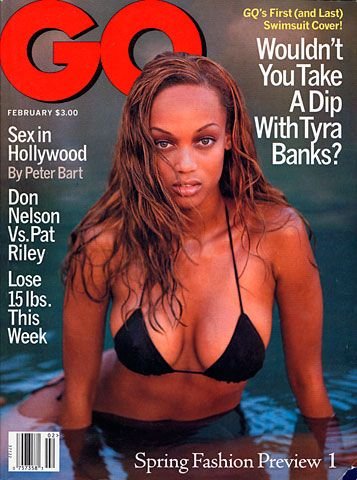
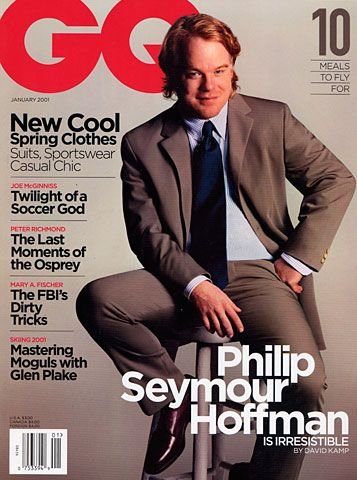
Answer: Apparel Arts
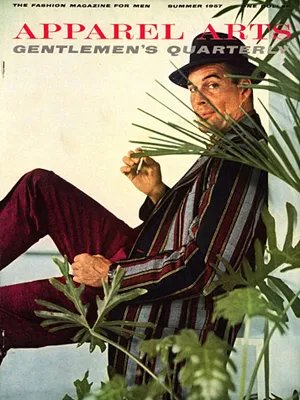
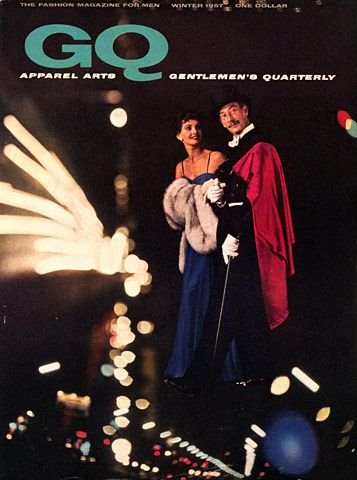
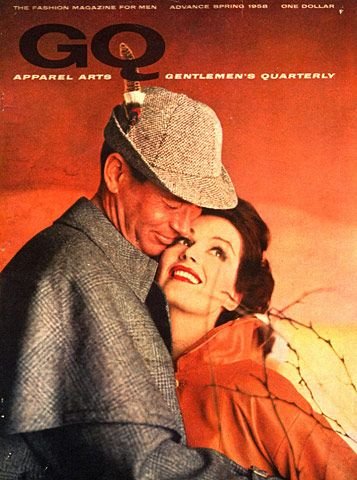
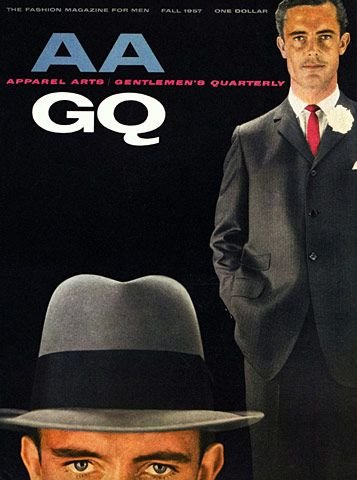
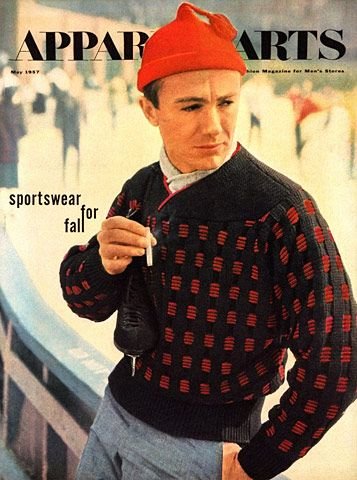
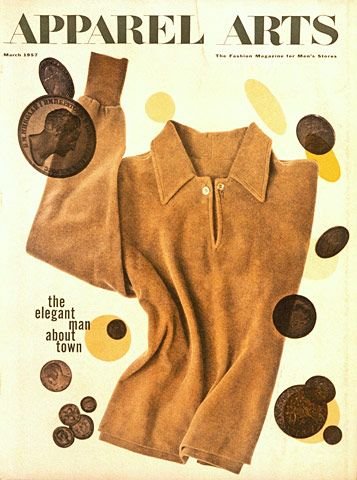
GQ started in 1931 as Apparel Arts, a trade magazine for men’s clothing wholesalers and retailers [1]. It was started by David Smart and William Hobart Weintraub, whose earlier venture was a free illustrated stylebook for men’s shops called Gentleman’s Quarterly. Apparel Arts was an elaborate quarterly publication for clothing salesmen, with real fabric samples pasted into its pages. Customers kept stealing copies from the shops, so in 1933 the publishers launched Esquire for the public at 50 cents a copy [2]. Arnold Gingrich, the first editor of Apparel Arts, became Esquire’s founding editor [3]. In 1957 Apparel Arts became a quarterly fashion supplement for Esquire subscribers, and in 1958 it began publishing on its own as Gentlemen’s Quarterly. Under Condé Nast, editor-in-chief Art Cooper widened it into a general men’s magazine, and in 1993 GQ outsold Esquire for the first time [1].
If you click the last link, it’ll take you to where I found all these covers [4]. The vast stylistic changes over time, from the incredibly elaborate to the simple and trite. From covers that speak for themselves to covers stuttered by bylines and advertisements. That being said, the women look fine as hell in the modern era, so tradeoffs! I love being able to see things change over time so please check it out!
Answer: 15000 aluminum discs
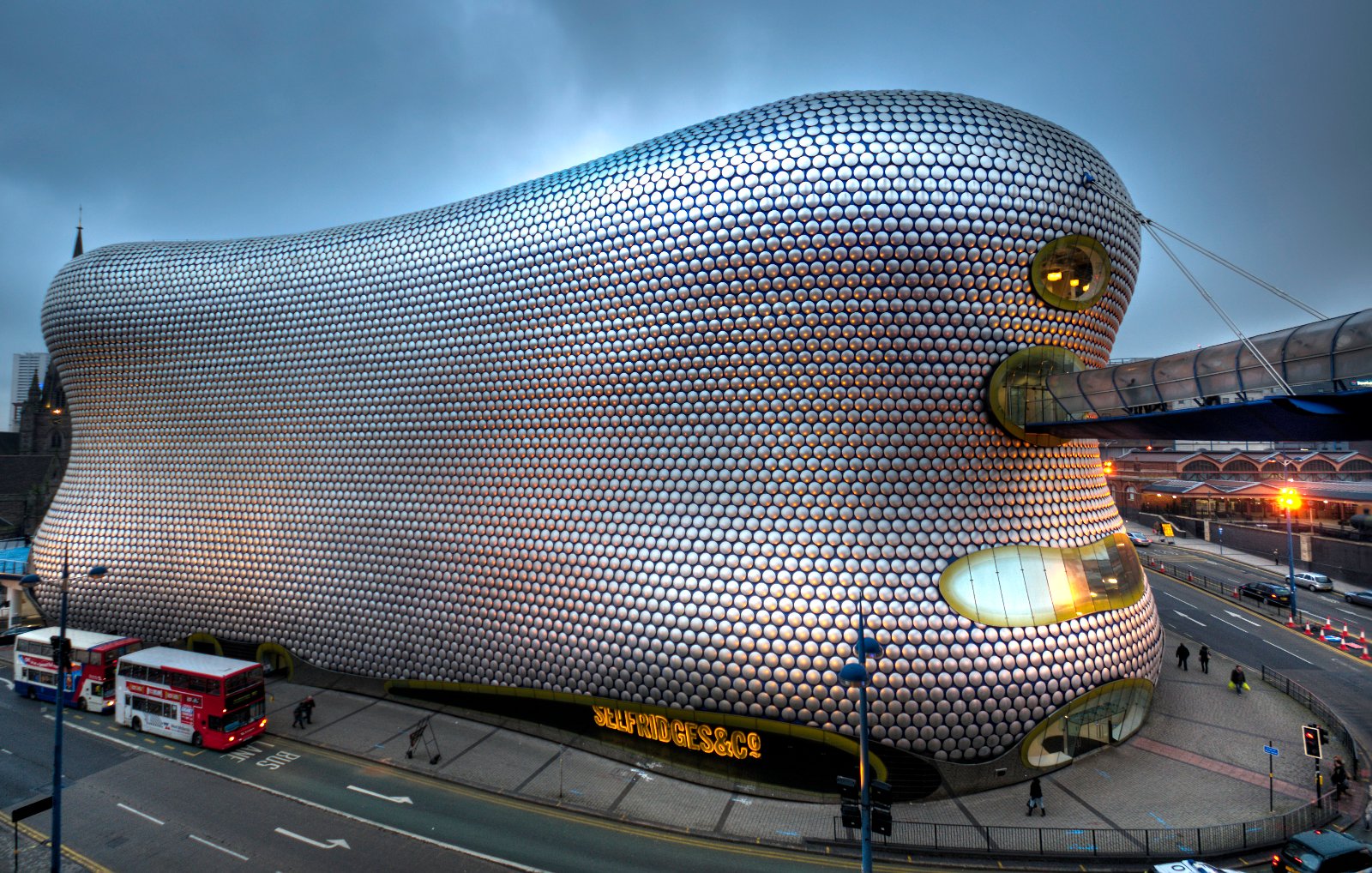
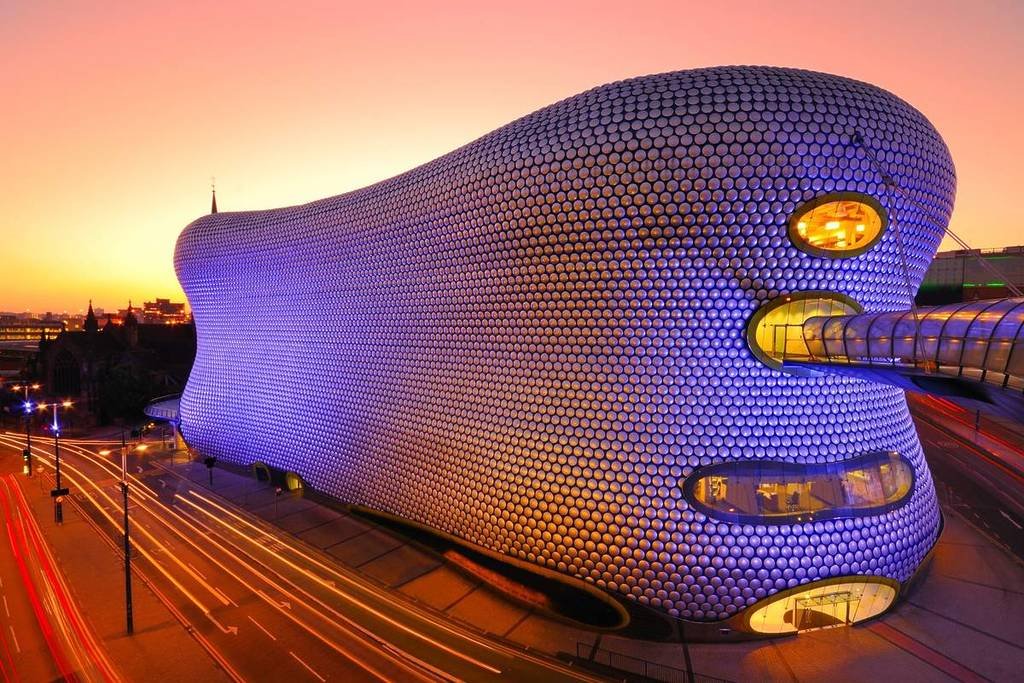
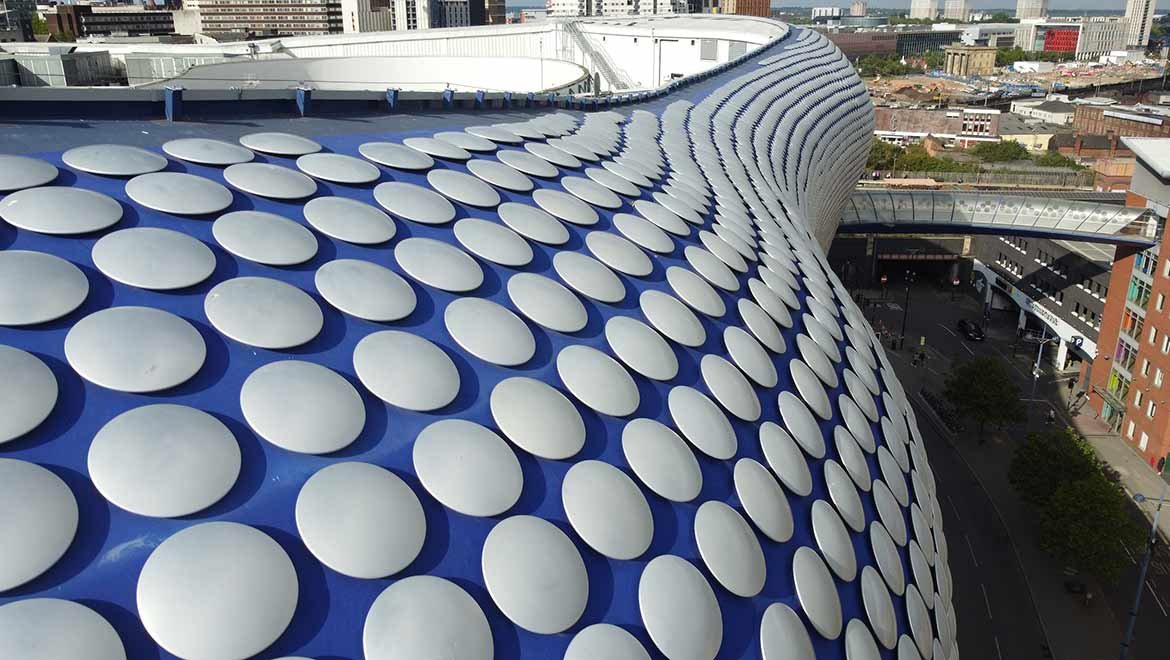
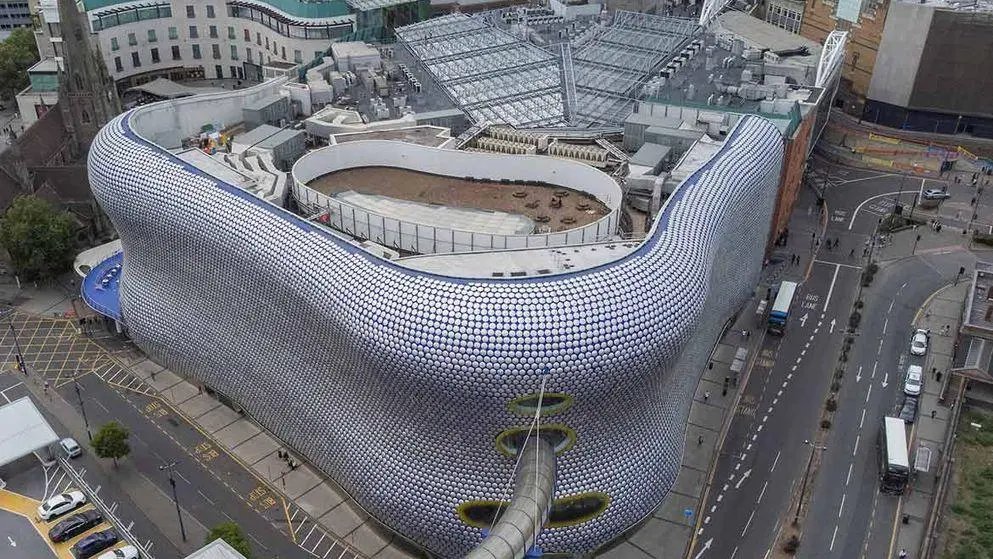
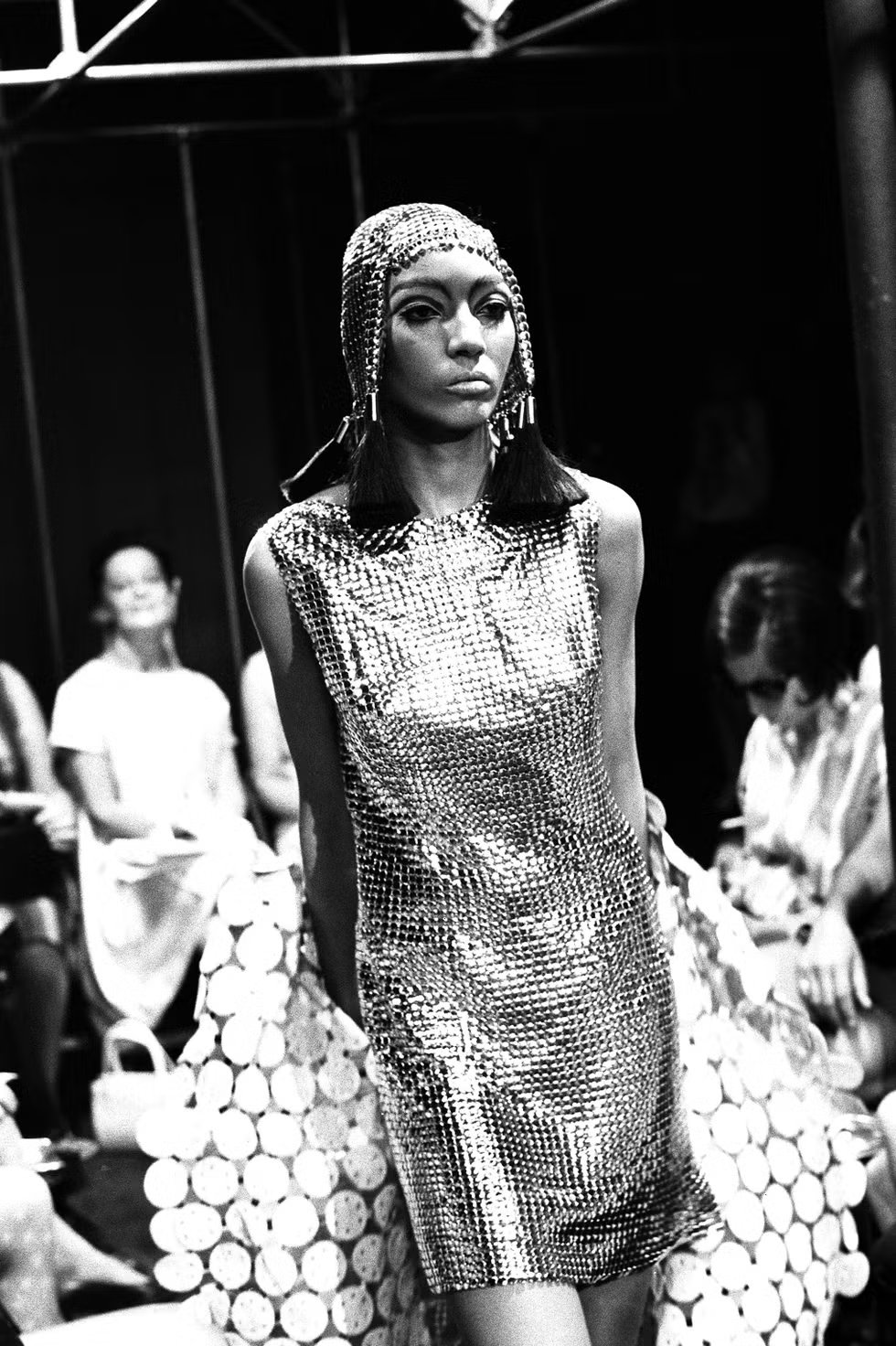
Selfridges Birmingham was designed by Future Systems, a firm belonging to Jan Kaplický and Amanda Levete. As part of the redevelopment of the Bullring, Selfridges asked for as few windows as possible to protect lighting and display space, but still wanted a striking exterior. The answer was a curved skin of 15,000 convex anodized aluminum discs, inspired by a Paco Rabanne dress and fixed to a sprayed-concrete structure [1]. The commission came from Selfridges’ managing director, Vittorio Radice, who chose the firm after seeing its media center at Lord’s Cricket Ground [2]. Project architect Matthew Heywood also pointed to the raised-pyramid texture of the Gesù Nuovo church in Naples. Before settling on aluminum, the team tested glass, plastic, enameled steel and vitreous china, the material used for toilets and sinks, with the bathroom maker Armitage Shanks. Each 26-inch (660 mm) disc was spun into shape, and the supplier, James and Taylor, reconditioned a machine built for polishing car hubcaps to give them a mirror finish. Behind them, Future Systems wanted a blue “the same colour as an Yves Klein painting,” and Liquid Plastics guaranteed its shade for 35 years [3]. Future Systems wrote that the shape recalls “the fall of fabric,” draping down the metal, concrete, and rebar [4].
In 2020, the Bullring’s owner, Hammerson, hired BAM to restore the facade ahead of the 2022 Commonwealth Games. Every disc came off to be refinished, almost 16,000 in all, and each was tracked with a QR code so it could go back in its original spot. During the work, the building wore what BAM calls the world’s largest canvas wrap, designed by Birmingham-born artist Osman Yousefzada, and the five metric tons of printed canvas were later reused as farm covers through the National Farmers Union [5].
Uncle Sam's Top Hat