November 2, 2026
The issue of November 2, 2026
Every question from this issue, with the answers, the hints and the reading behind them.
Play the November 2, 2026 issue
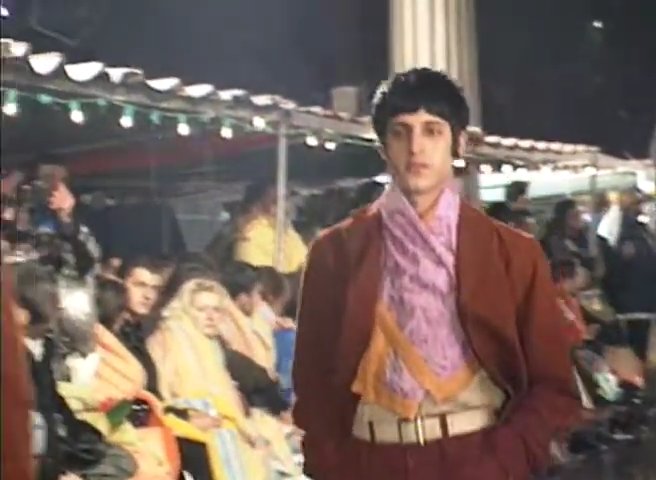
House: Dries Van Noten · Designer: Dries Van Noten · Season: Autumn/Winter 1996-97
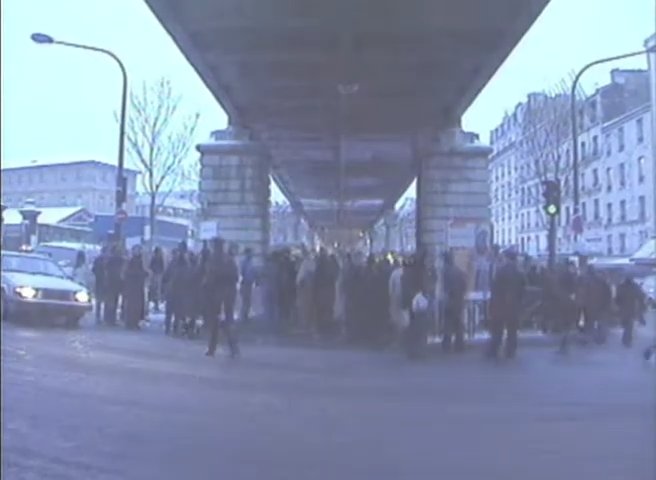
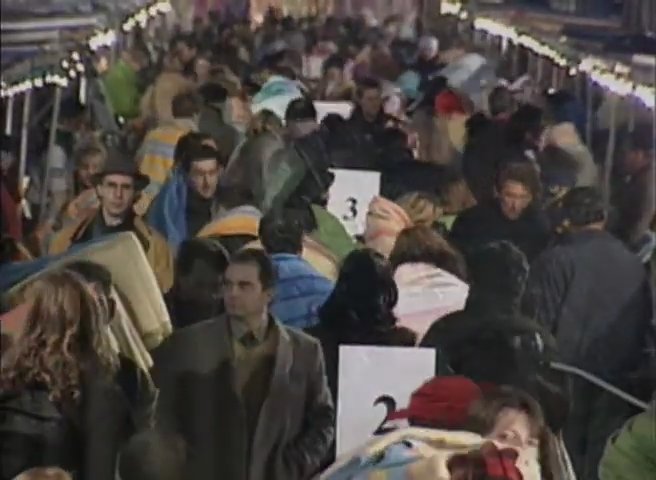
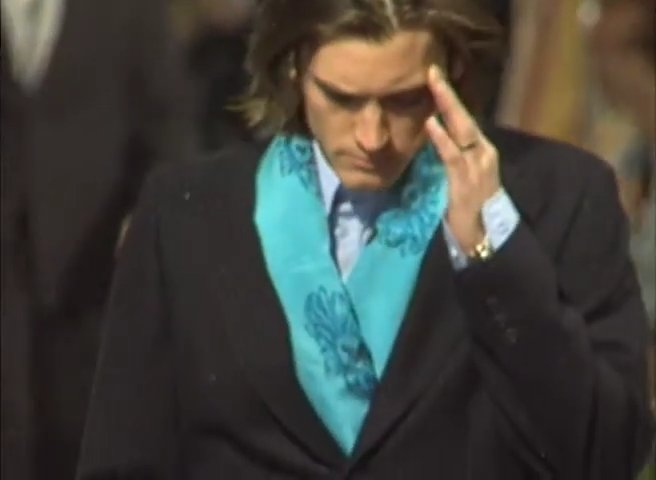
Dries Van Noten’s 15th show, Men’s Autumn/Winter 1996-97, took place on Friday, January 26, 1996, under the theme Indian Streetwear. Heavy snow fell on Paris that weekend, and several designers still showed outdoors. Walter Van Beirendonck put W< in a tent in the middle of a racecourse, and Van Noten showed in an open-air market under railway arches. Every guest got a wool blanket and a hot drink on arrival, which The Irish Times’ Robert O’Byrne said gave the evening the feel of a “fashion refugee camp” [1].
In 2017, Van Noten said the house’s embroidery was designed in Antwerp and made in Kolkata, where it had worked since 1988, with the handwork sent out to around 2,000 embroiderers in remote villages [2]. In a 2005 interview with The Guardian, he said that around 1997 and 1998 the big luxury groups suddenly had all the power, and he felt like “just this guy doing ethnic collections,” to the point that he wondered about selling the company [3].
On first watch, I saw a celebration of multiculturalism. The show takes place in an open market under a bridge. There’s a stretch of the video shot during the day where the market looks busier; vendors and other assorted people were crowded about, some going about their day as usual, some seemingly setting up for the show later. I love this part of the show the most, where everything is chaotic, and it seems some people are still finding their seats and the cameras are still setting up. People walk the streets and greet and chat with each other. Nothing is distinct, just dozens of people folding into each other, a human collage, a societal stir-fry. By nightfall they’re mostly gone, and the paths are calmer and quieter, this is where the show begins. The models walk not like they are in a show, but as real people. They walk at different paces, wear different expressions, different levels of recoil as they shoot out the cold air. They warm their hands on the braziers lined up. Some look like they’ve just lost their virginity and ran into their best friend, others look like they got caught cheating on their girlfriend with their wife. One man wins the lottery, the other just suffered a loss in his embezzlement case. Everyone in this show has a story, big or small, triumphant or tragic, but they still all find themselves going down the same path, skip or slog. Thoughtful!
Answer: Spaghetti
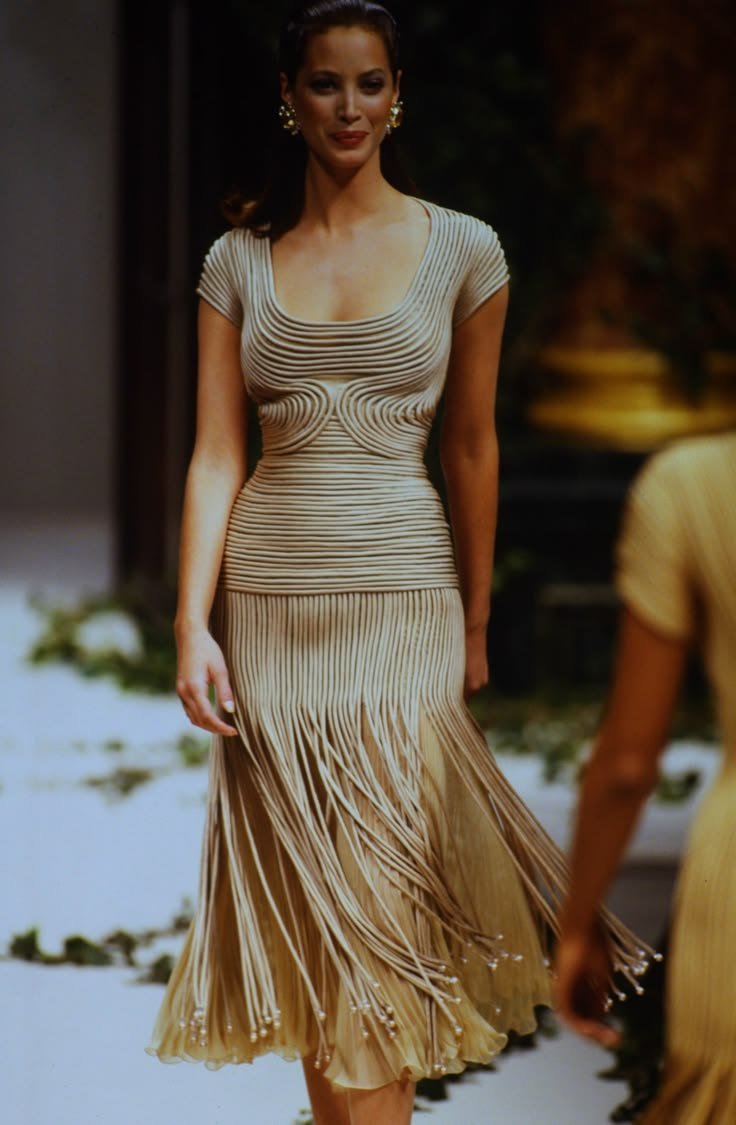
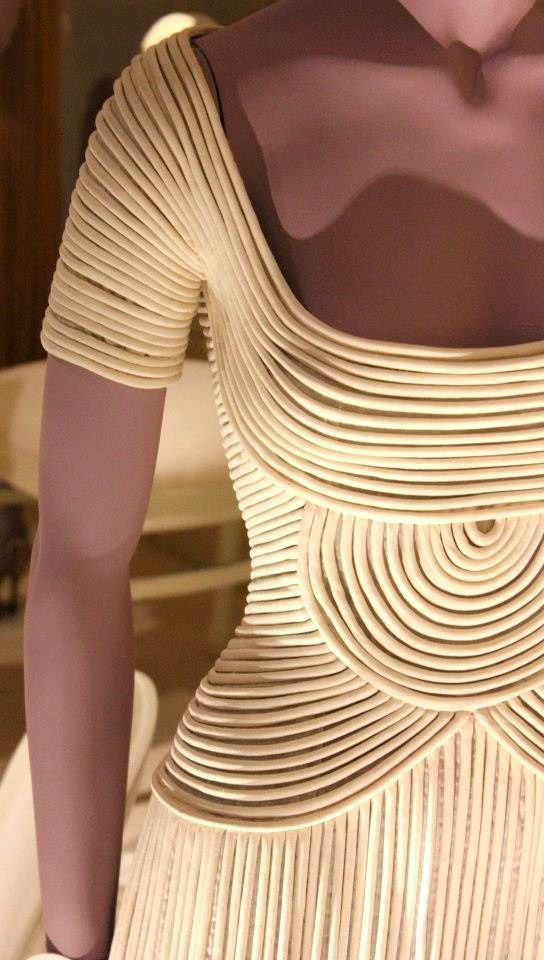
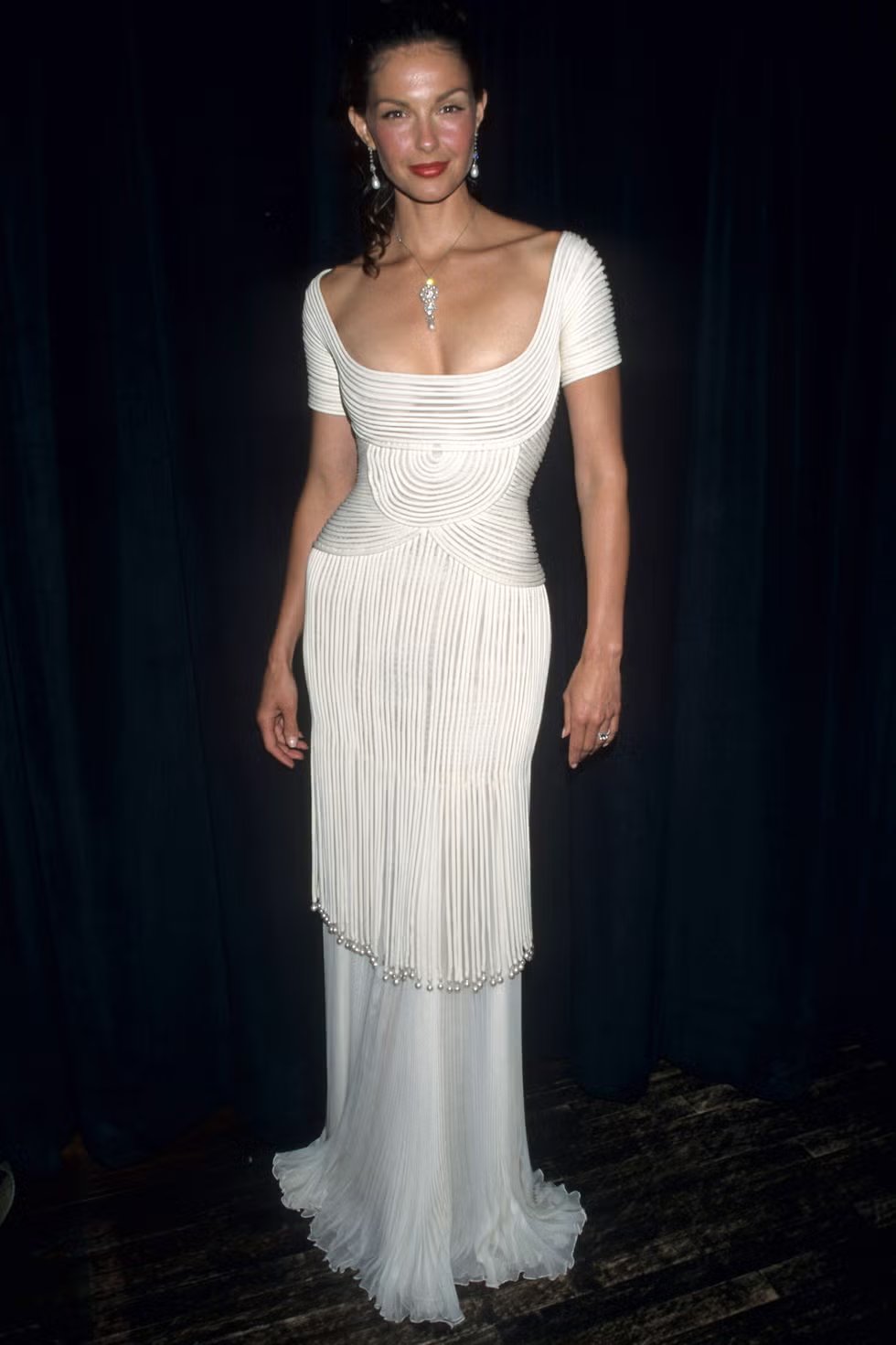
Valentino Garavani debuted his ‘Spaghetti Dress’ during his Spring/Summer 1993 couture collection [1][2]. Thin coils of silk looped over wool cover the bodice [3], cascading into a long fabric fringe topped with pearls that resemble fresh-cut pasta [1]. Christy Turlington wore it on the runway. Seven years later, Ashley Judd wore it to the 2000 CFDA Awards [2].
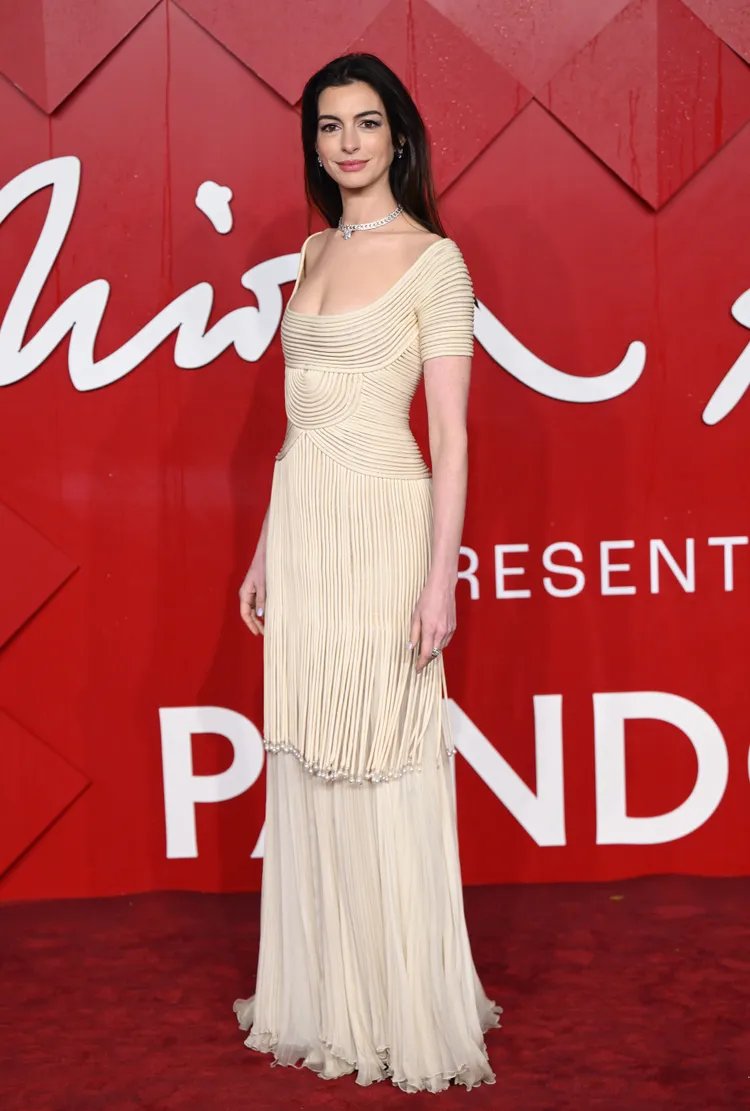
The dish behind it came out at the 2023 Fashion Awards, where Valentino received the Outstanding Achievement Award [4]. Giancarlo Giammetti, his business and life partner, accepted it for him and explained the dress to host Law Roach. “It’s vintage Valentino, and Valentino designed it thinking about spaghetti,” he said [4]. Anne Hathaway wore the gown that night, and according to her stylist, Erin Walsh, the tailor who helped make the original worked on it again [1]. Imagine I inserted some clever quip here about ‘serving’ and him having a lot on his plate, you people eat that up!
Answer: Dolls
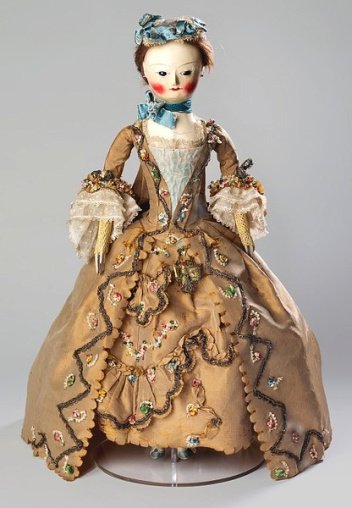
Before fashion magazines and models, before bids on eBay and bots on Grailed, dressmakers showed new styles on dolls called Pandoras. A customer would go to a store, or the store would come to them; they would look over all the options and pick the style and the fabric they wanted. Each doll came fully dressed, with the right undergarments and accessories underneath [1]. The V&A traces the practice to the 14th century, when Pandoras carried the latest fashions between the courts of Europe. By the 18th century, dressmakers were sending them all over Europe and America to a much wider clientele, and by the end of that century fashion magazines had taken over [2]. According to THATMuse, when Britain and France were at war in 1712, the dolls were exempt from the ban on enemy imports and even got a military escort [3]. The V&A also records that during the Napoleonic Wars, the dolls were let through from Paris to London so English women could keep up with Paris fashion [1]. In a 1992 talk at the Maryhill Museum of Art, Susan Train, Vogue’s longtime Paris bureau chief, said that as early as 1715 a shop on the Rue Saint-Honoré was sending large, perfectly dressed dolls to dressmakers and private customers across Europe and as far as Constantinople [4]. Before Marie Antoinette left Austria for France, she was presented with a whole set of them in different fabrics and fashions [3].
After World War II, the Paris couture houses revived the tradition to raise money for French war relief, using mannequins about a third of human size, built from wire with plaster heads [4][5]. The Théâtre de la Mode opened at the Louvre on March 28, 1945, and drew crowds daily for more than a month [4]. It then toured London, Leeds, Barcelona, Stockholm, Copenhagen, Vienna, and the dolls were completely redressed for New York and San Francisco in 1946 [5]. The mannequins arrived at the Maryhill Museum of Art in Washington State in March 1952, where they remain [4][5].
Answer: Chicago White Sox and New York Mets
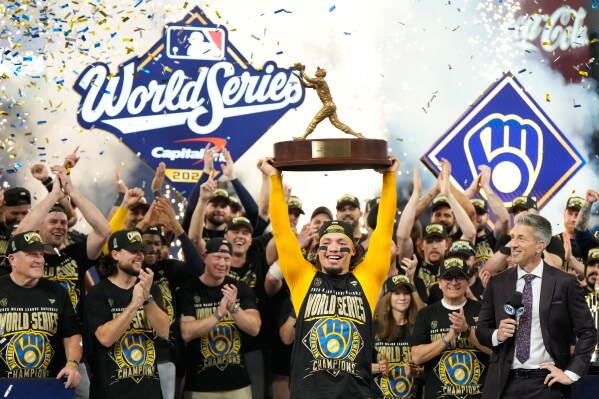
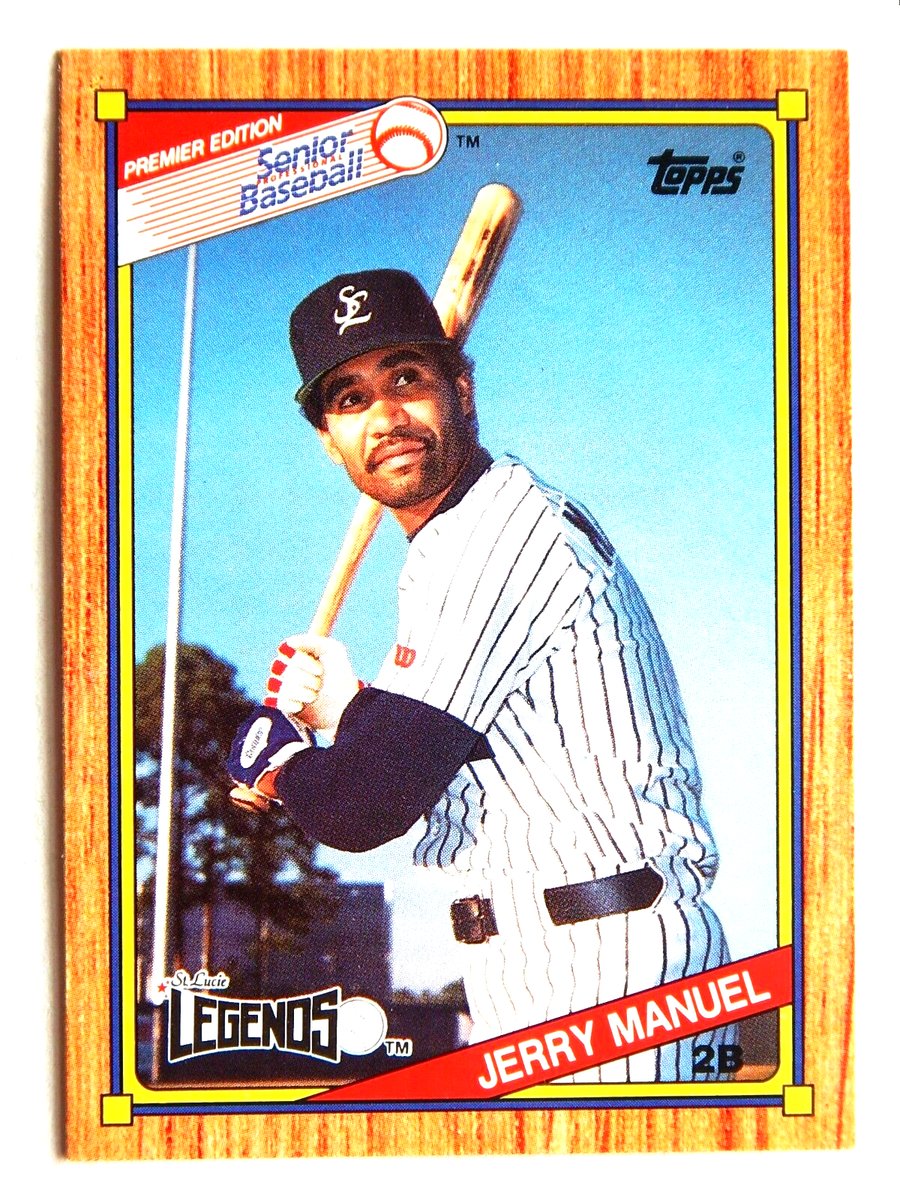
Jerry Lorenzo’s full name is Jerry Lorenzo Manuel. His father, Jerry Manuel, played briefly in the major leagues for the Tigers, Expos, and Padres [2], then managed the Chicago White Sox from 1998 to 2003 and the New York Mets from 2008 to 2010. His grandfather, Lorenzo Manuel, pitched for the Atlanta Black Crackers in the Negro Leagues [1]. Lorenzo was born in Sacramento and moved around to be near his father, first to West Palm Beach and then to Chicago. The family lived paycheck to paycheck [3] (baseball money wasn’t what it is now; the MLB minimum was $16,000 in 1975 and $30,000 in 1980 [4], and his dad spent most of those years in the minors or coaching). When his father was coaching for the Expos, his mother drove him and his three siblings 23 hours from West Palm Beach to Montreal every summer because they couldn’t afford plane tickets [3].
Lorenzo’s first jobs were in sports: corporate sponsorships for the Los Angeles Dodgers, then player marketing at the agency CSMG. In 2008 he began handling former Dodger Matt Kemp’s marketing and styling, and he started designing when he couldn’t find the clothes he wanted for him [3]. In 2019, Fear of God and New Era made a black and white 59FIFTY cap for ComplexCon Chicago with a 7 on the back, the number Manuel wore managing the White Sox. All proceeds went to the Jerry Manuel Foundation [5]. Fear of God’s Seventh Collection came out in August 2020, during MLB’s celebration of the Negro Leagues’ 100th anniversary, and included a whole category dedicated to the Negro Leagues [1]. Jerry Lorenzo seems to be carrying on the family name just fine!
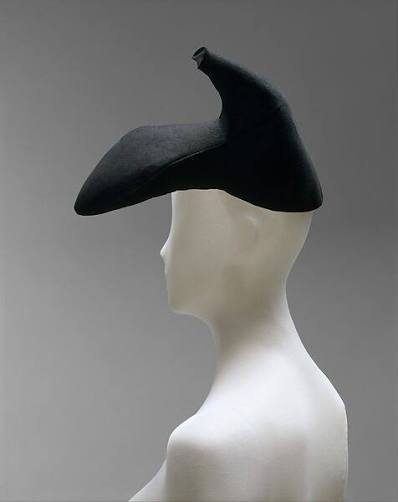
Elsa Schiaparelli x Salvador Dalí - Shoe Hat (1937–38)