
November 1, 2026
The issue of November 1, 2026
Every question from this issue, with the answers, the hints and the reading behind them.
Play the November 1, 2026 issue
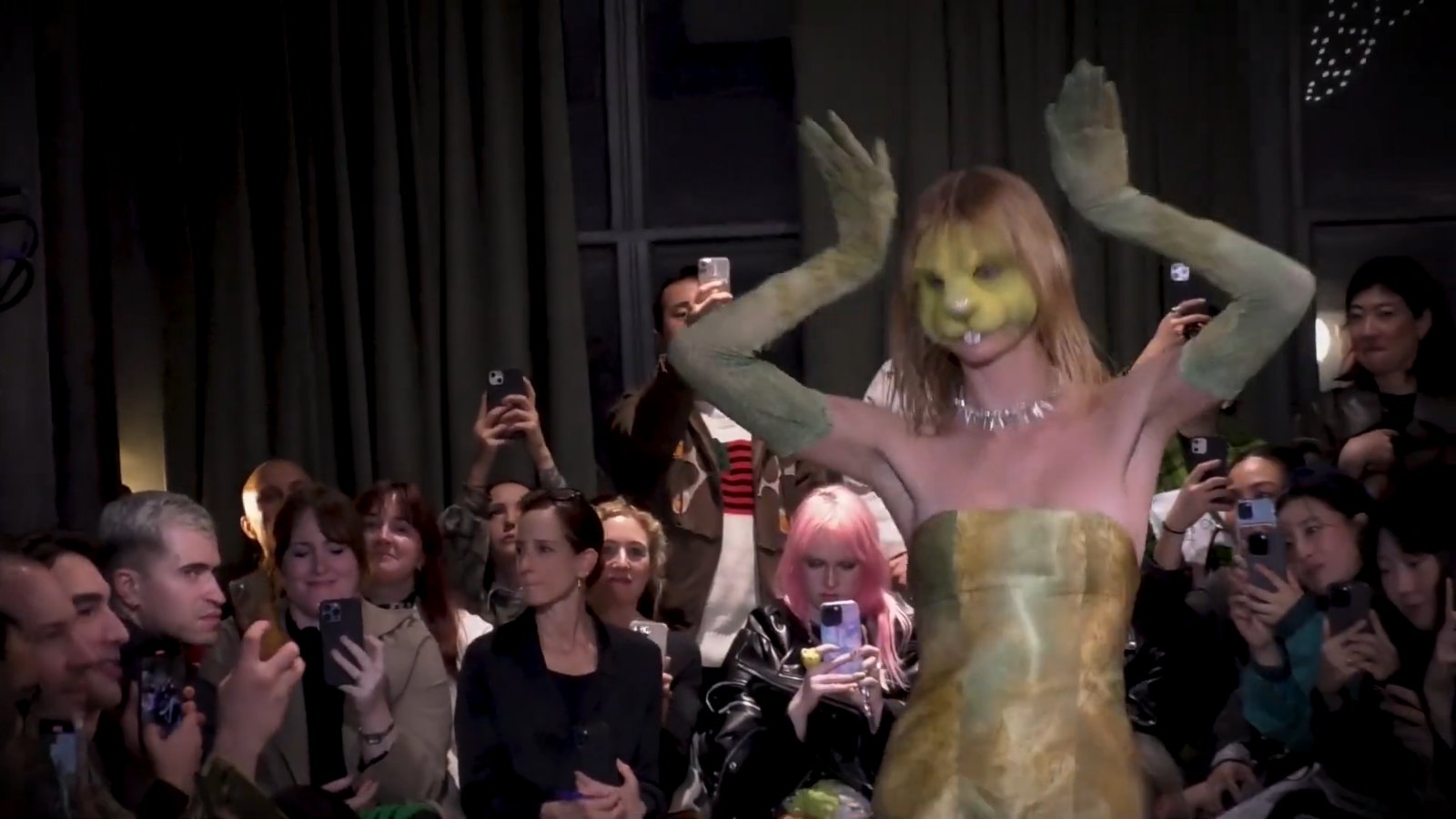
House: Collina Strada · Designer: Hillary Taymour · Season: Fall/Winter 2023 - Please Don’t Eat My Friends
I think I should go vegan. Veganism is one of those things that is 100% morally correct: it’s better for the environment, we have many foods to supplement the dietary benefits of meat, people would likely be healthier (Oreos are vegan). But it’s hard to give up on stuff like that, it’s hard to give up decadence and comfort, commodity. It’s hard not to eat your friends. And Collina Strada’s AW23 show pleads and begs that you reconsider your cravings over the course of this wonderful show.
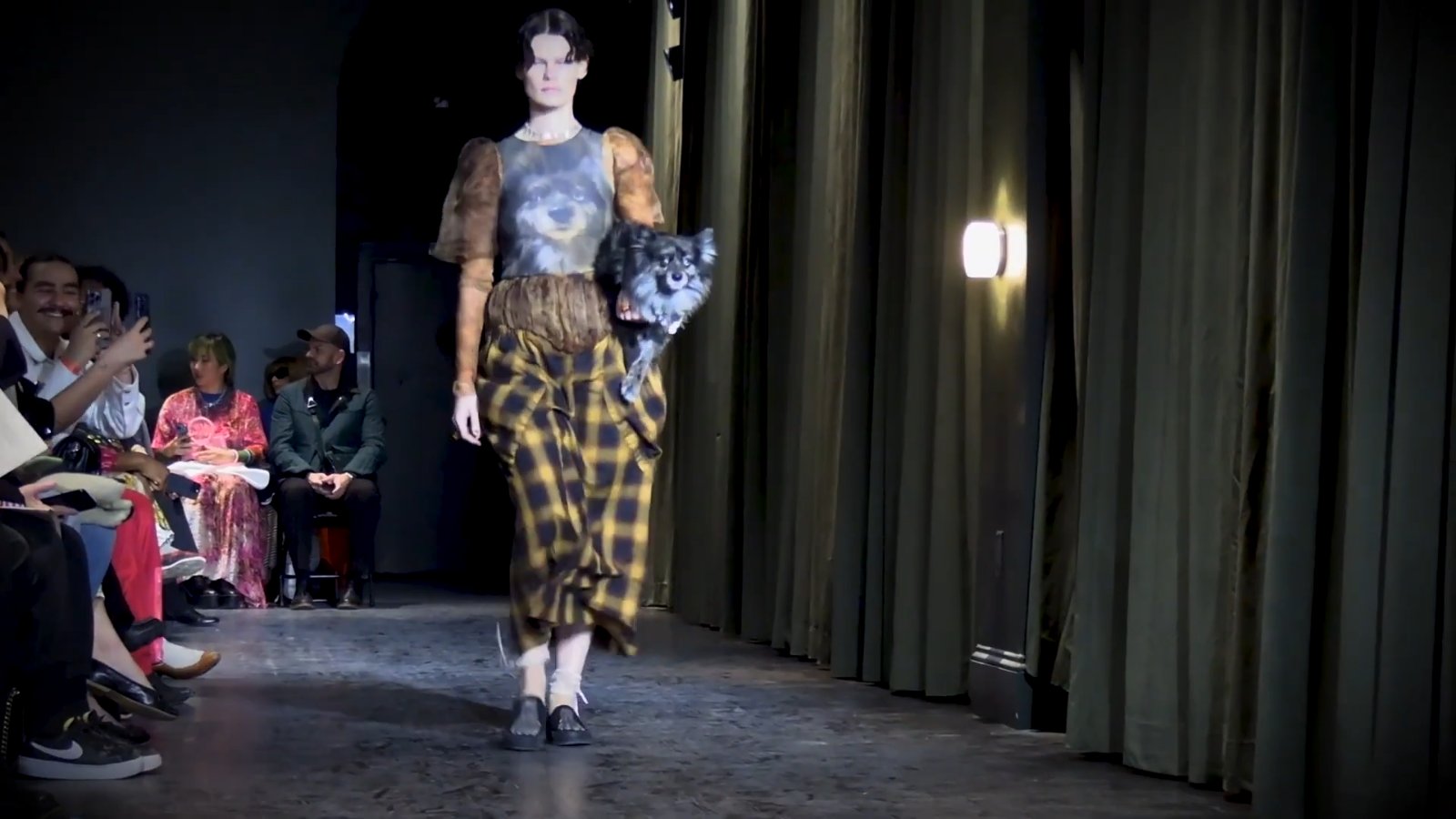
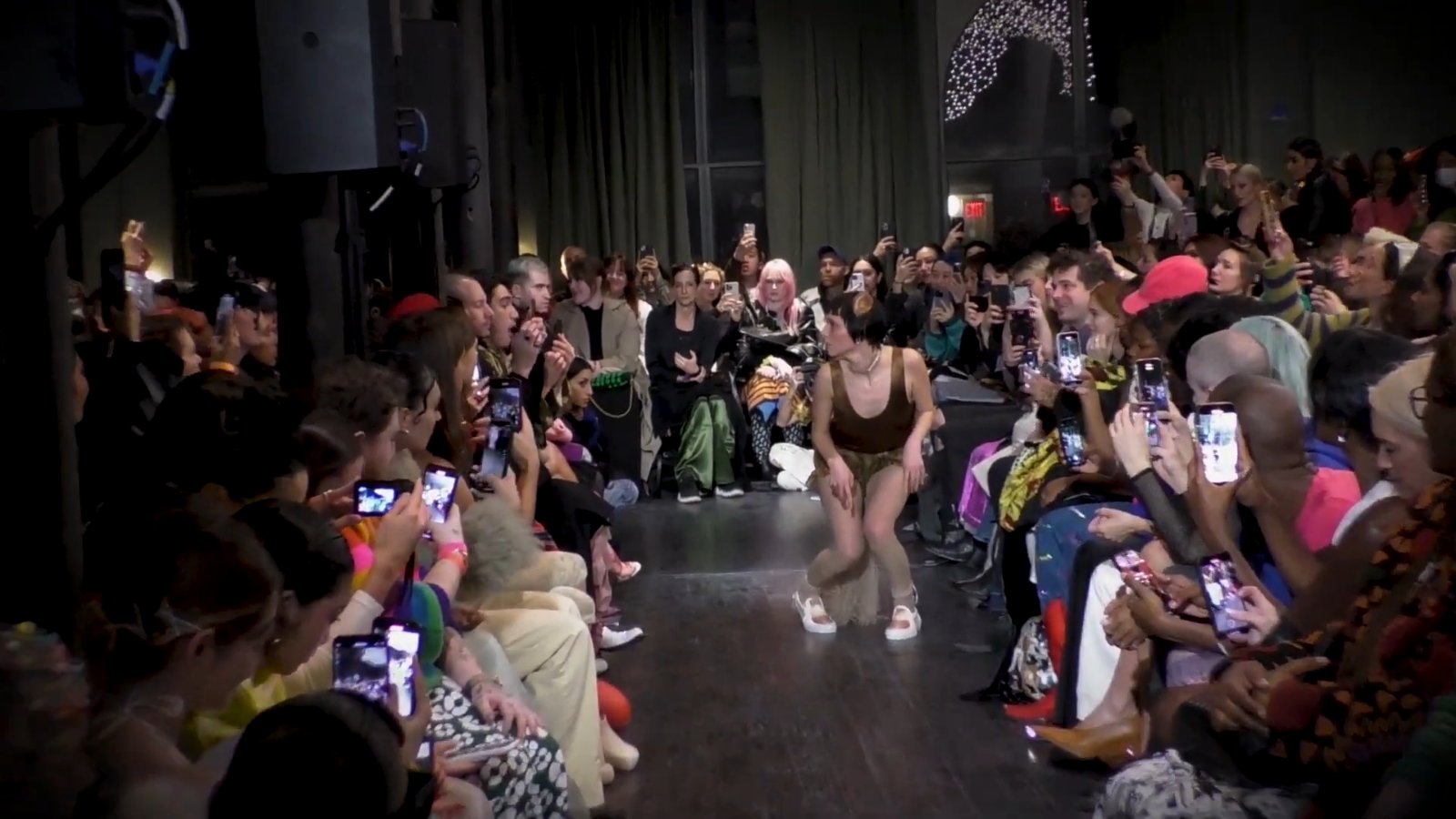
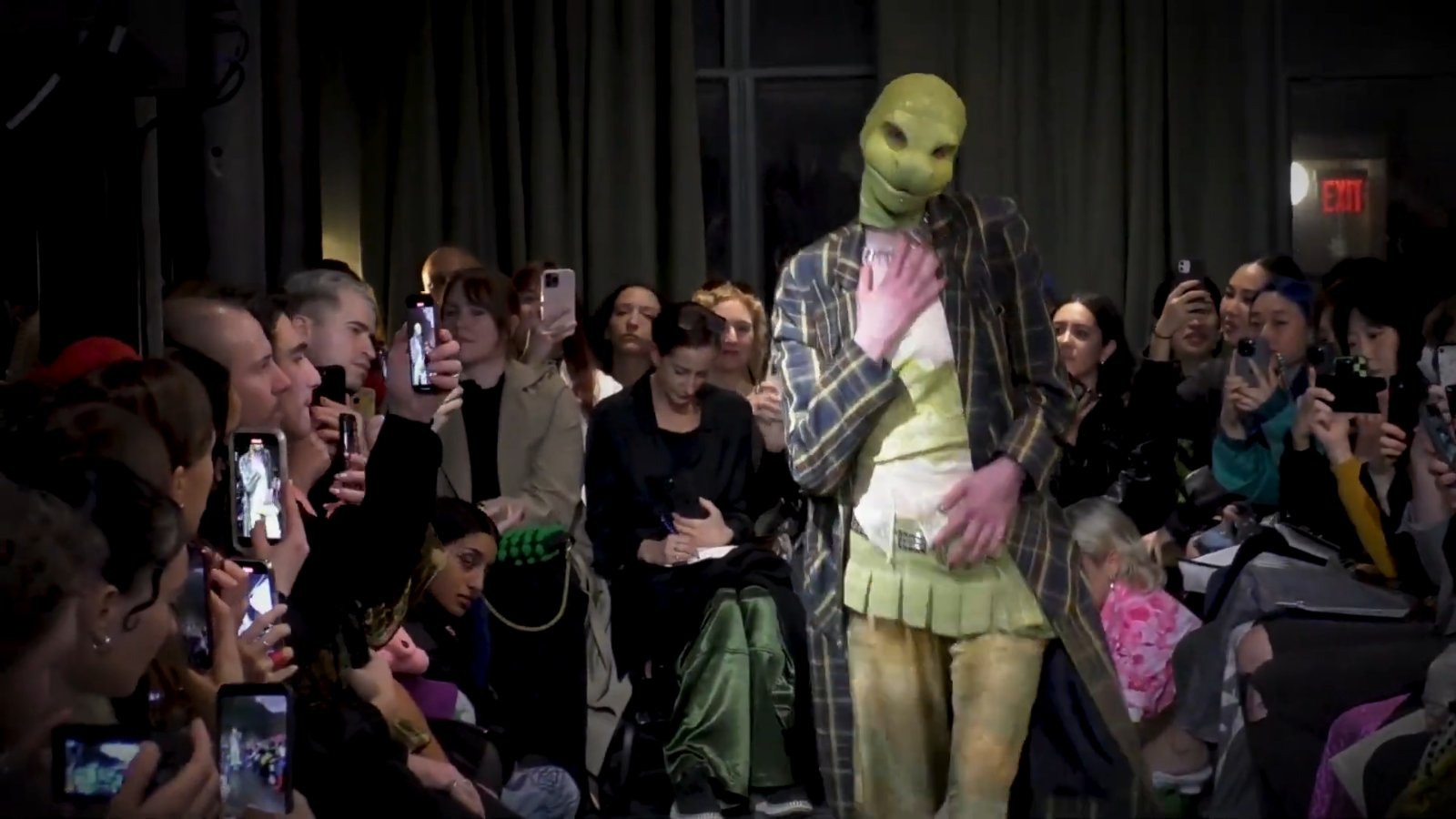
Collina Strada opened New York Fashion Week on February 10, 2023[1][2], in SoHo’s House of Cannabis, a museum still under construction at the time[3][4]. Models walked, crawled and hopped in half-animal prosthetics by Isamaya Ffrench: bedazzled pig snouts, dolphin mouths, goat ears, beaks and horns, all painted in the collection’s own prints[1][2]. Ffrench told Fashionista the theme was “Animorphs”[2]. In Paper, Mario Abad described models lunging at the front row, and a few getting down on all fours to pretend to pee on guests[5]. Taymour’s show notes said she was dressing both our “inner show pony” and our inner workhorse, and that everything is linked by tiny filaments under our feet[5][6]. Dazed noted the notes also pointed out that humans and worms share 70 percent of their DNA[7]. By her own standards the clothes were toned down. Taymour told Vogue’s Laia Garcia-Furtado she was trying to balance “the looming recession version of fashion,” and she cut the gowns in biodegradable satin, one of them with removable horns[8]. Her Pomeranian, Pow, came down the runway in a model’s arms, and Tommy Dorfman closed the show[1][8]. Reactions split: The Week reported that some viewers found the prosthetics exciting and others called them their “biggest nightmare”[9].
The show is like a live action Zootopia; models move and gesture like animals, wild and domestic. It’s like that one scene in Cheetah Girls where the dude pulls the animal masks out and presents them to the girls as their new identity. For some reason that’s the only thing I remember about that movie; why was I watching Cheetah Girls? Anyway, it seems the show is hinting at the idea that we aren’t so different than our friends in the world and in the wild and that we should cherish them and protect their environments the same way they often protect our way of life. Delicious!
Answer: Mismatched Buttons
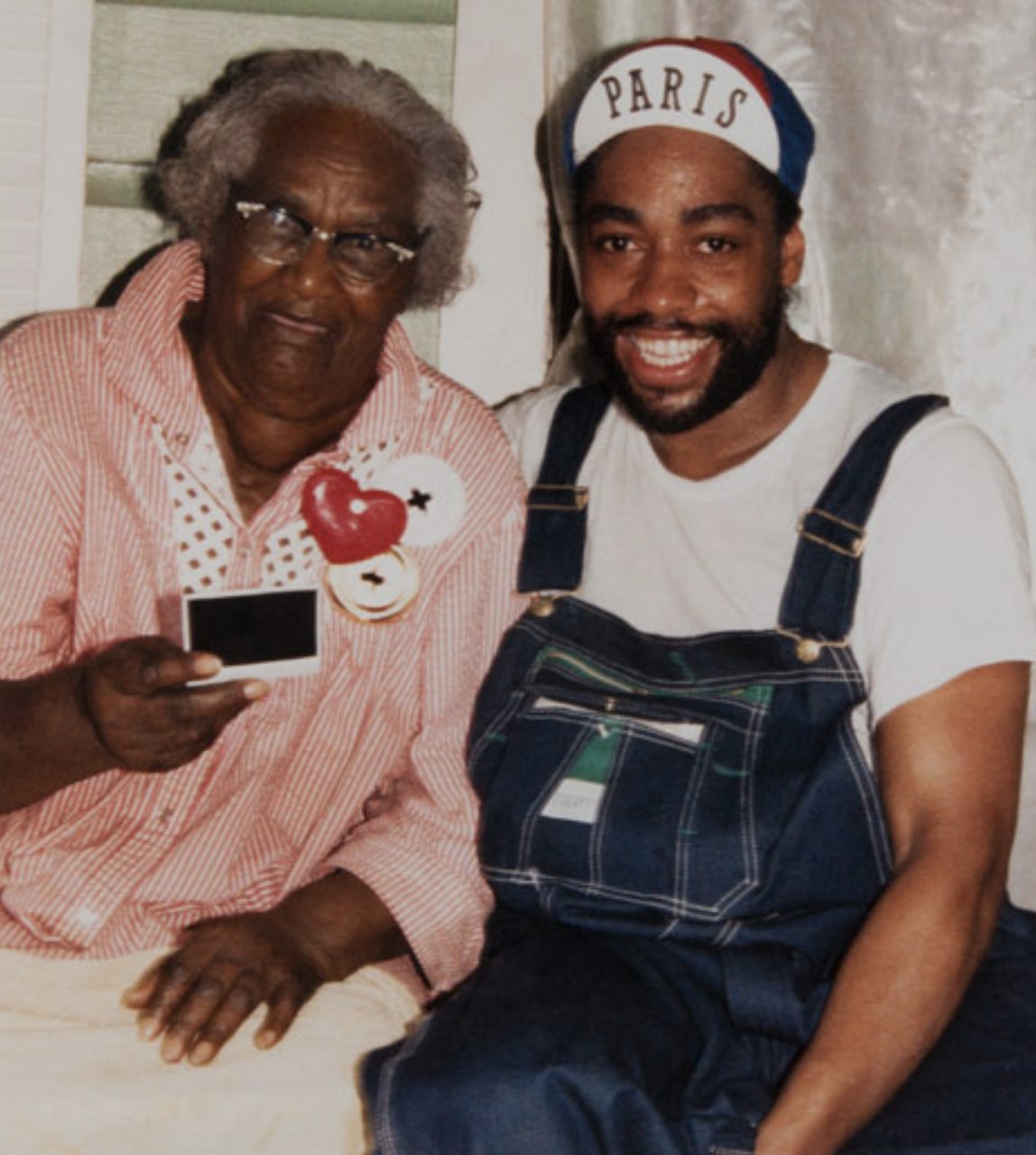
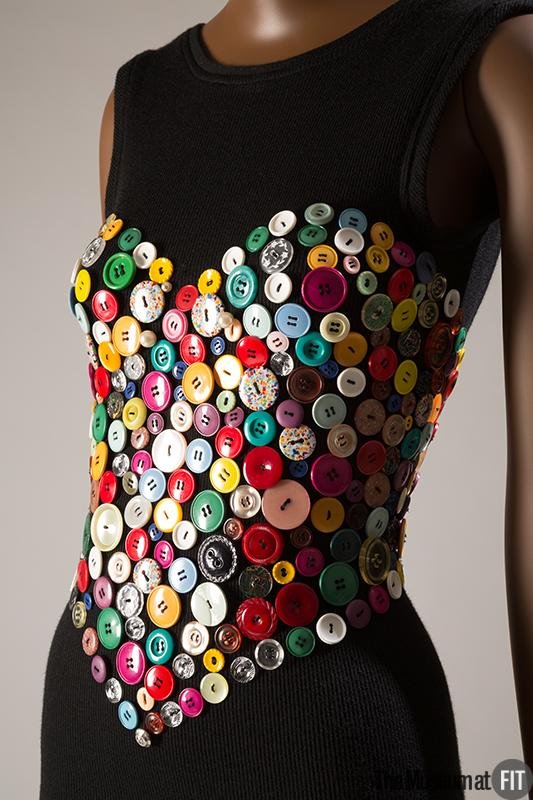
Patrick Kelly grew up in Vicksburg, Mississippi in the 50s and 60s often under his grandmother, Ethel Rainey. She was a maid and seamstress, and as a kid he kept losing the buttons off his shirts. She couldn’t always find matching replacements, so she sewed on whatever she had in her basket[1][2]. Kelly made those mismatched buttons his signature. On a Fall 1986 dress at the Museum at FIT, hundreds of them form a fake bustier shaped like a heart, another of his trademarks[3]. Colony Little of W calls the button “an homage to his southern roots”[1]. Kelly moved to Paris in 1979, and in 1988 he became the first American, and the first Black designer, elected to the Chambre Syndicale du Prêt-à-Porter[4]. He died young on January 1, 1990, from AIDS complications at 35[2][4].
Answer: June Ambrose
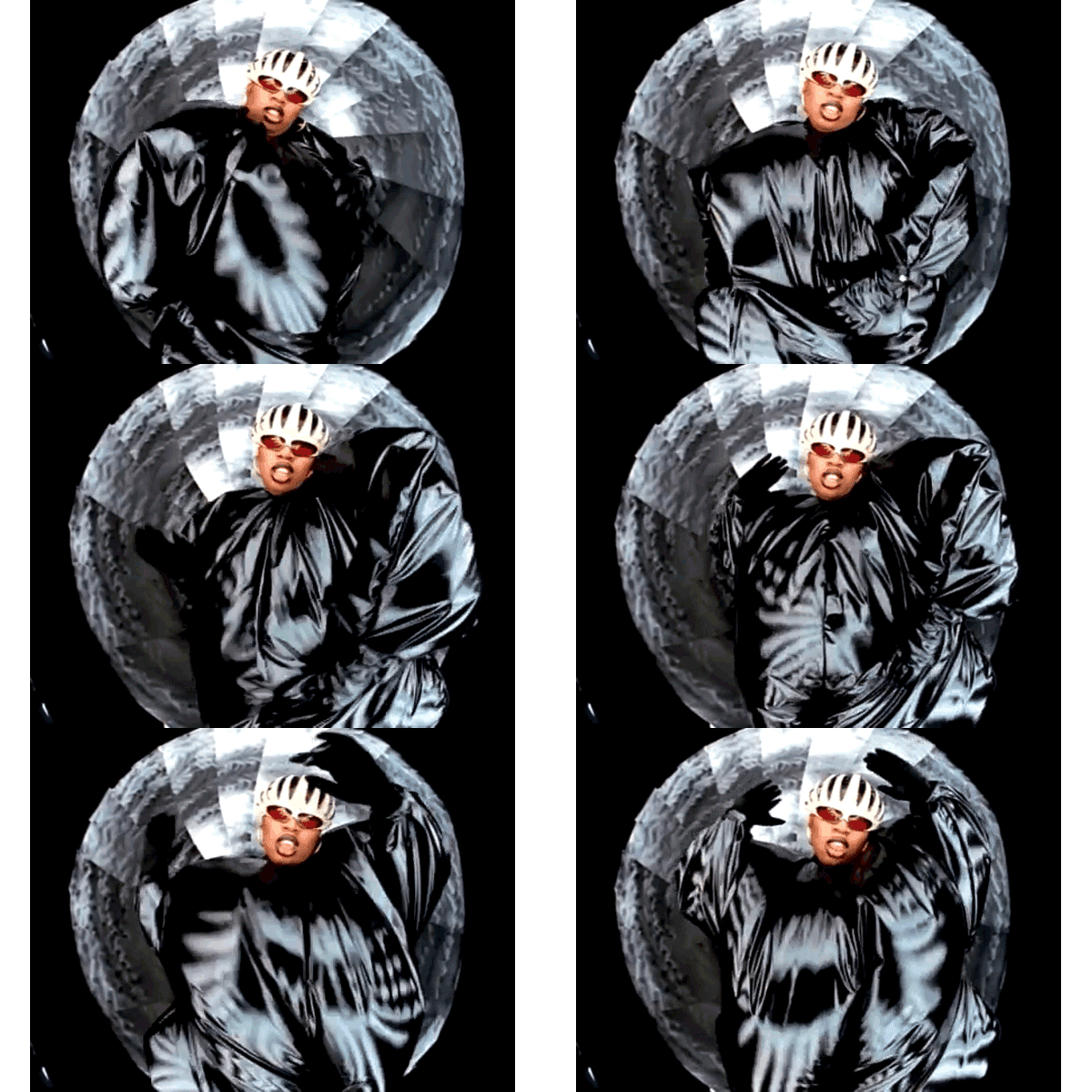
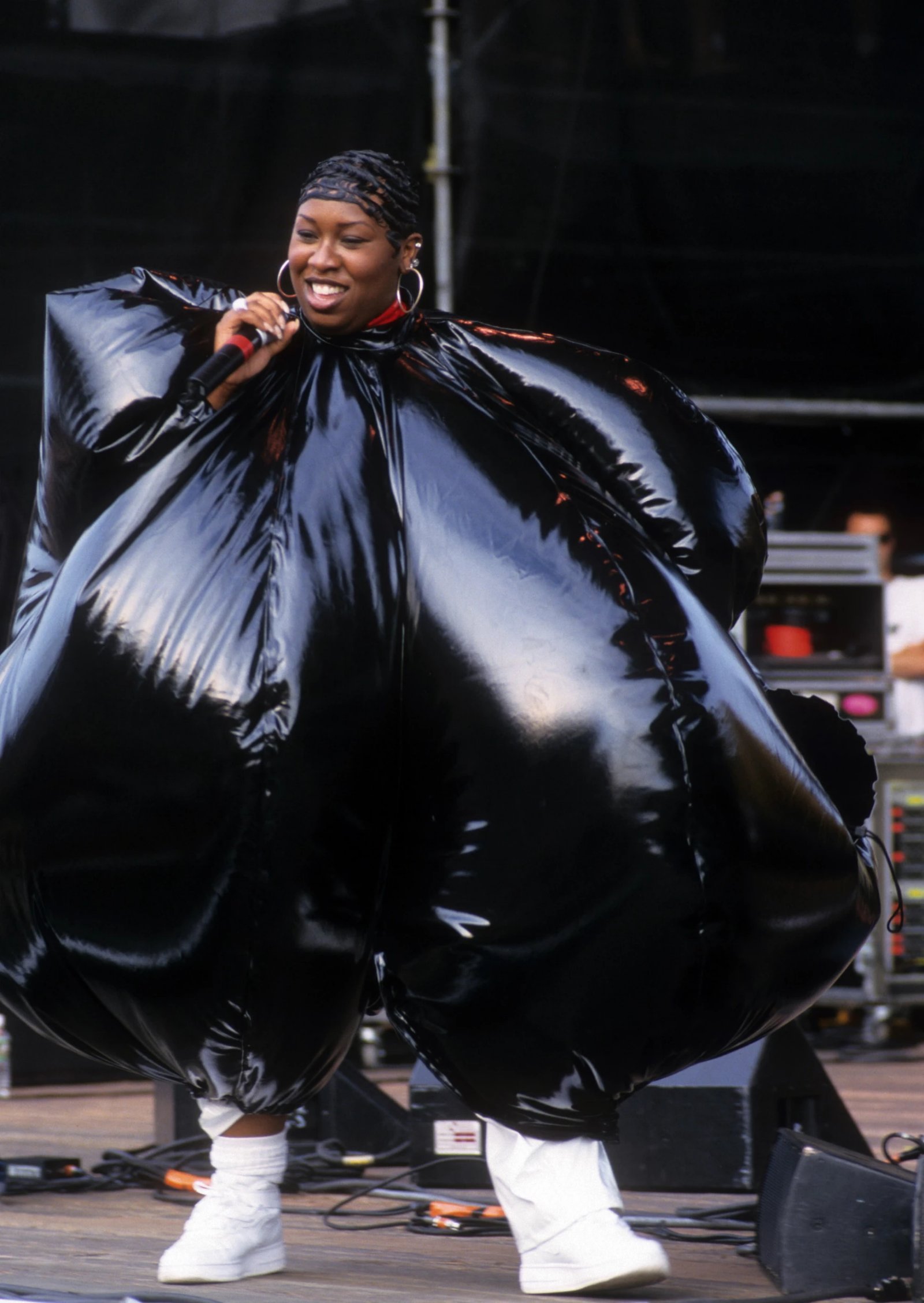
When Missy Elliott was getting ready to release 'Supa Dupa Fly' in 1997, her team asked June Ambrose how to sell a full-figured woman to mainstream America at a time when the charts were full of racy, hyper-sexualized female acts. Ambrose told NPR her answer was to make Missy a “modern-day cartoon character”[1]. Hype Williams’s treatment for the video had Missy blown up like the Michelin Man. Ambrose didn’t want a white suit and pitched shiny patent leather and vinyl instead[2]. This was her first time trying anything like this, a great departure from dressing the likes of Mase and Diddy in the 'Mo Money Mo Problems' video that was released a few weeks after The Rain[6].
They inflated Missy at a gas station, and she walked to the set down a busy Brooklyn street because she couldn’t fit in the car[3]. This one had a tire inner tube inside[1] and no stitching; she told Bustle the seams were held with tire glue[3]. The suit had a slow leak, so Ambrose stood behind it with a bicycle pump through every take. She said the leak actually gave it more movement than she’d imagined[1][2]. People to this day still call it the trash bag suit; Ambrose called it “a couture Michelin suit”[3]. She went on to style Missy’s later videos like Get Ur Freak On (classic), One Minute Man, and Lose Control[5]; and in 2020 she joined PUMA as creative director for its women’s basketball line[4].
Side note: Videos in the 90s were so cool; you had Missy and Busta releasing legendary videos all the time. Back then everything was TV, so these videos often were thought of as little films in and of themselves and were taken super seriously. Then when the internet came along, and YouTube came along, we started to see less effort overall. Smaller screens, smaller attention span, smaller budget. What was the last notable music video?
Answer: Gucci
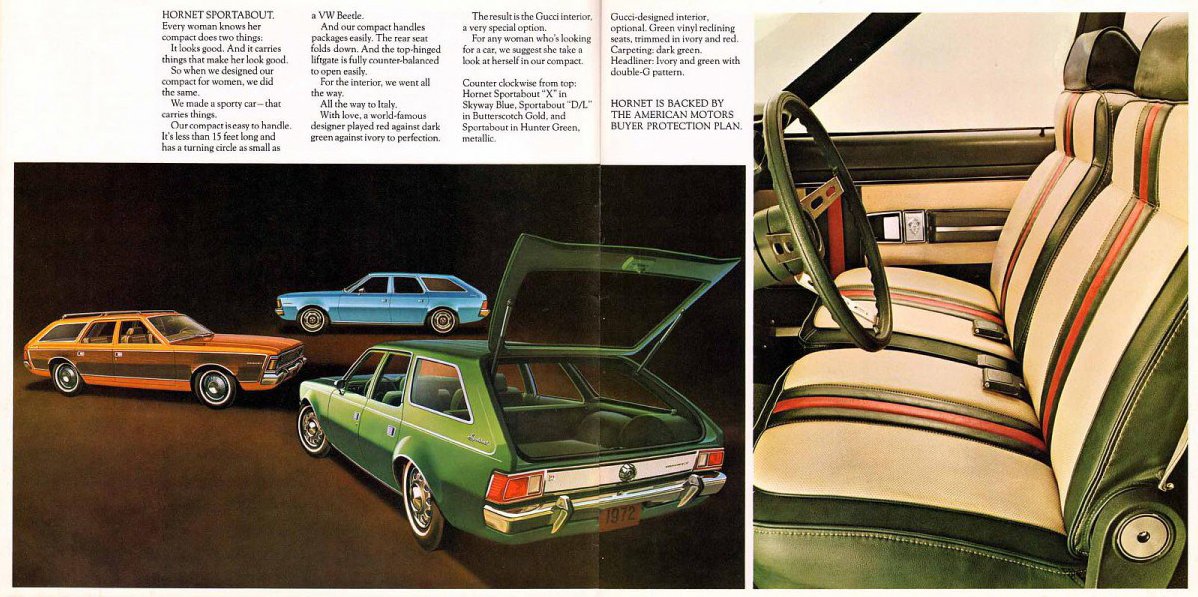
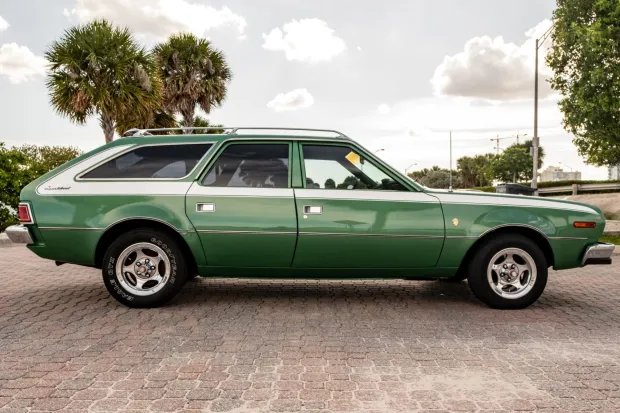
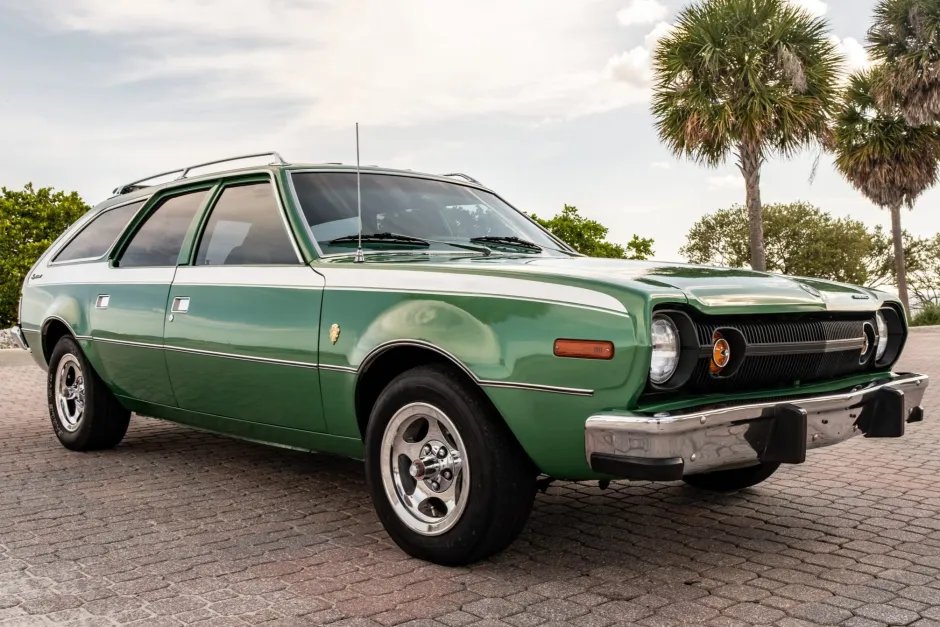
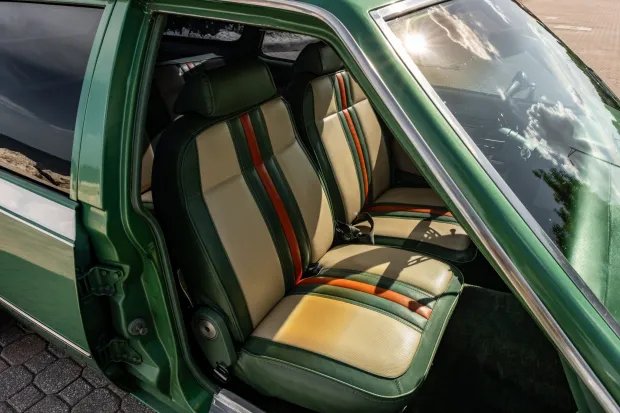
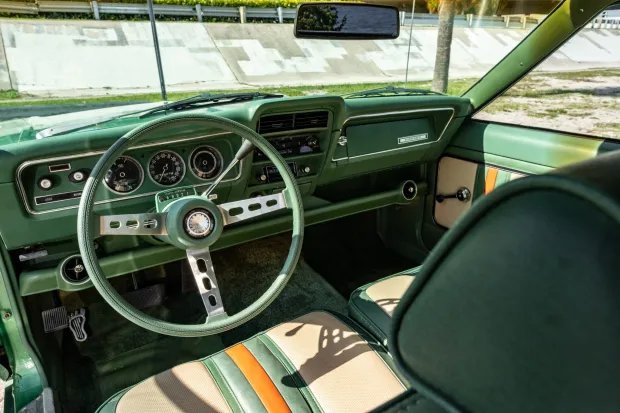
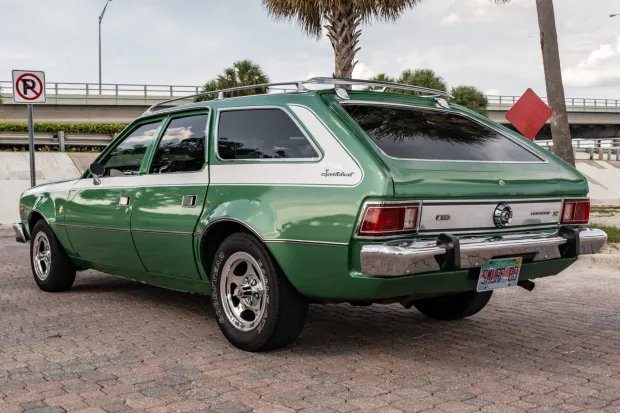
In 1972, American Motors offered its Hornet Sportabout wagon with a Gucci trim package for $141.75 on top of a base price of about $2,500. The Sportabout was the only model you could get it on[1][4]. Buyers got green and ivory seats with Gucci’s green and red stripe, green door panels with ivory inlays, and a headliner printed with the double-G logo[1]. Outside, the only signs were Gucci badges and a choice of four colors: Snow White, Yuca Tan, Grasshopper Green and Hunter Green[1][3]. Hagerty’s Sajeev Mehta suggests Gucci saw it as a “rolling billboard for the Gucci brand in America’s heartland”[2]. Road Test magazine drove a Hunter Green one in June 1972. It liked the wagon but complained that the reclining front seats were awkward to adjust[3]. AMC sold 2,583 Gucci wagons that year and about 2,250 more in 1973[1][3]. It also made designer editions with Pierre Cardin, Oleg Cassini and Levi’s, and Larry Printz of Hagerty traces Detroit’s later designer cars back to AMC[1].
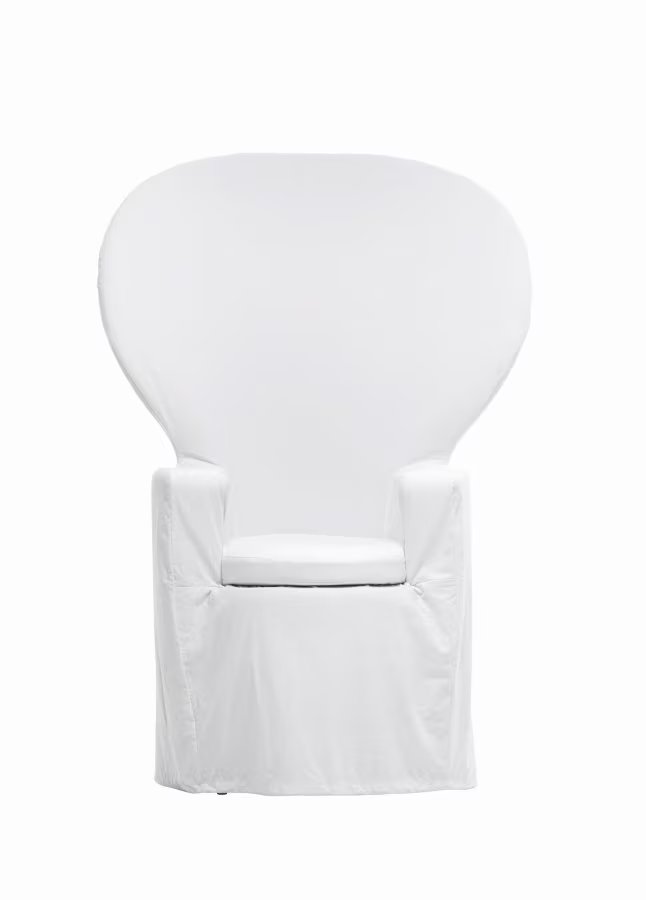
Maison Martin Margiela x Cerruti Baleri 'Emmanuelle Armchair'. This chair looks like a toilet and probably costs a lot of money. As the great Jadakiss said, “My bathroom lift up, my walls do a 360.” This chair belongs in that bathroom.