
October 30, 2026
The issue of October 30, 2026
Every question from this issue, with the answers, the hints and the reading behind them.
Play the October 30, 2026 issue
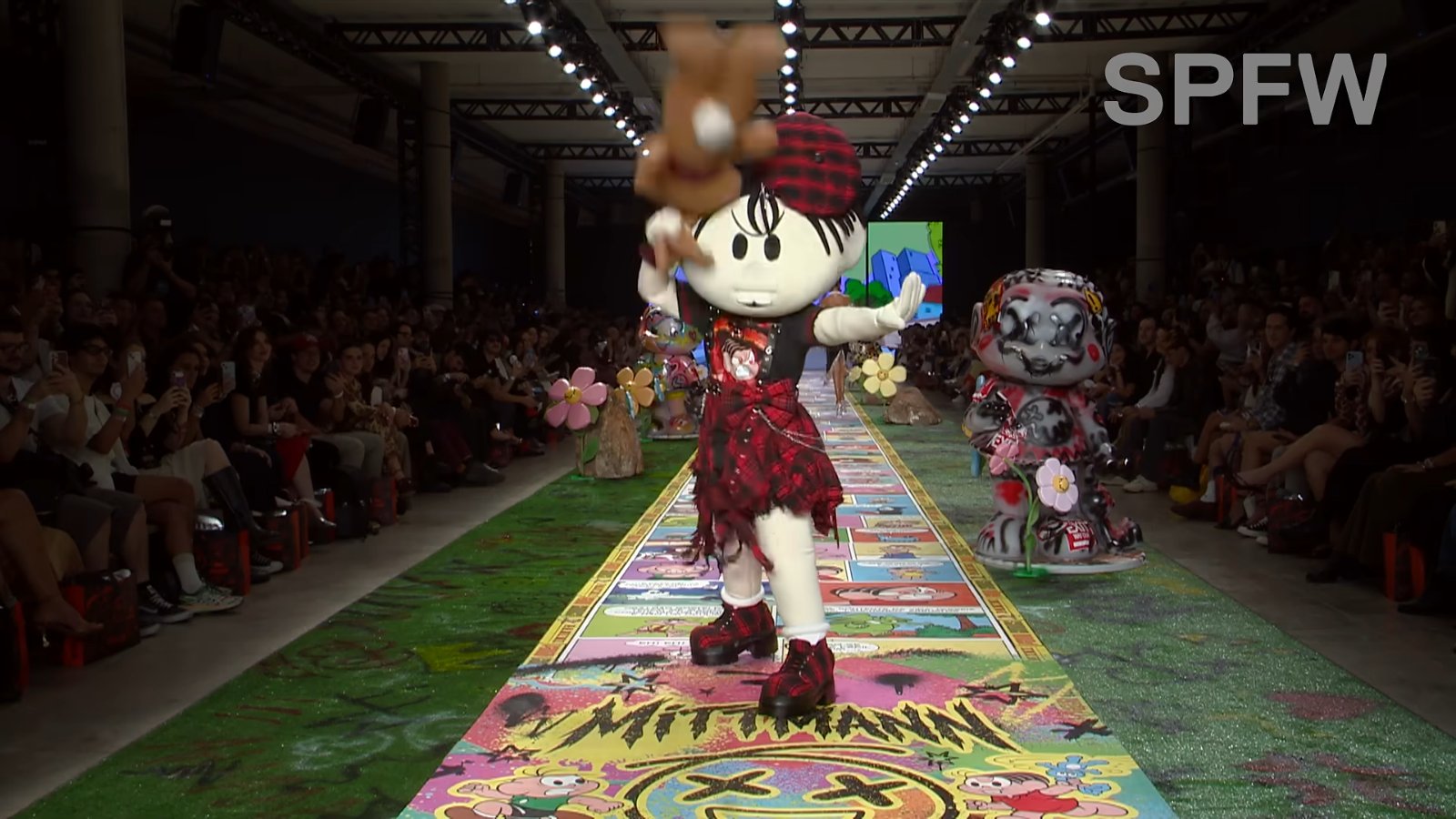
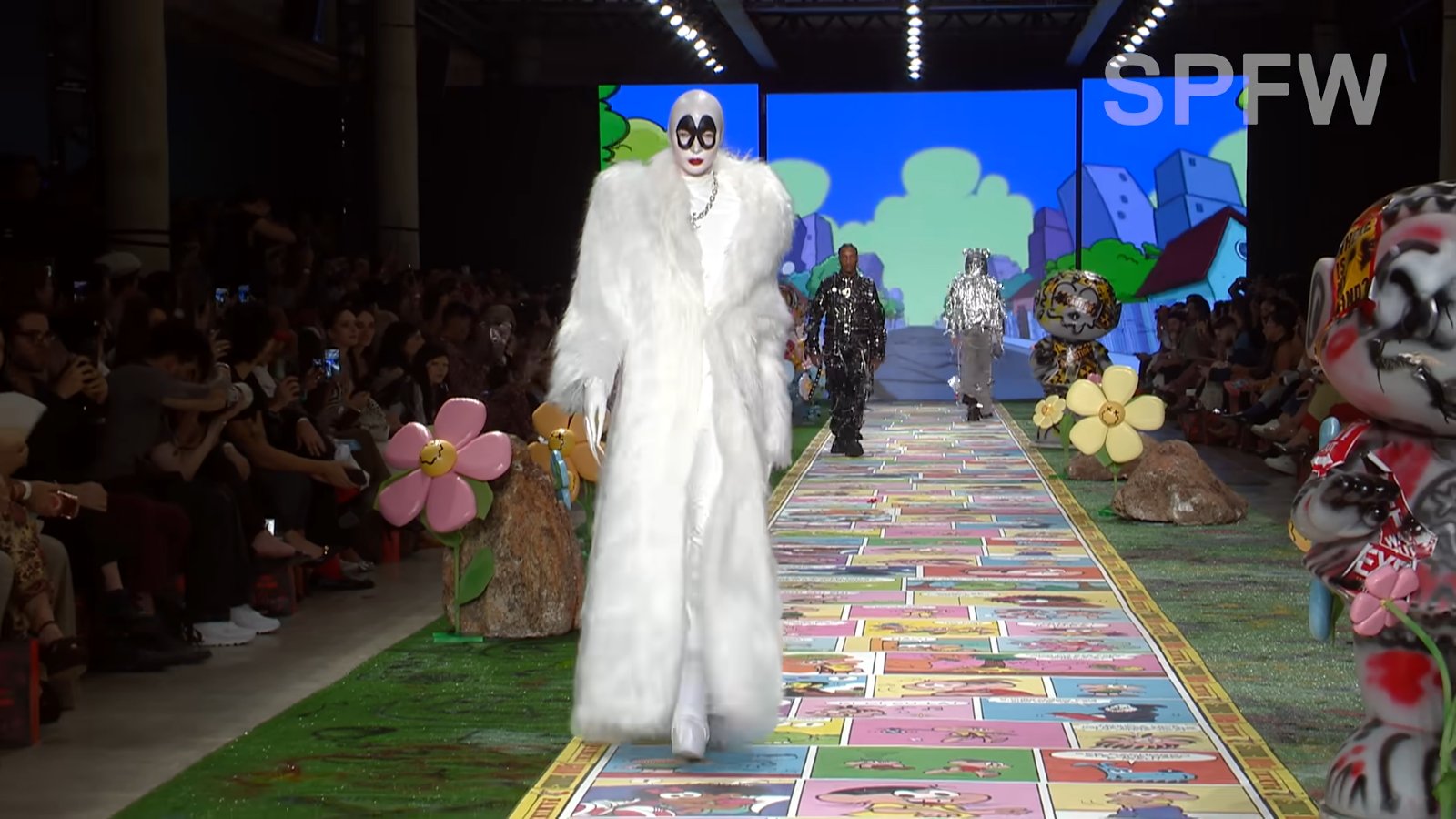
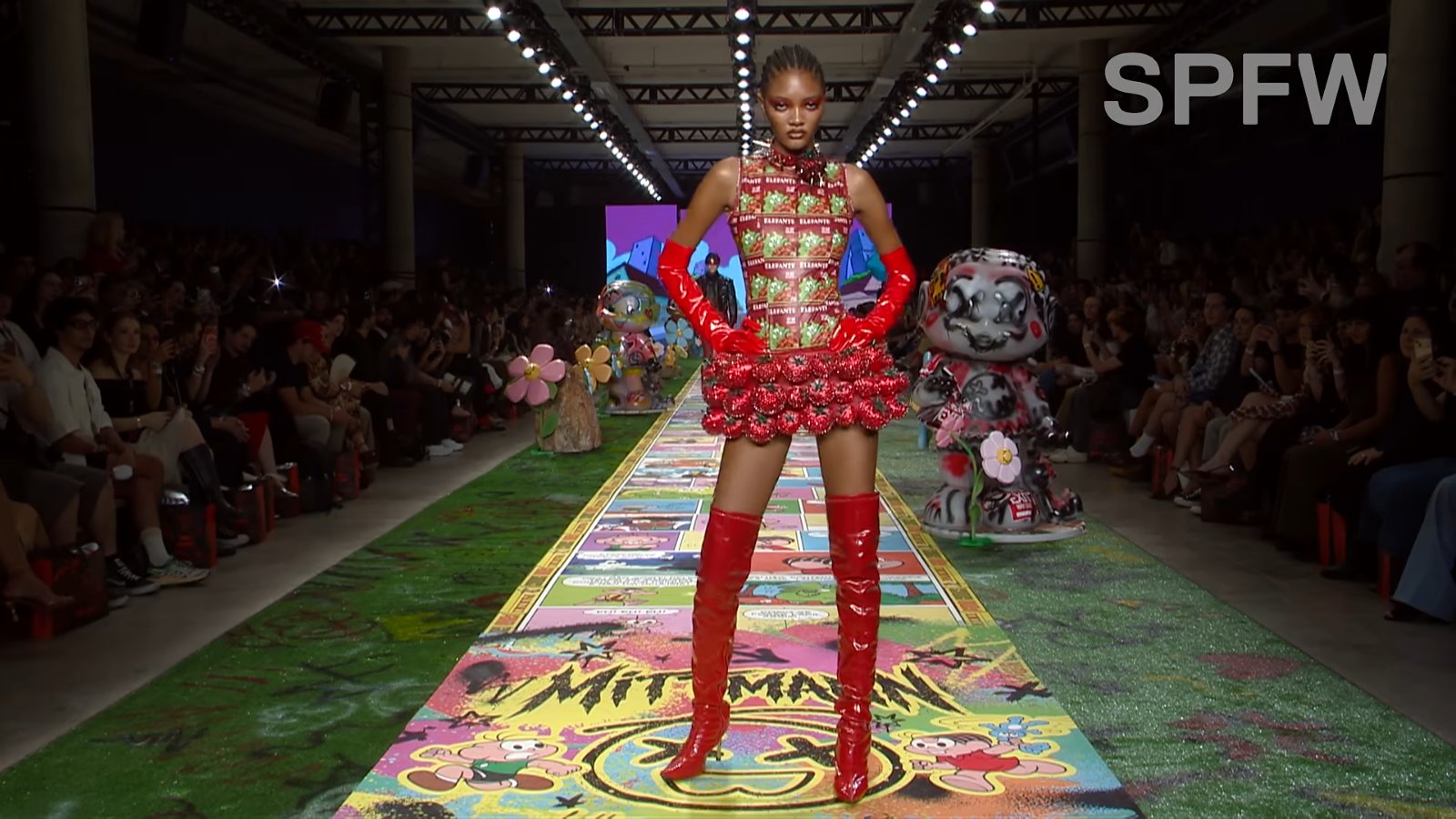
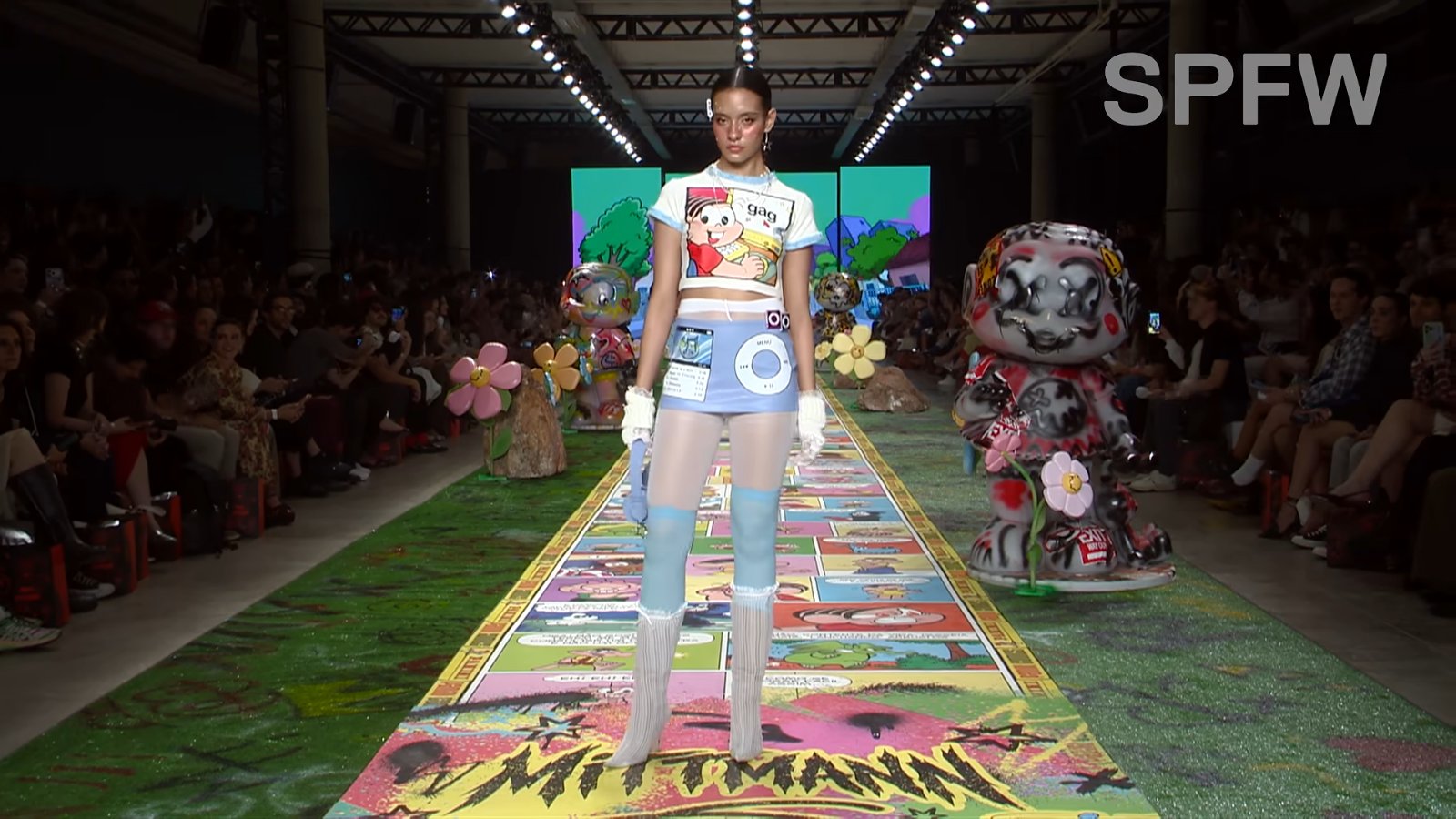
House: Dario Mittmann · Designer: Dario Mittmann · Season: SPFW N61 - BAGUNÇA
Dario Mittmann is part of Brazil’s new generation of designers. His work draws on pop culture and city life and blends Western and Eastern influences[4]. For SPFW N61, he teamed with MSP Estúdios, Mauricio de Sousa’s studio, to close out the cartoonist’s 90th-anniversary celebrations. It was the first fashion show dedicated to de Sousa’s work[2]. It took over a year for the partnership to be solidified, and in the end, Mittmann had total creative freedom.
The collection, “BAGUNÇA: O belo caos de ser humano” (“Mess: The Beautiful Chaos of Being Human”), had 35 looks. It gave the Turma da Mônica characters a punk makeover, mixing streetwear with romantic and underground elements[1]. Mittmann explained the title: “Quando você é criança, te chamam de bagunceira” (“When you’re a kid, they call you messy”). He described the main look as “messy girl” (ELLE Brasil). He also said, “Para mim, a Turma da Mônica sempre falou sobre crianças diferentes, imperfeições humanas e o caos bonito de existir” (“To me, Turma da Mônica was always about different kids, human imperfections and the beautiful chaos of existing”) (Bruna Magatti, Propmark).
In his words, “Eu trouxe os personagens para o meu universo” (“I brought the characters into my universe”) (ELLE Brasil). Cebolinha, Magali, the dog Bidu, the little ghost Penadinho and Mônica’s stuffed bunny Sansão showed up in prints from different eras with rock and gothic influences. Penadinho came back as a traumatized adult, and Sansão’s plush look was darkened. There were skulls and horror-film references on oversized tees, pants and dresses, plus distressed lace, piercings, wide jeans, puffers, plush trim, long fur coats, fuzzy sleeves and platform boots[1].
The set was inspired by comic book pages, and Xamã, MC Caveirinha, KayBlack and Dallas Devil made appearances[1]. A new Turma da Mônica comic, published by Panini during the event, saved its ending for the runway, and one look also appears in it as a paper doll[2]. Mittmann himself appears in that comic as “Darinho” (ELLE Brasil).
To me, it felt like cartoons coming to life: the unwieldy imagination of a child, Saturday-morning cartoons on a sugar rush, Looney Tunes, Kappa Mikey, Ed, Edd n Eddy, Foster’s Home for Imaginary Friends (I’ll stop here because I will list 100 shows). It reminded me of the Jimmy Timmy Power Hour crossovers, where Jimmy Neutron and the Fairly OddParents end up in each other’s worlds, or the episodes where cartoons cross into the real world. It has Who Framed Roger Rabbit and even Cool World vibes, which is fitting for a show where Mittmann pulled comic characters into his own universe.
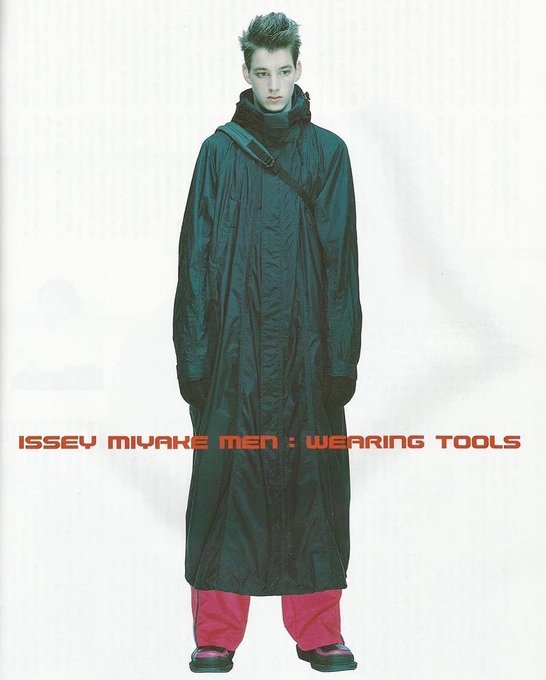
Answer: Naoki Takizawa
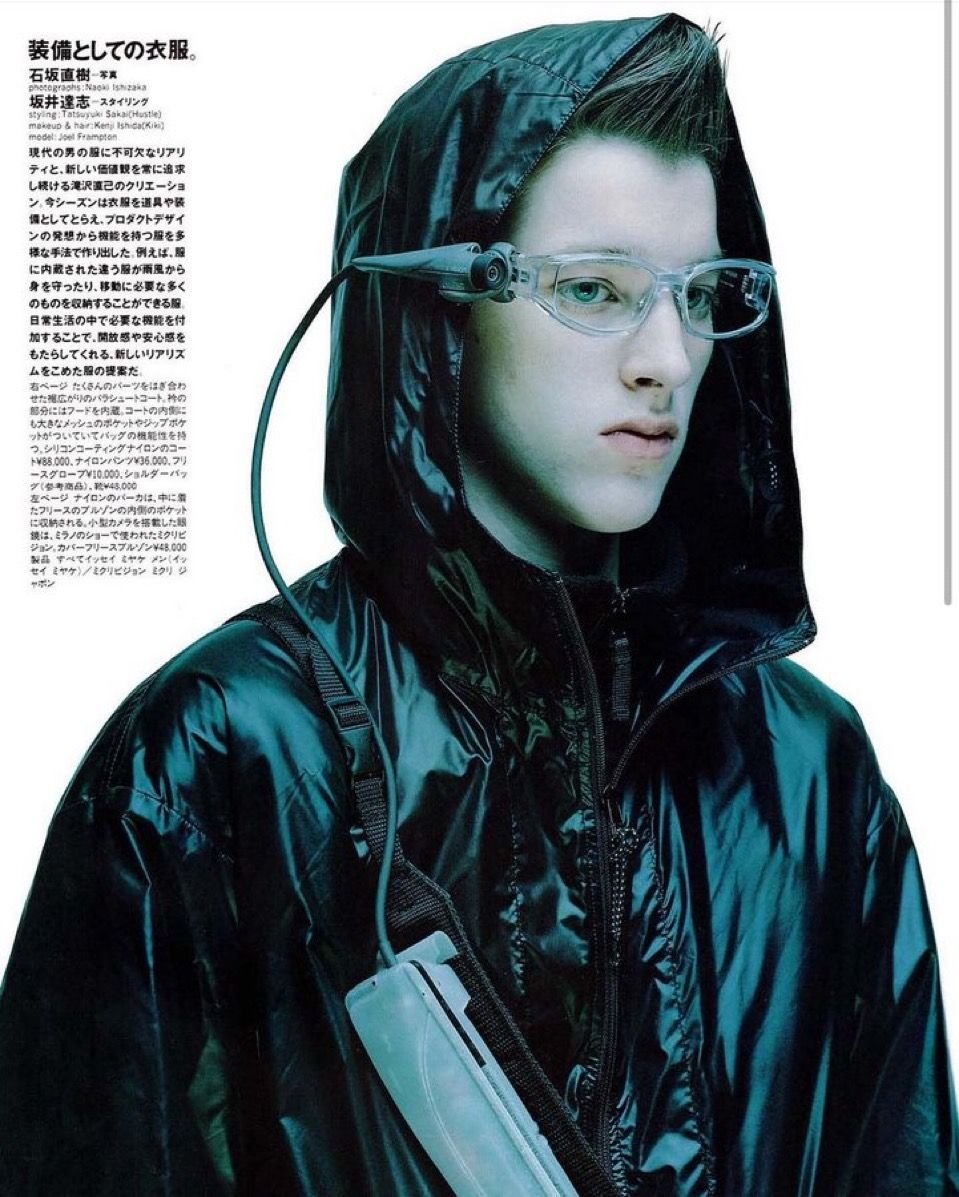
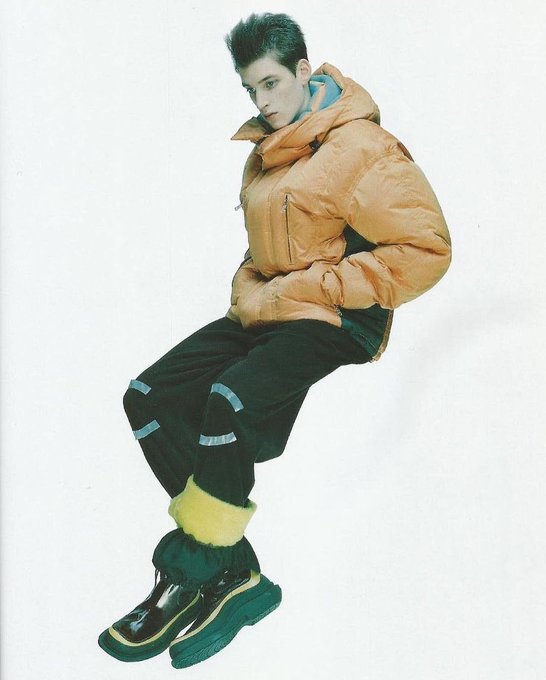
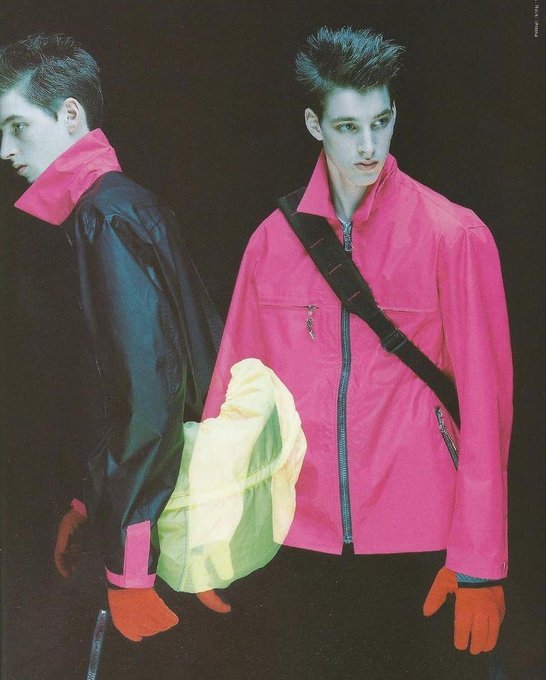
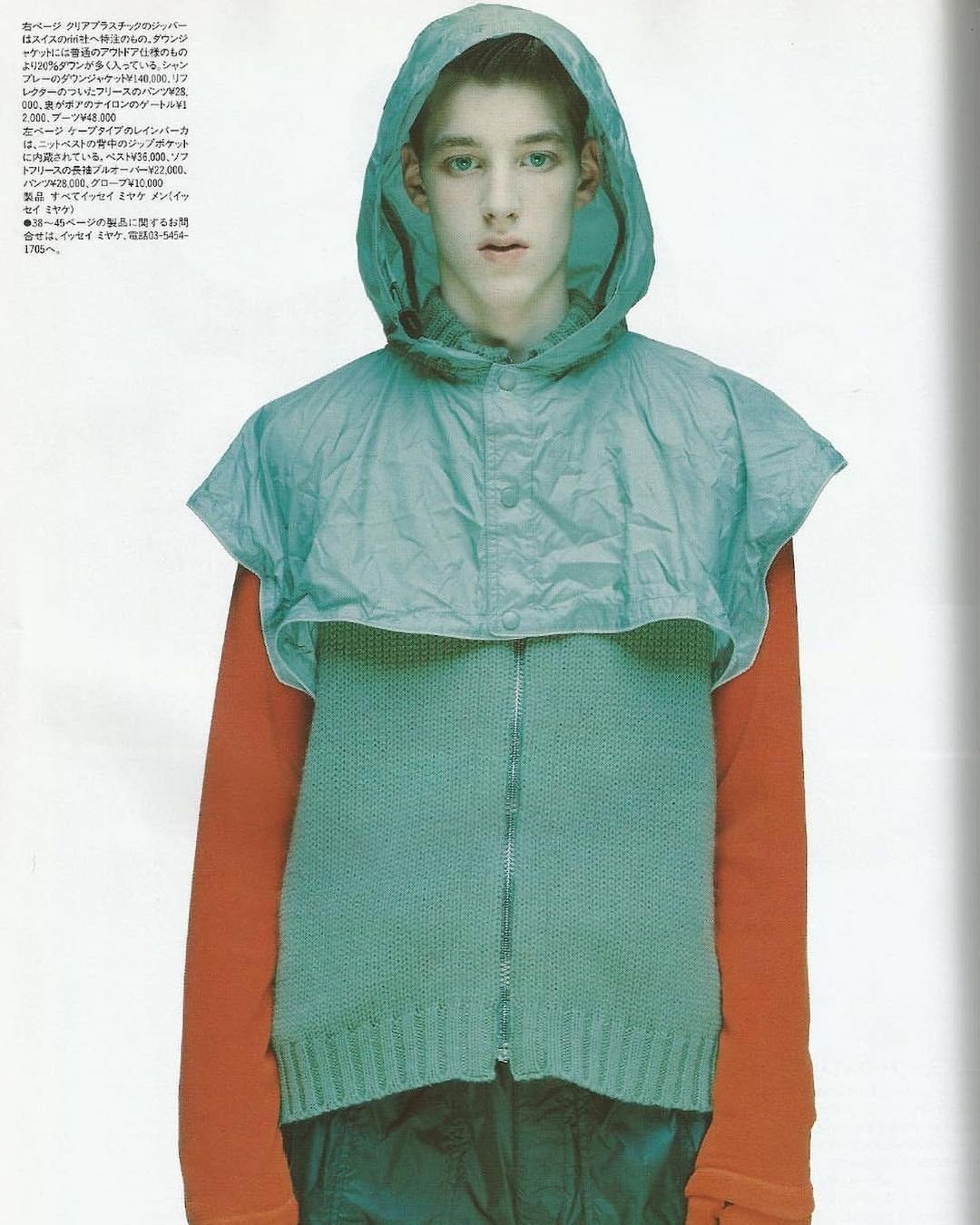
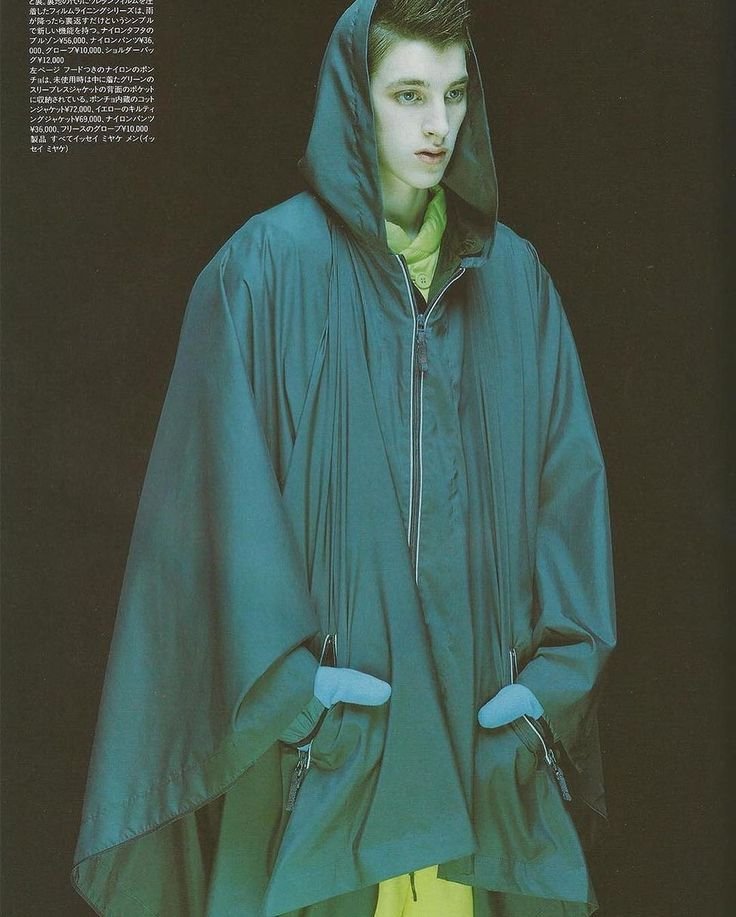
This is Issey Miyake Men for Autumn/Winter 2000, designed by Naoki Takizawa. The editorial, “Wearing Tools,” ran on pages 38 to 45 of Mr. High Fashion No. 97, published by Bunka Publishing.
Credits:
Photography: Naoki Ishizaka
Styling: Tatsuyuki Sakai (Hustle)
Makeup and hair: Kenji Ishida (Kiki)
Model: Joel Frampton
Takizawa joined the Miyake Design Office in 1982 and became designer of Issey Miyake Men in 1993[2]. In October 1999 he became creative director of the main Issey Miyake line, starting with the Spring/Summer 2000 collection[1]. Issey Miyake Men moved its shows to Milan starting with Spring/Summer 1999[1].
Headline: 装備としての衣服, “Clothing as Equipment.”
Main text (translated): “The creations of Naoki Takizawa, who never stops pursuing two things: the reality modern menswear can’t do without, and new values. This season he treats clothing as tools and equipment. Starting from the mindset of product design, he used many different methods to make clothes that work. For example, a second garment built into a garment protects you from wind and rain, and other clothes can hold the many things you need when you’re on the move. By adding functions you need in everyday life, these clothes bring a sense of freedom and a sense of security. It’s a proposal for clothing with a new realism.”
Captions (translated):
Long coat: “A parachute coat pieced together from many panels, flaring out toward the hem. A hood is built into the collar. Inside the coat there are also large mesh pockets and zip pockets, so it works like a bag.”
Camera glasses: “The nylon parka packs into an inside pocket of the fleece blouson worn underneath. The glasses fitted with a small camera are Mikli Vision, used in the Milan show.” The glasses are credited to Mikli Vision (Mikli Japon). Issey Miyake was among the designers who had Alain Mikli design eyewear for them starting in the early 1980s[4].
Pink jacket: “The Film Lining series has a film bonded on in place of a lining, which gives it a simple new function: when it rains, you just turn it inside out.”
Poncho: “When it isn’t being used, the hooded nylon poncho is stored in a pocket on the back of the green sleeveless jacket worn underneath.”
Orange puffer: “The clear plastic zippers were custom-ordered from the Swiss company riri. The down jacket holds 20% more down than a standard outdoor jacket.”
Knit vest: “The cape-style rain parka is stored in a zip pocket on the back of the knit vest.”
Answer: Dropped them out of a window.
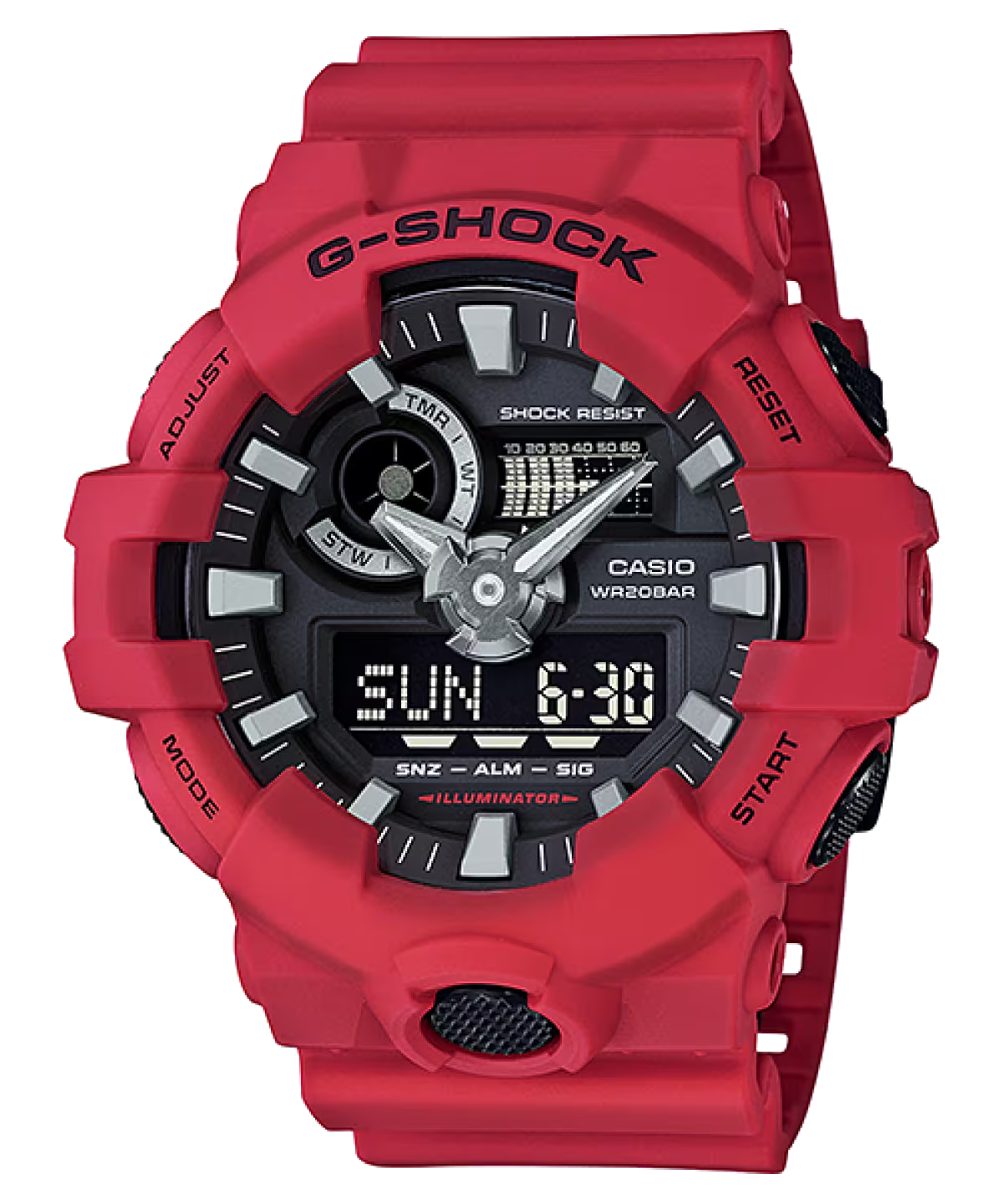
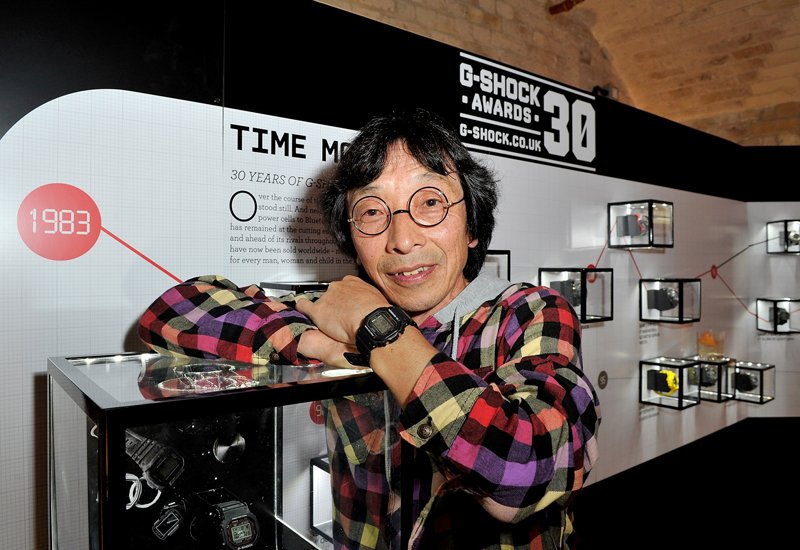
Kikuo Ibe, who designed watch exteriors at Casio, got the idea after his own watch, given to him by his father at the beginning of high school, broke when he dropped it[4]. In 1981 he submitted a one-line proposal: “A durable watch that would not break even if dropped”[1]. He formed an eight-person team called Project Team Tough with a “Triple 10” goal: survive a 10-meter fall, resist water to 10 bar and run 10 years on a battery[3].
To test prototypes, the team threw them from a third-floor washroom window at Casio’s R&D Center onto the ground 10 meters below, then analyzed and strengthened the broken parts before trying again[1]. Over the course of two years, they made over 200 prototypes[2].
Ibe was close to giving up when he watched children playing with a rubber ball in a park next to the office. That gave him the idea of a watch “floating” inside a ball. The final design suspends the module inside a hollow case and uses five levels of shock absorption[1]. Nippon.com says this “float” structure is still the foundation of G-Shock watches today[3].
The first G-Shock, the DW-5000C, went on sale in 1983. It sold poorly at first, until a North American television program showed how tough it was, and then it became a worldwide hit[1].
Answer: Devoré
Devoré, also called burnout, chemically removes one or more fibers from a finished fabric[1]. The name comes from the French dévorer, “to devour” (1stDibs).
It works on fabrics made from two kinds of fiber. An acid paste is printed on in a pattern. It dissolves the cellulose fibers, such as cotton, linen or viscose, and leaves the protein or synthetic fibers, such as silk or polyester, intact[2]. On velvet, the pile is eaten away where the paste lands, leaving patterns of velvet on a sheer silk ground[2].
The technique began with wool cleaning in the mid-to-late 1800s. Wool was treated with sulfuric acid, and heat turned the plant debris caught in it to dust[1]. Yarn makers then spun delicate wool or silk with a cotton thread to hold it steady during weaving, and burned that thread away afterward. Printing the acid paste only in selected areas left lace-like openwork, and devoré grew out of this process in the late 1880s[1].
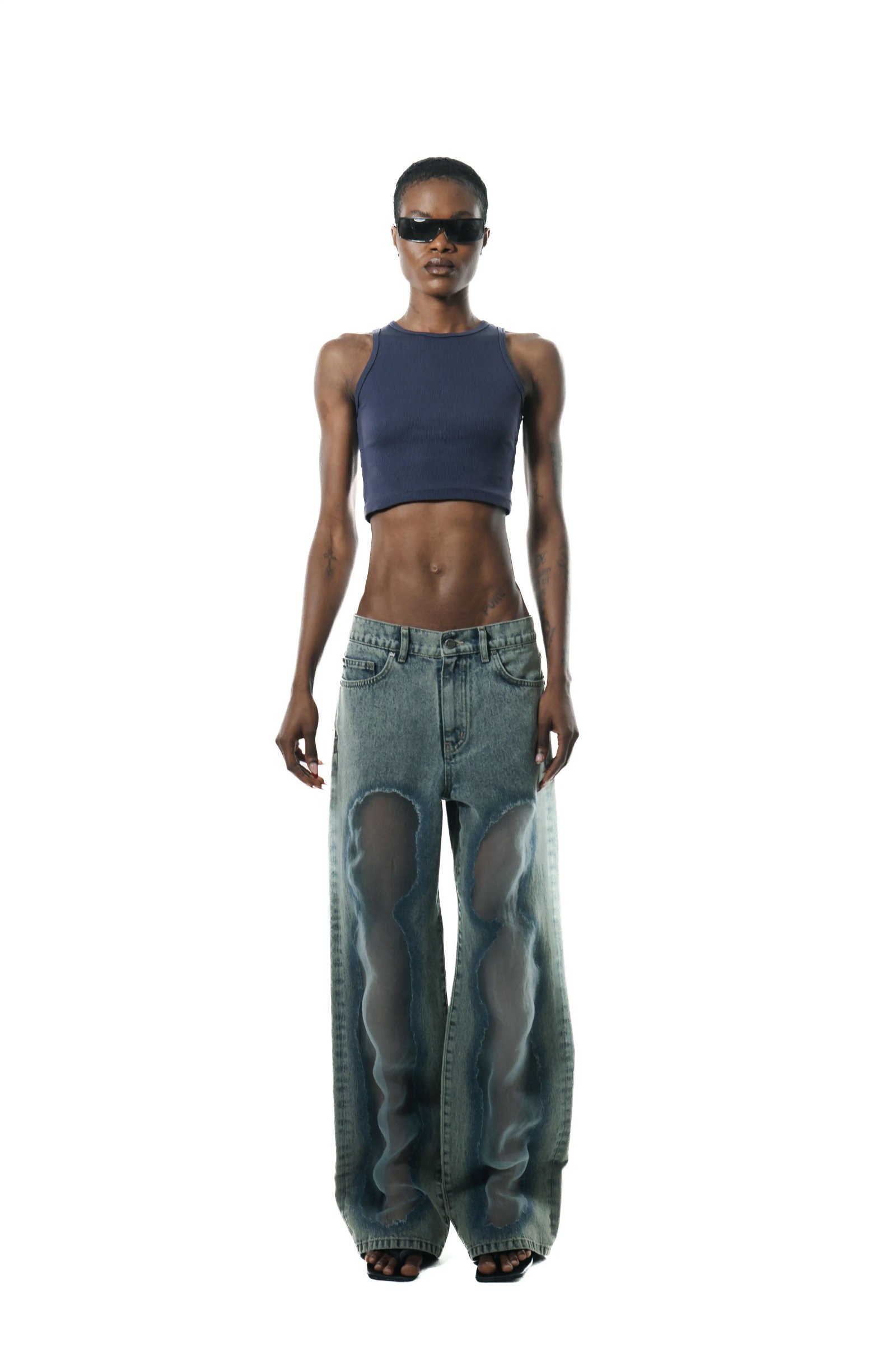
It was most popular in the 1920s, when heavy decoration met new artificial fibers like viscose rayon and acetate[1]. The RISD Museum holds a French silk chiffon devoré sample from 1926 to 1930. The technique came back in the 1990s, when British designer Jasper Conran used it[2]. Today it’s also used on denim: the cotton is broken down in chosen areas and the polyamide threads stay intact, making semi-transparent patterns[4].
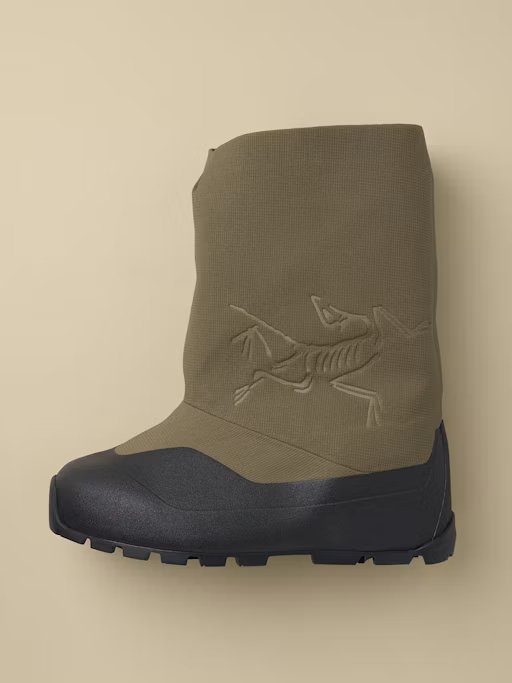
Arc'teryx Postour Boot Men's