
October 29, 2026
The issue of October 29, 2026
Every question from this issue, with the answers, the hints and the reading behind them.
Play the October 29, 2026 issue
House: KidSuper · Designer: Colm Dillane · Season: Spring/Summer 2023 - Superby’s
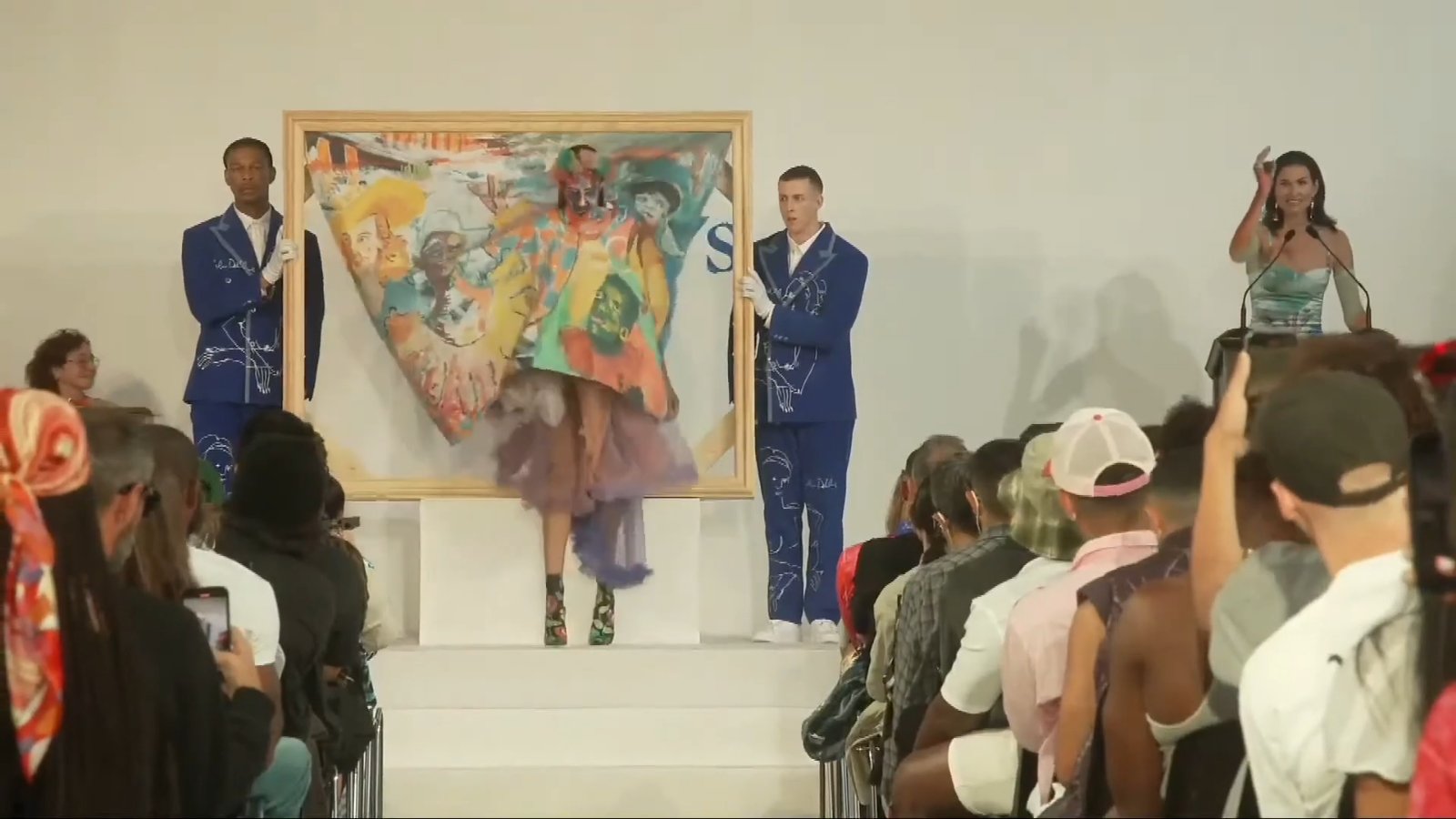
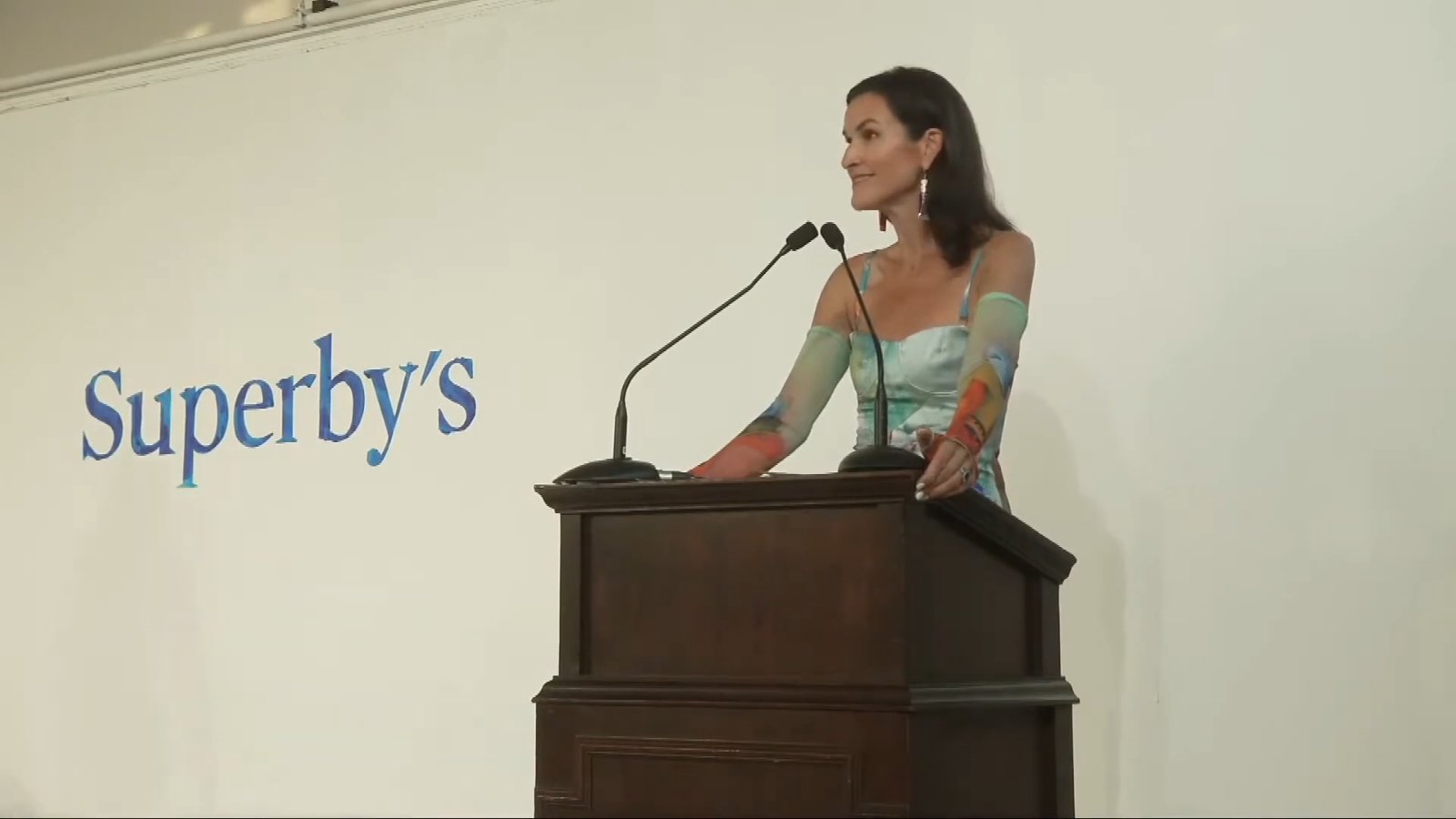
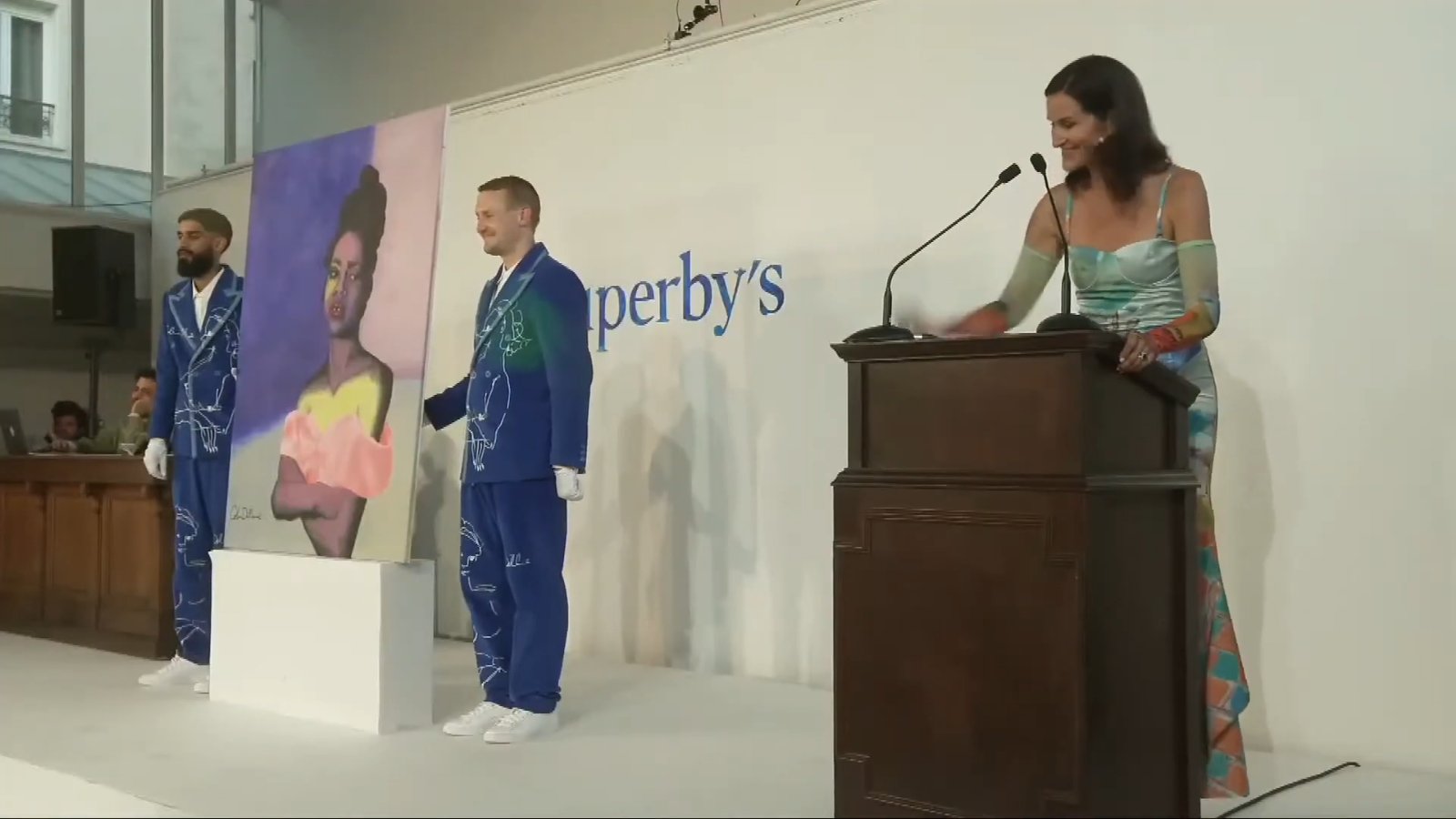
For his first in-person show on the official Paris men’s calendar, Colm Dillane turned the runway into an auction house. He called it “Superby’s,” a play on Sotheby’s, and the auctioneer was Christie’s Lydia Fenet, wearing a gown and fingerless opera gloves from the collection (Joelle Diderich, WWD). Each of the 23 looks was based on one of Dillane’s own paintings. As every model walked, the matching painting went up for live bidding, with J Balvin, Tyga and Alexandre Arnault among those holding paddles. Dillane’s friend Russ paid $210,000 for the headline lot, “The Girl That Breathes Life Into The Inanimate.” “That went about $100,000 better than I thought it was going to go,” Dillane said, and part of the $529,000 total went to foundations supporting young artists (WWD).
Dillane said the idea came from the divide between audience and subject he’d noticed at other shows: “How do I get people to interact and participate, and make it an experience.” The finale was a painting with a hole where a face should be, with a model’s face peeking through. As the gavel fell, the canvas was pulled away to reveal the top layer of her tulle dress. The show’s video description called it “clever, fun, and funny” and “the most original show of the season, so far” (The Front Row).
To me, it’s a great parody, and it’s literally what a fashion show is in reality. We think of fashion shows as grand artistic statements and events, but often they’re just showrooms for buyers looking to stock shirts, pants and jackets in the back rooms of their stores. The models balancing on stage are just garments hanging on a rack. Dillane simply handed the buyers paddles and said the quiet part out loud.

Sources: The Front Row · WWD via Yahoo, Joelle Diderich · The Impression · Art Currently · MR Magazine

Answer: Bras and Girdles
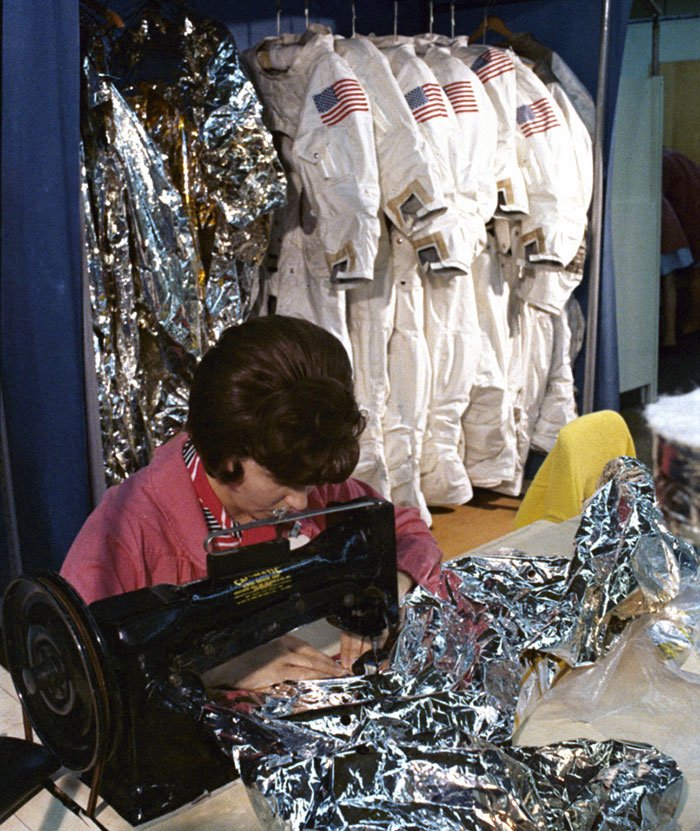
When Neil Armstrong stepped onto the Moon on July 20, 1969, he was wearing a suit made by the International Latex Corporation of Dover, Delaware, part of the company that made Playtex bras and girdles (Smithsonian). In the 1950s and ’60s, ILC’s Playtex branch was the largest maker of foundation garments in the US. Some of its sewers moved over to spacesuits, and the latex-dipping process used for shapewear was used on suit parts too (Elizabeth Way, The Museum at FIT). ILC beat out other contenders, including Hamilton Standard and the David Clark Company, to win the contract (Dana Finkle, Threads).
Each A7L suit had 21 layers of material, including rubber, neoprene, synthetics and nylon tricot. Its outer layer was Teflon-coated glass fiber, added after a 1967 fire killed three astronauts and NASA required suits to withstand temperatures over 1,000°F (Smithsonian; Threads). Seamstresses like Jean Wilson and Joanne Thompson hand-stitched them to exacting standards, where a stitch 1/32 of an inch off wouldn’t pass (Threads). “Lives are at stake when astronauts wear what we make,” ILC engineering specialist Guada told FIT. As for Armstrong: “Its true beauty,” he said of the suit, “was that it worked” (Smithsonian).
Sources: Smithsonian Magazine, Andrew Chaikin · The Museum at FIT, Elizabeth Way · Threads, Dana Finkle · Glamour Daze · Discover Magazine, Katie Liu
Answer: Net-a-Porter (2000) → SSENSE (2003) → Farfetch (2008) → Vestiaire Collective (2009) → Grailed (2013) → StockX (2016)
Net-a-Porter (2000): former Tatler editor Natalie Massenet launched it with content “more akin to a fashion magazine than mere product descriptions.” Clothes were shot on models, and orders arrived in black-and-white boxes with bows and tissue paper (Don-Alvin Adegeest, FashionUnited).
SSENSE (2003): brothers Rami, Bassel and Firas Atallah started it in Montreal. Rami began the business while studying computer science and reselling designer jeans. It built a loyal customer base worldwide before filing for bankruptcy protection in 2025 (Amelia Eqbal, CBC).
Farfetch (2008): José Neves, who had founded the footwear label Swear, built it as one marketplace where independent boutiques around the world could compete with the biggest e-commerce sites (Farfetch).
Vestiaire Collective (2009): Fanny Moizant and Sophie Hersan founded it in Paris as “Vestiaire de Copines,” literally “friends’ closet,” with a few thousand secondhand pieces from people they knew. It now operates in more than 70 countries (Diane Vanderschelden, FashionUnited).
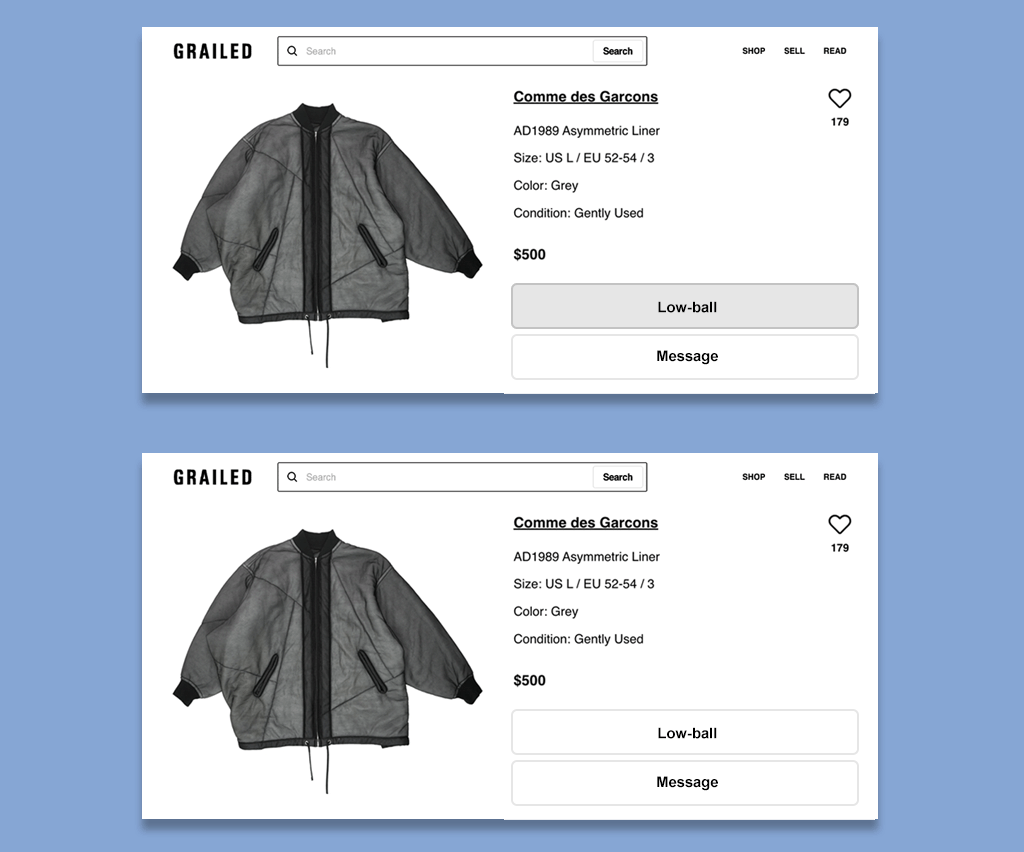
Grailed (December 2013): Arun Gupta coded it in about three months after spending years hunting deals on menswear forums like StyleForum and SuperFuture. He launched it with about 200 items he listed himself (Skylar Bergl and Andy Hur, Complex).
StockX (February 2016): it grew out of Campless, Josh Luber’s site tracking rare sneaker resale prices. With Detroit businessman Dan Gilbert, he built a “stock market of things” where buyers bid, sellers ask and items are checked at verification centers. It went on to a $3.8 billion valuation (Sherin Shibu, Entrepreneur).
Sources: FashionUnited, Don-Alvin Adegeest · CBC, Amelia Eqbal · Farfetch · FashionUnited, Diane Vanderschelden · Complex, Skylar Bergl and Andy Hur · Entrepreneur, Sherin Shibu
Answer: Wool → Wool · Cotton → Cotton · Silk → Silk
Under a microscope, every fiber has a fingerprint. Wool, like all animal hair, is covered in overlapping scales that make its surface rough. Coarse wool has jagged, zig-zag scales and a visible core called a medulla, while fine wool has none (Canadian Conservation Institute). Cotton looks like a twisted ribbon, with turns called convolutions along its length and a hollow center, the lumen, that takes up more than half its width. Mercerizing cotton, a chemical treatment that makes it shinier, removes most of the twists. Cultivated silk is a smooth, cylindrical rod with occasional bulges, with no scales and no twists (Canadian Conservation Institute). Cotton’s twists are easy to spot because its fibers aren’t round, while wool’s scales can be damaged or hidden by harsh bleaching or dyeing (Homi Bhabha Centre for Science Education). Because no single test is foolproof, textile conservators pair microscopy with a burn test (Canadian Conservation Institute).
Sources: Wikimedia Commons, CSIRO · Alpine Meadows Guild · Bresser · Canadian Conservation Institute · Homi Bhabha Centre for Science Education (TIFR), Ankush Gupta
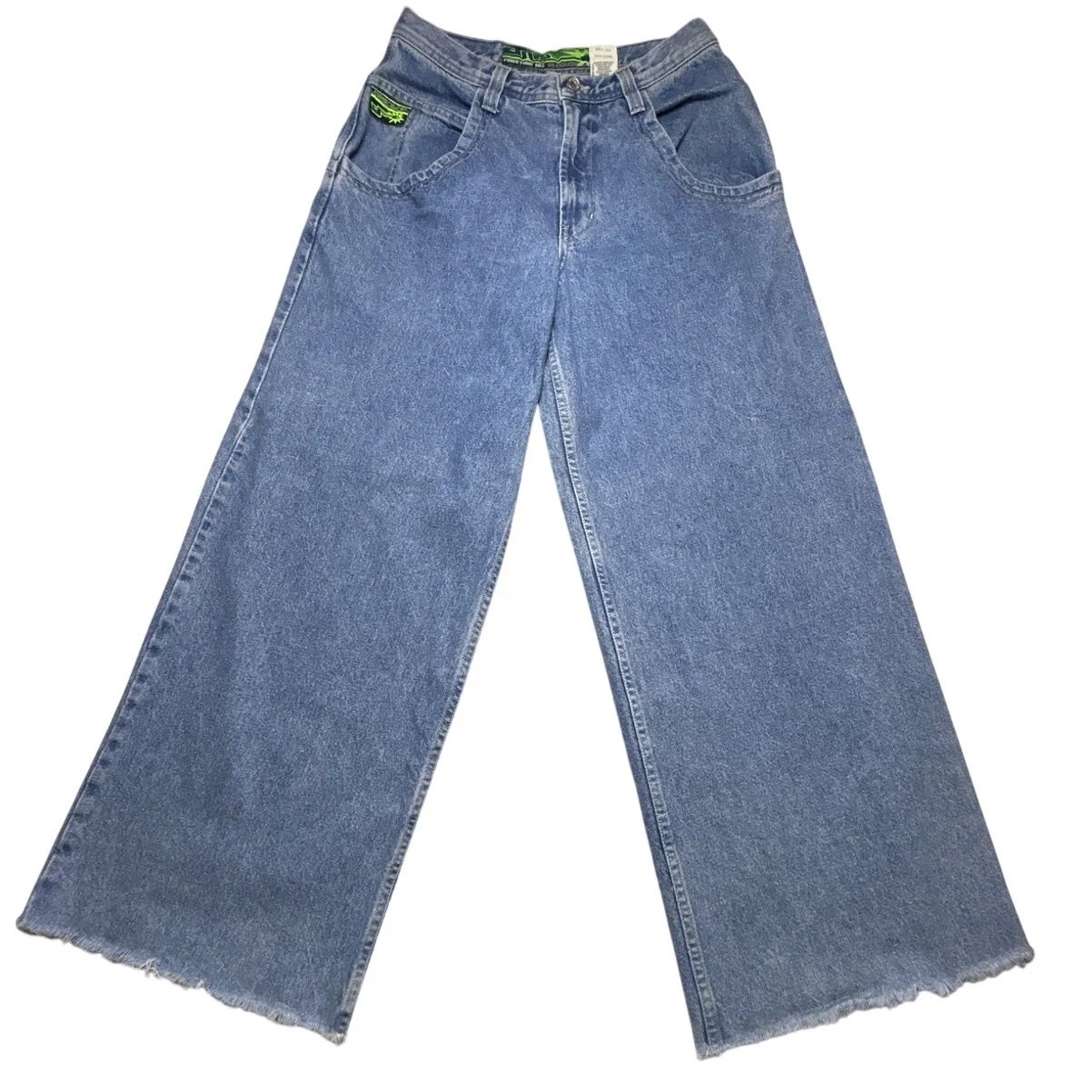
JNCO Jeans