
October 28, 2026
The issue of October 28, 2026
Every question from this issue, with the answers, the hints and the reading behind them.
Play the October 28, 2026 issue

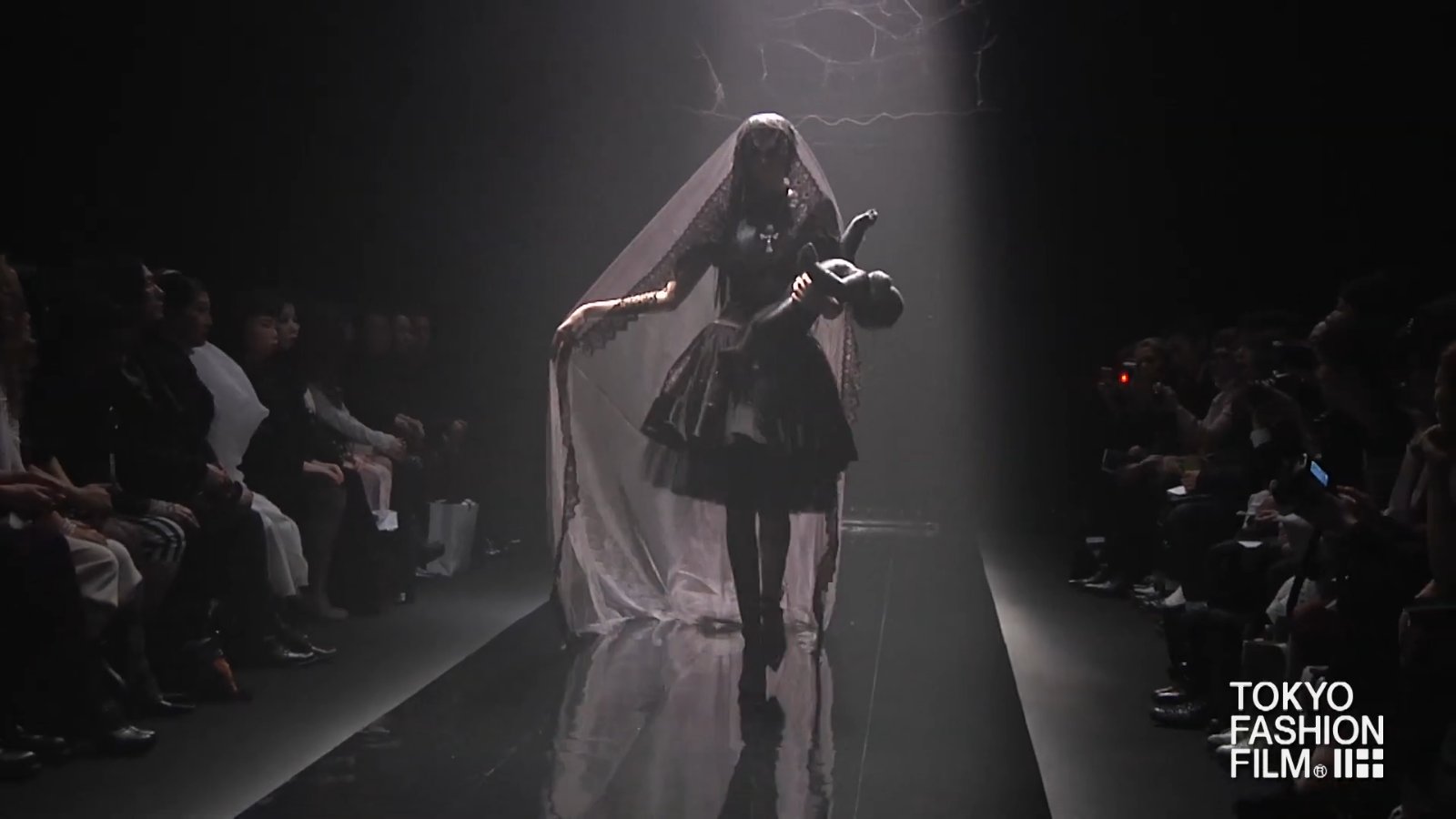
House: alice auaa · Designer: Yasutaka Funakoshi · Season: Fall/Winter 2013
Watching it for the first time, before I knew any of the backstory, I saw the spider motif: being caught in a web, dealing with the devil, a soul trapped. It reminded me of Kafka’s Metamorphosis, with various looks where models are turned into spiders and walk like them. Emo goth creepiness at its best. The real lore behind the show was even more interesting.
For Autumn/Winter 2013-14, shown on March 18, 2013 at Mercedes-Benz Fashion Week Tokyo, Yasutaka Funakoshi built a fantastical, mostly black world from Dante’s Divine Comedy and Ovid’s Metamorphoses. At its center was Arachne, a weaver who cannot escape a spider’s silk, told through heavily theatrical staging (Nana Iwata, AFPBB). In Ovid’s version, Arachne boasts that her talent owes nothing to the goddess Minerva and challenges her to a weaving contest. Minerva weaves the gods in glory, while Arachne weaves their crimes against mortals. The furious goddess tears Arachne’s tapestry apart, and when Arachne tries to hang herself, Minerva turns her into a spider, cursed to spin webs forever (Liana Miate, World History Encyclopedia). A soul trapped in a web, after all.
Funakoshi, born in Kobe, launched alice auaa in 1995. The label blends punk, new wave and gothic influences from London’s underground, dressed musicians like L’Arc~en~Ciel, and became a favorite of Japan’s gothic Lolita scene (TokyoFashion). Its philosophy is about contrasts like beauty and ugliness, light and shadow, seen through a “decadent and surreal filter based on the color black,” and about finding elegance and eroticism in discomfort (Rakuten Fashion Week Tokyo). The show was a turning point for the label: later that year, three alice auaa looks appeared in “Fetishism in Fashion” at MoBA 13 in the Netherlands, and Lady Gaga wore the brand to her ARTPOP press conference in Japan (Rakuten Fashion Week Tokyo). Tremendous!


Sources: FASHIONSNAP · FASHIONSNAP · AFPBB News, Nana Iwata · Rakuten Fashion Week Tokyo · TokyoFashion · World History Encyclopedia, Liana Miate
Answer: Steven Meisel → Vogue Italia June 2002: Raquel Zimmermann · Szilveszter Makó → Vogue USA November 2026: Jenna Ortega
Steven Meisel learned to see fashion by drawing it. He studied illustration at Parsons and worked as an illustrator at Women’s Wear Daily in the 1970s. As a teenager, he would wait outside modeling agencies to photograph the models (Pierre Alexandre de Looz, 032c). In 1988 he began working with Vogue Italia under Franca Sozzani, who gave him wide latitude, and he called it his most creative outlet. He shot its covers until 2015 (032c; Fashion Gone Rogue). He was a close friend and “constant escort” of supermodels like Linda Evangelista, Christy Turlington and Naomi Campbell. He photographed Madonna’s Sex book in 1992, and campaigns for Valentino, Versace, Prada and Calvin Klein made his name. His 1995 Calvin Klein jeans ads even prompted a federal investigation. Critics compare him to the satirist William Hogarth, and his Vogue Italia editorials took on war, plastic surgery and race, from “State of Emergency” to the all-Black issue. Famously private, he hides under hats and dark glasses and refuses to be photographed himself. As Anna Sui put it, “Steven sets the stage for everybody else” (032c).
Szilveszter Makó came to photography from a very different place. He was raised by his grandparents in Lillafüred, a small town at the foot of Hungary’s Bükk Mountains, and spent two years at a Waldorf school sewing his own clothes. He wanted to be a painter but found it too slow (Chiara Bardelli Nonino, Aperture). Aperture calls him the “manager of his own miniature theater,” staging every image by hand, using recurring props like cardboard boxes, checkered sheets and house-shaped hats, and insisting that nothing in his photos is made with Photoshop, CGI or AI (Aperture). Elizabeth Goodspeed at It’s Nice That points to his muted ochre tones, display-case sets and hidden symbols tied to each sitter. In 2026 his style went mainstream, with covers for Vogue Italia, British Vogue, Vogue Philippines, Rihanna for Edward Enninful’s EE72 (Aradi Hanga Zsófia, Telex) and Jenna Ortega for Vogue in November (Szilveszter Makó).
Sources: 032c, Pierre Alexandre de Looz · Vogues Covers · Fashion Gone Rogue · Models.com · Szilveszter Makó on Instagram · Aperture, Chiara Bardelli Nonino · It’s Nice That, Elizabeth Goodspeed · Telex, Aradi Hanga Zsófia
Answer: Sweatpants
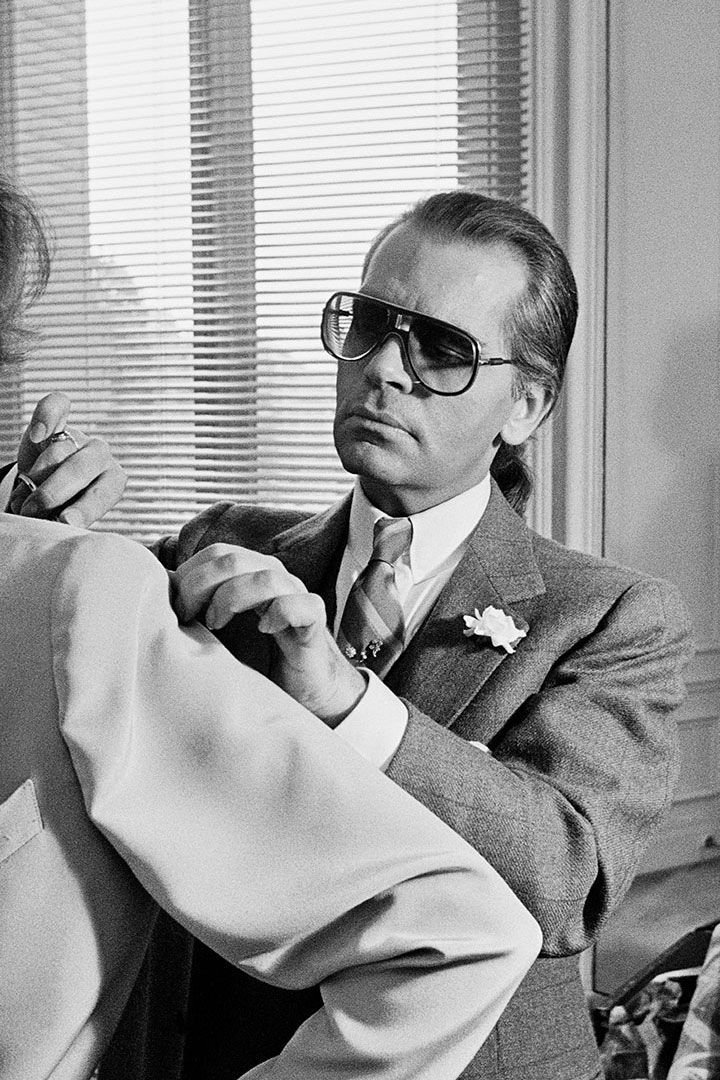
1,000,000,000% DISAGREE! SWEATPANTS ARE FASHION’S VICTORY CIGAR!
Karl Lagerfeld never met a one-liner he didn’t like, and this is one of his most repeated: “Sweatpants are a sign of defeat. You lost control of your life so you bought some sweatpants.” It’s printed in The World According to Karl (2013), a collection of his quotes (Megan McCluskey, TIME). Like many of his lines, it’s hard to pin down where he first said it. It’s often credited to a 2012 German talk show appearance, but Germany’s press agency dpa checked that episode and couldn’t find it. The earliest print use they found was a newspaper in the summer of 2012 citing Grazia. His longtime spokesperson, Caroline Lebar, recalled him saying versions of it for 15 to 20 years, often in different languages (dpa, t-online).
Sources: TIME, Megan McCluskey · t-online (dpa) · FashionUnited

Answer: Street Couture
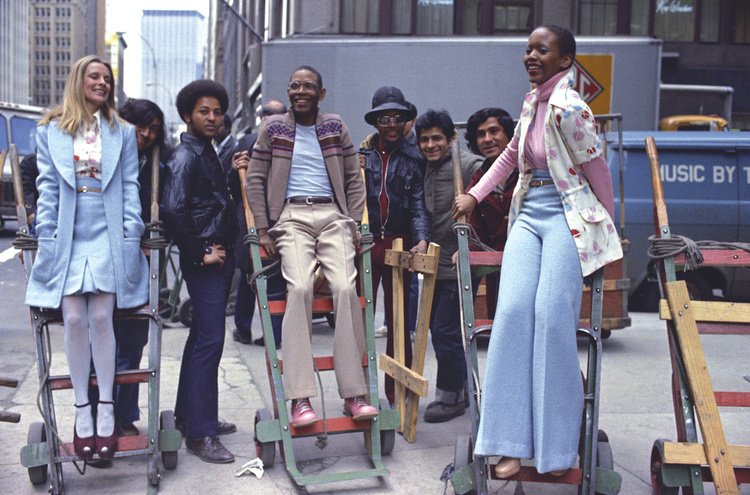
Willi Smith was born in Philadelphia in 1948, studied fashion illustration there and won scholarships to Parsons. He sketched for Arnold Scaasi and became lead designer at the sportswear label Digits at 21 (Synatra Smith, Philadelphia Museum of Art). In 1976, he and his partner Laurie Mallet founded WilliWear, which sold relaxed, colorful, drapey clothes at prices regular people could afford. “I don’t design clothes for the Queen, but for the people who wave at her as she goes by,” he said (Alexandra Phanor-Faury, Essence). His Fall 1983 collection was called “Street Couture,” and the name stuck as his philosophy: high fashion inspired by people on the street (Pam Boy, V Magazine; Philadelphia Museum of Art). He collaborated with artists like Keith Haring and Christo, and designed the homecoming court gowns for Spike Lee’s School Daze and the suits for the groom and groomsmen at Caroline Kennedy’s 1986 wedding (Philadelphia Museum of Art; Essence). By 1986, WilliWear was making about $25 million a year.
Smith died on April 17, 1987, at 39, from an AIDS-related illness. The Cooper Hewitt calls him the most commercially successful Black American designer of the 20th century at the time of his death, and in 2020 it gave him a major retrospective, Willi Smith: Street Couture. V Magazine traces his influence through Baby Phat, Telfar Clemens and Pyer Moss’s Kerby Jean-Raymond.
Sources: Cooper Hewitt, Smithsonian Design Museum · Philadelphia Museum of Art, Synatra Smith · V Magazine, Pam Boy · Essence, Alexandra Phanor-Faury · Willi Smith Archive · The Guardian
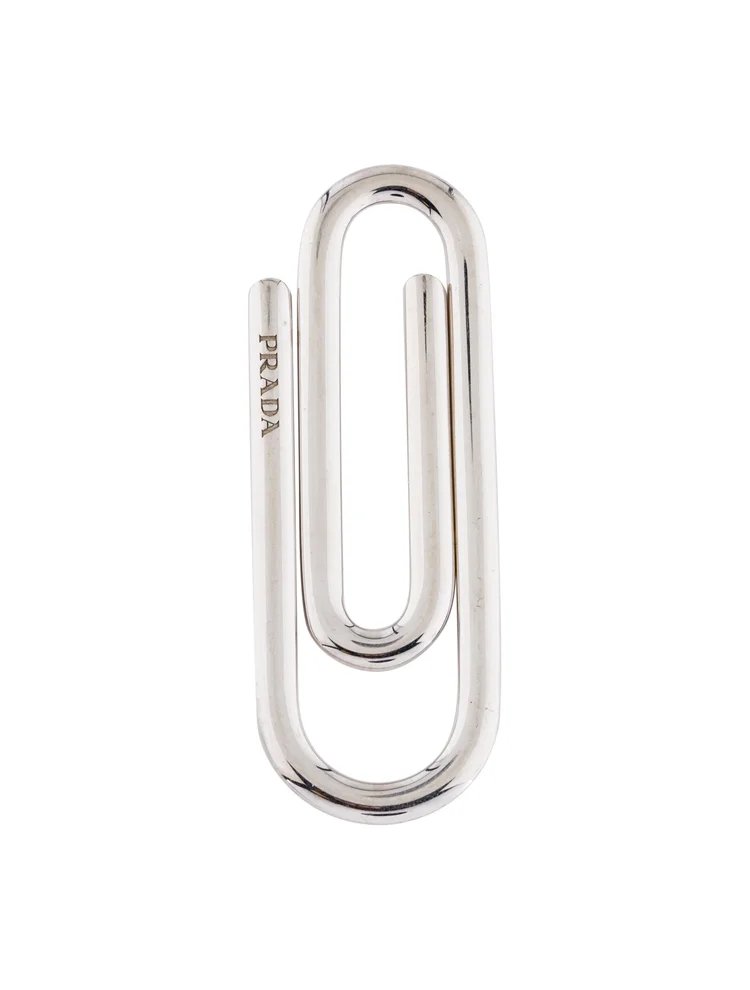
Prada Paperclip Money Clip