October 26, 2026
The issue of October 26, 2026
Every question from this issue, with the answers, the hints and the reading behind them.
Play the October 26, 2026 issue
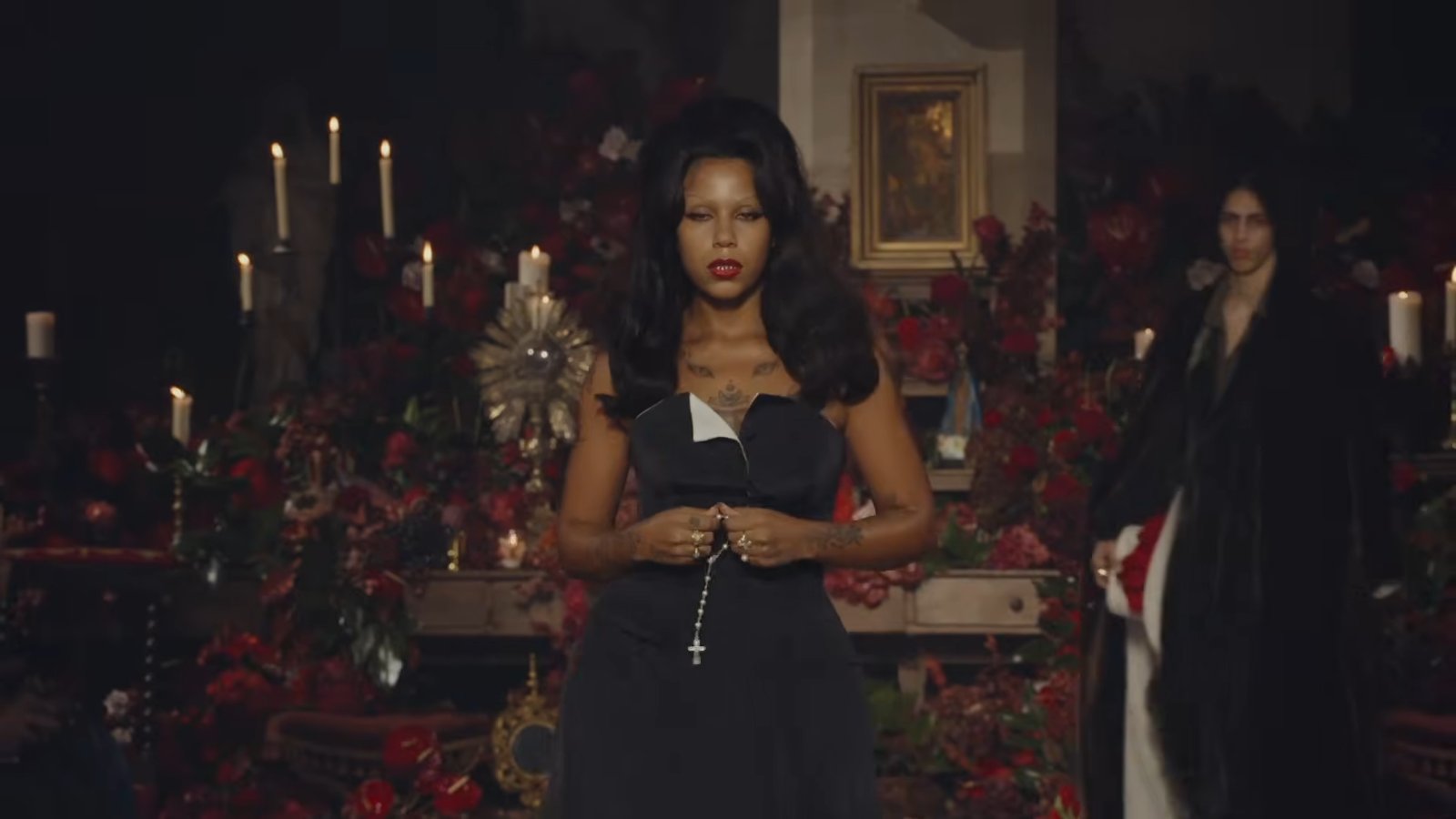
House: Willy Chavarria · Designer: Willy Chavarria · Season: Autumn/Winter 2025 - Tarantula
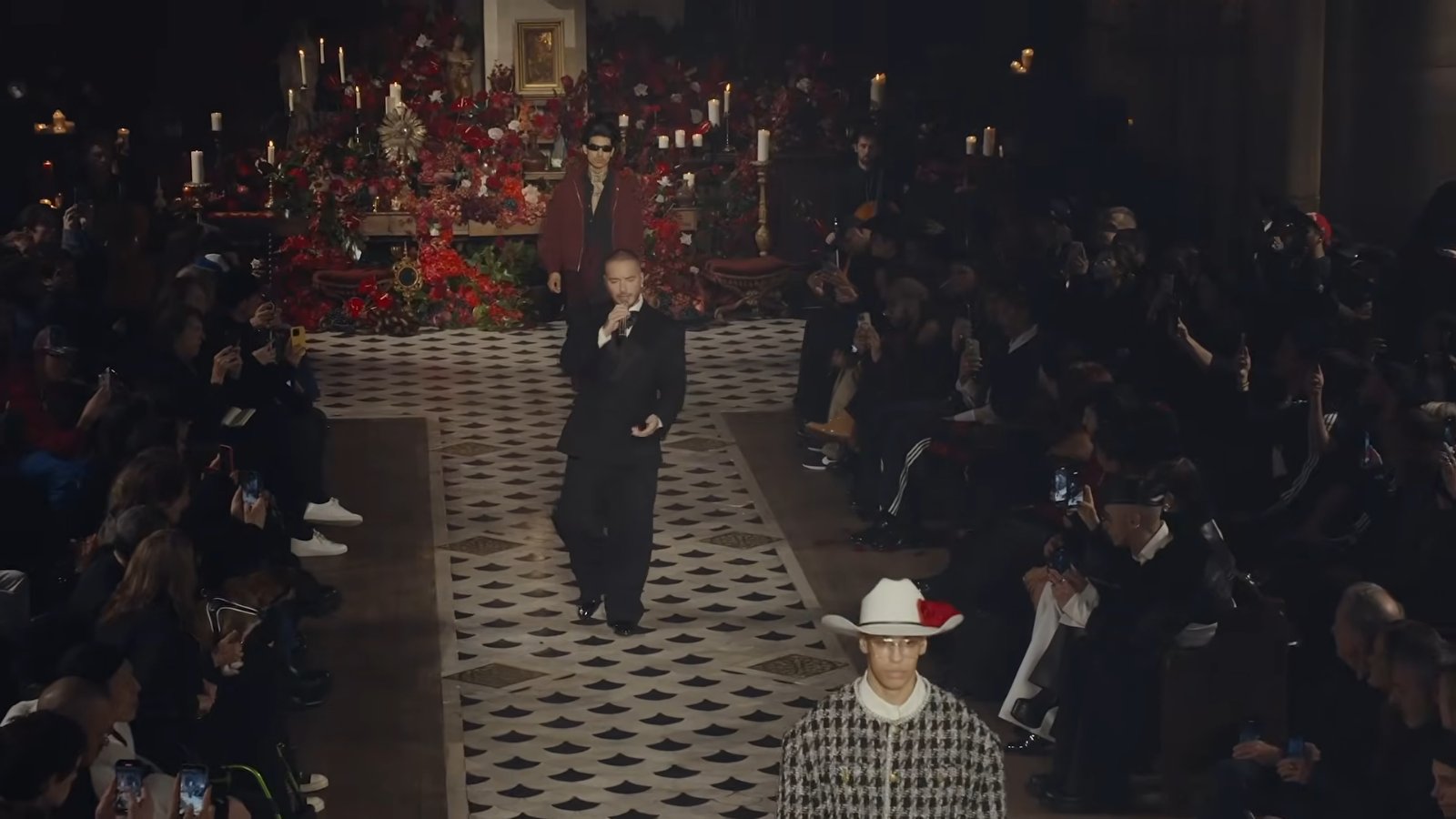
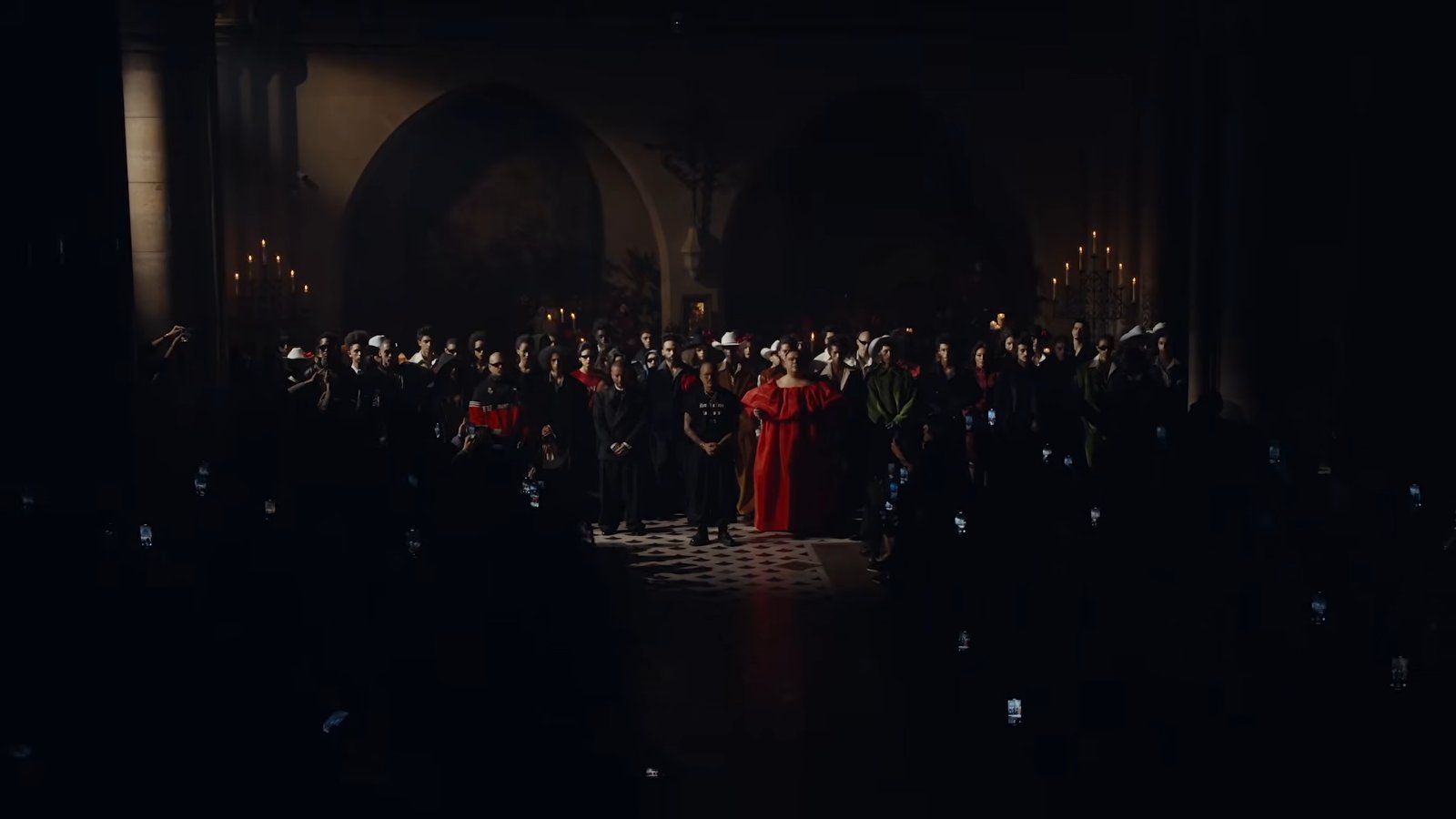
Willy Chavarria marked his label’s 10th anniversary with his Paris debut on January 24, 2025, staged in the candlelit American Cathedral in Paris. The title came from a This Mortal Coil song that shaped him as a teenager. Madeleine Rothery at AnOther writes that the tarantula stood for gentle people who are vilified simply for living their lives. “It just seems very appropriate with so many of our rights under attack,” Chavarria said (Complex). His own show notes called it a “chiaroscuro exploration of love, sexuality and identity,” with a closing warning: “Just don’t get it twisted. We bite hard if confronted” (Willy Chavarria).
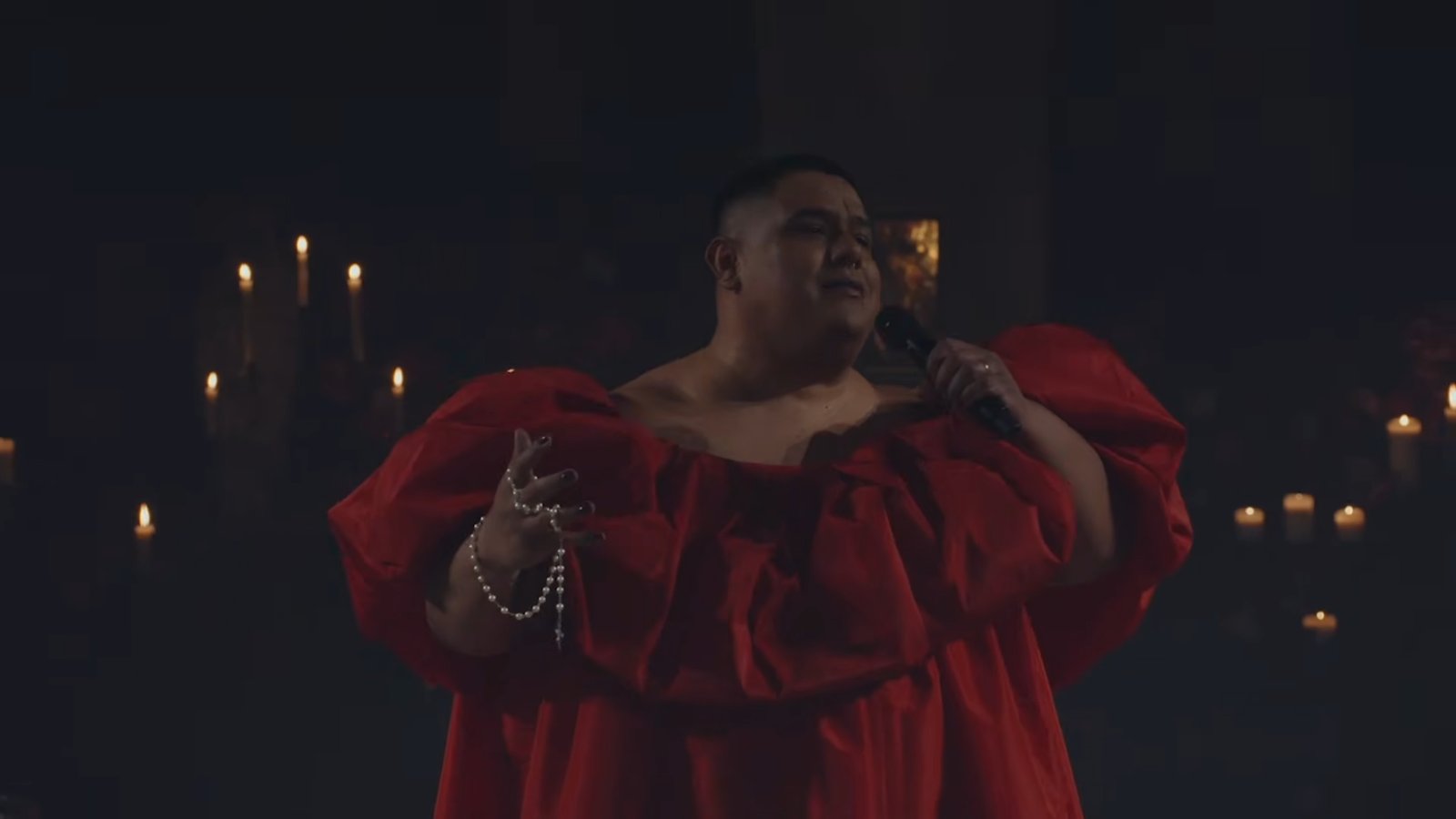
The 63 looks drew on Chicano style: satin zoot suits, oversized lapels, red roses on the chest, rosaries and gold keys. They were cut in Italian velvets, silks and cashmere in a Baroque palette of gold, blue, crimson and plum, and about a third of the collection was his adidas collaboration (DeStefano, Complex; Willy Chavarria). The cast mixed models from his New York shows, people street-cast in Paris and names like Indya Moore, Honey Dijon and Paloma Elsesser (Rothery, AnOther), in keeping with his notes’ promise of “a community where everyone is welcome.” Singer Dorian Wood opened the show, and J Balvin performed mid-runway. For the finale, Chavarria and his cast stood before an altar of red flowers as Bishop Mariann Edgar Budde’s sermon played: “I ask you to have mercy upon the people in our country who are scared now” (Document Journal). “I was excited by this speech, and I think we should all recognize and enforce that message,” Chavarria said (CFDA). He took his bow in a T-shirt reading “How We Love Is Who We Are.”
To me, it’s a very spiritual show, and very timely. It’s about forgiveness and mercy, from the opening scene to the rosaries to that prayer at the end. It’s deeply moving. People from all walks of life and all backgrounds gather in the church to bond over divinity and spirituality. The variety of looks represents a variety of backgrounds and classes, and it reminds me that everyone should be accepted in the church and that we shouldn’t judge others. Religion and faith are like the silk a tarantula lines its burrow with, the thing that keeps you from falling into the abyss. Here, the tarantula isn’t a scary predator but a protective force, proof that something people are afraid of can be benevolent. That unfounded fear is the genesis of most bigotry, and it often triggers violent oppression. The root of fascism is an aversion to ugliness. For the bigot, to begin to understand is a concession, an admission that they themselves are ugly. So they construct a web of lies to keep them from falling into the void of hell that is their existence. And still, many pray that the merciful tarantula can catch them.
Sources: Willy Chavarria · AnOther, Madeleine Rothery · Complex, Mike DeStefano · CFDA, Roxanne Robinson · Document Journal · San Diego Zoo Wildlife Alliance
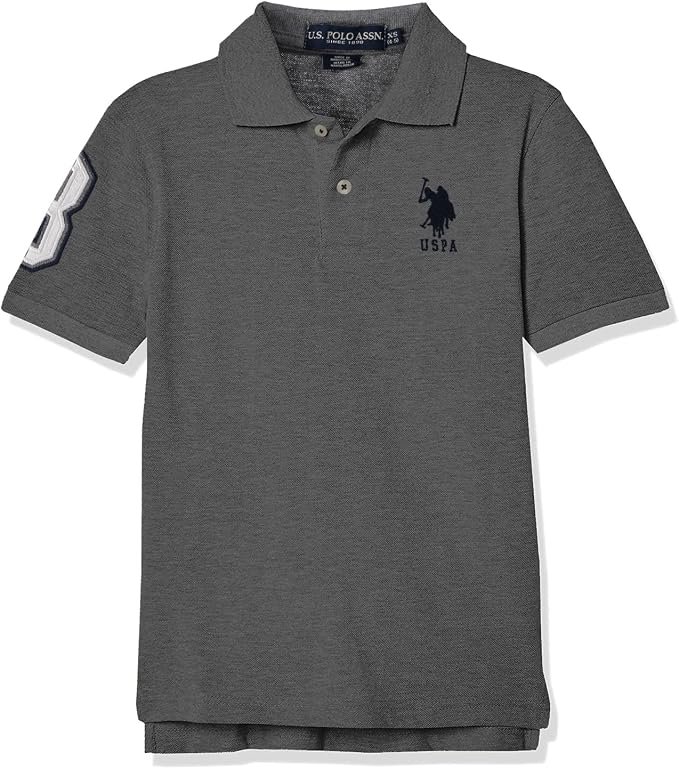
Answer: The official governing body of polo in the United States.
It ain’t Ralph, but it ain’t fake either! Wearing USPA was a capital offense as a kid, but to my surprise, the brand not only isn’t a knockoff of Polo Ralph Lauren, it’s arguably even more legit than the illustrious brand. Ralph Lauren started Polo as a line of wide ties in 1967, working out of a drawer in the Empire State Building. The embroidered polo player first appeared on a line of women’s shirts in 1971, and the Polo shirt followed in 1972 in 24 colors (Ralph Lauren). The United States Polo Association is much older. It was founded in 1890 to set the rules, guidelines and handicaps for the sport, and U.S. Polo Assn. is its official brand. Part of the brand’s revenue goes back into tournaments, player development and clubs (USPA).
The two have fought over polo players for four decades. A 1984 ruling allowed USPA to run a licensing program, but only with a logo distinct enough not to be confused with Ralph Lauren’s. In 2006, a Manhattan jury found that USPA’s solid double horsemen logo used alone on clothing infringed, while the outlined version with “U.S.P.A.” did not (Adrienne Kendrick, IPWatchdog; Covington). When USPA put the double horsemen on fragrances, Judge Robert Sweet found it had acted in bad faith and banned the logo on fragrances and cosmetics in 2012. The Second Circuit upheld that ban in 2013. Later, the court held USPA in contempt over double horsemen sunglasses and awarded Ralph Lauren the future profits from them (Covington). That’s why you’ll see two horsemen on U.S. Polo Assn. shirts, but not on its cologne. Brand recognition is a double-edged sword...or in this case mallet I guess.
Sources: Ralph Lauren · USPA · IPWatchdog, Adrienne Kendrick · Covington · U.S. District Court (S.D.N.Y.)
Answer: Jean Paul Gaultier
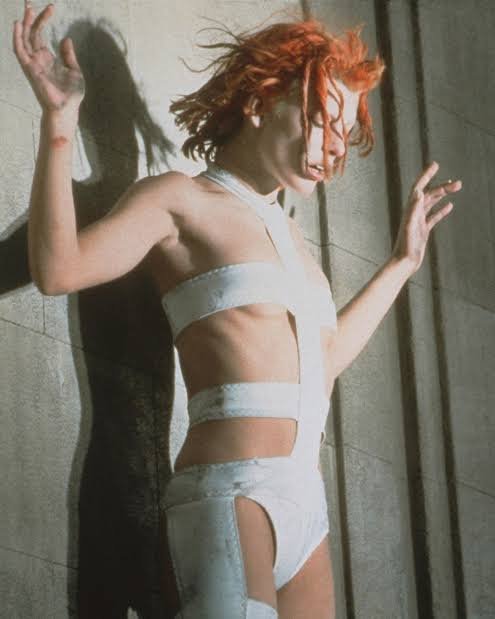
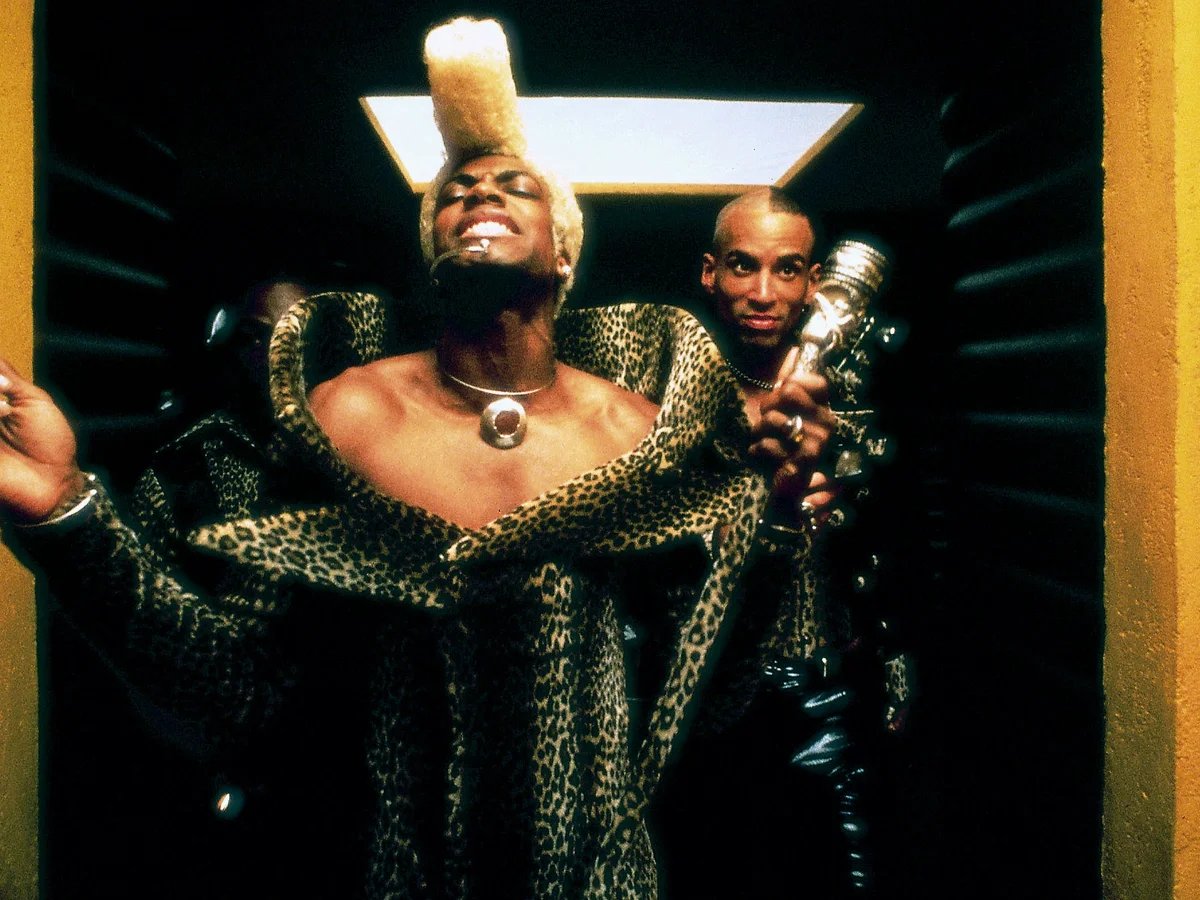
Luc Besson wanted the best for his sci-fi epic: “I wanted the best and that is Jean-Paul” (Katherine Prior, FIT Fashion History). Jean Paul Gaultier designed more than 1,000 costumes for it, which curator Thierry-Maxime Loriot compared to “10 collections but all for one movie” (Marianne Eloise, Dazed). “I spoke with Luc about what is futuristic,” Gaultier said. “Everything’s possible.”
Milla Jovovich’s Leeloo arrives wrapped in white bandages that become her clothes when she escapes, an idea that came out of her conversations with Besson and that Gaultier built on his underwear-as-outerwear collections (FIT; Dazed). Jovovich admitted the costume “was a bit embarrassing.” Ruby Rhod’s leopard-print jumpsuit was first meant for Prince, who was cast before Chris Tucker and walked away after clashing over the costumes. The midriff-baring flight attendants were, in Gaultier’s words, “a little change from what they are wearing on Air France.” Gaultier was nominated for a César for the film, and its looks still turn up on runways. Jeremy Scott’s 2018 Moschino collection borrowed from those flight attendants (FIT).
Sources: FIT Fashion History, Katherine Prior · Dazed, Marianne Eloise
Answer: Vicuña
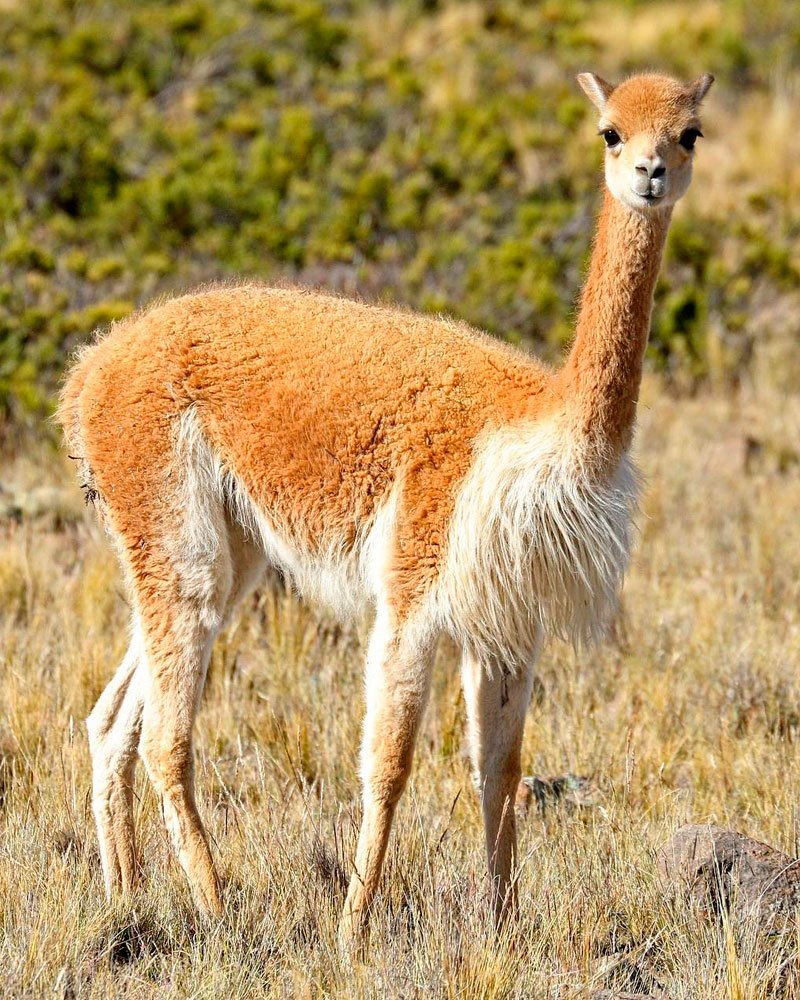
The vicuña is a wild relative of the camel, alpaca and llama that lives in the Andes above 4,000 meters (Loro Piana). Under the Inca, vicuñas belonged to the state. Killing one was forbidden, and only nobility could wear the wool. Every few years, the Inca organized a chaccu, where people formed a human chain to round up the wild herds, shear them alive and release them (David Nolan, Smithsonian). The fiber averages about 12 to 12.5 microns, finer than cashmere (Smithsonian; Loro Piana).
After the Inca, the animals were hunted instead of shorn. Peru had about 400,000 vicuñas in the 1950s and roughly 10,000 by the late 1960s (CITES), and Smithsonian puts the low as close to 6,000. International trade was banned in 1975. In 1994, Loro Piana, the Peruvian government and Andean communities set up a framework for legal fiber trade (Loro Piana). Today there are more than 200,000 vicuñas, and the chaccu is back as a yearly community event, with raw fiber selling for up to $270 a pound and a single vicuña jacket costing more than $20,000 (Smithsonian). Communities, though, keep only 2 to 6% of the final retail price (CITES).
Sources: Smithsonian, David Nolan · Loro Piana · CITES · Salkantay Trekking
Cartier Crash Watch