
October 24, 2026
The issue of October 24, 2026
Every question from this issue, with the answers, the hints and the reading behind them.
Play the October 24, 2026 issue
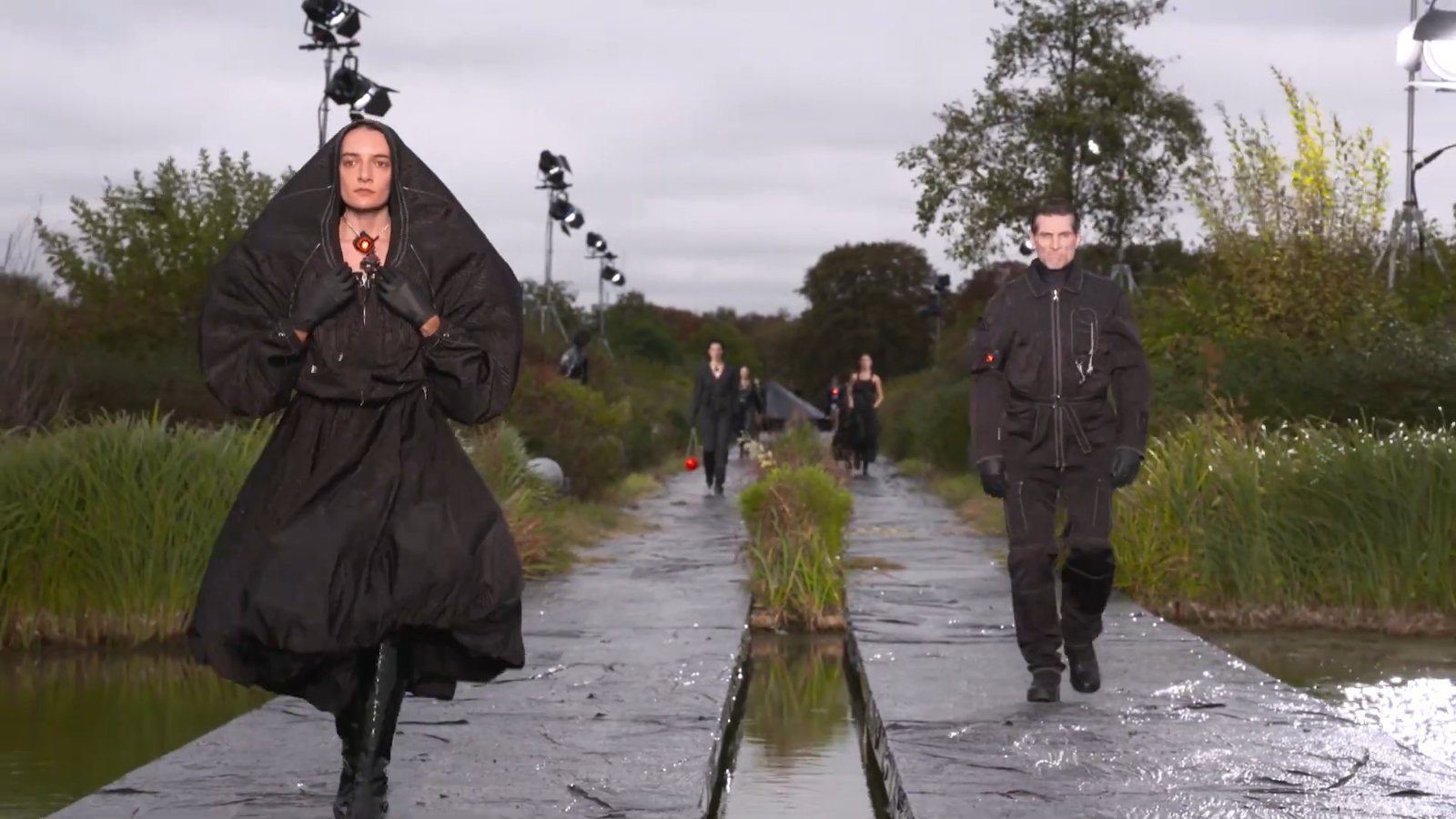
House: Marine Serre · Designer: Marine Serre · Season: Spring/Summer 2020 - Marée Noire
Marine Serre opened Paris Fashion Week on September 24, 2019, with Marée Noire, French for “oil slick” or “black tide.” It was shown on a wet embankment at the Auteuil Hippodrome, with 600 guests holding small black umbrellas against the drizzle (FashionNetwork). It was her second collection in a row about the apocalypse. “My view of the apocalypse is of a black sea,” she said. “And it is not far away.”
Her show notes imagine survivors of climate wars, heatwaves and mass extinction coming out of underground shelters into a wasteland of oil and water and forming clans:
one in black moiré uniforms and oily raincoats
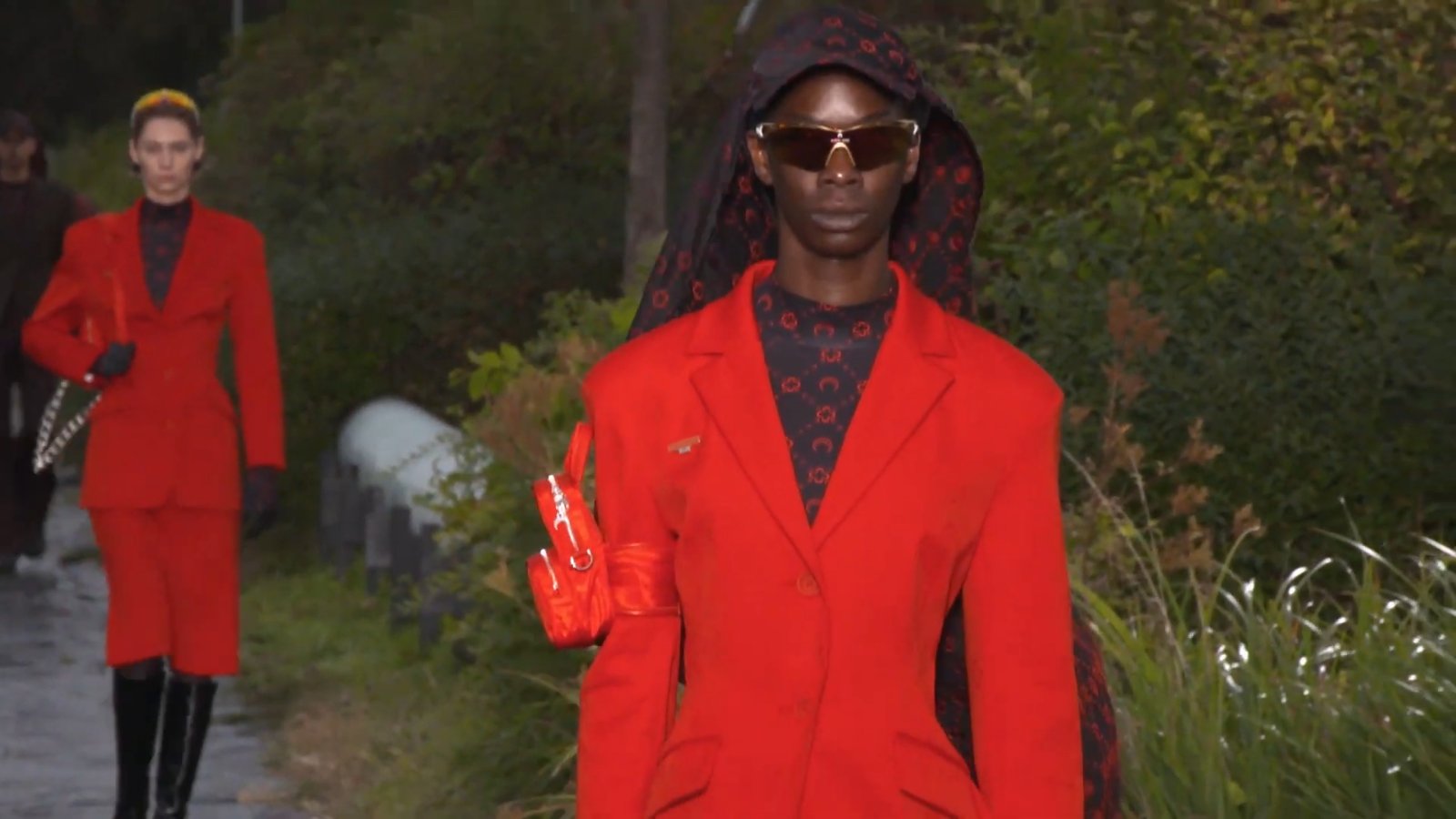
one in red and brown jacquard tailoring that ends in a “desert scuba-djellaba dress” made of red silk scarves
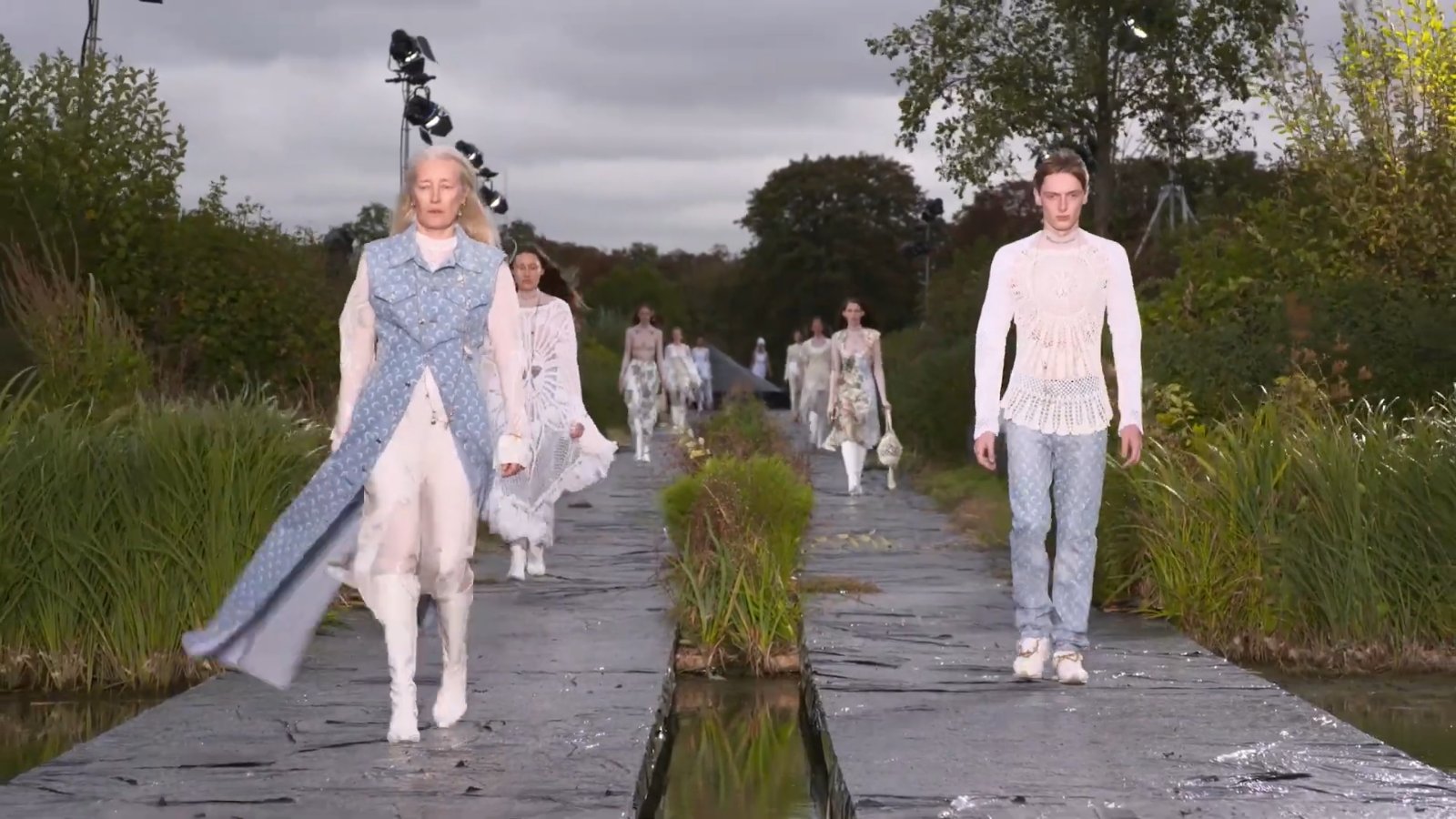
one in robes repurposed from crochet tablecloths, bed sheets and old nightgowns
executives whose suits are made of towels because the world has become so hot (Marine Serre; FashionNetwork)
Vogue reported that half the collection was upcycled (via Jocelyn Silver, PAPER). Sleek called it a “beautiful vision of doom.” The rain and a brief livestream blackout only added to the end-of-the-world mood. The cast included a pregnant Adina Fohlin, with Elise Crombez and Hannelore Knuts closing the show (Irene Ojo-Felix, Models.com). Months later, Serre released a CGI “movie” following the tribes as they transform to survive (Mahoro Seward, i-D; Bonacic, 10 Magazine). “Everything we do is a sequel,” she said.
I love the world building, between the show notes and the movie. It feels like Dune. It also reminds me of After the End, a total conversion mod for Crusader Kings II and III. It’s set in a post-post-apocalyptic America in the year 2666 (PCGamesN), where remnants of American culture survive but much of it is mistranslated and out of context. New religions have emerged, with people venerating the Founding Fathers as religious figures. Midwesterners go to war in football helmets, and there’s even a Wayne dynasty in New York based on Batman. It’s the idea of societal collapse: what is gained, what is lost, and what falls through the cracks as we try to fill them. We try to make sense of the past and why things went wrong, yet the effort is fruitless, because we are spellbound to commit the same mistakes again. This is the legacy of war: death is a dynastic endeavor, and only life can break the chain. We must always pick up the pieces and rebuild. Sensational!

Sources: Marine Serre · Marine Serre · FashionNetwork · PAPER, Jocelyn Silver · Sleek · Models.com, Irene Ojo-Felix · 10 Magazine, Dino Bonacic · i-D, Mahoro Seward · PCGamesN
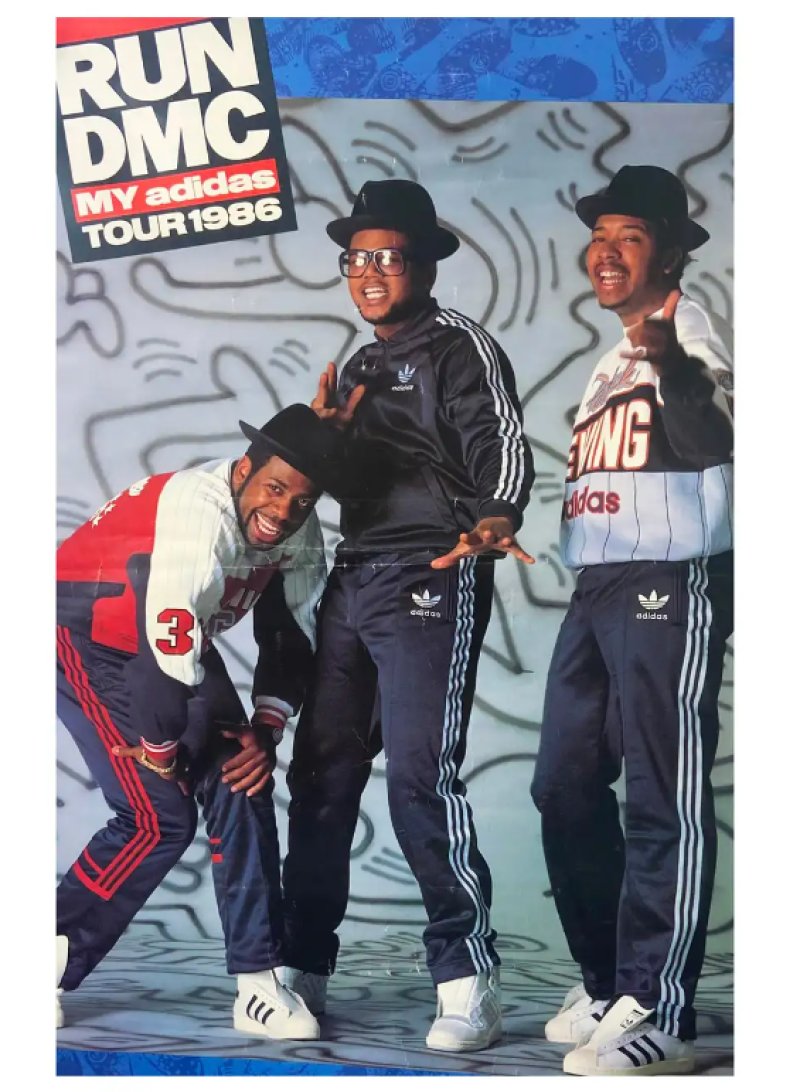
Answer: $1 million
“My Adidas” started as a defense. DMC told Sole Collector that a community activist in their neighborhood had been handing out a pamphlet linking kids in adidas without laces, Kangols and gold chains to crime. So the group wrote a song arguing you can’t judge people by what they wear. “We actually did the record ‘Adidas’ because we loved adidas,” he said. “Even before we had the record deal, we wore adidas in the hood” (Zac Dubasik, Complex).
The single came out on May 29, 1986. On July 19, at Madison Square Garden, Run-DMC asked about 40,000 fans to hold up their adidas, and they did (Guinness World Records). Co-manager Lyor Cohen made sure an adidas executive, Angelo Anastasio, saw it, and he brokered what Gary Warnett at Mr Porter called a “then-unprecedented” endorsement deal for any musician. Mr Porter puts it at $1 million and Guinness at $1.6 million. Either way, Guinness credits it as the first non-sporting sneaker endorsement, and it opened up a whole streetwear market for adidas.
Sources: Guinness World Records · Mr Porter, Gary Warnett · Complex, Zac Dubasik · Sothebys
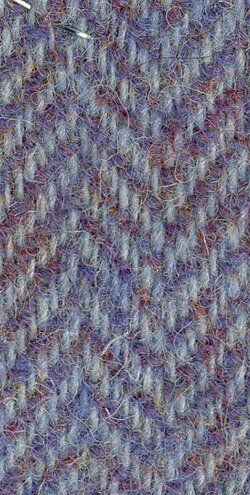
Answer: The Outer Hebrides
Islanders had woven tweed on their crofts for generations. In the 1840s, Lady Dunmore, whose family owned the Harris estate, had Harris weavers reproduce her clan tartan in tweed and began selling it to wealthy friends (Harris Tweed Authority). As demand grew, so did the fakes. In 1906, a manufacturer was jailed for passing off inferior cloth as Harris Tweed. In 1909, the Harris Tweed Association formed to protect the name, and its Orb trademark was registered in 1910 and stamped from 1911.
A 1934 definition confined production to the Outer Hebrides, and a 1964 court ruling held that every stage must happen there. In 1993, the Harris Tweed Act made the definition law and created the Harris Tweed Authority (UK Parliament; Harris Tweed Authority). Today the wool is dyed and spun in island mills, woven on looms in weavers’ own homes, then returned to the mill to be finished and stamped with the Orb (Outer Hebrides Heritage).

Sources: UK Legislation · Harris Tweed Authority · Harris Tweed Authority · Outer Hebrides Heritage · Wikipedia
Answer: Louis Vuitton Speedy (1930) → Gucci Bamboo (1947) → Chanel 2.55 (1955) → Hermès Birkin (1984) → Fendi Baguette (1997) → Dior Saddle (1999)
Louis Vuitton Speedy (1930): it started life as the “Express,” an everyday version of the larger Keepall. In 1965, Audrey Hepburn asked for a smaller one, which became the Speedy 25 (Erica Kagan, Sotheby’s).
Gucci Bamboo (1947): fine materials were hard to get after World War II, so Gucci made the handles from processed Japanese bamboo (Darren Gore, Time Out).
Chanel 2.55 (February 1955): Coco Chanel’s flap bag had an adjustable chain strap, the first shoulder strap on a Chanel bag, and a burgundy lining inspired by her uniform at the Aubazine convent (Vanessa Wat, Sotheby’s).
Hermès Birkin (1984): Jane Birkin sat next to Hermès president Jean-Louis Dumas on a flight and asked for a bag that was “capacious, practical but also elegant.” Dumas sketched it on a paper bag from the plane (Il Sole 24 Ore). Her original sold at Sotheby’s Paris in July 2025 for about $10 million, a record for a handbag (Guinness World Records).
Fendi Baguette (1997): Silvia Venturini Fendi designed it to be tucked under the arm like a loaf of French bread. Sex and the City made it a pop culture icon when Carrie corrected a mugger: “It’s a Baguette” (Carolyn Twersky Winkler, W Magazine).
Dior Saddle (1999): John Galliano designed it in 1999 and sent it down the runway in his Spring/Summer 2000 show. Maria Grazia Chiuri brought it back for Fall/Winter 2018 (Tora Northman, Hypebae).
Sources: Time Out Tokyo, Darren Gore · Sotheby’s, Vanessa Wat · Il Sole 24 Ore · Guinness World Records · W Magazine, Carolyn Twersky Winkler · Hypebae, Tora Northman

Vivienne Westwood Horn Tiara