
October 22, 2026
The issue of October 22, 2026
Every question from this issue, with the answers, the hints and the reading behind them.
Play the October 22, 2026 issue
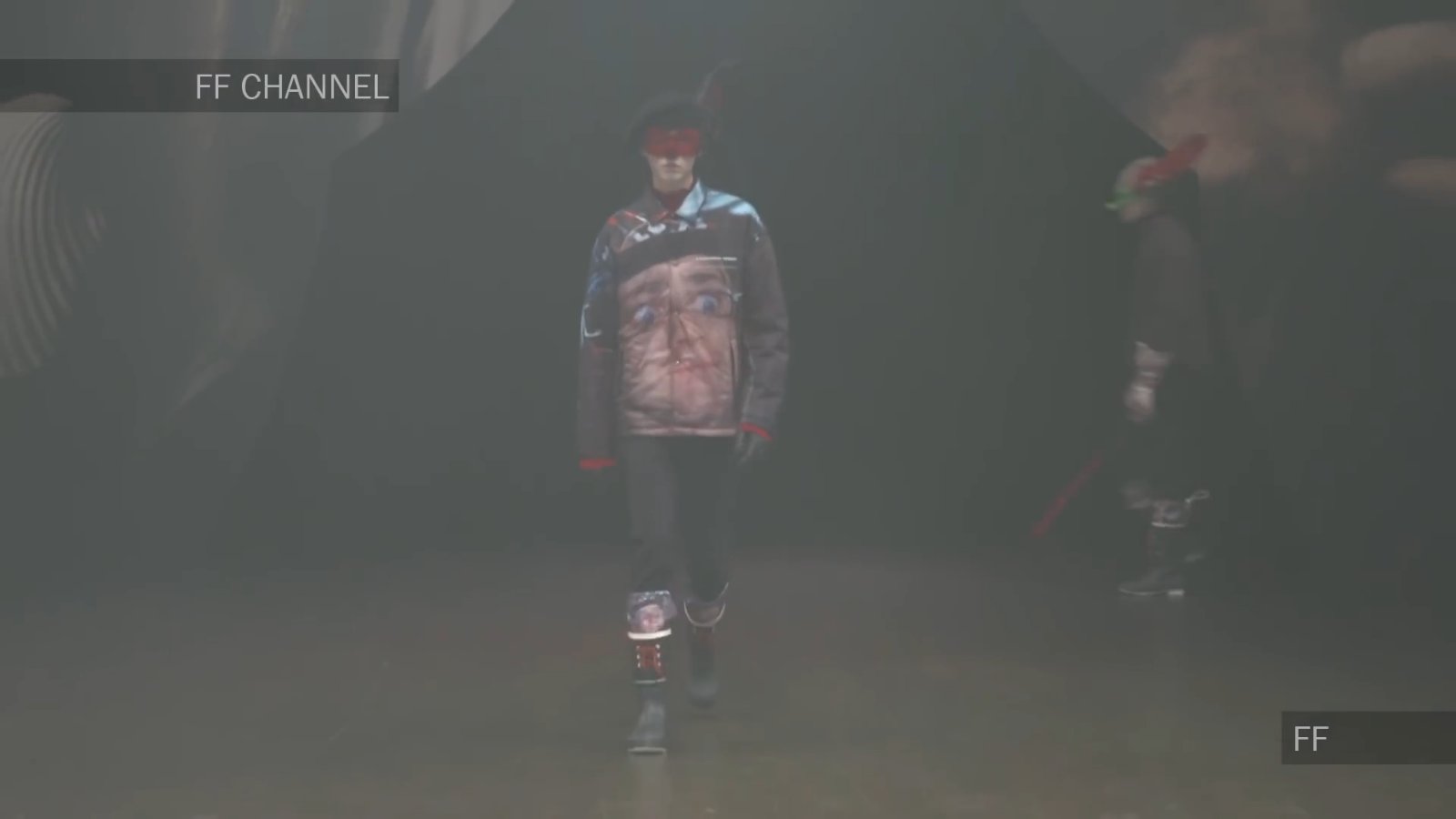
House: Undercover · Designer: Jun Takahashi · Season: Fall/Winter 2019 - The Droog
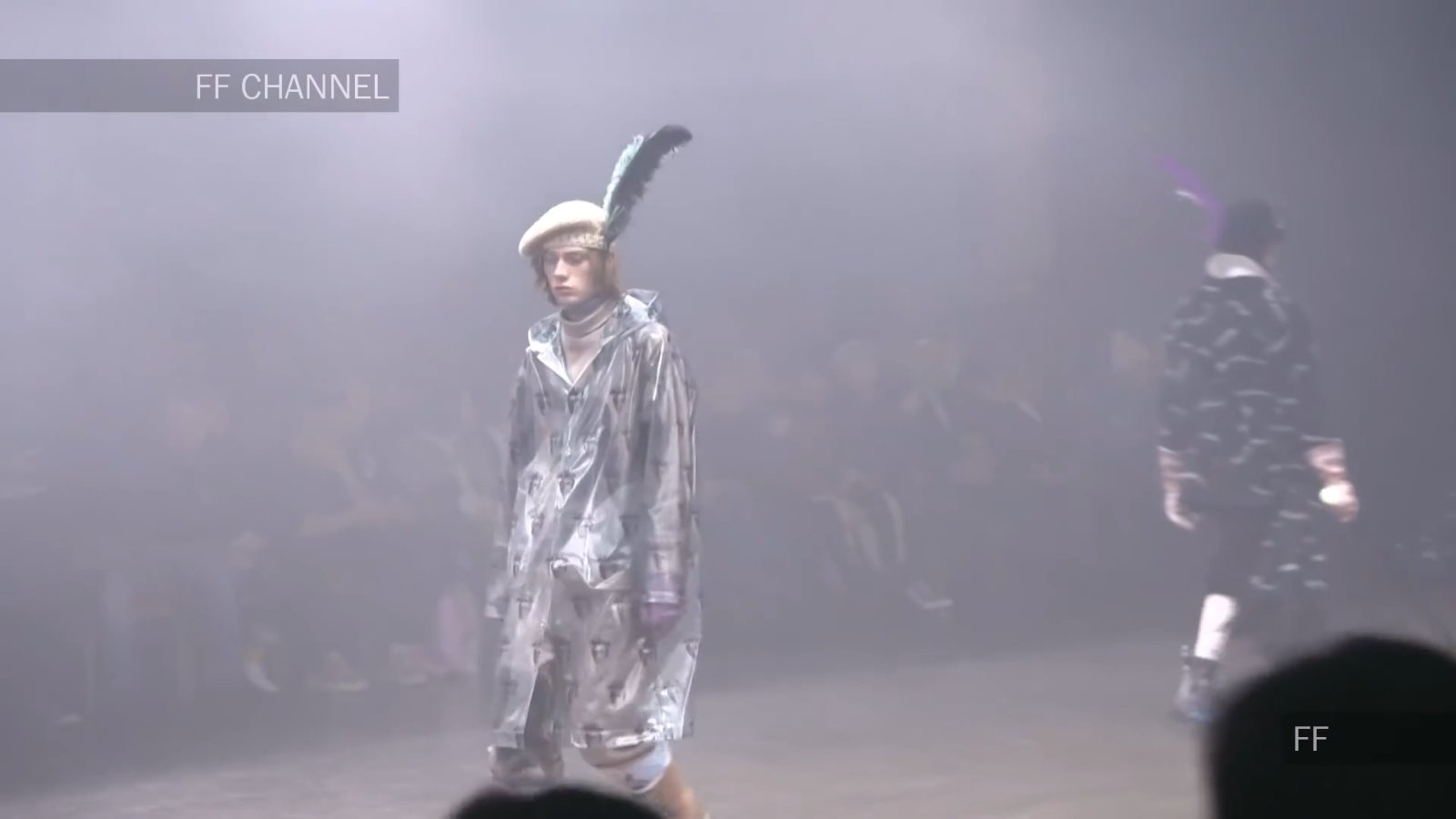
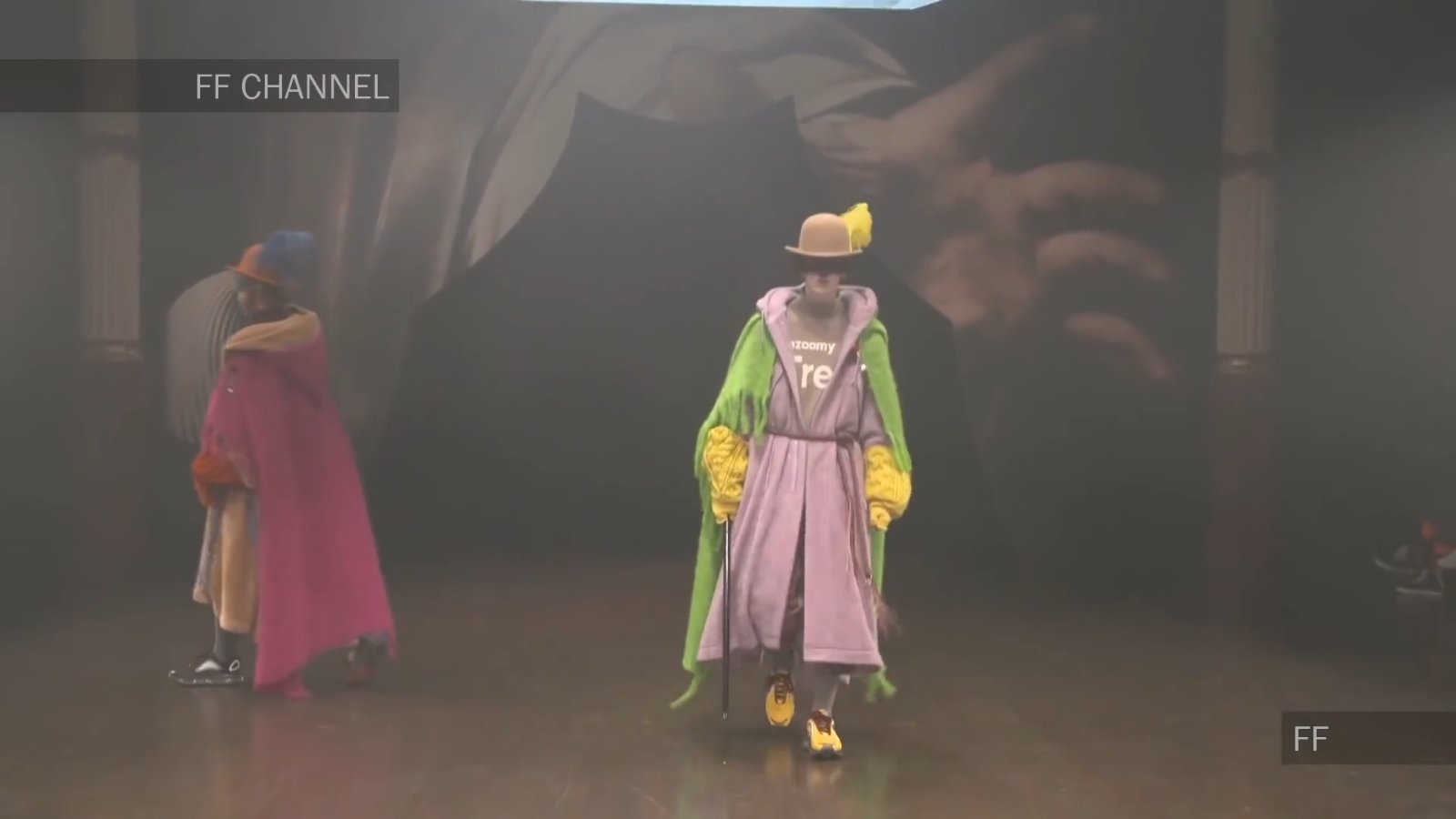
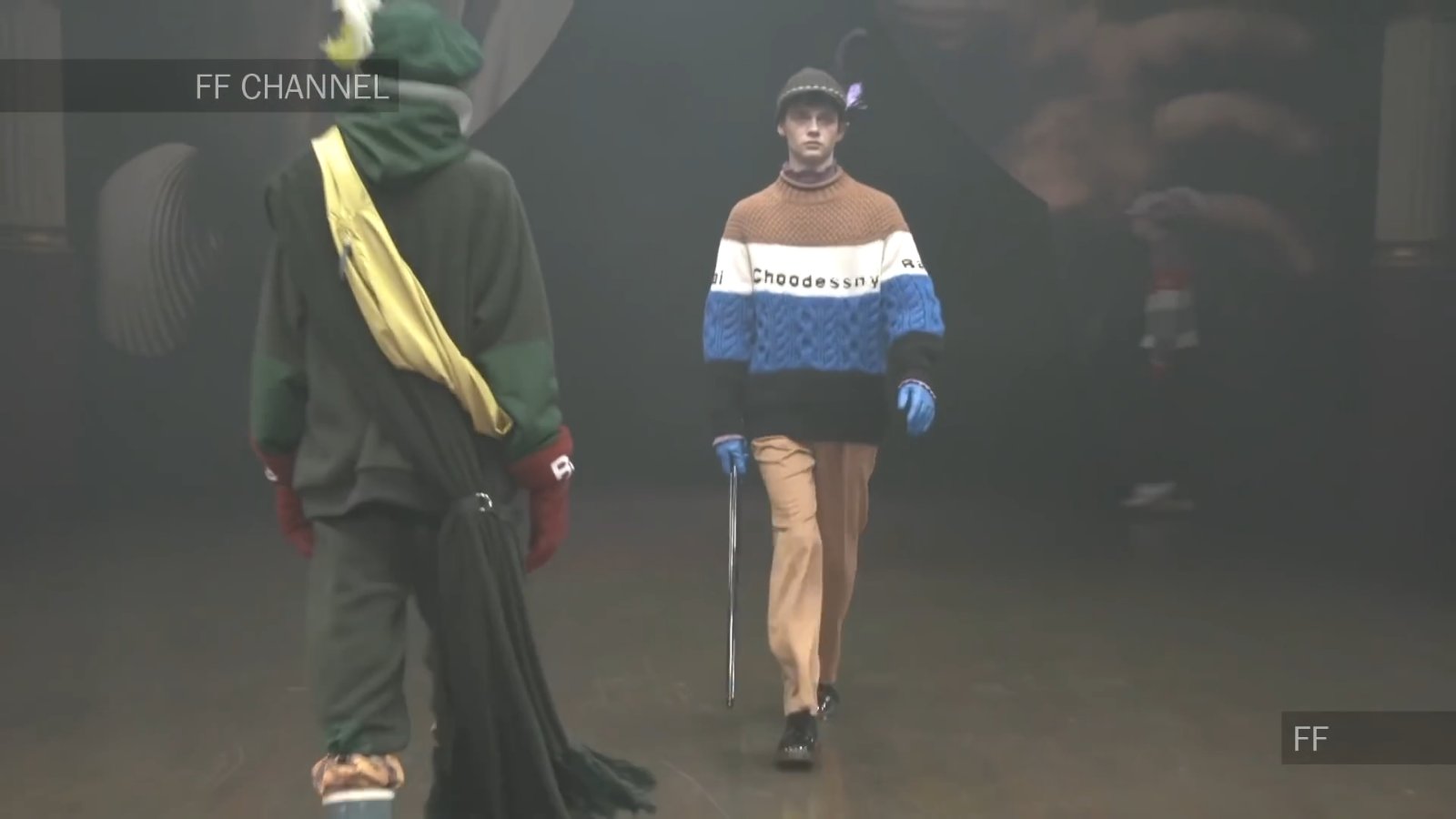
Jun Takahashi showed Undercover’s Fall/Winter 2019 menswear at the Salle Wagram in Paris on January 16, 2019. The collection was titled “The Droog,” after the gang in Stanley Kubrick’s A Clockwork Orange (Fashion Press). Tim Blanks at The Business of Fashion wrote that Takahashi saw the film as a child and found it shocking but sexy, and that he has always been drawn to gangs. A single laser beam opened the show. Then figures in shocking pink, blue and yellow-green robes walked out with feathered hats, beaked Venetian masks and canes (Fashion Press; WWD). Blanks read them as Caravaggio-inspired Renaissance figures crossed with Droogs, a “dream hybrid” that was “apocalyptic and alluring.”
Film stills and the face of Beethoven, Alex’s favorite composer, covered parkas, puffers and coach jackets, and the knits spelled out Nadsat slang. The same day, Pierpaolo Piccioli showed a Valentino collaboration built on Takahashi’s collage of Edgar Allan Poe and UFOs. Undercover’s sportier versions carried a giant V (Blanks, BoF; WWD). WWD called it a “madcap fantasy world.”
To me, it’s villainous. These are the middle-management bosses, the annoying schemers and elusive shadows who work as spymasters, collecting secrets and stacking the deck against their opps through intrigue and manipulation. There’s a smugness to every look, and these are the people whose demise we cheer. It’s power projection by megalomaniacs who still look silly; the emperor has no clothes. There’s nepo baby energy too: "My dad is the local lord, so do as I say. It’s the wimpy, bratty weakling who would execute a peasant farmer because his milk is too sour." It’s A Clockwork Orange, but these are also the clothes of someone like Redmond Barry from Kubrick’s Barry Lyndon, “a roguish Irish opportunist” who is “mostly driven by self-interest” (Peter Sobczynski, RogerEbert.com).
So what makes someone dangerous? Complete control, or the lack of it? What are we beholden to? What keeps our impulses from pulsating? Sun Tzu wrote in The Art of War, “When you surround an army, leave an outlet free,” so your enemy won’t be driven to fight to the death. I’ve always thought of violence as a living, malevolent force that we have to counteract with the utmost efficiency to resist its temptations. We need to find hygienic ways to exercise the violence out of us and use that energy for good. The fog of war can be more claraboyant than anything.
It’s worth rewatching the film with that in mind, because it’s a prime example of point of view and an unreliable narrator. Alex narrates the whole story (AFI). Watch how his violence is played as good fun, while violence against him is played as a grave violation. The home invasion becomes a song and dance to “Singin’ in the Rain.” His threesome with two young women from the record shop is sped up to the William Tell Overture, which David Salazar at OperaWire notes makes it comical. In the novel, they’re ten-year-old girls (Encyclopedia.com); Kubrick cast young women (AFI). Meanwhile, the scenes where Alex is the one being hurt, beaten by the police or strapped in for his re-education, are drawn out to make us sympathize with him. The scene I cite most is the one where the police are interrogating him and the one officer spits on Alex, and the spit gets on his lip. This, in my eyes, is Alex's interpretation of the kind of sexual violence and violation he inflicted on others. Roger Ebert caught it in 1972, writing that Kubrick nudges us “toward a kind of grudging pal-ship with Alex.” And of course, Takahashi’s show ends with the aforementioned song. DEVIOUS!
Sources: The Business of Fashion, Tim Blanks · WWD via Yahoo · Fashion Press · Highsnobiety, Fabian Gorsler · Highsnobiety, Jonathan Sawyer · MIT Classics
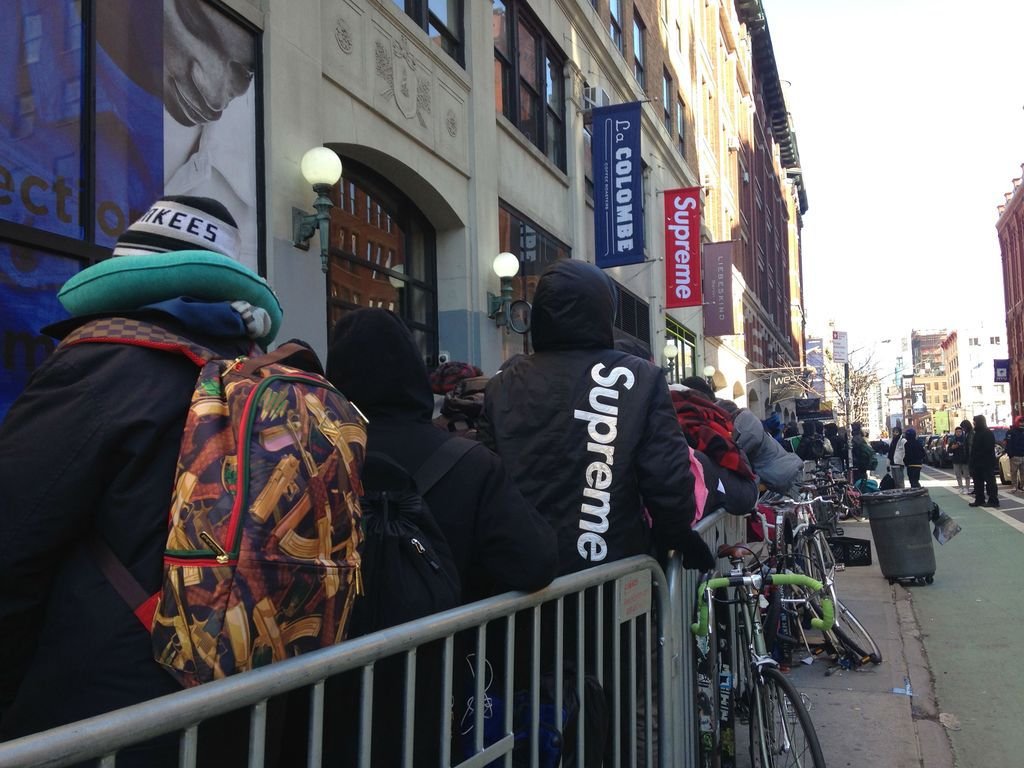
Answer: 1994
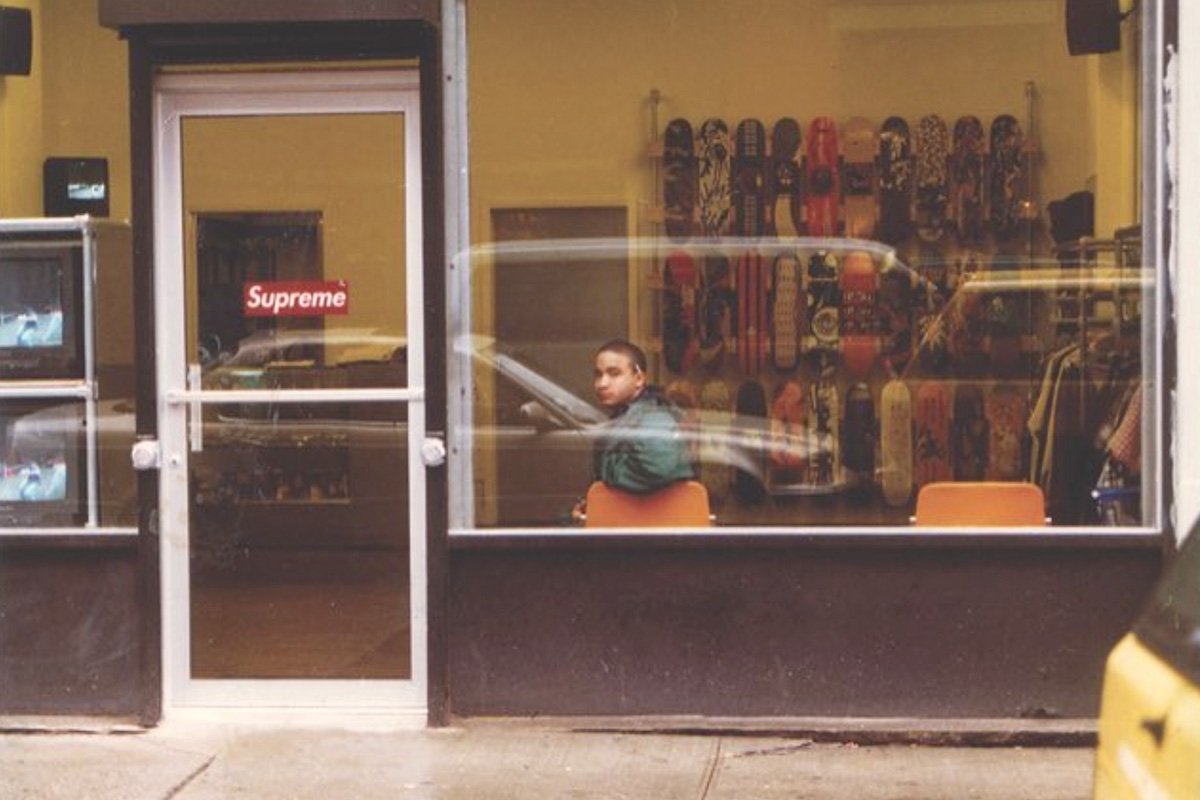
James Jebbia opened Supreme in April 1994 at 274 Lafayette Street, between Prince and Houston (Highsnobiety; Andrea Tuzio, nss magazine). He leased the space with a $12,000 deposit (Filippo D’Asaro, nss magazine). In a 2017 Vogue interview, he said he wanted a shop “that carries the cool stuff that everybody was wearing, no big brands or anything” (Kevin Kosanovich, StockX). The racks ran around the edges and the hardwood floor stayed open, so customers could skate right in (Highsnobiety). Tuzio calls it “the last social club” downtown. The staff and the skaters out front were famously cold to outsiders, and the shop’s crew, including Justin Pierce, ended up in Larry Clark’s Kids in 1995 (Renz Ofiaza, Highsnobiety; Tuzio, nss).
The first T-shirts used a simple logo a friend designed. After those sold out, Jebbia lent the friend a Barbara Kruger book, and that led to the red box logo in Futura Heavy Oblique, which first appeared on a tee in 1995 (Highsnobiety).
After 25 years, Supreme moved to a temporary space at 190 Bowery in February 2019 while it renovated Lafayette (Marjorie van Elven, FashionUnited). It never went back. That fall it signed a long-term lease on Bowery and listed the original shop for lease (Barbara Santamaria, FashionNetwork; Nicholas Rizzi, Commercial Observer). The shop that wouldn’t let you touch the merch grew into a global business. VF Corp bought Supreme for about $2.1 billion in 2020, and in 2024 it sold the brand to EssilorLuxottica, the owner of Ray-Ban, for $1.5 billion (Laurel Deppen, Retail Dive). And thus, the hypebeast Mecca of the world was no more.
Sources: nss magazine · Cannabis Aficionado · Highsnobiety · Highsnobiety · StockX, Kevin Kosanovich · nss magazine, Andrea Tuzio · Retail Dive, Laurel Deppen
Answer: Rayon (1889) → Nylon (1935) → Polyester (1941) → Spandex (1958) → Gore-Tex (1969) → Polar fleece (1981) → Mylo (2018)
The newest isn’t spun at all. It’s grown from mushroom roots in a few weeks.
Sources: Dharma Trading · Alchemie · EBSCO · Lancashire County Council Museums · Textile World · Science History Institute, Rachel S. Gross · Outdoors Magic, Will Renwick · Polartec · Gear Patrol, Tucker Bowe · FashionUnited, Rachel Douglass

Answer: Issey Miyake
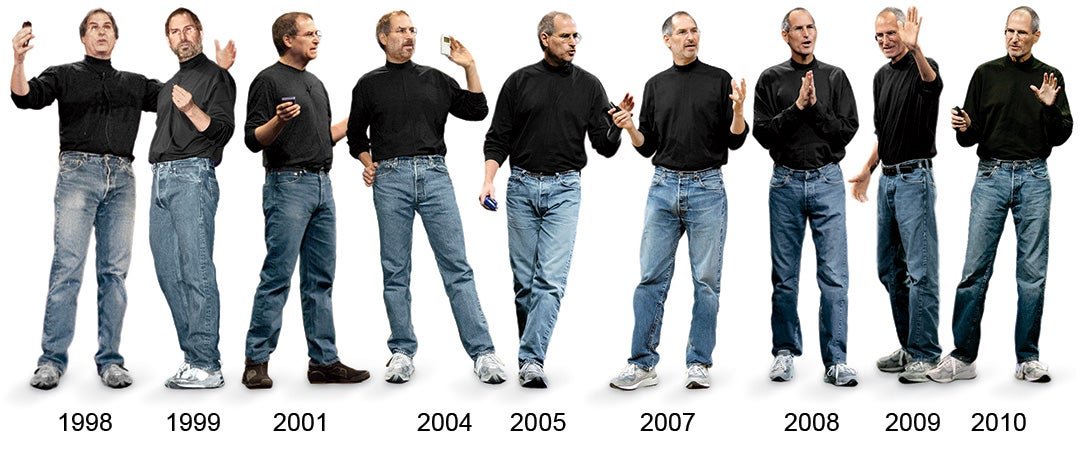
In the early 1980s, Jobs visited Sony and asked chairman Akio Morita why everyone wore a uniform. “He looked very ashamed and told me that after the war, no one had any clothes,” Jobs recalled to Walter Isaacson. Sony’s uniforms were designed by Issey Miyake and included a nylon jacket that turned into a vest when you took off the sleeves. Jobs wanted the same thing for Apple, but when he showed the vests to his staff, “Everybody hated the idea” (Wynne Davis, NPR). Instead, he asked Miyake to make black turtlenecks just for him, and Miyake sent about a hundred. “I have enough to last for the rest of my life,” Jobs said (Isaacson, via The Hollywood Reporter). Worn with Levi’s 501s, they became his uniform until he died in 2011.
After his death, St. Croix claimed his turtlenecks were its “Style 1990,” saying he bought two dozen a year. Isaacson’s book said Miyake made them (Aylin Zafar, TIME). Miyake retired the style in 2011, then brought it back in 2017 as the Semi-Dull T, at $270 in a 60% polyester, 40% cotton blend (Mitchel Broussard, MacRumors; Bloomberg).
Sources: History · Fast Company · NPR via KPCW, Wynne Davis · The Hollywood Reporter · TIME, Aylin Zafar · MacRumors, Mitchel Broussard · Bloomberg
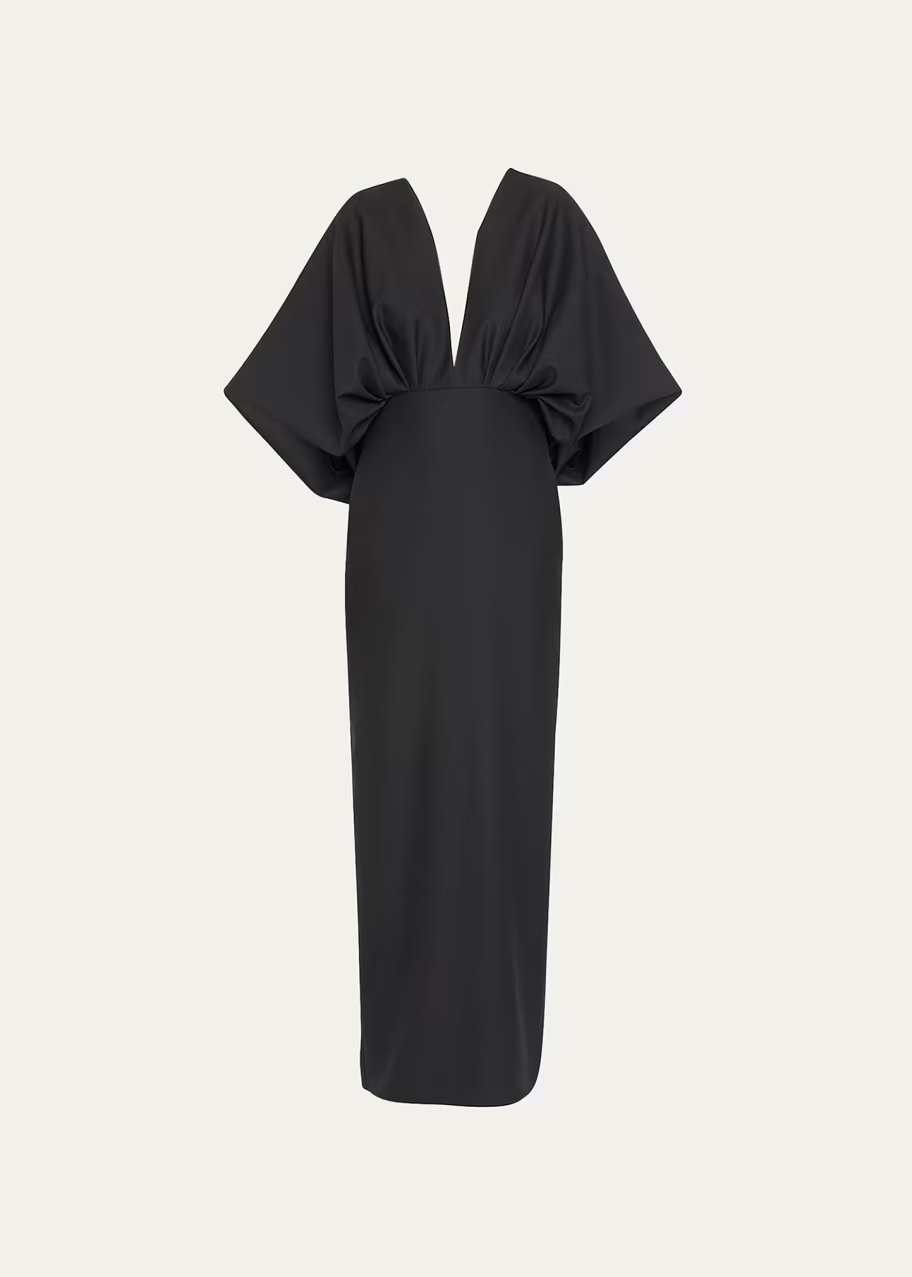
The Row Abinhav Gathered Wool Column Dress