October 21, 2026
The issue of October 21, 2026
Every question from this issue, with the answers, the hints and the reading behind them.
Play the October 21, 2026 issue
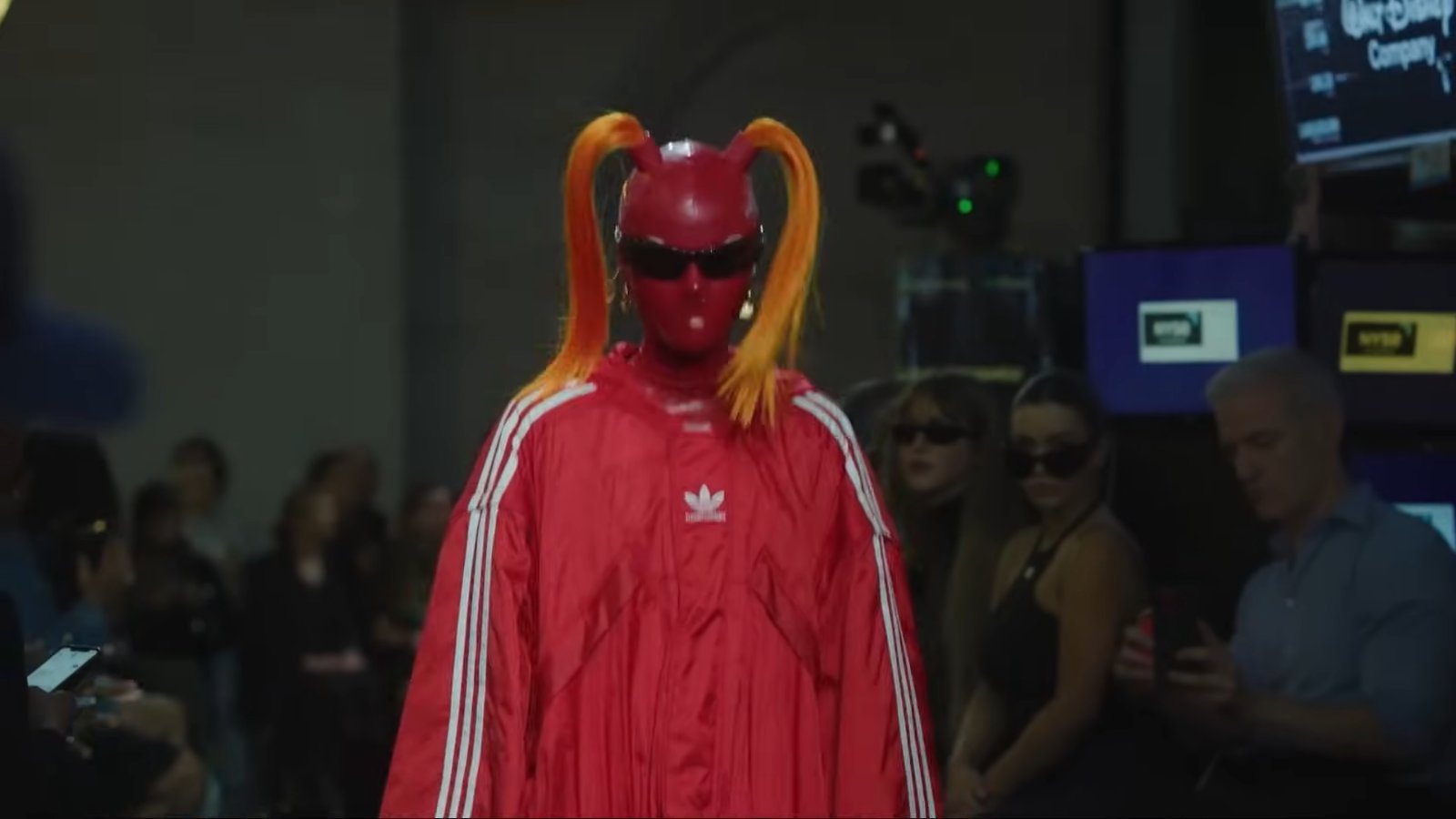
House: Balenciaga · Designer: Demna Gvasalia · Season: Spring/Summer 2023
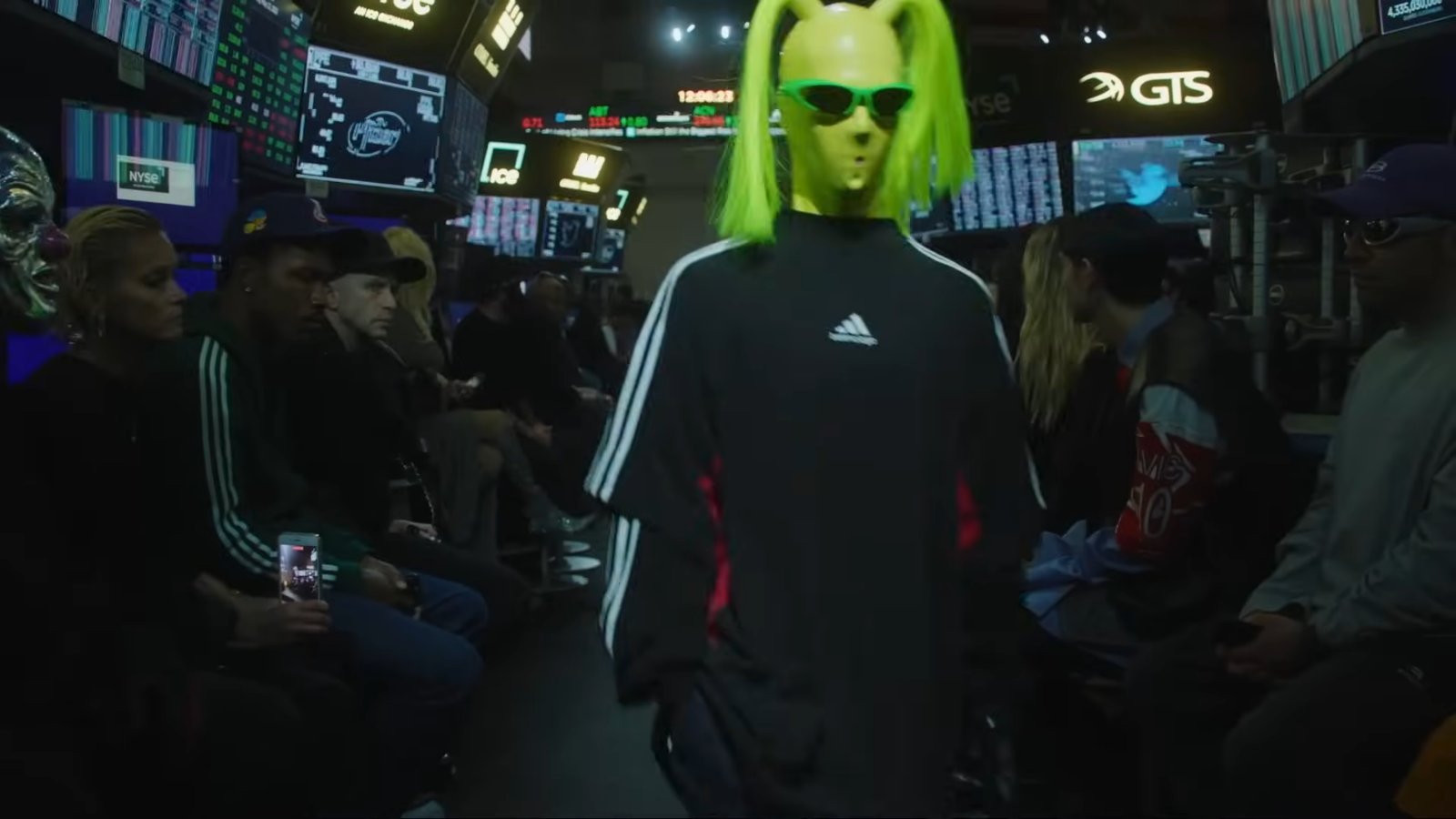
Balenciaga’s Spring 23 show was Demna’s first in New York, and he held it on the trading floor of the New York Stock Exchange on Sunday, May 22, 2022. Guests sat on traders’ stools and the bell rang to open the show. The screens that usually show market tickers glitched and flickered over the runway (Roxanne Robinson, FashionNetwork; Bloomberg). Thom Waite at AnOther read those screens as a possible “preemptive funeral for the world economy.” The timing helped: two days earlier, the S&P 500 had briefly fallen into bear market territory (David Gura, NPR).
The clothes were 1980s Wall Street turned up, almost all in black:
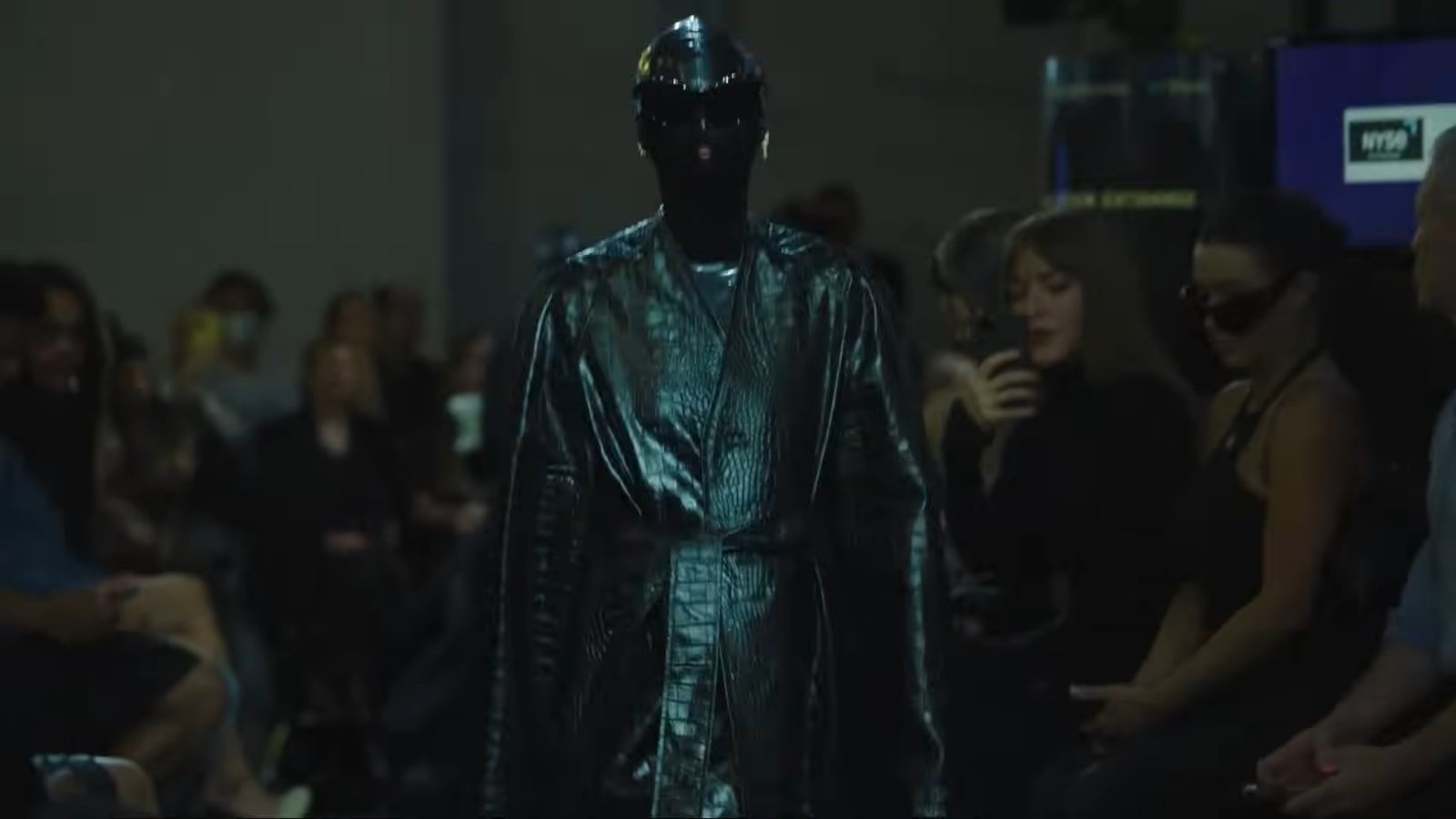
wide-shouldered suits and crocodile overcoats
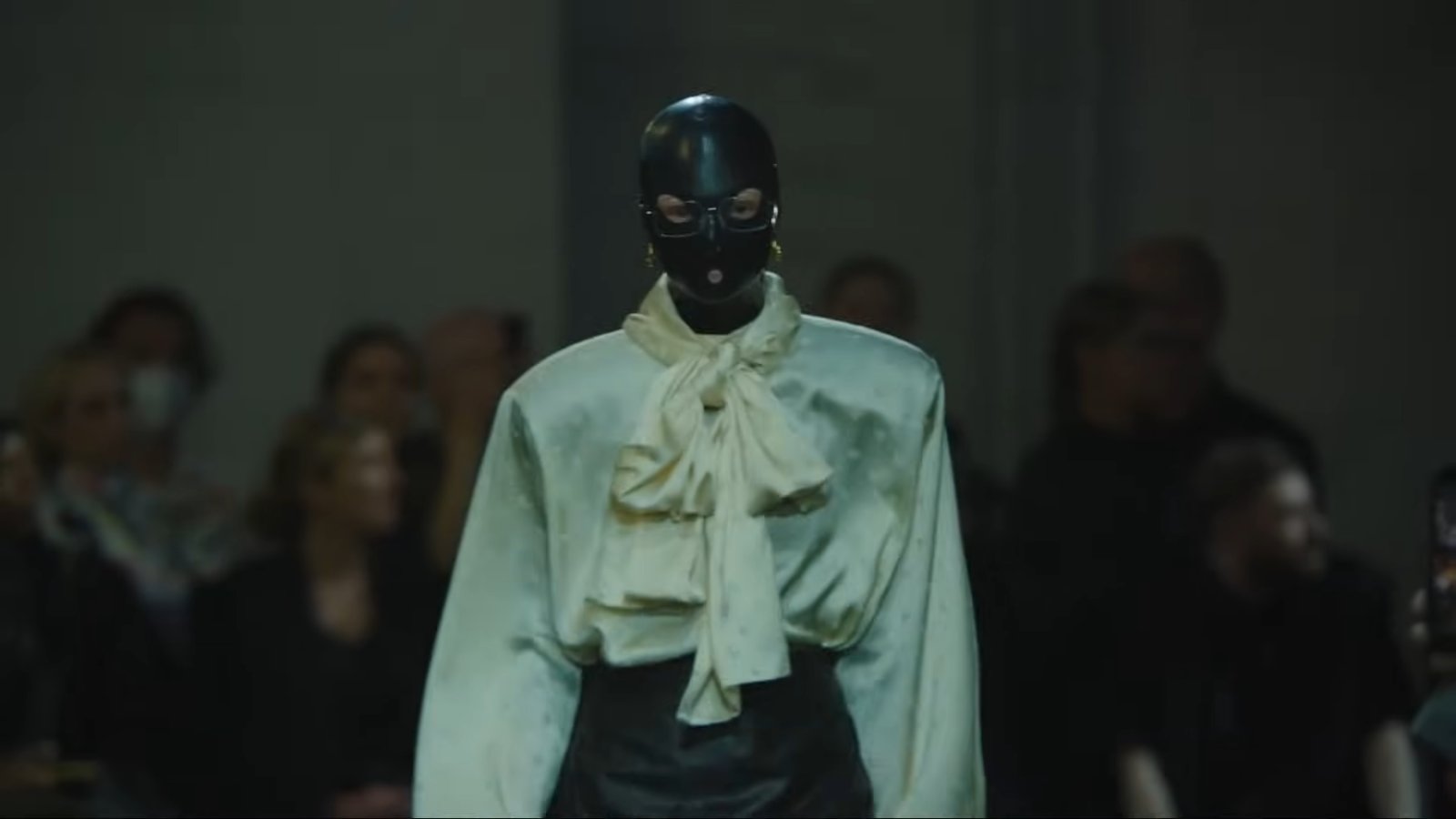
silk trench coats with trains and pussy bows
derbies and pumps blown up to “steroid” size
It was also the debut of Garde-Robe, Balenciaga’s new line of tailored staples. Then every face disappeared under a black latex mask. The last section brought in the Balenciaga x adidas collaboration, with three-stripe tracksuits worn with more masks and fetish bodysuits. It went on sale the same day.
Demna gave the thesis himself backstage: money “is probably the biggest fetish in the world” (AnOther). Interview called the show a “campy capitalist critique.” Stella Hughes at Culted read it as a critique of “riotous capitalism” and conspicuous consumption. Mar Piera at Highxtar described the latex as a symbol of both submission and power. Not everyone was sold. Robinson found the take on 80s greed “dated,” and Culted noted that some called the adidas pieces lazy logo work at luxury prices.
Watching it for the first time, I saw commodification. We’ve all been turned into things to be consumed, faceless parts of a system where an industry is just a collection of factories built to churn out product and profit. The masked figures dress like stockbrokers and finance bros, but they’re also in gimp gear, and that dichotomy is a big part of show for me. Who’s really in control, the dom or the sub, the boss or the employee? Workers have the power to band together and overthrow the system, and yet we don’t. A sub can stop the pain at any time but doesn’t, because they like it, or feel they deserve it, or don’t want the responsibility of standing on their own without the suffering. We are servants of capitalism and its perpetrators at the same time. Our politics informed by sexual pathology. Even the music plays along. The slowed “New York, New York” in the soundtrack is Carey Mulligan’s from Steve McQueen’s Shame, a film about a sex addict in Manhattan. Wall Street is never lit or policed. It's inhabitants dwell in the shade and throw their morality down an alleyway. It's a dark dungeon illuminated by downward charts of global happiness, and upward charts of it's suffering. We tell broke people to run a bag up, but what's in that bag may break them. Shoutout to sex!
Sources: AnOther, Thom Waite · FashionNetwork, Roxanne Robinson · Bloomberg via BNN · Interview · Culted, Stella Hughes · nss magazine, Bernardo Savastano
Answer: Nike Kobe
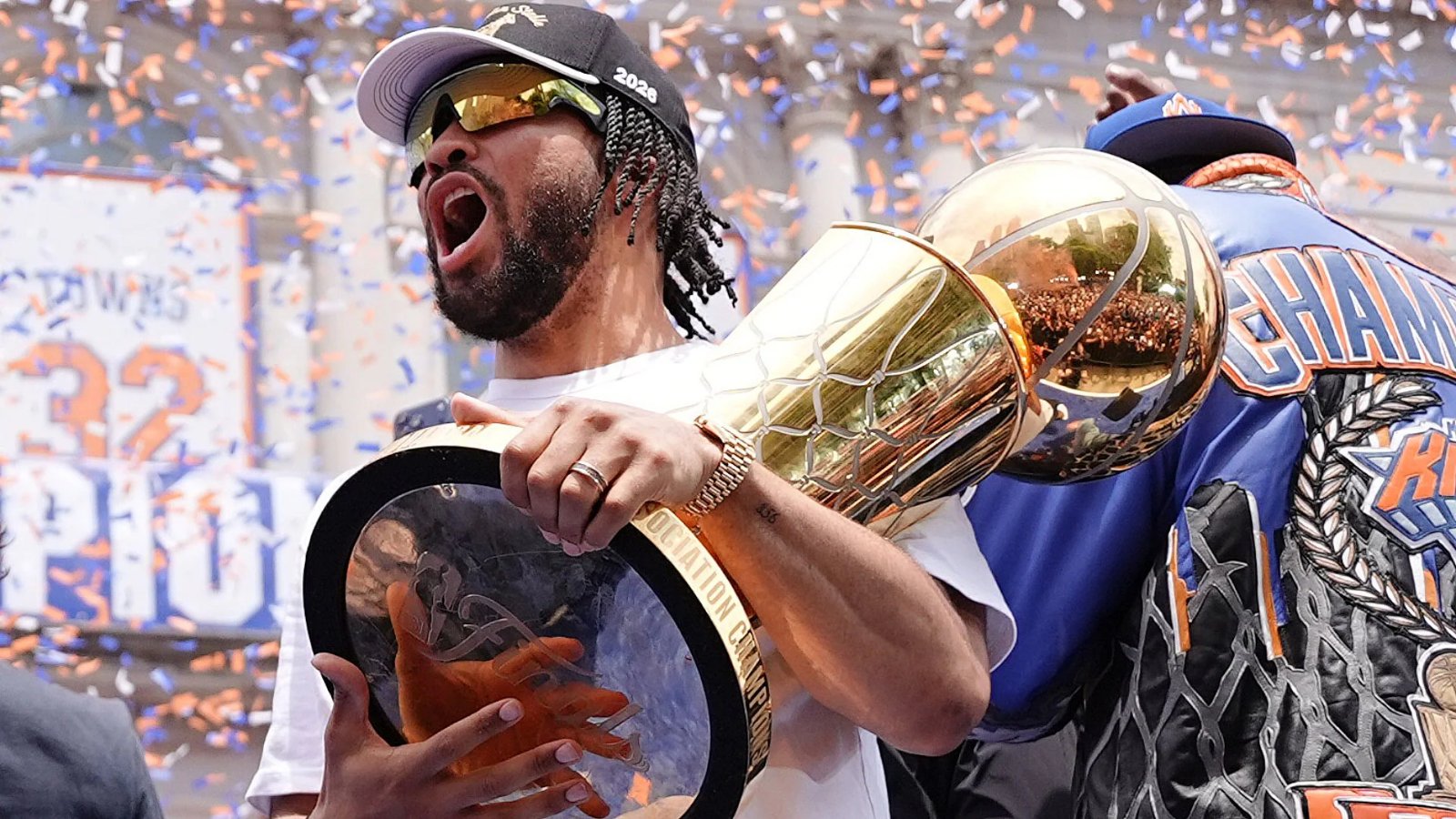
Yesterday, the reigning champion Knicks raised their first banner since 1973 at Madison Square Garden, and their star wore Kobes, just like he did when he won it. In June, Jalen Brunson led New York past the Spurs in five games, scoring 45 points in the Game 5 clincher to win Finals MVP. On his feet was the Nike Kobe 6 Protro “Statue of Liberty,” a mint-green pair he picked because the Knicks had already won the NBA Cup and the Eastern Conference Finals clincher in it. Brunson even had an unreleased Kobe PE ready for the Finals but stuck with his lucky pair. The shoe retailed for $200 when it dropped in December 2025, and after the title-clinching win, some resale purchases topped $1,000, according to ClutchPoints.
It’s all Kobes for Brunson: Sole Retriever counted 25 different pairs over the 2025-26 season, mostly player exclusives, including a pair inspired by his daughter’s pajamas, which he says is his favorite, and a Knicks-orange Kobe 3. The connection goes back to Christmas 2014, when Brunson was a high schooler and Kobe Bryant gave him a pair of Kobe 9 Elites. Unusually for a player of his stature, Brunson still doesn’t have a signature shoe, and reportedly by choice. According to Ric Mestre of Unstructed Vision, speaking on The Grindhouse, Inc podcast, Brunson said: “I refuse. I don’t want a signature. Just let me wear Kobe’s for the rest of my career, and I’ll be good.” Industry analysts told Sportico that a Brunson signature shoe would sell out, but for now he’s the de facto face of the Kobe line. KNICKS GOING B2B!
Sources: Sneaker News · ClutchPoints · Sneaker Bar Detroit
Answer: Ralph Lauren
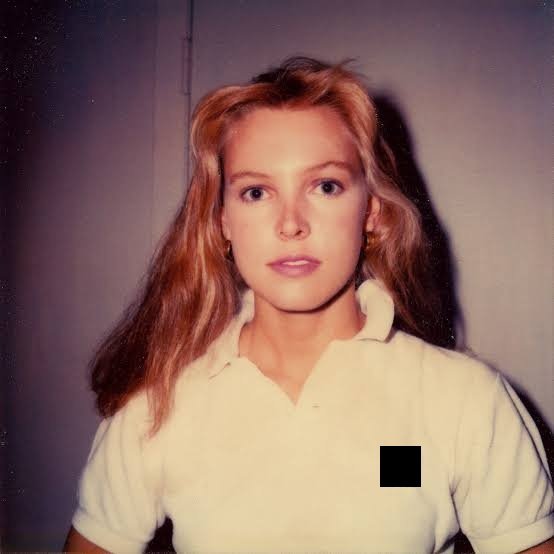
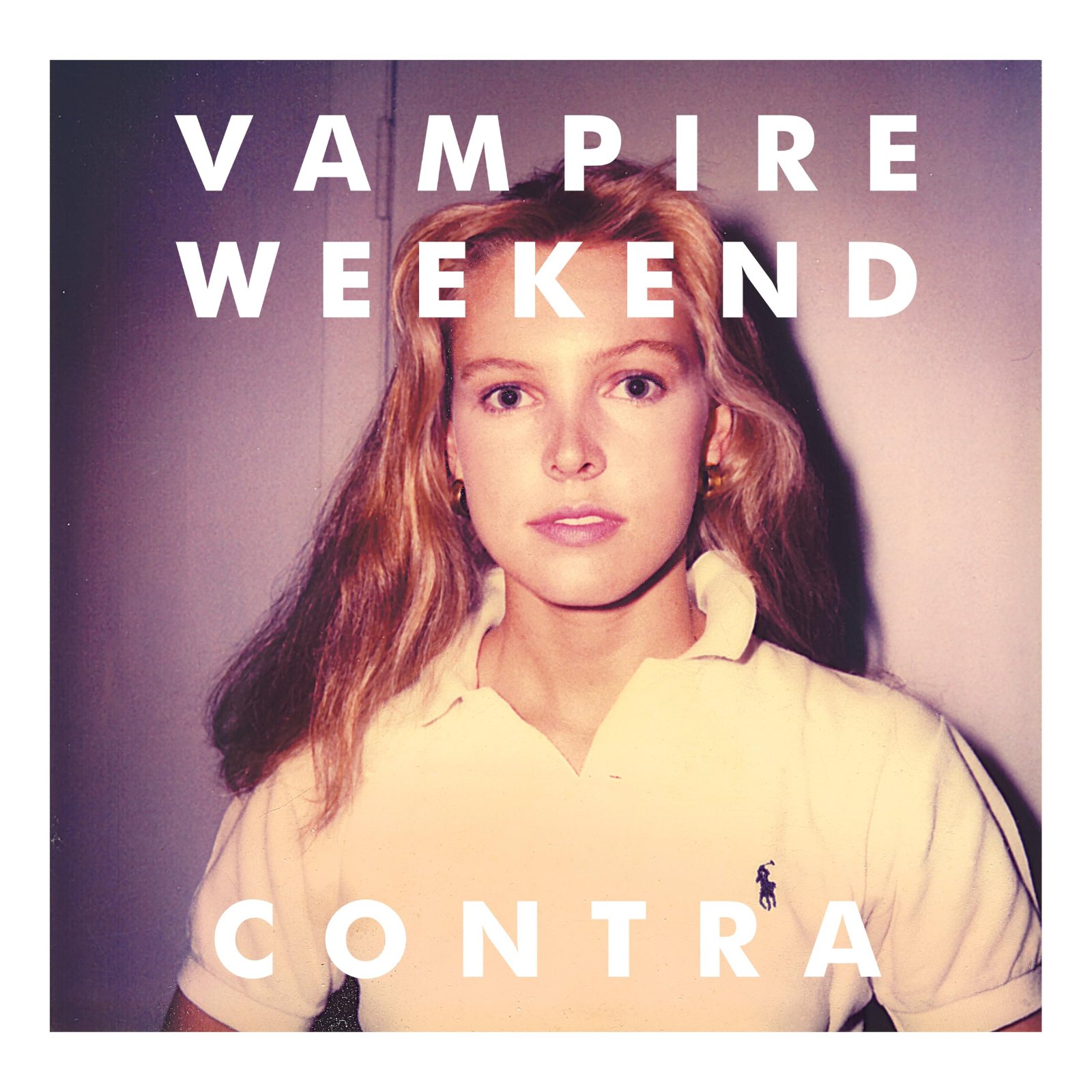
The woman on the cover of Contra, Vampire Weekend’s 2010 album, is wearing a pastel Ralph Lauren polo with a popped collar: preppy, a little aloof, and perfect for a band known for making Ivy League style feel indie. Band member Rostam Batmanglij found the image on Flickr, where photographer Tod Brody had posted it, saying it came from a 1983 casting session in New York. The band reportedly paid him $5,000 for it. Ezra Koenig called it “an actual candid document of a person in New York City in 1983,” and said the band debated whether she “could be 15 or 27.”
Her name was Ann Kirsten Kennis, a former model then living in Connecticut, and she found out in the most surprising way. Her teenage daughter brought the album home and said, “Hi Mum, see your picture?” In July 2010, Kennis sued the band, their label XL Recordings and Brody for $2 million, claiming the image was used without her permission and that her signature on the release form was forged. Her lawyer even claimed her mother had taken the Polaroid, though her former agent said it was clearly a casting shot. In August 2011, Kennis settled with the band and label for an undisclosed amount. The band then went after Brody for misrepresenting his rights, but he died before that case was widely reported as resolved.
Sources: WFAE (NPR) · NME · PetaPixel · Gigwise · TIME
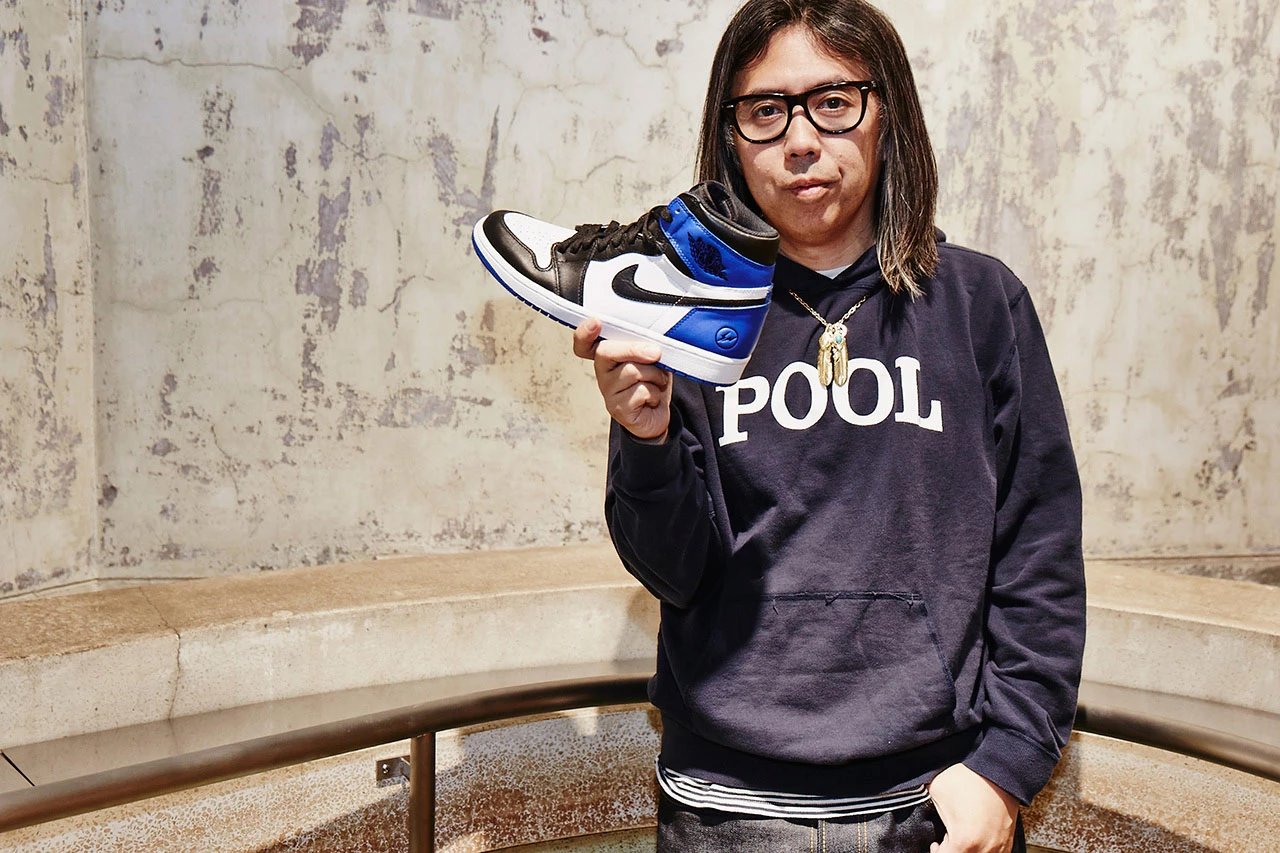
Answer: Launches his streetwear brand GOODENOUGH (1990) → Co-founds Nike’s HTM line with Tinker Hatfield and Mark Parker (2002) → Formalizes his collaboration label, fragment design (2003) → Begins collaborating with Starbucks (2011) → Releases the Fragment x Air Jordan 1 (2014) → Launches a collection with Louis Vuitton and Kim Jones (2017) → Guest-curates the 30th issue of A Magazine Curated By (2026)
Hiroshi Fujiwara, often called the “godfather of streetwear,” built his career one crossover at a time. Born in Ise, Japan, he moved to Tokyo at 18, spent time in London with Malcolm McLaren and Vivienne Westwood, and arrived in New York during hip-hop’s golden age. Back in Japan, he became one of the country’s first freelance DJs and the face of Stüssy’s International Stüssy Tribe there.
In 1990, he launched GOODENOUGH, which Highsnobiety calls one of the first true streetwear brands, and he helped Jun Takahashi and NIGO get their start in Ura-Harajuku. In 2002, he co-founded Nike’s HTM line with designer Tinker Hatfield and CEO Mark Parker, a project later known for innovations like Flyknit. Around 2003, he formalized fragment design, a label that has never made its own products and works only through collaborations. According to Complex, he found the word “fragment” in the dictionary and borrowed its double lightning bolt logo from an earlier project called Electric Cottage.
Those lightning bolts soon turned up everywhere. Starting in 2011, fragment worked with Starbucks on cups, mugs, loyalty cards and even a store design. On December 27, 2014, the fragment design x Air Jordan 1 High OG released for $165, with the bolts on the heel. In April 2017, he teamed up with Kim Jones on a Louis Vuitton collection built around an imaginary band, “Louis V and The Fragments.” “Hiroshi Fujiwara is an influencer in the truest sense of the word,” Jones told AnOther.
Now he’s the editor. In October 2026, Fujiwara was named guest curator of the 30th issue of A Magazine Curated By, a magazine that hands each issue to a single designer, from Martin Margiela in issue 1 to his old friend Jun Takahashi in issue 4. His issue starts in Tokyo’s neighborhoods, record shops and private collections, then heads home to Ise, with sections on Shibuya then and now, konbini, punk and denim, plus contributors including Ai Weiwei. A limited edition of 300 copies comes with an NFC chip and an exclusive 45 rpm vinyl from Big Crown Records. As Fujiwara puts it: “What I like most. The things I love. The things I enjoy. It’s all here. And I want to share it with you.”
Sources: Highsnobiety · AnOther · Complex · Sneaker Files · Wonderland · A Magazine Curated By
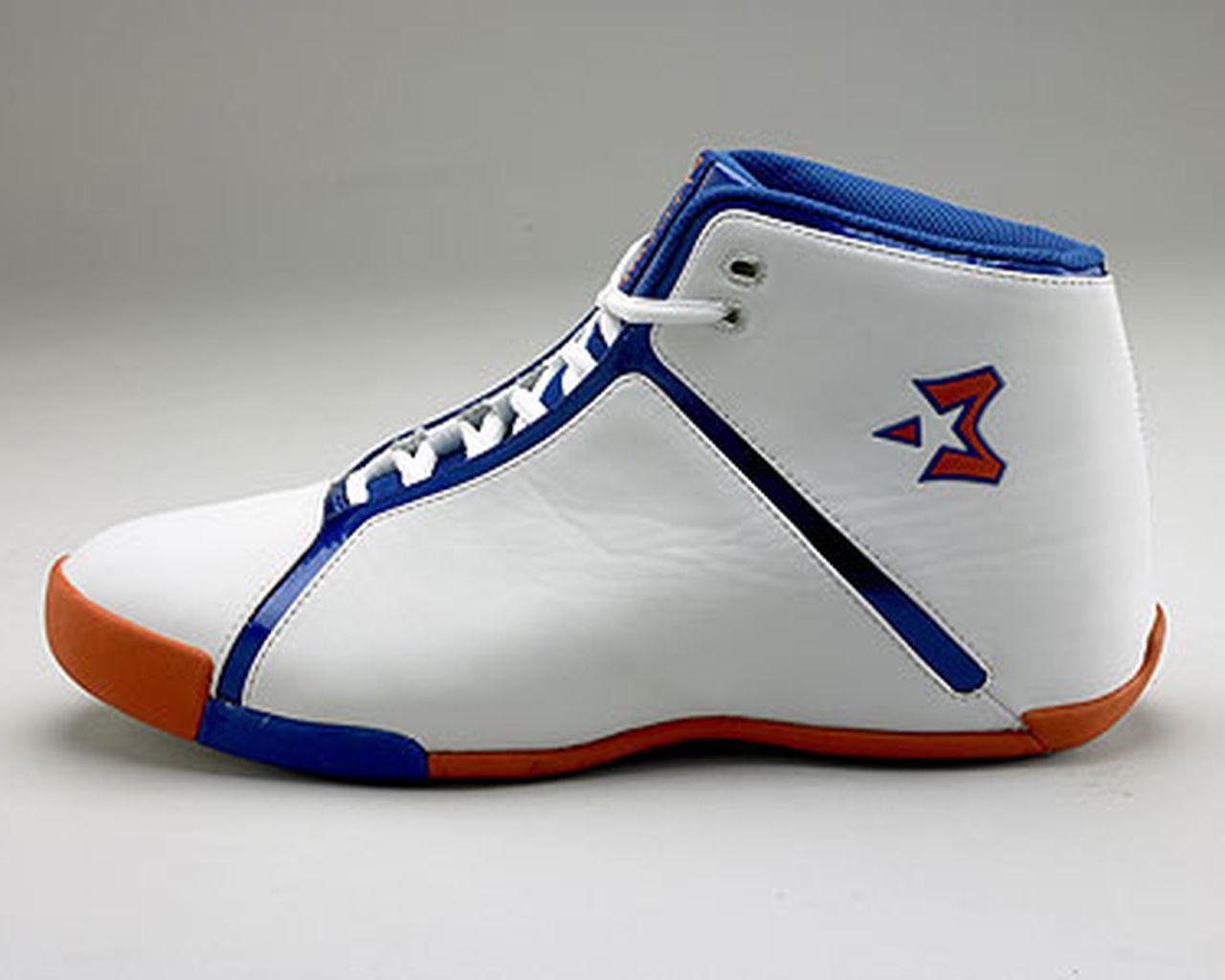
Starbury One (2006). The Starbury One came out in 2006. Stephon Marbury, a Coney Island kid who became the Knicks’ point guard, sold an “NBA quality” basketball shoe for $14.98. It was sold only at the discount chain Steve & Barry’s. The chain kept the price that low by skipping national advertising, making the shoes itself and selling them in its own stores (Quartz; Dave Zirin, The Nation/ZNet).
The reason was personal. Marbury grew up unable to afford big-name sneakers. When he asked for them, he told Oprah.com, his mother said, “That’s grocery money.” He also talked about kids being robbed for expensive shoes, and called his own line “bigger than basketball.” To show the shoe could hold up, he wore Starburys in Knicks games for a whole NBA season (NPR). People lined up outside Steve & Barry’s, and NPR reports the line sold more than 4 million pairs.
The ride didn’t last. Steve & Barry’s went bankrupt in 2008, and the original Starbury run ended with it. Complex notes the shoe was mocked for years, though it calls Marbury’s intentions admirable. He later took the brand to China, where he became a basketball legend, and he has talked about bringing the $15 shoe back (Quartz). For a Knicks fan, the white, blue and orange pair might be the most New York sneaker ever made: a hometown kid making sure the hometown kids could afford to play in his shoes. Shout out to Starbury!
Go New York, Go New York, GO!