October 20, 2026
The issue of October 20, 2026
Every question from this issue, with the answers, the hints and the reading behind them.
Play the October 20, 2026 issue
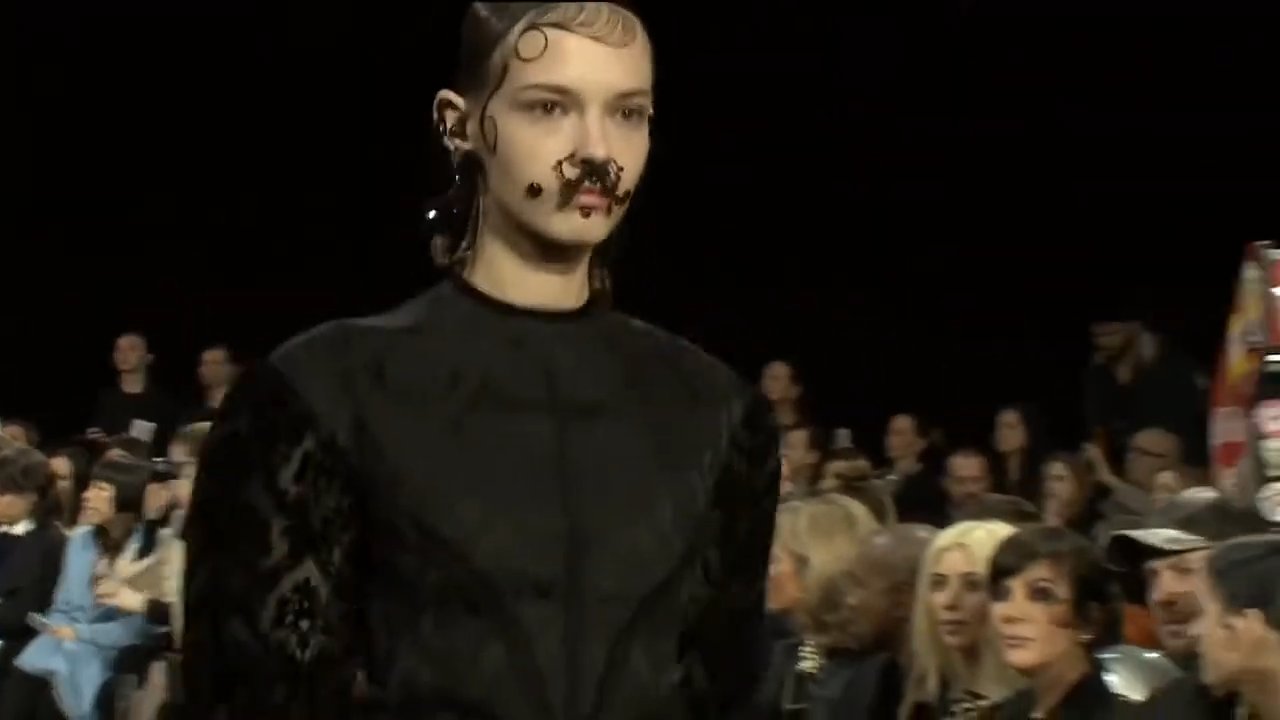
House: Givenchy · Designer: Riccardo Tisci · Season: Fall/Winter 2015
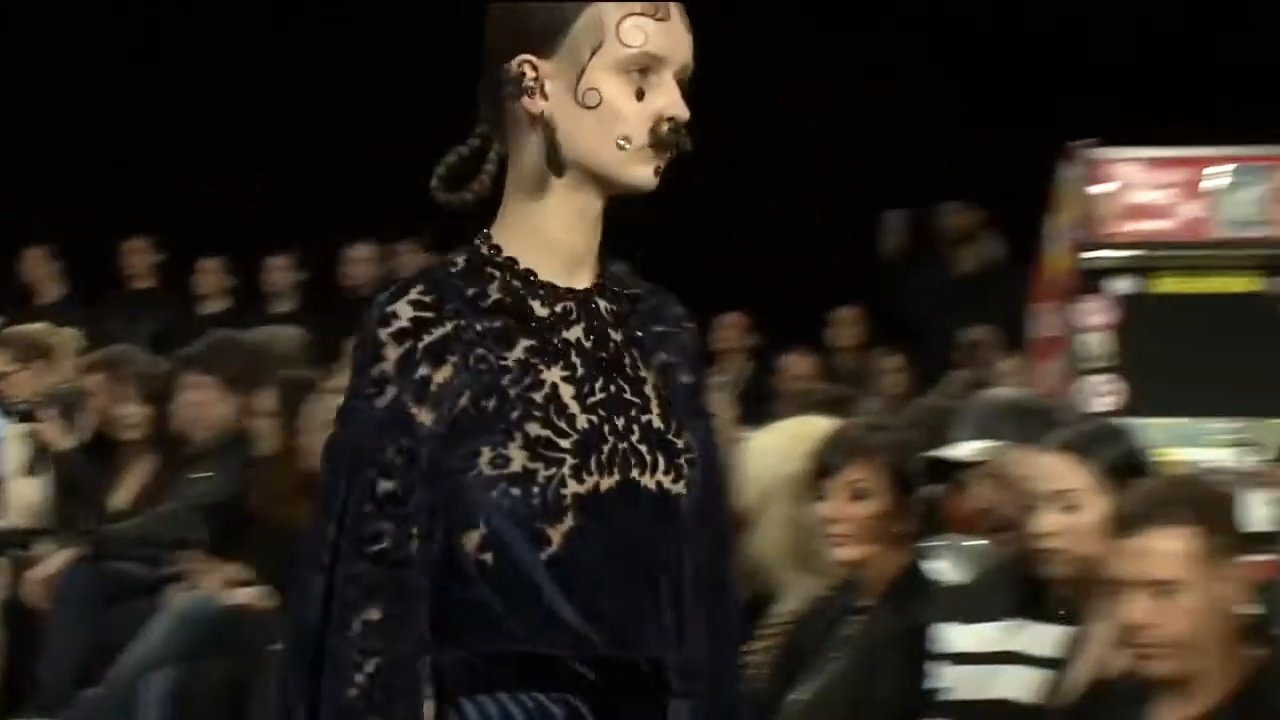
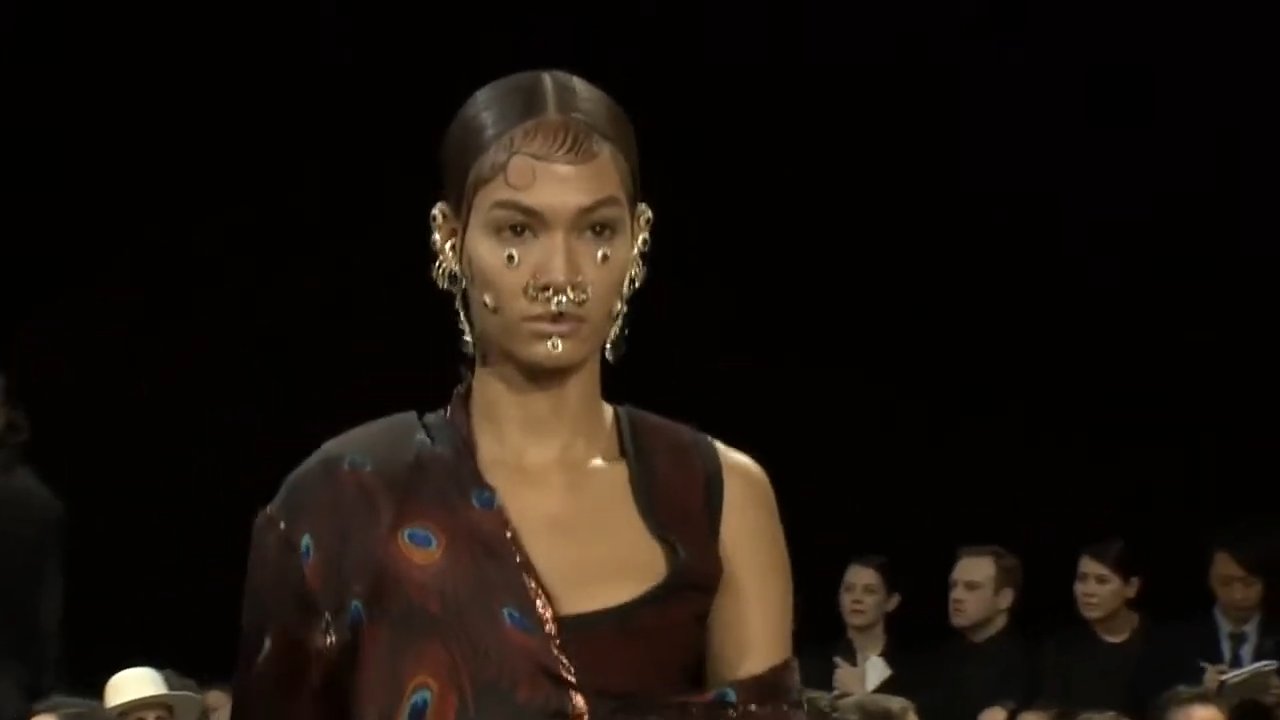
The Halloween run gets gothic and glamorous. On March 8, 2015, Riccardo Tisci sent out a Givenchy collection he called “Chola Victorian.” “She’s the boss of the gang,” he told Vogue backstage. The anachronism is the point: NOWFASHION described it as 19th-century British mourning dress meeting Southern California girl-gang style, with corseted coats and tailcoats, flocked velvet, leather coats with fur tails on the zippers, peacock prints, and dresses with small crosses stitched on the chest. Pat McGrath spent more than six hours on each model, gluing crystals from cheek to chin and adding giant septum rings, and the hair was slicked into braids with kiss curls pressed against the forehead. Vogue called the show “sublime,” and Daily Front Row’s Paige Reddinger called it “a uniquely divine collection.”
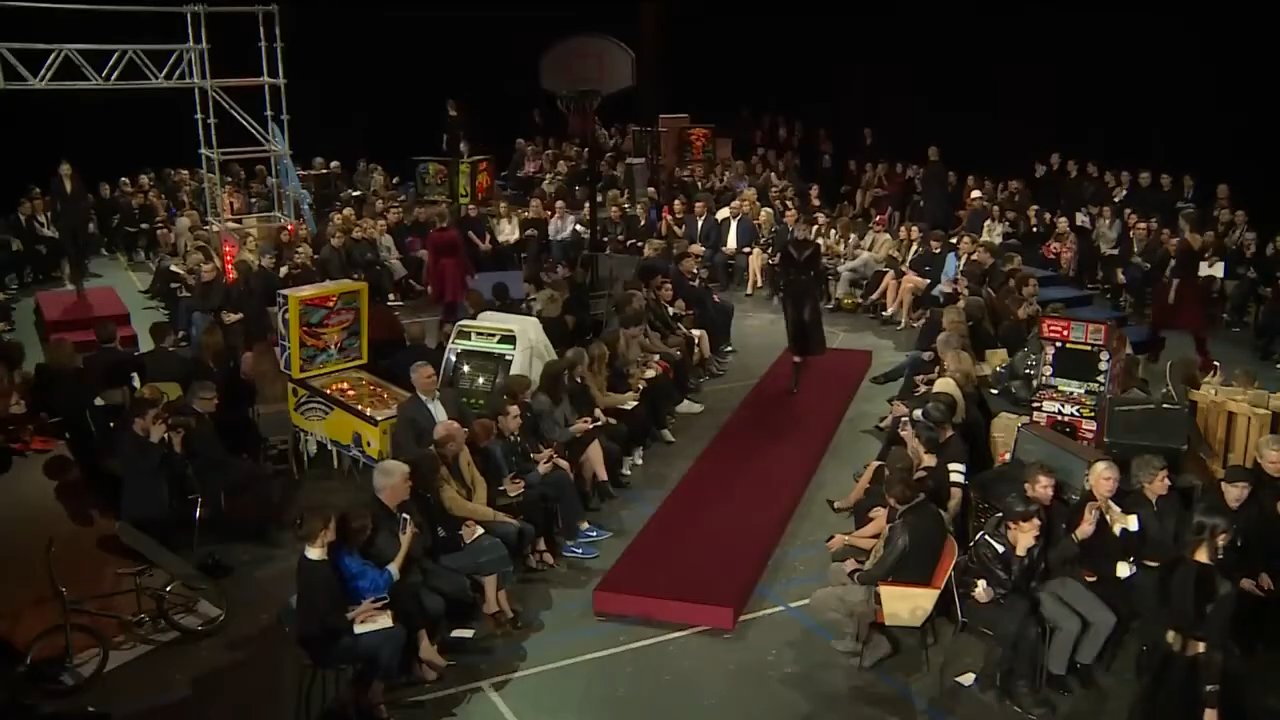
It’s exaggerated by design, an extrapolation of the hoop earring and baby hair look, played out in a masculine/feminine matrix; some models even wore jeweled face designs shaped like mustaches. The set feels like a junkyard: The Hollywood Reporter described an old, dark gymnasium filled with vintage radios, old TVs, neon signs and motorcycle helmets. It would have been cool if the models had rolled down the runway on bikes. The “boss of the gang” idea comes through too, in the sense of a more developed authority, someone who carries herself in excess regalia as she leads her people.
Not everyone was charmed. “Chola” was once a slur against Mexican immigrants before Chicana women reclaimed it, and critics argued Givenchy borrowed their look without including them. Writing for Refinery29, Phillip Picardi called using “chola” as inspiration “cultural appropriation” and noted that Joan Smalls was, as far as he knew, the only Latina model in the show. In Ms., writer Stephanie cited Kara Brown of Jezebel on the double standard behind styled baby hairs: “When we do it, it’s ghetto or unattractive, but when white people do it it’s cool and unique and fashion.” I understand the controversy and how people felt; it’s easy to see why some felt Tisci was playing fast and loose with a people’s culture. Even Picardi called the collection breathtaking and Tisci a brilliant talent who simply “missed the mark” this time. It’s an interesting concept, to say the least, and the clothes and makeup stand out.
Sources: Daily Front Row (Paige Reddinger) · Fashion Gone Rogue · Things&Ink (Alice Snape) · Refinery29 · Remezcla (Phillip Picardi) · Ms. Magazine
Answer: Toile
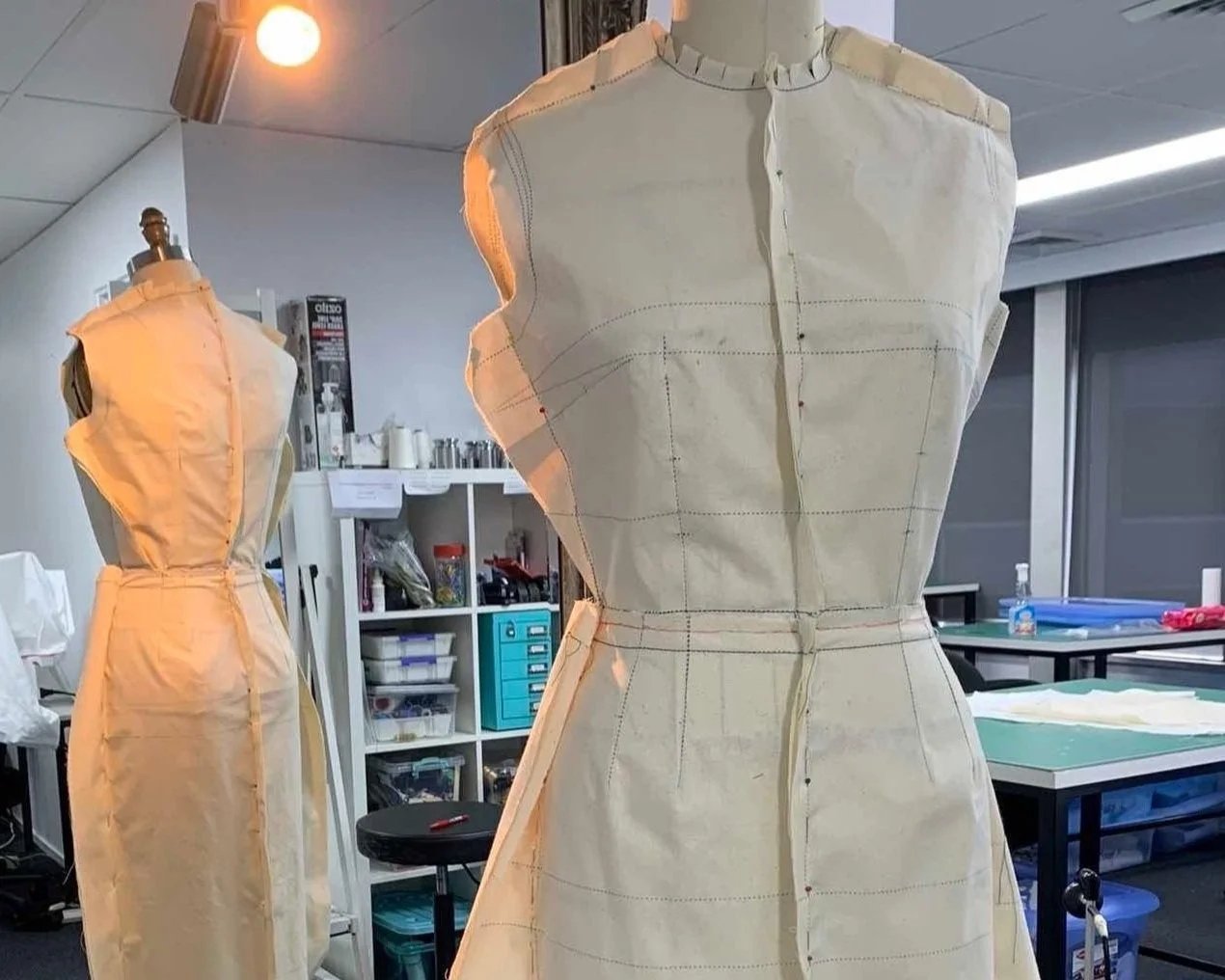
A toile is a test garment: a mock-up of a design sewn in inexpensive cotton like calico or muslin, chosen to match the weight and drape of the final fabric. Before cutting into costly silk or wool, designers use it to check the fit, proportions, darts and seams, and they often make several toiles for a single design. The word “muslin” has even become a synonym; sewists talk about “making a muslin.”
The name says it all. Toile is French for “cloth” or “linen canvas,” from the Old French toile and ultimately the Latin tela, meaning “web” or “warp of a fabric,” which comes from texere, “to weave.” English borrowed it around 1400 for a coarse cloth, and only later did it come to mean the mock-up itself.
In couture, the toile is essential. The Metropolitan Museum of Art calls it “an intrinsic step in the creation of a couture garment,” adjusted for each client during fittings. Because toiles stayed inside the atelier, few survive. They were also big business. In the 1950s, Christian Dior sold calico toiles of his designs to department stores and manufacturers, who could copy them a limited number of times. The V&A holds a 1954 toile skirt from his H-Line, still in its Christian Dior envelope, and notes that Dior was one of the first couturiers to set up international licensing deals like this.
Sources: The Met · V&A · Online Etymology Dictionary · Merriam-Webster · Simplicity · Couture Arts
Answer: July 2008
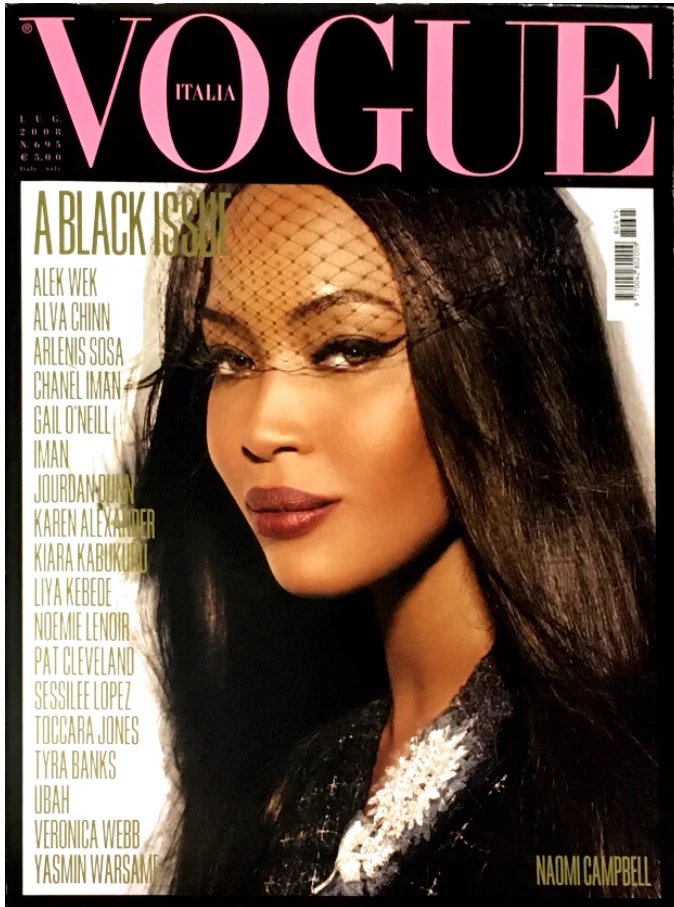
Vogue Italia’s “Black Issue” came out in July 2008. Editor-in-chief Franca Sozzani conceived it partly in response to Barack Obama’s rise. “America is ready for a black president, so why are we not ready for a black model?” she told Reuters. Steven Meisel shot four covers, starring Naomi Campbell, Liya Kebede, Jourdan Dunn and Sessilee Lopez, plus more than 100 pages of editorials featuring over 20 Black models, including Iman, Tyra Banks, Alek Wek and Pat Cleveland. Edward Enninful styled it, and Bethann Hardison guest-edited a feature.
It was a phenomenon. The issue sold out in the U.S. and U.K. within days, and Condé Nast had to reprint it. Hardison said a second reprint had never happened to a Condé Nast magazine before. “The explanation for why they don’t use black models is always that we don’t sell, but this shows that’s not true,” said Sola Oyebade of Mahogany Model Management. Copies have since sold on eBay for up to £1,500. Critics noted that the Black models were still missing from the magazine’s ads, and Hardison has said the industry didn’t change as much as it should have.
Sources: Andscape · Ben Arogundade · Istituto Marangoni · Magazine Cult
Answer: Halston, Stephen Burrows, Oscar de la Renta, Bill Blass, Anne Klein
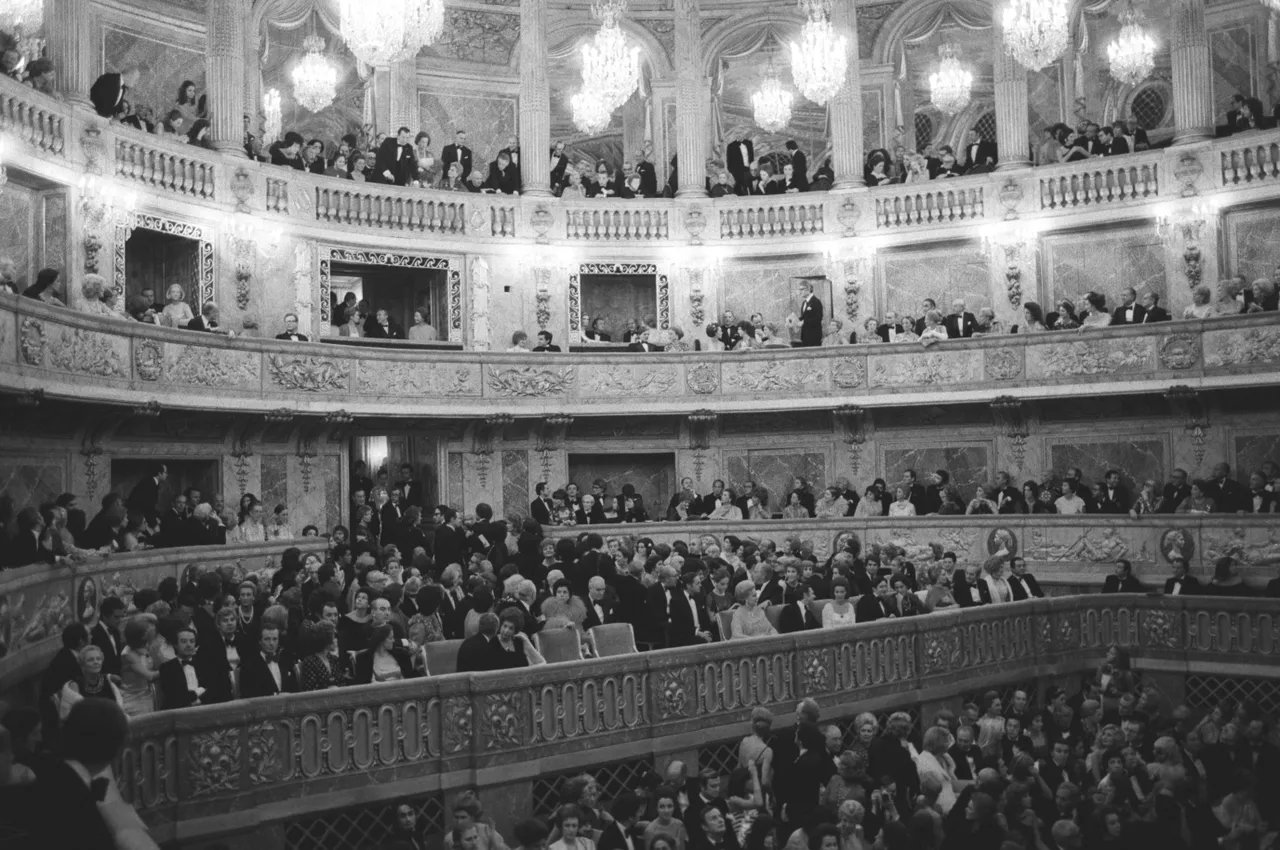
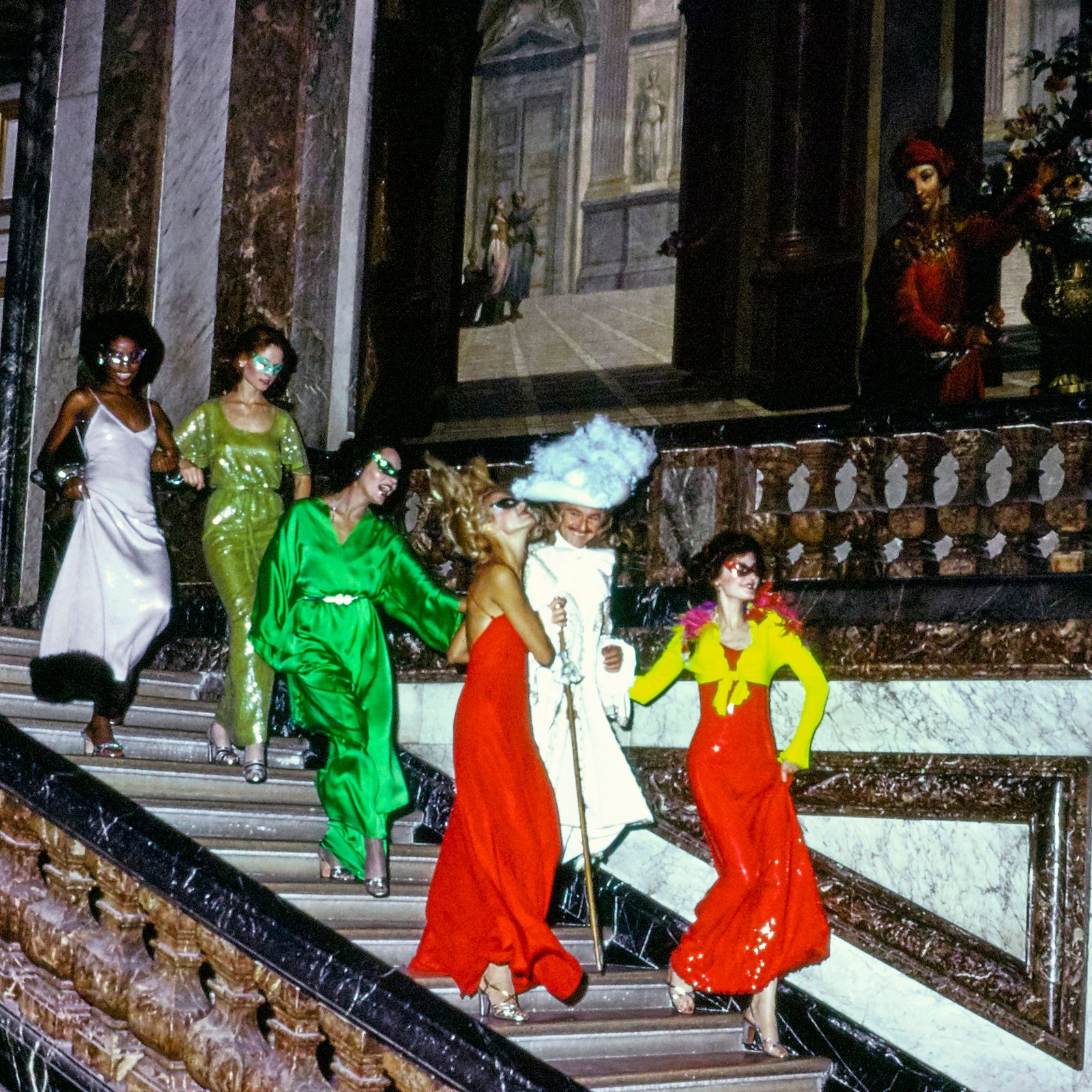
On November 28, 1973, the Palace of Versailles hosted the Grand Divertissement à Versailles, a black-tie gala to raise money for the crumbling, termite-ridden palace. It was the press, not the organizers, who called it a “battle.” Five French couturiers (Marc Bohan for Christian Dior, Pierre Cardin, Hubert de Givenchy, Yves Saint Laurent and Emanuel Ungaro) shared the stage with five invited Americans: Bill Blass, Stephen Burrows, Oscar de la Renta, Halston and Anne Klein. UPI’s Aline Mosby called it “the first time France ever has recognized that the United States even has designers.” Publicist Eleanor Lambert floated the idea to the palace’s curator, Gérald van der Kemp, and Baroness Marie-Hélène de Rothschild led the French side. Tickets cost $235, and Princess Grace of Monaco came in a white Dior gown under a red Madame Grès cape.
The French went first with a sprawling variety show directed by Jean-Louis Barrault. It featured a cardboard rocket float for Cardin, a Cinderella pumpkin for Dior, Zizi Jeanmaire singing for Saint Laurent, Rudolf Nureyev dancing, Josephine Baker in furs and feathers, and Crazy Horse dancers who dropped their fur coats at the finale. The Christian Science Monitor’s Phyllis Feldkamp called it “disjointed,” and the Los Angeles Times’ Eugenia Sheppard said its sets were “about as contemporary as a bustle.” The Americans kept it short. Choreographer Kay Thompson focused on sound and movement, and illustrator Joe Eula had to hand-draw an Eiffel Tower backdrop on the spot after a mix-up between yards and meters. Liza Minnelli, dressed by Halston, opened with “Bonjour, Paris.” Anne Klein, the only woman designer on either side, showed first; Oscar de la Renta closed, with model Billie Blair playing a magician who pulled colored scarves from her sleeve. Then Minnelli brought the house down with “Cabaret.”
What stunned the room were the models. Ten of the 36 American models were Black, and Stephen Burrows was one of the five American designers. “They’d never seen anything like us, tall, skinny, a mixture of every American type and moving all the time,” Billie Blair said. “At the end, the French were throwing the programs into the air,” Lambert recalled. “The real surprise was that American fashion has come of age. The French can no longer ignore it,” wrote Hebe Dorsey in the International Herald Tribune. Vogue now sees the night as the moment ready-to-wear overtook couture, and as an international stage for the Black Is Beautiful movement. Even Bill Cunningham covered it for the Chicago Tribune, calling Burrows’ designs “sheer genius.”
Sources: Vogue (Laird Borrelli-Persson) · AnOther · France-Amérique · The New World
McQueen Classic Silk Skull Scarf in Black