
October 19, 2026
The issue of October 19, 2026
Every question from this issue, with the answers, the hints and the reading behind them.
Play the October 19, 2026 issue
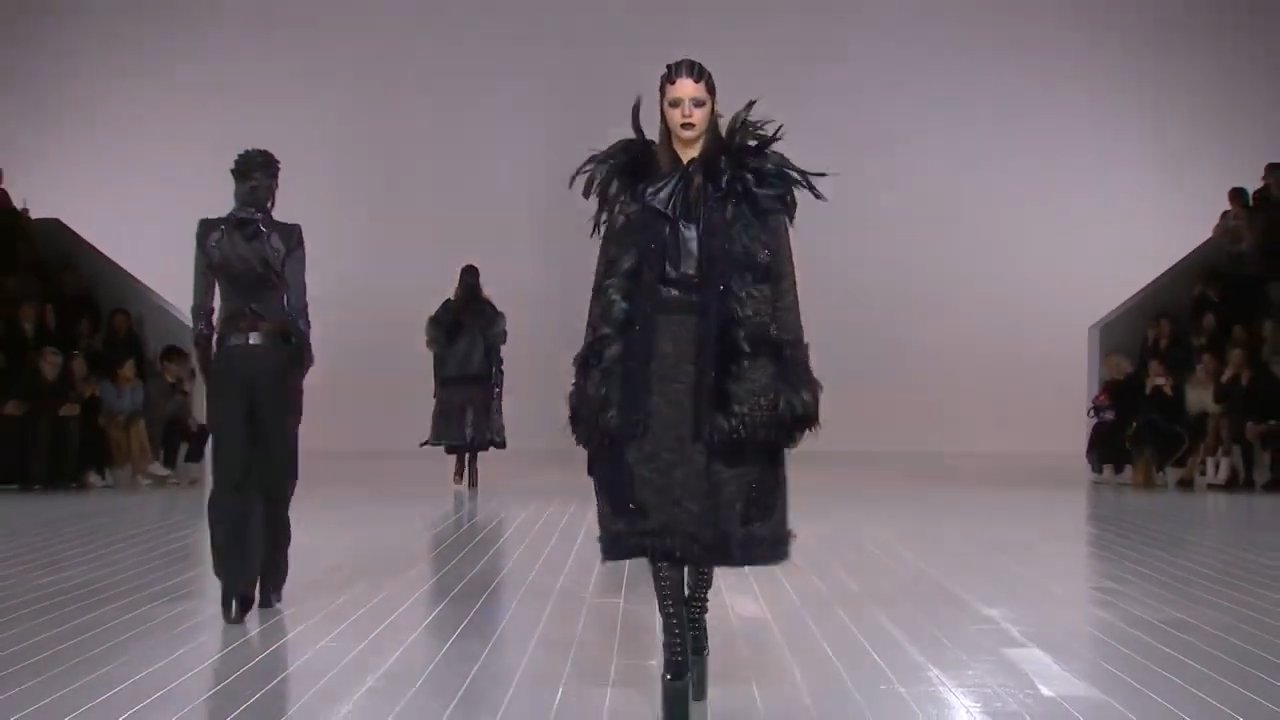
House: Marc Jacobs · Designer: Marc Jacobs · Season: Fall/Winter 2016
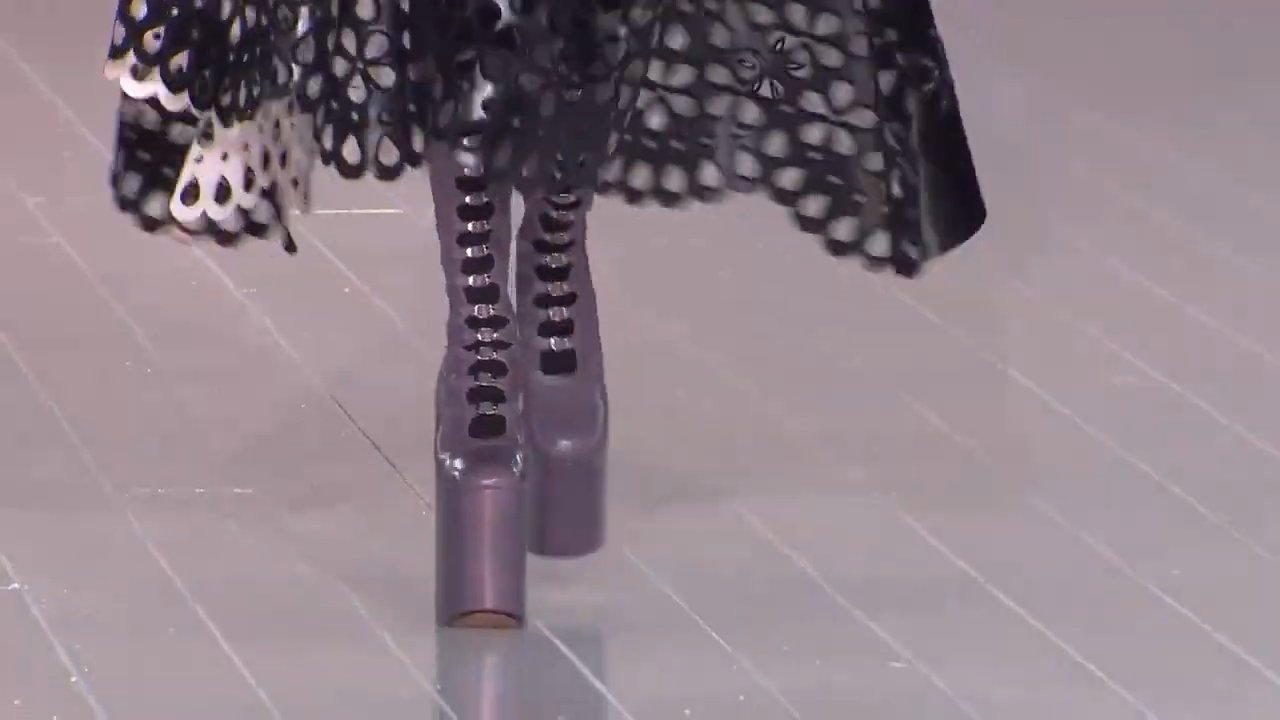
On February 18, 2016, Marc Jacobs closed New York Fashion Week at the Park Avenue Armory with a collection that, as NOWFASHION noted, traded the saturated reds and blues of his spring show for black, charcoal and shadow. Whitewall summed up the goal as making “every girl a show unto herself,” and that’s exactly what it is: every look is attention-grabbing. The proportions were extreme, with gigantic coats whose sleeves ran past the fingertips, broad-shouldered pinstripe capes and wide trousers pooling at the floor, all balanced on the towering Kiki platform boot, which made its runway debut here.
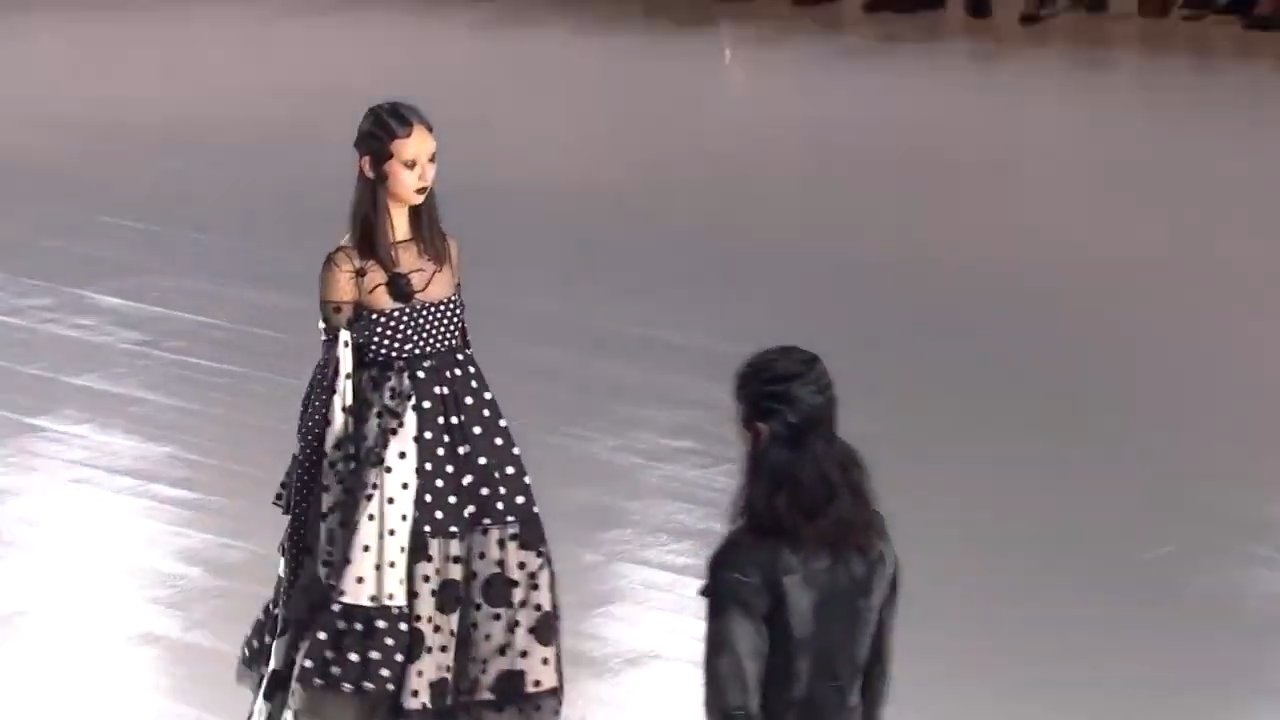
The details were pure gothic melodrama. Ostrich feathers sprouted from the shoulders of tweed coats, white crochet collars sat on dark knits, and spiderwebs were embroidered on denim jackets hung with chains. Daily Front Row spotted a fluffy, “Little Miss Muffet”-style polka-dot dress with black spiders on its shoulders and compared the whole cast to a sister of Edward Scissorhands, dressed for goth high school. To me, the girls look like dolls who inhabit a gothic castle of the same namesake, one that a young lady would curate and adorn black with black; obsessed with death and spiders, and spiders who catch death in a web and devour it. Straight out of Coraline this show is. Wednesday Addams wardrobe. NOWFASHION read the pale skin, bleached brows, heavy black eyes and slicked finger waves as a nod to 1920s underground cabaret and silent-film drama. It praised the atelier-level craft but felt some of the chain-heavy denim looks were more styling exercises than design.
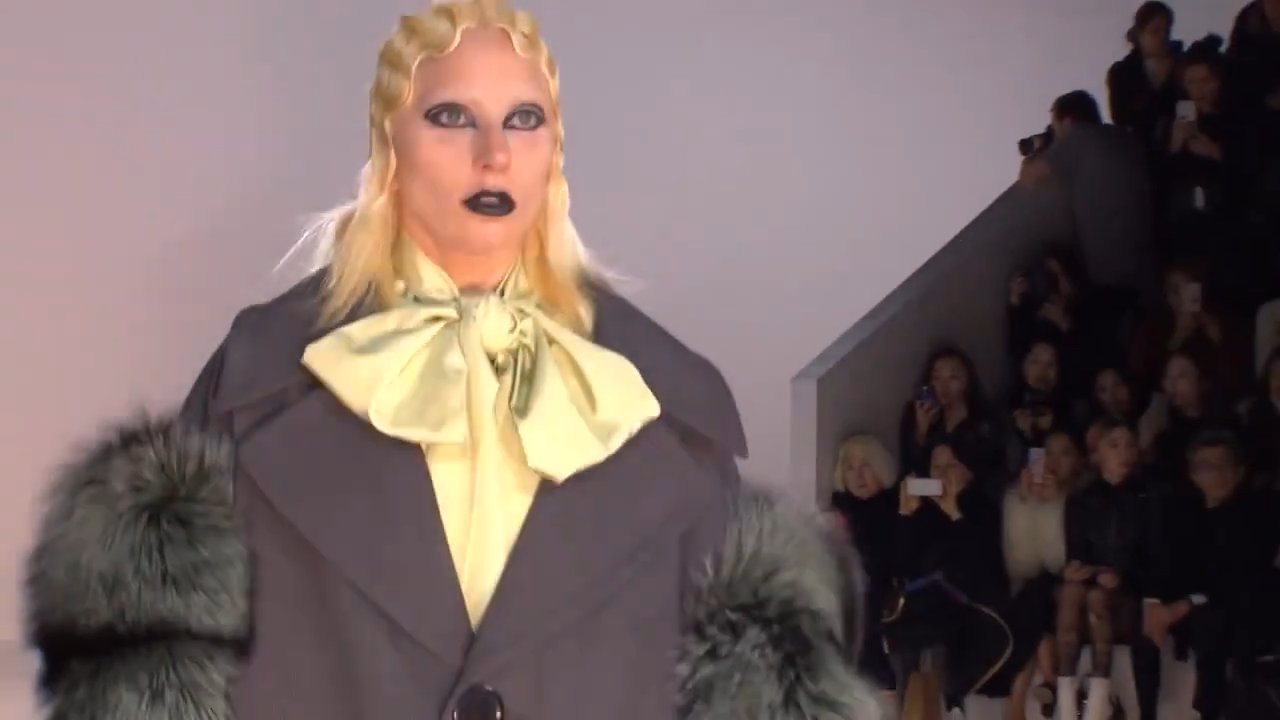
Two big names walked. Kendall Jenner, whom ET called almost unrecognizable, appeared in a vampy, feather-collared coat and knee-high platform boots, and right behind her came Lady Gaga, making her New York runway debut in a floor-length coat with plush fur sleeves and sky-high Victorian lace-up boots. “Mother Monster looked like a natural,” ET wrote. Gaga, a longtime Jacobs fan, had worn his designs just days earlier for her David Bowie tribute at the Grammys. Taken all together, the collection plays like the maximalist version of a phase a lot of girls go through: the black-lipstick, everything-dark years, turned up to couture volume. Cool!
Sources: Daily Front Row · Whitewall · NOWFASHION · ET Online

Answer: Seb Janiak
The futuristic cover of TLC’s FanMail was shot by French photographer Seb Janiak, with art direction and design by D.L. Warfield. Released on February 23, 1999, the album was named in honor of the fans who kept writing to TLC during the group’s hiatus, and its digital, cyber-age look matched its themes of technology and virtual connection. FanMail debuted at number one on the Billboard 200 with 318,000 copies sold in its first week, spent five weeks at the top, went six-times platinum, and earned eight Grammy nominations, winning three.
Janiak was the perfect fit for a Y2K vision of the future. Born in France in 1966, he discovered a Paint Box digital graphics system in Paris in 1986 and became one of the pioneers of digital photography. Between 1988 and 1989, he developed what he calls “Photographic Matte Painting,” building ultra-realistic images out of many separate analog photographs, work that earned him recognition from George Lucas. He came up in photographer Jean-Baptiste Mondino’s circle, directed music videos for Janet Jackson (“Together Again”), Daft Punk and Robbie Williams, and worked with Givenchy and L’Oréal. In 2019, he won first place in the Science category at the Tokyo Foto Awards for his series “Magnetic Radiation.”

Sources: Discogs · Session Days · Tokyo Foto Awards · A Shaded View on Fashion · Saatchi Art · Cover Atlas
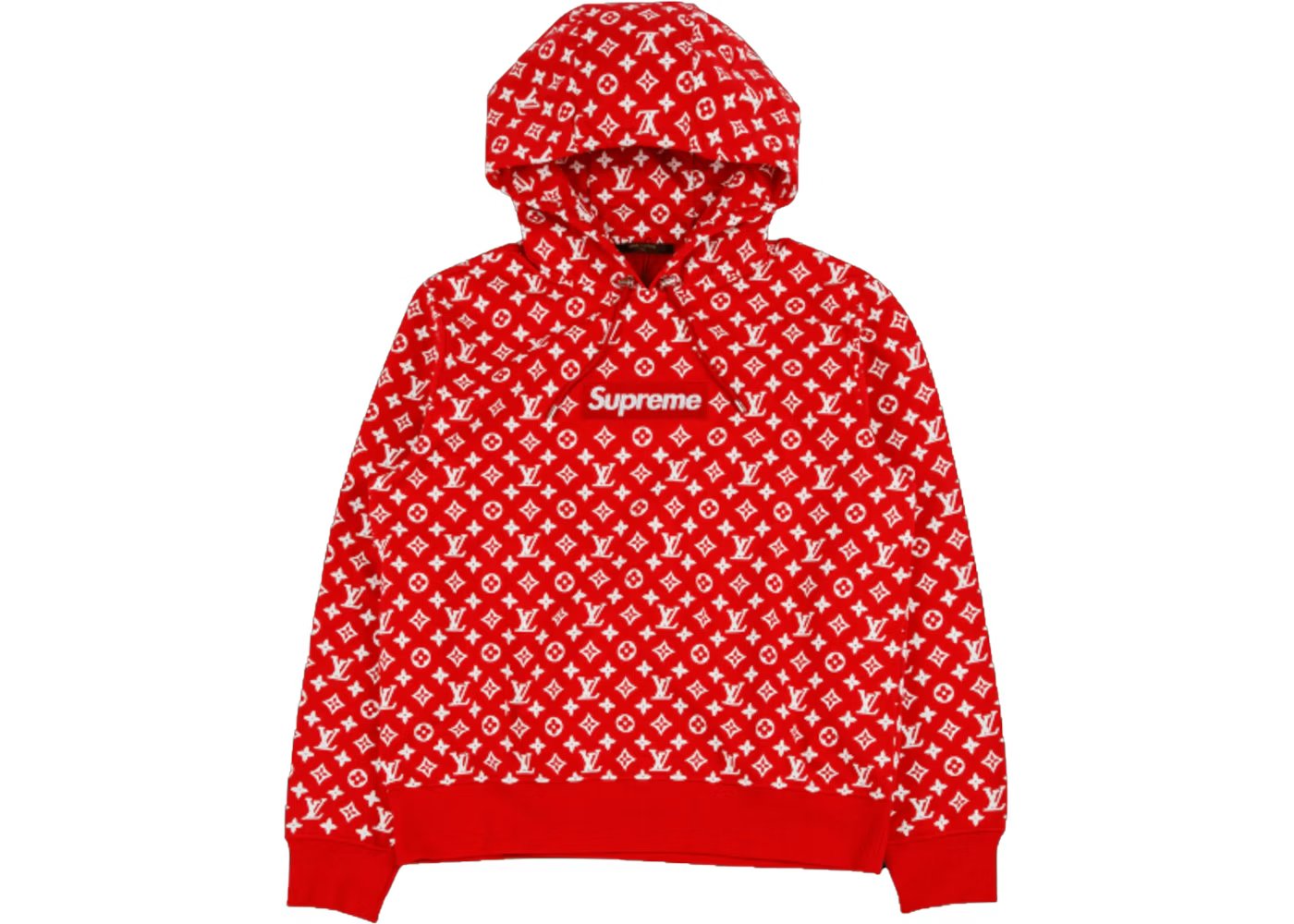
Answer: It’s borrowed from botany, where it separates the names of a hybrid plant’s two parents., It came from Japan’s 1990s creative scene, where it marked two artists working together., It signals multiplication, not addition: the brands multiply each other’s impact instead of simply adding up.
There’s no single Xplanation (ha ha ha ha...ok) for the “x” in names like “Supreme x Louis Vuitton,” but a few popular theories stand out. One points to botany: scientists place a multiplication sign between the names of a hybrid plant’s two parents, as in Brugmansia × insignis. Another points to Japan’s 1990s creative scene. According to the branding agency Here Be Dragons, the “x” was “first used in the creative industries in Japan in the nineties as a symbol of two artists working together.”
That timing fits. As Highsnobiety puts it, “fashion collaborations first thrived in early ’90s Ura-Harajuku,” Tokyo’s backstreet streetwear hub. Jun Takahashi and NIGO opened their shop NOWHERE there in 1993, and Takahashi went on to work with NIGO’s BAPE, Neighborhood, fragment design and nearly every big name in Japanese streetwear. Their mentor, Hiroshi Fujiwara, helped pioneer the streetwear-meets-luxury partnerships that are now everywhere.
The third theory is the most poetic: an ampersand adds two brands together, while an “x” multiplies them, promising something bigger than the sum of its parts. One could even say it's...Xponential (I am out of control today). It’s more marketing lore than history, but it’s probably the reason the “x” stuck. As for the decoys, the “x” isn’t short for “exclusive,” it isn’t a legal requirement, and Supreme didn’t invent it.
Sources: Here Be Dragons · Highsnobiety · Yokogao Magazine · International Plant Names Index (Kew)
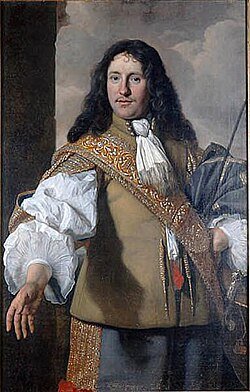
Answer: Croatia
The cravat is named after the Croats. During the Thirty Years’ War (1618 to 1648), Croatian mercenaries fighting for the Holy Roman Empire wore distinctive knotted scarves of red silk or cotton around their necks. The scarves may have protected them from cold and smoke, and wounded soldiers could use them as bandages. France recruited many Croats into elite cavalry regiments known as the “Royal Cravates,” and the French began calling the neckwear cravate. In fact, “Croat” and “cravat” were once just different spellings of the same word. The link survives across Europe, from the German Krawatte to the Italian cravatta.
King Louis XIV made it fashionable. By one account, he started wearing a lace cravat in 1646, at just 7 years old, and the style spread from Paris across Europe. The English helped carry it around the world, and over the centuries it stretched into the long necktie we know today. New York tailor Jesse Langsdorf patented the modern necktie in the early 1920s.
Croatia still celebrates its invention. Every October 18 is Cravat Day, which the Croatian Parliament made official in 2008. The date marks a 2003 stunt by the nonprofit Academia Cravatica, which wrapped a giant red necktie around Pula’s ancient Roman arena. At about 2,650 feet long, it took two years to prepare and five days to install, and Guinness World Records recognized it as the largest necktie in the world. Today, Zagreb celebrates with a parade by the Cravat Regiment honor guard and red ties tied around its statues.

Sources: KPBS · Mental Floss · Croatian Parliament
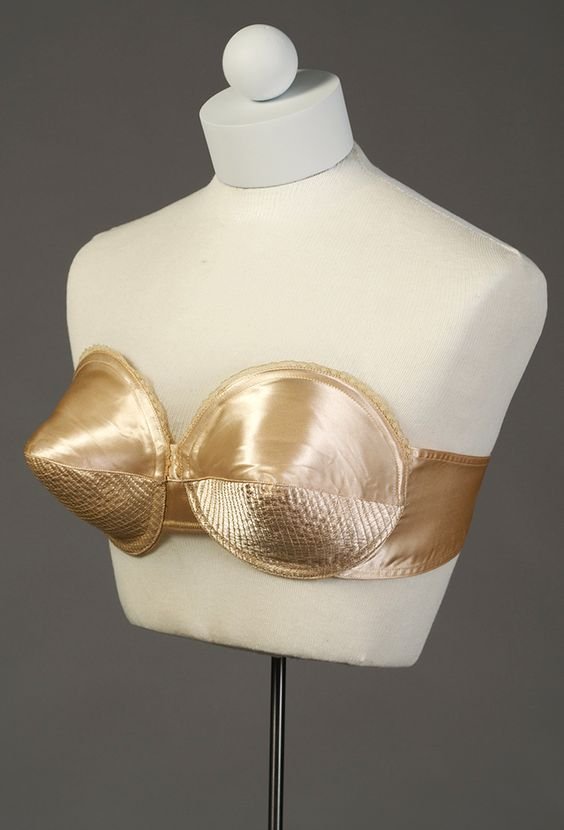
Jean Paul Gaultier’s Cone Bra