
October 16, 2026
The issue of October 16, 2026
Every question from this issue, with the answers, the hints and the reading behind them.
Play the October 16, 2026 issue

House: Olivier Theyskens · Designer: Olivier Theyskens · Season: Spring/Summer 1999
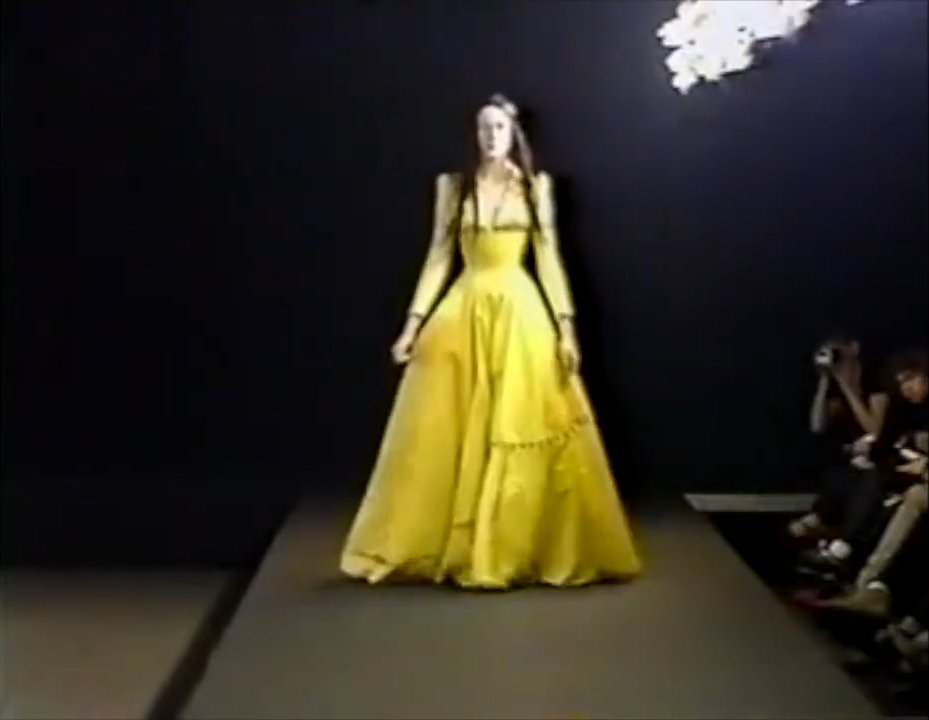
Olivier Theyskens is considered by many to be one of fashion’s greatest goth designers, and his Spring/Summer 1999 show lives up to that moniker. The young Belgian left Brussels’ La Cambre art school after two years and stormed onto the scene in 1998 with a Paris show staged in an abandoned mansion. His models had powdered faces and mannequin hands clutching their heads, and the soundtrack was built from movie screams, including Jodie Foster’s from The Silence of the Lambs. Nothing was for sale yet. That same week, Madonna wore one of his satin coat dresses to the Oscars. The following year, he presented his first ready-to-wear collection to the public, and that is the show we’re looking at today.
The show play out like a Silent Hill cinematic. Fog and haze, a dampness, a dispair hold up the foundation of the catwalk. Looks covered in birds and flowers remind me of Pyramid Head from the aforementioned game: a person’s perpetual suffering, swarmed by birds and flowers, innocuous things we see every day, consuming us. One dress was overlaid with pigeons that seemed to devour the model. Masks with sheer coverings converge on the mouth make the wearers look like members of a secret society they can’t (or won’t) speak of. The Met describes it recalling medieval crusaders and religious orders. A long black silk taffeta gown fastened with a cross of hooks and eyes, his signature detail, is pure vampire wear, straight out of Blade or Vampire: The Masquerade - Bloodlines. The location even looks like an underworld club in the sewers, where shadows are strobe lights.
The Metropolitan Museum of Art’s Costume Institute reads his work as a play between Eros and Thanatos, the instincts for love and death. One wool suit from the collection has blonde hair embroidered down the back of the jacket. The cross-closure gown later became a favorite of goth brides. In 2000, American Vogue named Theyskens one of the most promising designers of his time, and he went on to lead Rochas, Nina Ricci and Theory. Groovy!


Sources: Stylezeitgeist · The Met · W Magazine · AnOther · MoMu
Answer: Ralph Lauren, Perry Ellis, Calvin Klein
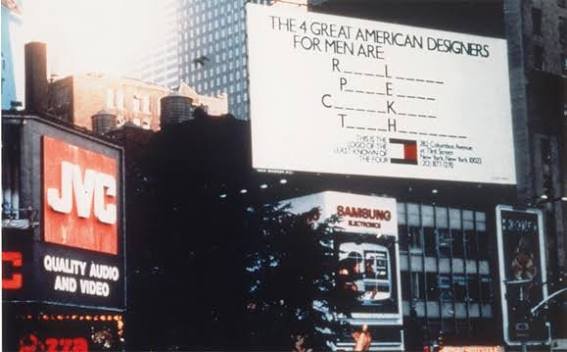
In 1985, a little-known designer named Tommy Hilfiger put up a billboard in Times Square that read “The 4 great American designers for men are:”, followed by blanks like a game of Hangman. The blanks spelled out Ralph Lauren, Perry Ellis, Calvin Klein and Tommy Hilfiger.
The idea came from George Lois, the art director famous for his Esquire covers. Hilfiger’s backer, Mohan Murjani, introduced them. Lois had never worked in fashion advertising, and Hilfiger had little money to spend. Hilfiger wanted beach-style ads like Calvin Klein’s and Ralph Lauren’s, but Lois rejected the idea. He showed Hilfiger a stack of designer ads with the names removed, and nobody could tell which brand was which. A conventional campaign, Lois argued, would take about 20 years and millions of dollars. Hilfiger needed to disrupt the market and get people talking.
It worked, and not always kindly. People asked, “Who is this guy?” Critics doubted he’d last six months, and his peers were furious. “Very! They hated it,” Hilfiger later said. But the billboard put his name on the map, and Hilfiger called seeing it “a surreal experience” and a major turning point in his career. In 2017, he released a “Being Bold” capsule collection celebrating the ad. In 2020, Telfar Clemens told him that Telfar’s team had followed the same playbook to present Telfar as a celebrity designer.
Sources: System Magazine · Esquire Middle East · Gulf News · Jeremy Floyd
Answer: The Leotard
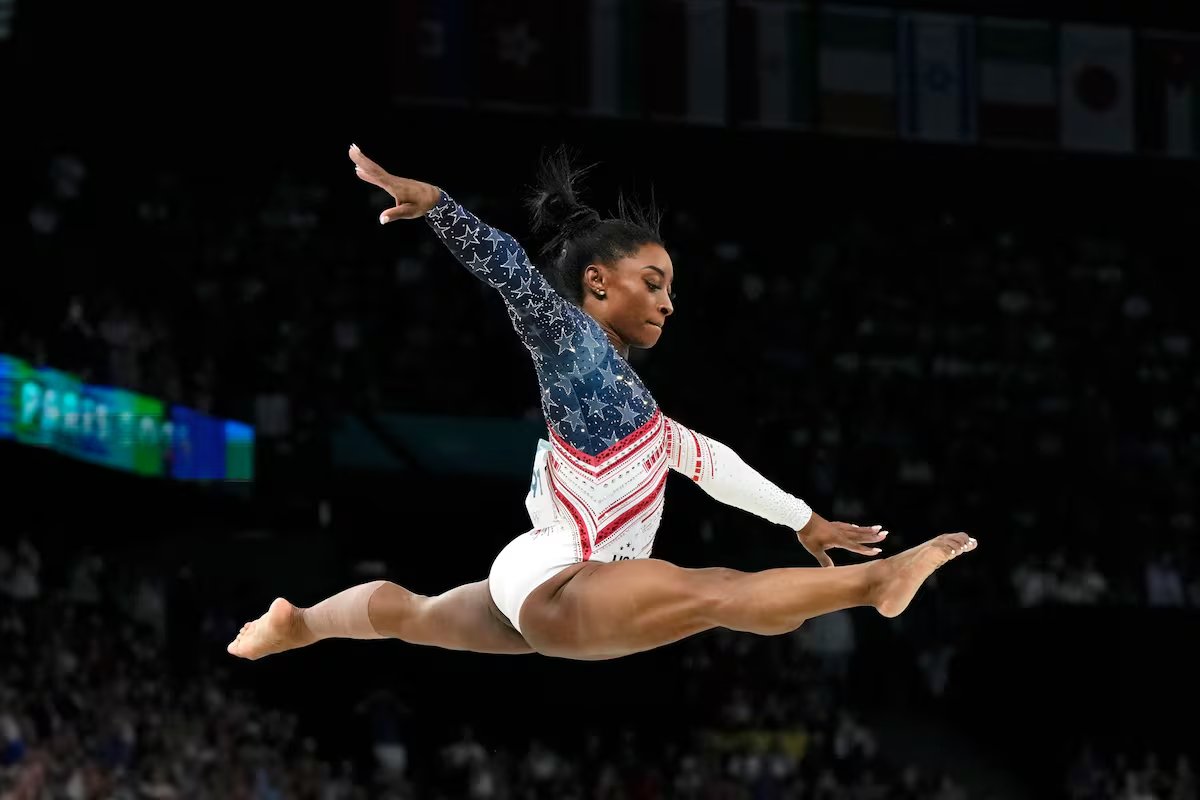
The leotard is named after Jules Léotard, the French acrobat who invented the flying trapeze. He grew up in Toulouse, where his father ran a gymnasium, and he practiced by swinging on bars hung over the swimming pool. On November 12, 1859, at the Cirque Napoléon in Paris, he performed a 12-minute routine across three trapezes. He became the first person to somersault in midair and leap from one trapeze to another, with only mattresses to break his fall.
For his act, Léotard wore a skintight, one-piece knitted costume that he called a “maillot.” It let him move freely and showed off his muscles. He became a star: at London’s Alhambra music hall in 1861, he performed above the diners and reportedly earned about £180 a week. In 1867, he inspired the hit song “The Daring Young Man on the Flying Trapeze.” He died young, in 1870, likely of smallpox. His costume moved from the circus into Paris ballet studios, and by 1886 English speakers were calling it by his name.
Sources: El Pais · Guide London · Palace of Variety · The World Link
Answer: His assistant’s red nail polish.
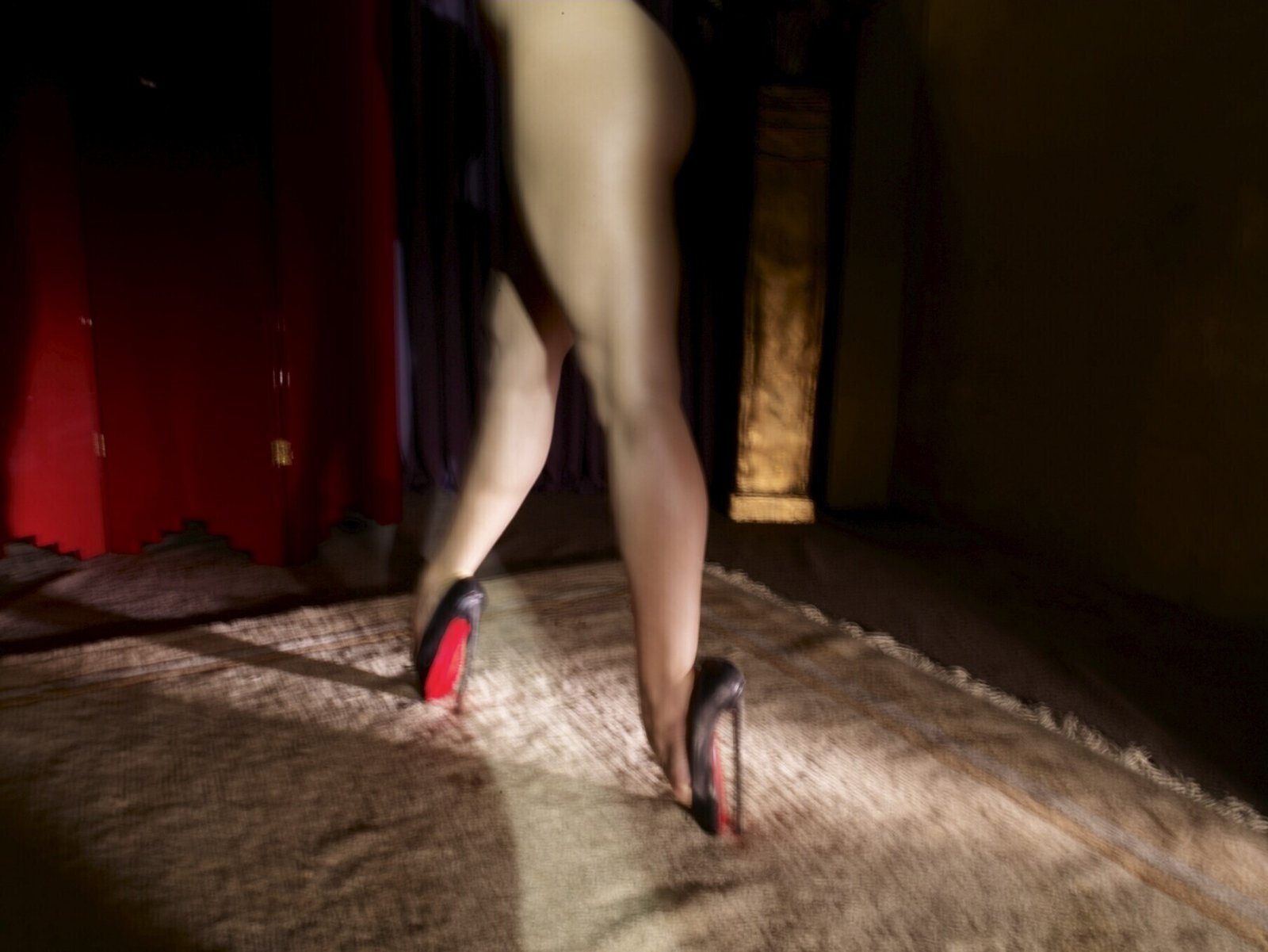
In the early 1990s, Christian Louboutin was working on a shoe called the Pensée, inspired by Andy Warhol’s Flowers. The prototype looked right from the front, but from behind its black sole felt dull and out of place. An assistant nearby was painting her nails. Louboutin grabbed her red polish and painted the sole with it, and his signature was born. “For people who don’t like color, red is a different thing,” he later said. Or, more cheekily: “Men are like bulls. They cannot resist the red sole.”
Louboutin had been obsessed with shoes since he was 10, when he saw a museum sign banning stilettos on its parquet floors. At 16, he interned at the Folies Bergère, the Paris cabaret, where he began designing shoes for the dancers. That’s why the Folies Bergère is the decoy here: it shaped his career, but not the soles. He opened his first boutique in 1991, in Paris’s Galerie Véro-Dodat.
The red sole became so valuable that he defended it in court. In 2012, a U.S. appeals court ruled in his case against Yves Saint Laurent that the red sole is a protected trademark, but only when it contrasts with the color of the rest of the shoe. YSL’s all-red shoe was allowed to stay.
Sources: Garagemca · FIT Newsroom · Azure Azure · Comité Colbert · Loeb & Loeb
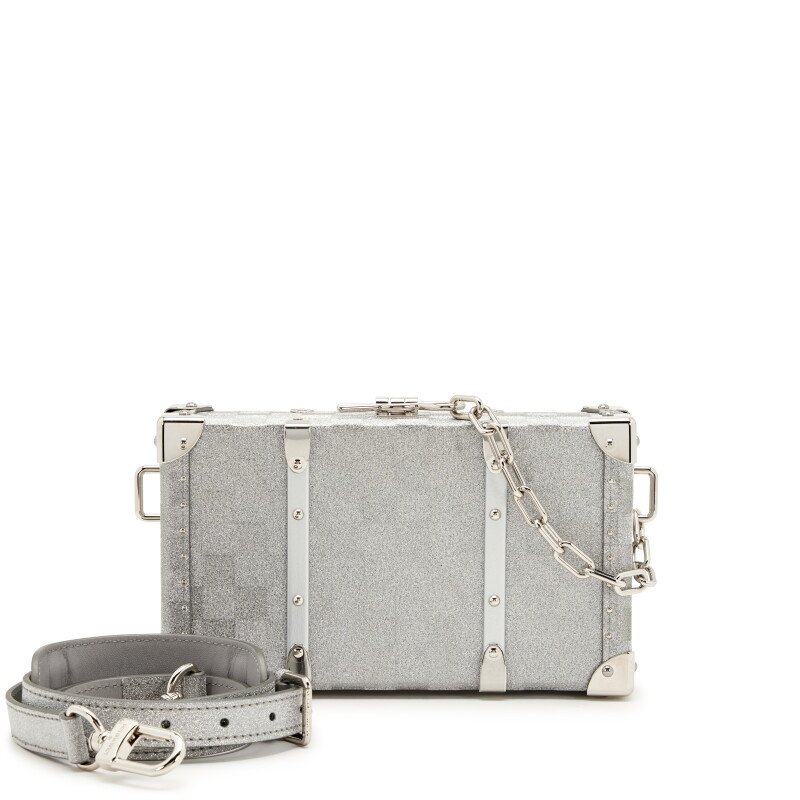
Louis Vuitton - Silver Glitter Aluminum Monogram Briefcase Trunk Silver Hardware (2022)