October 15, 2026
The issue of October 15, 2026
Every question from this issue, with the answers, the hints and the reading behind them.
Play the October 15, 2026 issue
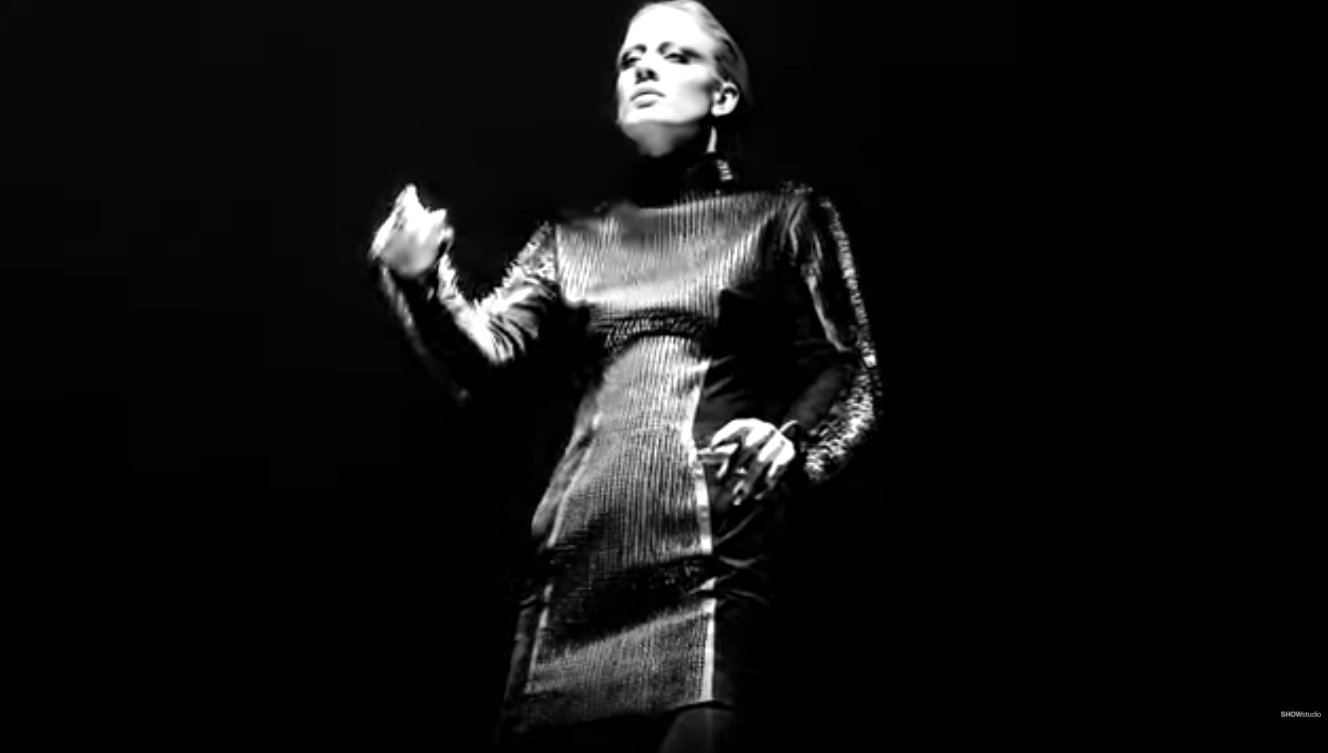
House: Gareth Pugh · Designer: Gareth Pugh · Season: Fall/Winter 2009
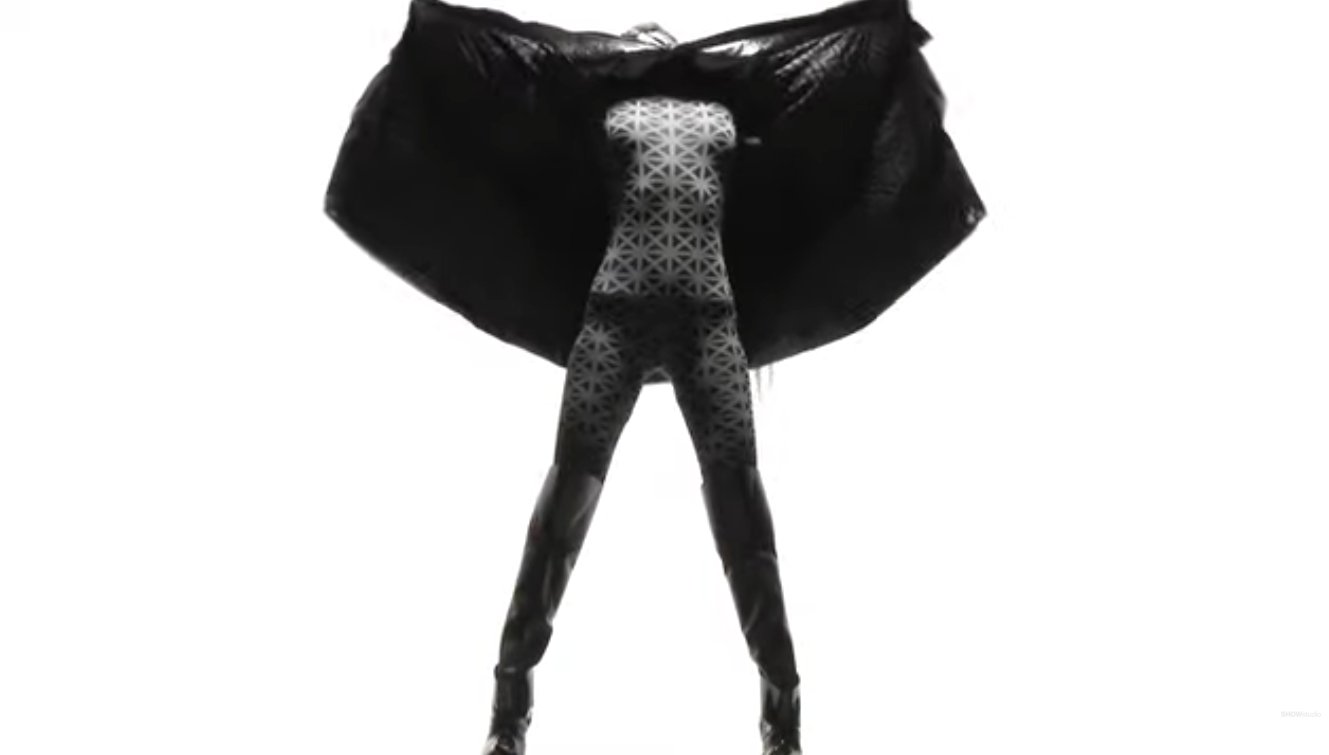
After yesterday’s ghostly Hanifa show, the Halloween run turns otherworldly and demonic. For Fall/Winter 2009, Gareth Pugh skipped the runway entirely and presented his collection in Paris as a short film by his longtime collaborator Ruth Hogben, released online through SHOWstudio on March 4, 2009. Pugh said his clothes needed movement you would “definitely lose in a straight catwalk show.” With the economy in recession, he also didn’t want to look brash by staging another big production. He called the choice “a big risk.”
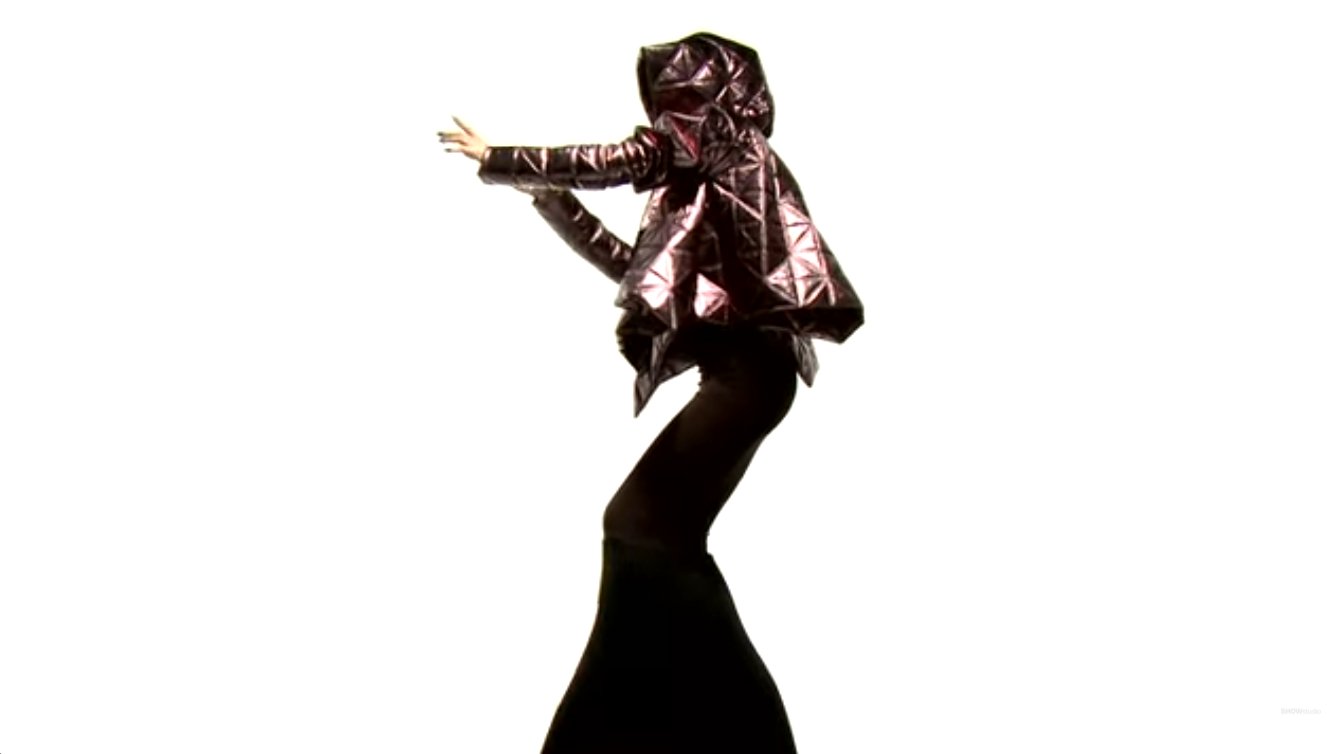
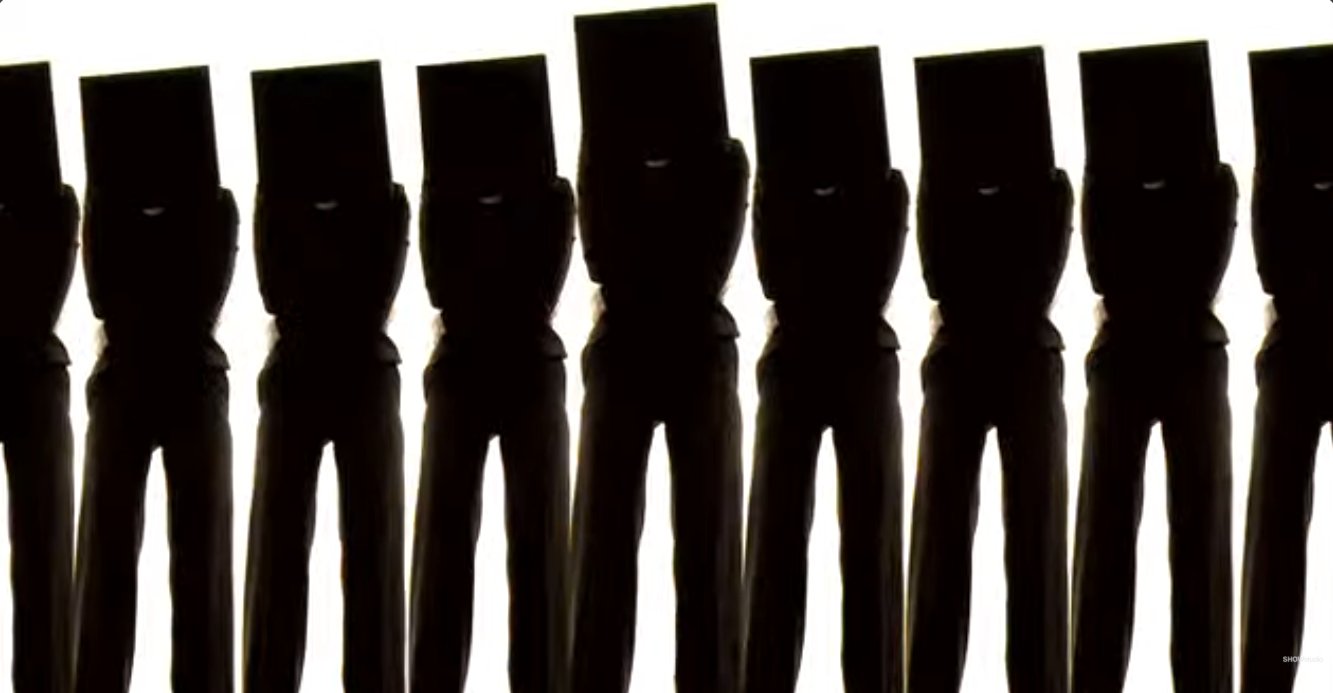
The film features a single model, Natasa Vojnovic, moving possessed through a stark, alien void made of water and black ink that spreads into Rorschach-like shapes. dread whips through the clothes and black smoke powers across the floor. Matthew Stone’s score mixes snapping bamboo, bird wings and gurgling water with pieces of the soundtrack from The Shining. The angle we’re shown it from makes it feel like we’re kneeling, with the show happening slightly above us, looking over us, waiting for us to give in. The black silhouettes, metal spikes and sharp geometric diamond patterns feel straight out of Hellraiser, with a hint of Illuminati ritual.
Above all, the film to me is about transformation, a metamorphosis into something else; being broken down to be recreated, either by choice, or by force. Vojnovic first appears in a long cape that makes her look like a crow, then in slashed tops that seem to detach her torso from her body, samurai-like shapes, a square hat and towering platform boots. Inflatable jackets and coats swell and deflate around her until, in the final shot, she almost seems to float. The jump cuts play like a time-lapse of a butterfly emerging from its cocoon, or a spider molting its exoskeleton.
Pugh grew up in Sunderland, England, and graduated from Central Saint Martins in 2003. He made his London Fashion Week debut with Fashion East in 2005, became known for dark, sculptural clothes, won the ANDAM prize in 2008, and began showing in Paris the season before this film. Hogben made it in just five days, one for filming and four for editing. It became her breakthrough and helped make fashion film a format of its own. This was very cool to experience!
Sources: SHOWstudio · Interview Magazine · Irenebrination · Business of Fashion · SHOWstudio · Business of Fashion
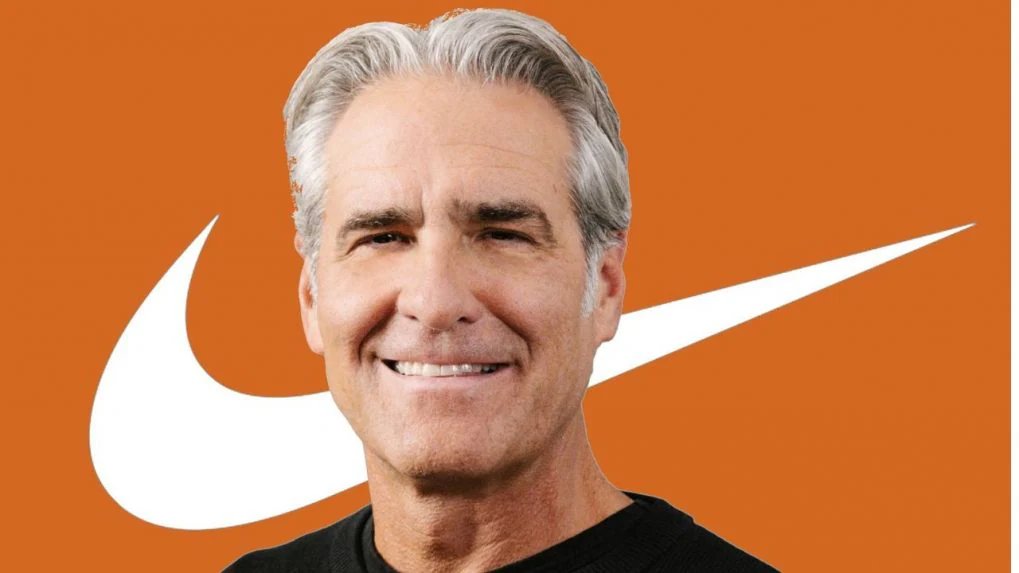
Answer: Elliott Hill
Two years ago today, on October 14, 2024, Elliott Hill took over as Nike’s President and CEO. He was a lifer coming home. Hill joined Nike in 1988 as an intern selling apparel in Texas, then worked his way through 19 different roles over 32 years. That run ended as President of Consumer and Marketplace, overseeing the Nike and Jordan brands, before he retired in 2020.
Nike called him back because the business was slipping. Under his predecessor, John Donahoe, a former eBay and Bain chief, Nike pushed hard into selling directly to customers through its own stores and app and pulled back from retail partners. Rivals like On and Hoka moved in and took that shelf space. Critics also said Nike had stopped producing the groundbreaking sneakers it was known for and leaned too heavily on retro styles. In June 2024, Nike forecast a 10% sales drop for the quarter, and the stock had the worst trading day in its history. When Hill’s appointment was announced, shares jumped about 8% after hours.
The turnaround has been slow. Nike’s annual revenue peaked at $51.4 billion in fiscal 2024, then fell 10% to $46.3 billion in fiscal 2025, as net income dropped 44%. “While our financial results are in line with our expectations, they are not where we want them to be,” Hill said. Fiscal 2026 was flat at $46.4 billion, with Nike saying it was encouraged by progress in its performance products.
Sources: NBC San Diego (CNBC) · Storyboard18 · TechRound · World Footwear · Business Wire
Answer: American Vogue
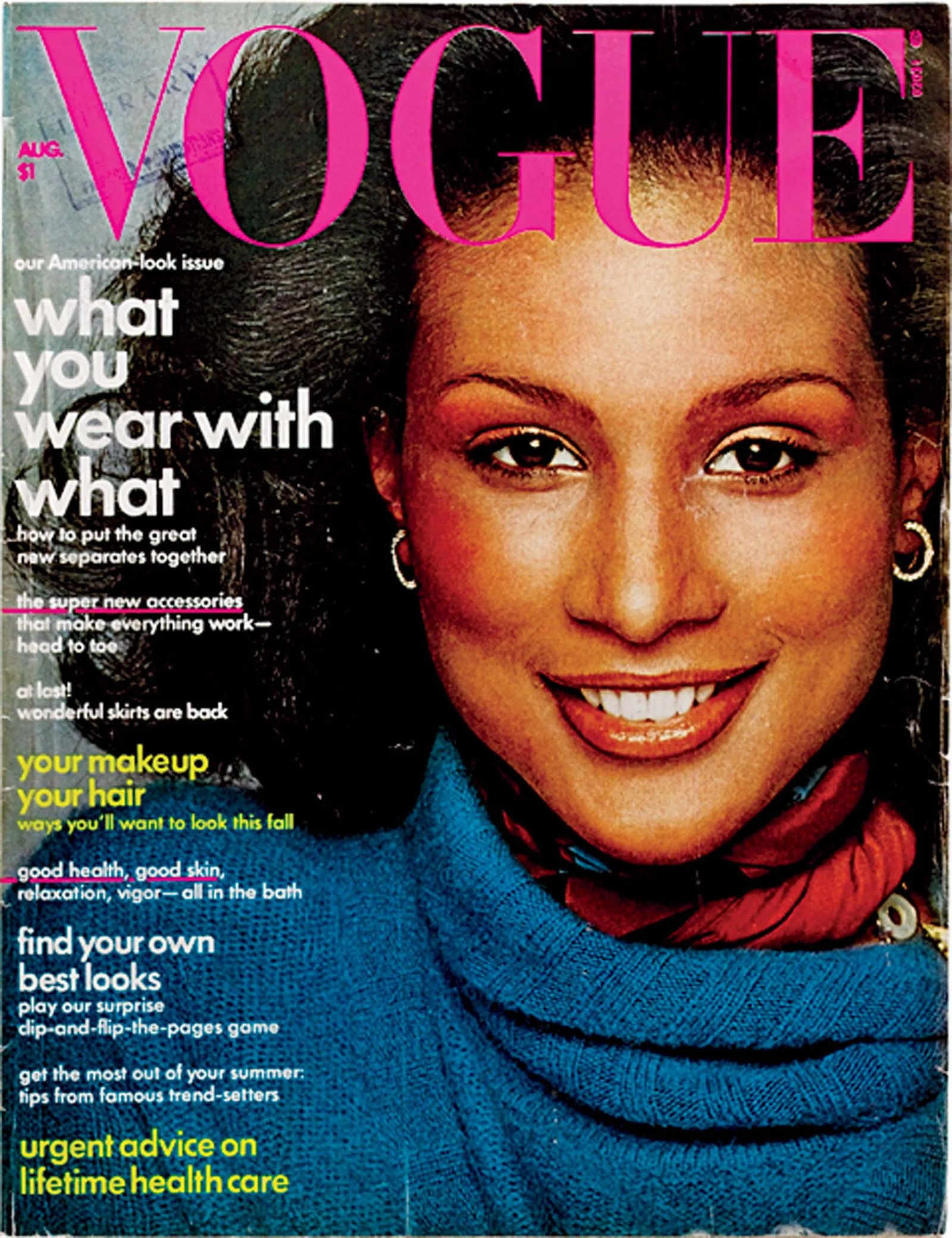
In August 1974, Beverly Johnson became the first Black model on the cover of American Vogue, in the magazine’s 80-year history. The cover was shot by Francesco Scavullo: a close-up of her face in a blue turtleneck. Johnson later called it the defining moment of her career and her life. Her first agent, Eileen Ford, had told her it would never happen, so she moved to Wilhelmina Cooper’s agency, which got Scavullo’s photo in front of the right editors. The night the issue came out, Johnson said she kept getting up every hour to look at the cover and make sure it had really happened.
She wasn’t the first Black model on any Vogue cover, though. That was Donyale Luna, a model from Detroit. David Bailey photographed her for the March 1966 cover of British Vogue, eight years before Johnson’s. A year earlier, in April 1965, Luna had also been the first Black person on the cover of Harper’s Bazaar, though that was a drawing rather than a photograph. Luna’s British Vogue milestone got little attention in the United States at the time, which is part of why Johnson’s American cover is the one most people remember.
Modeling wasn’t Johnson’s original plan. Born in Buffalo, New York, on October 13, 1952, she was a competitive swimmer who nearly qualified for the 1968 Olympics. She went to Northeastern University on a full scholarship to study criminal justice, planning to become a lawyer. After her freshman year, friends urged her to try modeling. Several agencies turned her down, but Glamour hired her on the spot, and she became a regular on its covers. That’s why Glamour is the decoy here: she was on its covers before Vogue, but that wasn’t the first.
Johnson’s cover changed the industry. Fashion writer Marjon Carlos noted that afterward, “every major fashion publication began to feature black models.” In 1975, Johnson became the first Black model on the cover of French Elle, and she went on to appear on more than 500 magazine covers. She walked runways for Halston and Calvin Klein, and she was still modeling in her 60s, including on Tommy Hilfiger’s 2019 runway with Zendaya.
Sources: NPR · Google Arts & Culture (Condé Nast Archive) · Britannica · BlackPast · Vogue · MovieMaker

Answer: Gianfranco Ferré, Virgil Abloh, Tom Ford
Gianfranco Ferré, Virgil Abloh and Tom Ford all studied architecture before they turned to fashion.
Ferré earned his architecture degree from the Politecnico di Milano in 1969. He then designed jewelry and accessories before launching his own label in 1978. His clothes were known for their architectural symmetry, above all his crisp white shirts, and Women’s Wear Daily called him the “Frank Lloyd Wright of Italian Fashion.” In 1989, he was named artistic director of Christian Dior.
Abloh earned a civil engineering degree from the University of Wisconsin–Madison in 2002. In 2006, he finished a Master of Architecture at the Illinois Institute of Technology in Chicago, studying under a curriculum designed by Mies van der Rohe. That way of thinking shaped everything he did after: Off-White, which he founded in 2013, and his role as artistic director of Louis Vuitton menswear, which began in 2018.
Ford dropped out of NYU, where he was studying art history, and enrolled at Parsons School of Design to study architecture, first in New York and then in Paris. He switched to fashion in his final year, reportedly because it moved faster than architecture. He joined Gucci in 1990 and became its creative director in 1994, but his sense of space carried into his runway shows, stores and ad campaigns.
Sources: Encyclopedia.com · Cassina · Illinois General Assembly · Biography.com · Social Life Magazine

The Nike Air Foamposite One Prm 'Weatherman' dropped in 2013 as part of a thematic pack that also included an Air Force 1 and second Air Foamposite One colorway. This pair makes use of a Foamposite shell adorned with a Doppler weather map that depicts inclement weather. The design is complemented by an embroidered tornado graphic on the black nylon heel tab.