
October 13, 2026
The issue of October 13, 2026
Every question from this issue, with the answers, the hints and the reading behind them.
Play the October 13, 2026 issue
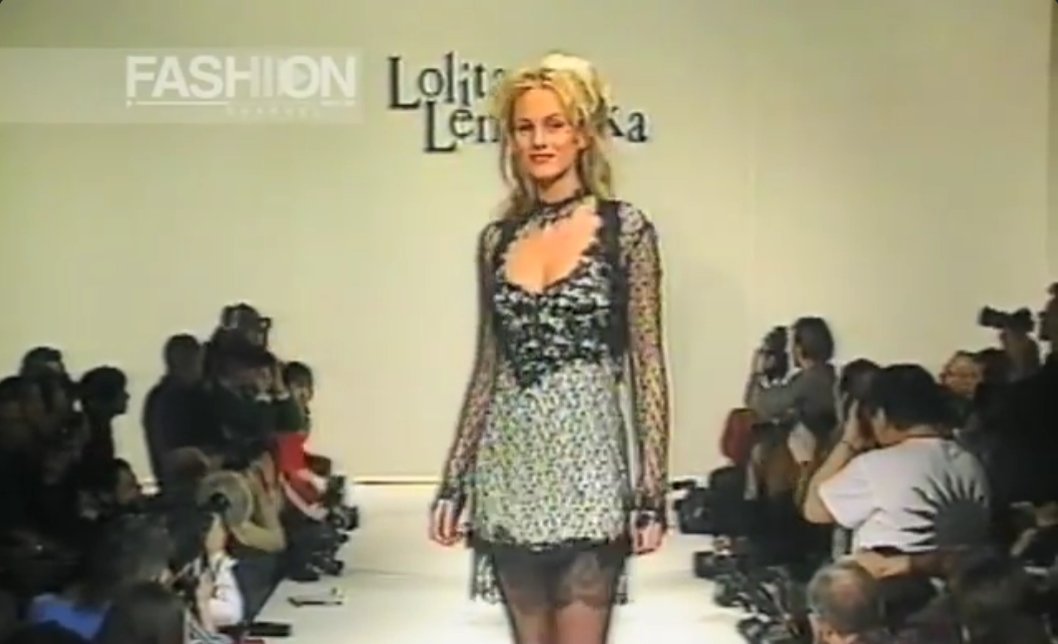
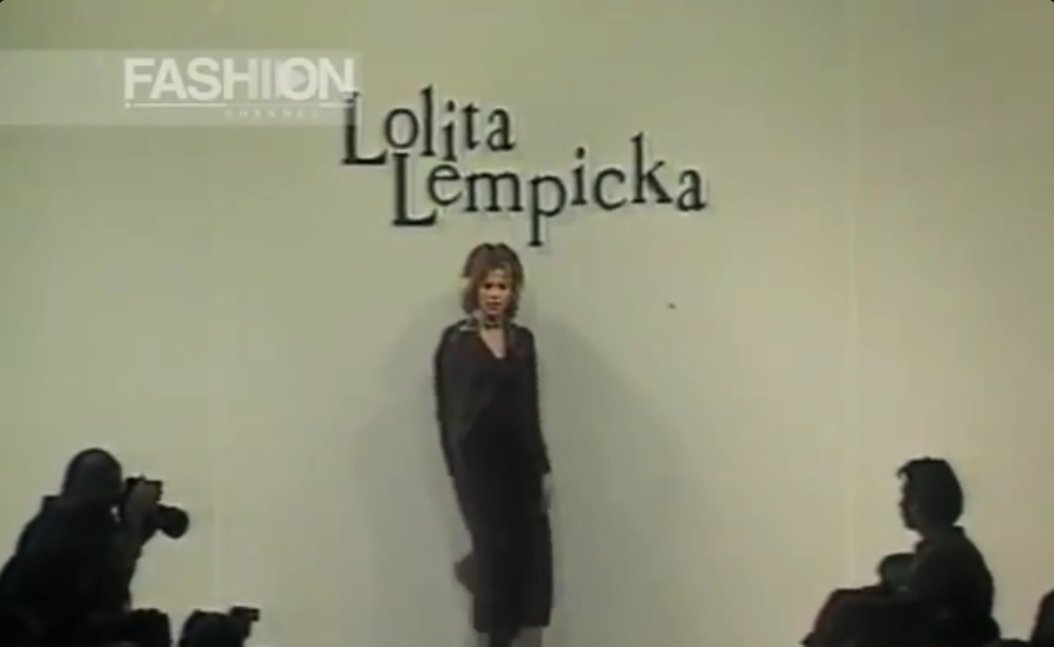
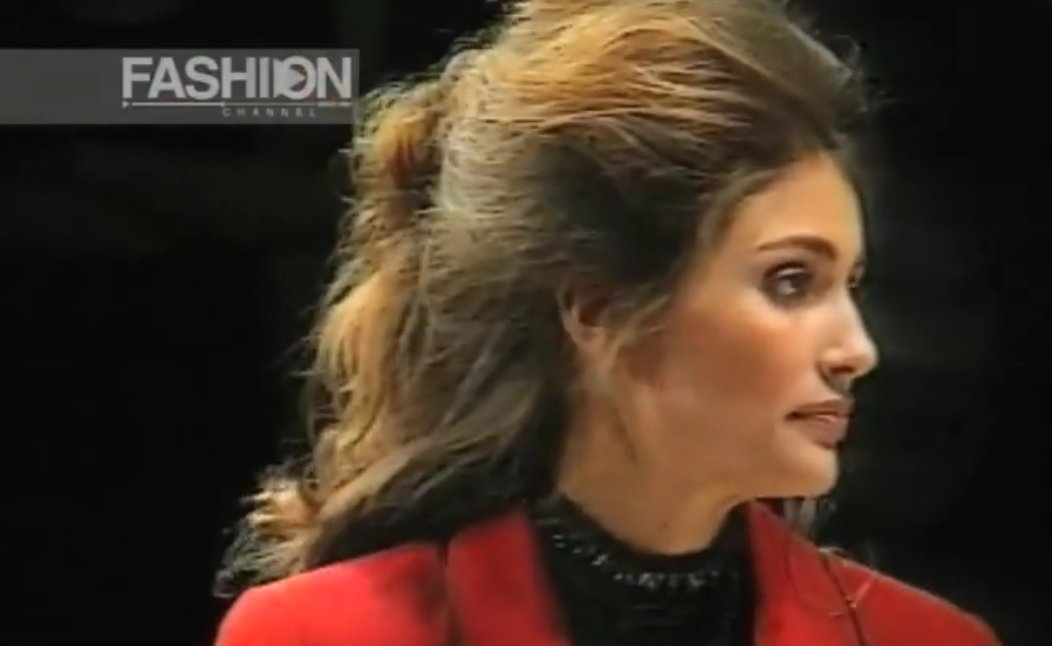
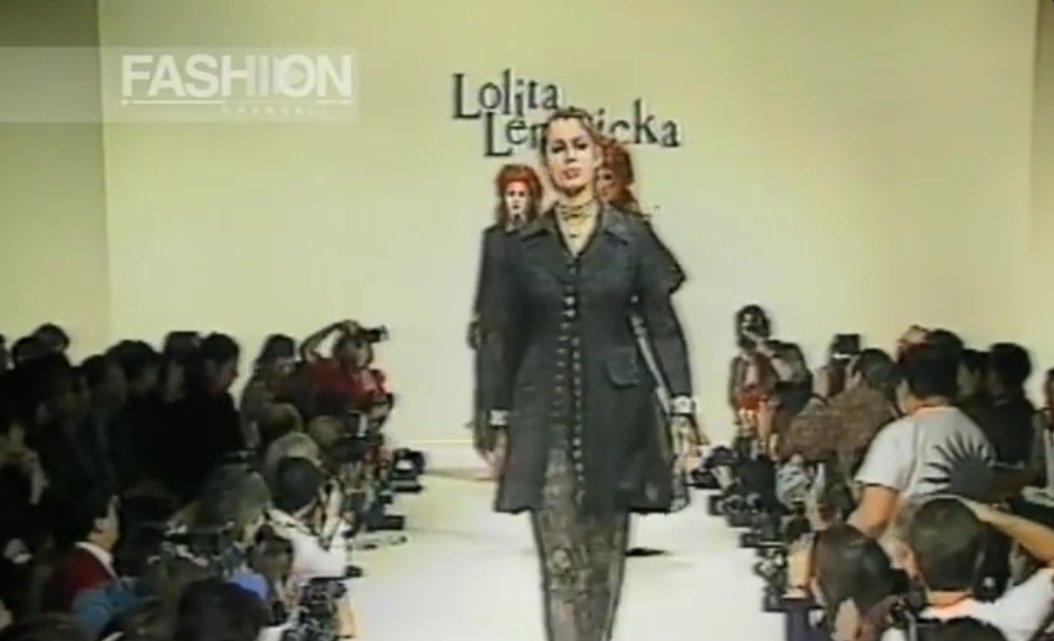
House: Lolita Lempicka · Designer: Lolita Lempicka · Season: Fall/Winter 1994
I could barely find any information about this show, its designer, or anything much related to it. The brand is kinda like a ghost, and we are nearing Halloween so it seemed fitting to showcase it anyway!
Before Lolita Lempicka had her own label, the designer ran a Paris boutique called “Nostalgia,” which mixed her own creations with carefully chosen vintage clothing, making her an early pioneer of retro chic. After designing ready-to-wear for Cacharel, she showed her first collection under her own name in 1984 and opened a showroom and boutique in Paris’s Marais district. She’s considered the first of a new generation of female Paris designers in the 1980s. Her style has been described as “pert, gamine, nostalgic, playful”: a love of 1940s touches like turbans, pearl chokers and tiny floral prints, paired with precisely cut tailoring meant to flatter the body rather than harden it. You can see that here in the sharp dark jackets, sheer lace, chokers and black tights.
It’s reminiscent of late 90s TV shows caught in reruns early in the morning before school. Getting up at 5 or 6 in the morning and flipping through multiple channels while sitting on the couch eating breakfast. Most of the time it was Looney Tunes (the OG version), a lot of the time it was a mirage of Married... with Children and Saved by the Bell. But sometimes I would mix it up with a Gunsmoke, or a Charmed, or a Buffy the Vampire Slayer, the latter two matching the witchy themes spiderwebbed throughout the show. It also reminded me of that one goth girl I knew from high school who, to say the least, was into some “weird stuff”... Good show!
That mix of nostalgia and mischief runs through everything Lempicka touched. Her junior line, Lolita Bis, launched in 1987, was made for “nice and naughty young girls.” Later, her name became even more famous through perfume: a licorice scent in an apple-shaped bottle, like a forbidden fruit straight out of a fairy tale.
Sources: Lolita Lempicka · Fashion Encyclopedia · Encyclopedia.com

Answer: False
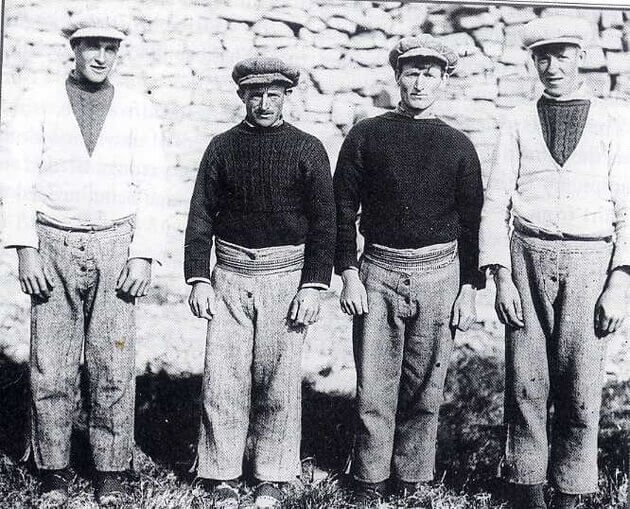
It’s one of fashion’s most romantic legends: each family on the Aran Islands, off the west coast of Ireland, had its own secret stitch pattern, so if a fisherman drowned, his body could be identified by his sweater. It’s also almost entirely fiction. There’s no evidence of family or clan stitches, and the Aran sweater tradition is only a few generations old.
The story seems to have grown out of J.M. Synge’s play Riders to the Sea, set on the Aran Islands. In the play, a woman identifies her drowned brother not by a sweater but by four dropped stitches in a sock she knitted herself. Years later, marketers turned that scene into the clan-pattern legend, and German writer Heinz Kiewe embellished it further. He never visited the islands, and he claimed the craft was centuries old and even appeared in the Book of Kells. Locals rarely corrected the story; it was good for business.
The real history is newer but still fascinating. In the 1890s, a government board encouraged knitting on the Aran Islands, mostly socks, to help islanders earn money. Early fisherman’s sweaters were made from unscoured wool that kept its natural oils, so they shed water. The first Aran sweaters went on sale in Dublin in 1935, Patons of England published the first Aran knitting pattern in the 1940s, and Vogue printed Aran patterns in 1956. Demand exploded after the Clancy Brothers wore them on The Ed Sullivan Show in March 1961, and Grace Kelly and Steve McQueen were photographed in them too. Some modern Aran sweaters contain up to 100,000 stitches. No secret family code required.
Sources: Ireland · The Sweater Shop · Center for Knit and Crochet · Irish Genealogy Toolkit
Answer: A burst pipe flooded her studio and ruined it.
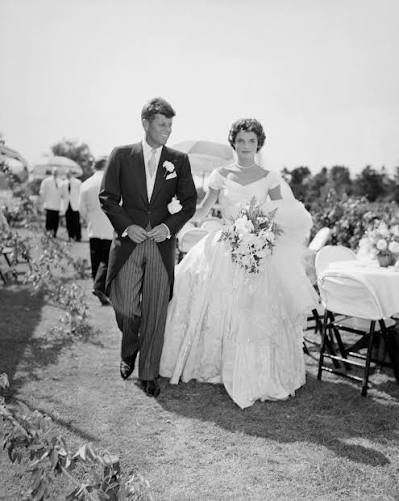
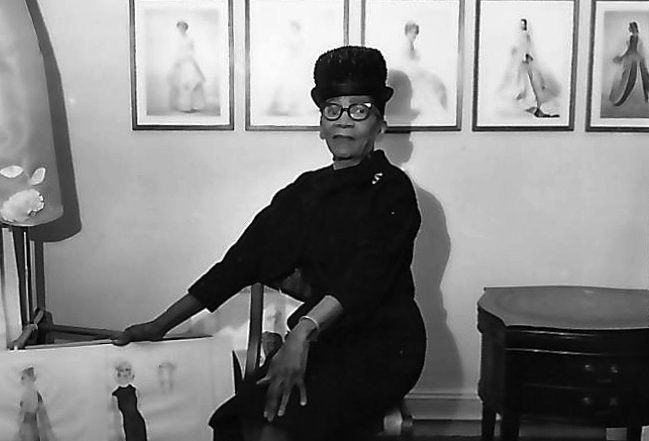
Ten days before the wedding, a water pipe burst in Ann Lowe’s New York studio. Water, rust and grime ruined ten of the fifteen dresses she’d made for the wedding party, including the bride’s gown, which had used 50 yards of ivory silk taffeta and taken eight weeks to make. Lowe didn’t tell the Kennedys. She bought new fabric, hired extra seamstresses and remade everything in time, at a loss of about $2,200, roughly $27,000 today. When she arrived to deliver the dresses and was told to use the servants’ entrance, she refused: “If you want the dresses, this is the door I am coming in.”
The gown itself, with its portrait neckline, fitted bodice and enormous bouffant skirt decorated with rosettes and circular bands of tucked fabric, became one of the most famous wedding dresses in American history. But Lowe got almost no credit. When reporters asked who made it, the new Mrs. Kennedy reportedly said only “a colored dressmaker.” Jacqueline had wanted a sleek French design; Joseph Kennedy insisted on a traditional American gown.
Born in Clayton, Alabama, around 1898, Lowe learned to sew from her mother and grandmother, both formerly enslaved, who ran a dressmaking business in Montgomery. By about age 6 she was making fabric flowers from scraps, which became her signature. She attended design school in New York, where she was made to study alone in a separate classroom, and went on to dress the Rockefellers, the du Ponts and Olivia de Havilland, whose 1947 Oscar gown she designed without credit. In 1964, the Saturday Evening Post called her “Society’s Best-Kept Secret.” Her gowns are now in the collections of the Met, the Smithsonian and the Museum at FIT, and in 2023 the Winterthur Museum held Ann Lowe: American Couturier, the largest exhibition of her work ever.
Sources: OSU · FIT Fashion History Timeline · University of Delaware · Winterthur Museum · Tatter
Answer: Burrs stuck to his dog’s fur.
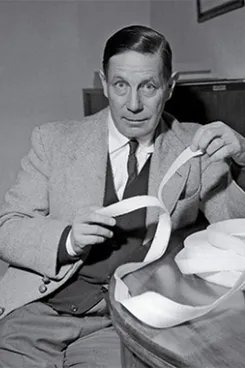
In 1941, Swiss engineer George de Mestral came home from an outing in the countryside with burdock burrs stuck to his clothes and all over his dog’s coat. Instead of just picking them off, he put one under a microscope and saw that each burr was covered in thousands of tiny hooks that latched onto the loops in fabric and fur. He wondered whether he could copy that hook-and-loop grip to make a fastener, one that wouldn’t jam like a zipper.
Many textile makers laughed at the idea. Loops were easy to weave, but hooks were not. Working with weavers in Lyon, France, he discovered that nylon held its hook shape, and he eventually found a way to cut the loops into uniform hooks, a method inspired by barbers’ clippers. After about a decade of trial and error, he patented his invention in the mid-1950s and named it Velcro, from the French velours (velvet) and crochet (hook).
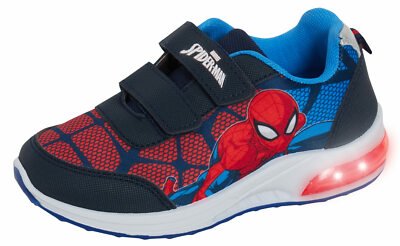
Velcro was slow to catch on, until NASA adopted it to keep objects from floating away in zero gravity. Buzz Aldrin even wore a Velcro watch band on Apollo 11. By the mid-1960s, it had reached fashion, with designers like Pierre Cardin helping bring it into the mainstream. Today it’s on everything from kids’ sneakers (the light-up ones I had as a kid!) to medical gear.
Sources: Swissinfo · Velcro Companies · Hook and Loop · Vogue · NY Magazine
Prada Nylon Backpack - Vela (1984)