October 12, 2026
The issue of October 12, 2026
Every question from this issue, with the answers, the hints and the reading behind them.
Play the October 12, 2026 issue

House: Jacquemus · Designer: Simon Porte Jacquemus · Season: Spring/Summer 2020 - Le Coup de Soleil
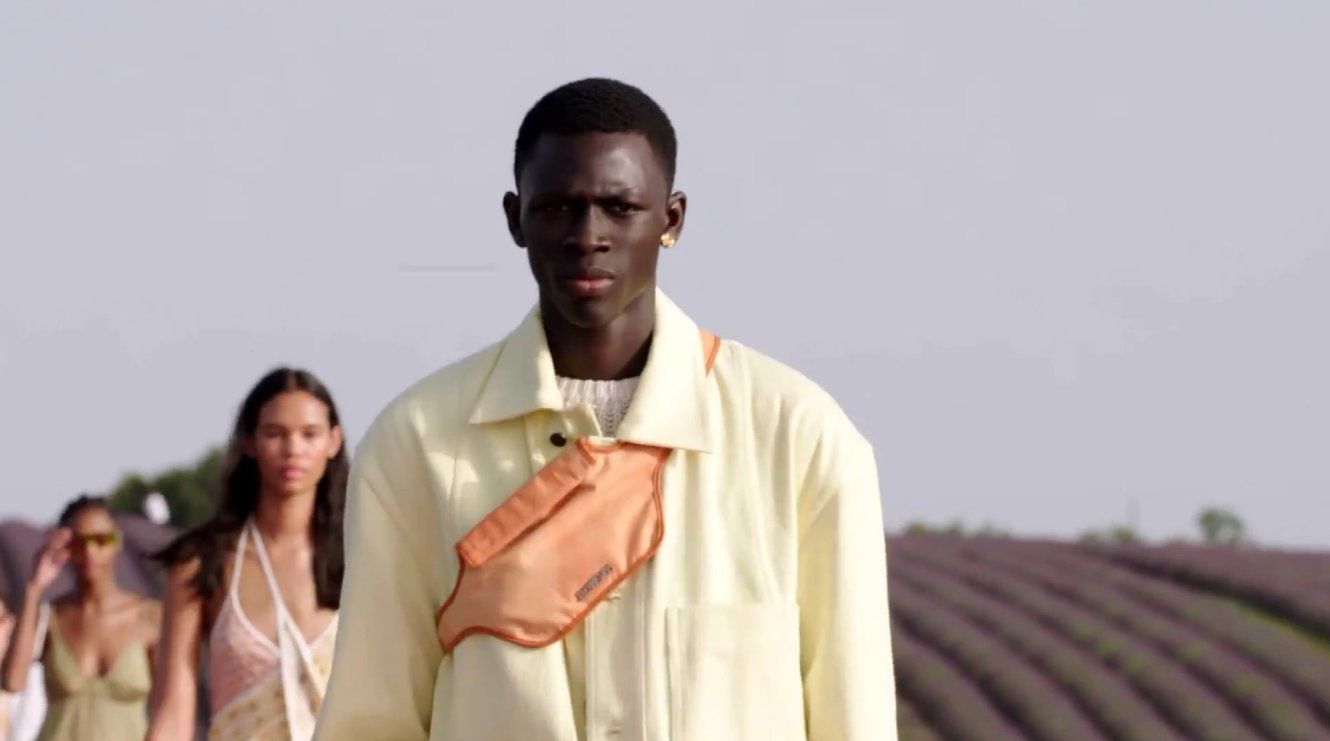
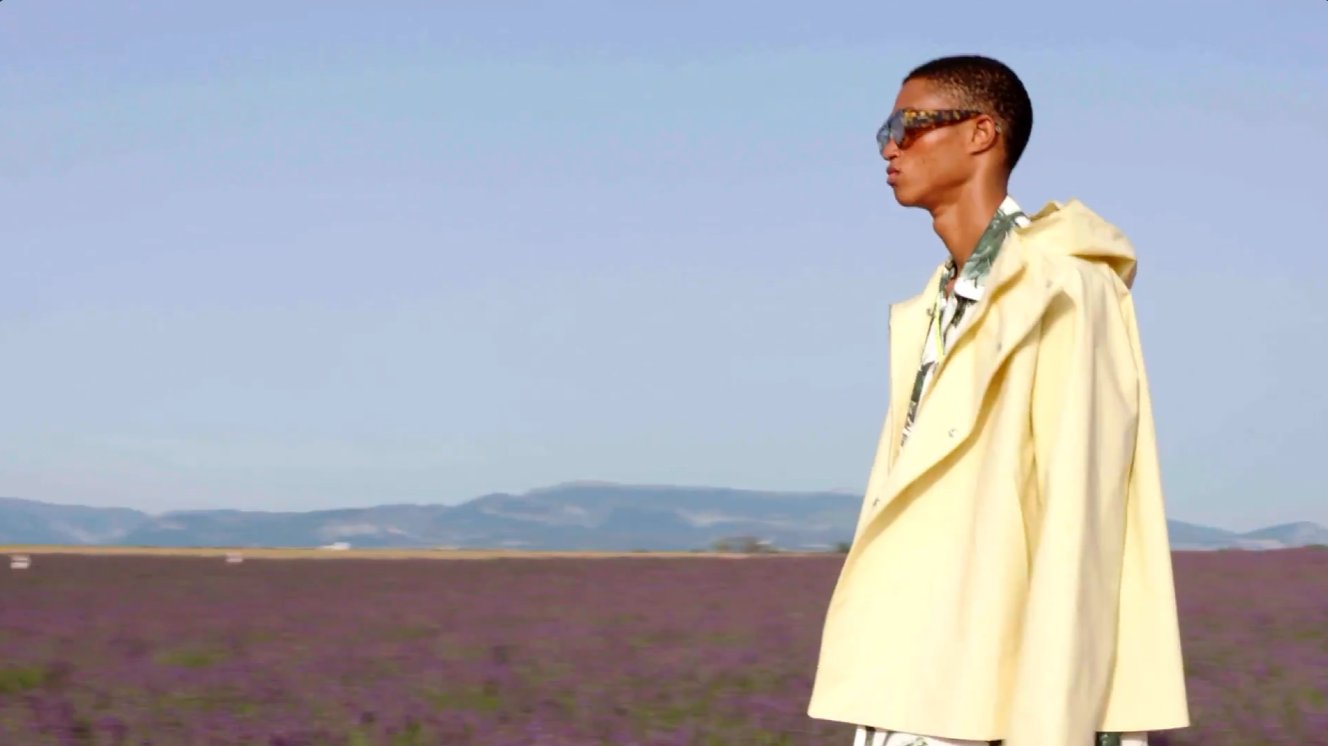
For his label’s 10th anniversary, Simon Porte Jacquemus went home. On June 24, 2019, he rolled out a long, hot-pink carpet through the lavender fields of Valensole in Provence, a few miles from where he grew up, and sent his Spring/Summer 2020 collection down the middle of it. “I wanted a place that looked like a postcard, almost too much like a postcard, even,” he said. White butterflies drifted over the rows, bees hummed, and the show was streamed live on Instagram. It quickly became one of the most photographed runways of the decade.
The collection was called Le Coup de Soleil, or “the sunburn.” For the first time, men and women walked a Jacquemus show together. The palette was soft and gelato-colored, with peach lace layered over a crisp white pantsuit for the opening look. Oversized blazers and suits gave the tailoring a relaxed ease, floaty dresses came in long and mini lengths, and 35 sunny prints included artichokes and cornflower-blue gerberas on bucket hats. The house signatures were all there: giant brimmed straw hats, micro handbags and the tiny Chiquito bag, even worn as a necklace.
This show is rightfully known for its beautiful setting. You see the unity between people and nature, the models moving through the lavender field like ants move through their empires. The world is our home, and we should fit in everywhere, be able to be at peace and be comfortable. Beautiful!

Sources: FashionNetwork · France.fr · Harper’s Bazaar Arabia · Grazia Magazine
Answer: Delphos
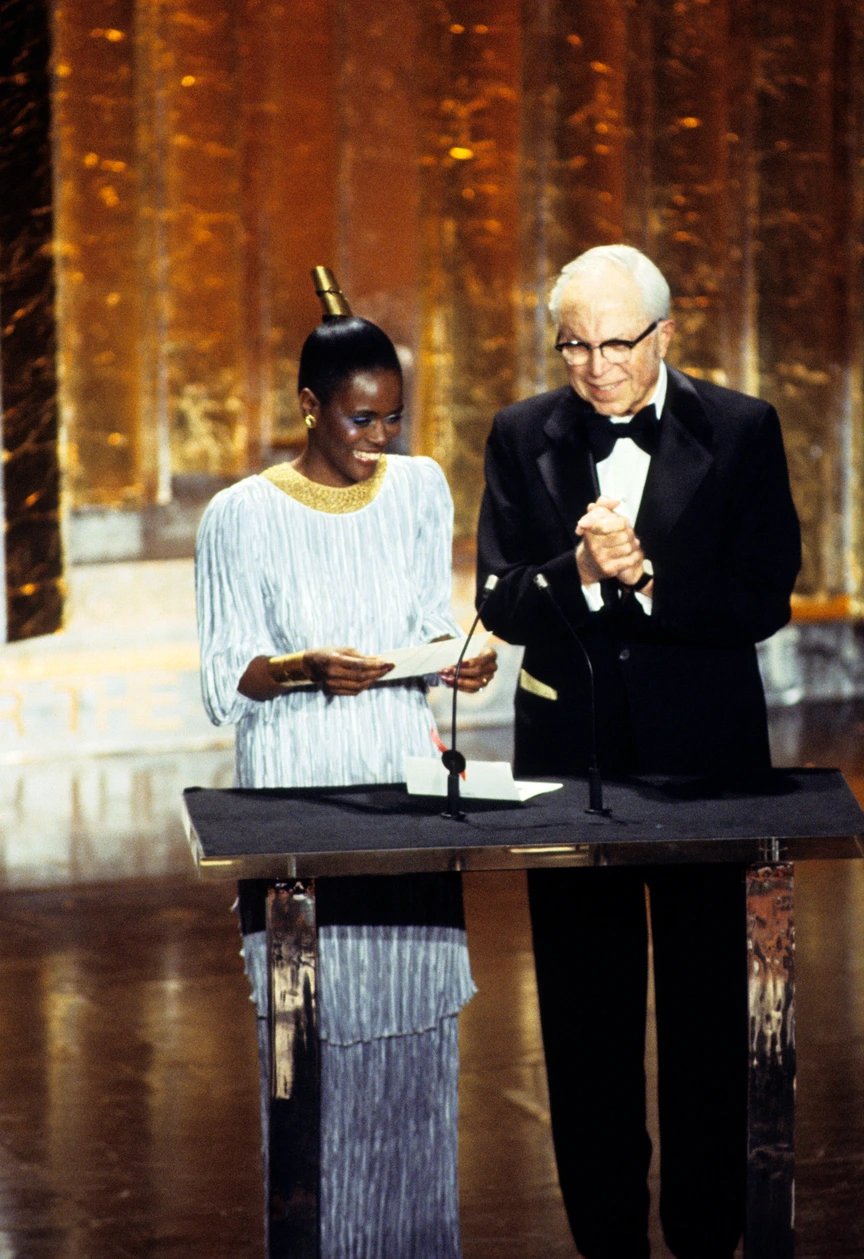
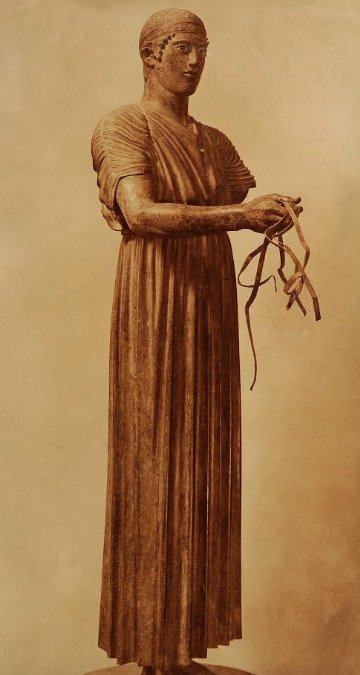
The Delphos gown was introduced in Venice in 1907 by the house of Mariano Fortuny. It was named after the Charioteer of Delphi, an ancient Greek bronze statue of a charioteer dressed in a finely pleated chiton. Like its namesake, the Delphos is a simple column of silk: four to five narrow panels, each holding around 430 to 450 tiny pleats, hand-sewn into a tube that slips over the head. Its one size fit everyone, because the pleats stretched to follow the body without a corset. Glass beads from Murano were strung along the side seams to weigh the silk down so it hung straight.
The pleating method is one of fashion’s great mysteries. Silk is notoriously hard to pleat permanently, and the process, patented in 1909, was never fully revealed. Experts believe the wet silk was pleated by hand, held in place with thread and heat-set, but no one has managed to replicate it exactly. To keep the pleats crisp, owners stored their gowns rolled and coiled in small hat boxes, and Fortuny would re-pleat damaged gowns for free in Venice.
Recent research has also changed the story of who designed it. Henriette Negrin, a French designer and inventor who lived and worked alongside Fortuny, is named as the inventor in the patent paperwork, and the V&A now credits her as largely, if not wholly, responsible for the design. Dancers Isadora Duncan and Ruth St. Denis and actress Sarah Bernhardt were among the first to wear the Delphos. It started out as an at-home tea gown, became acceptable evening wear by the 1920s, and the house kept making it, nearly unchanged, until Fortuny’s death in 1949.
Sources: Messy Nessy's Cabinet · Essence · V&A · FIDM Museum · Fountainhead Antique Auto Museum

Answer: Rei Kawakubo
Scenario, which premiered at the Brooklyn Academy of Music in October 1997, was a collaboration between choreographer Merce Cunningham and Comme des Garçons designer Rei Kawakubo. Cunningham invited her to design the costumes, set and lighting, even though he had never worked with a fashion designer and she had never worked with a dance company. Kawakubo first said no, then changed her mind while working on her Spring/Summer 1997 collection.
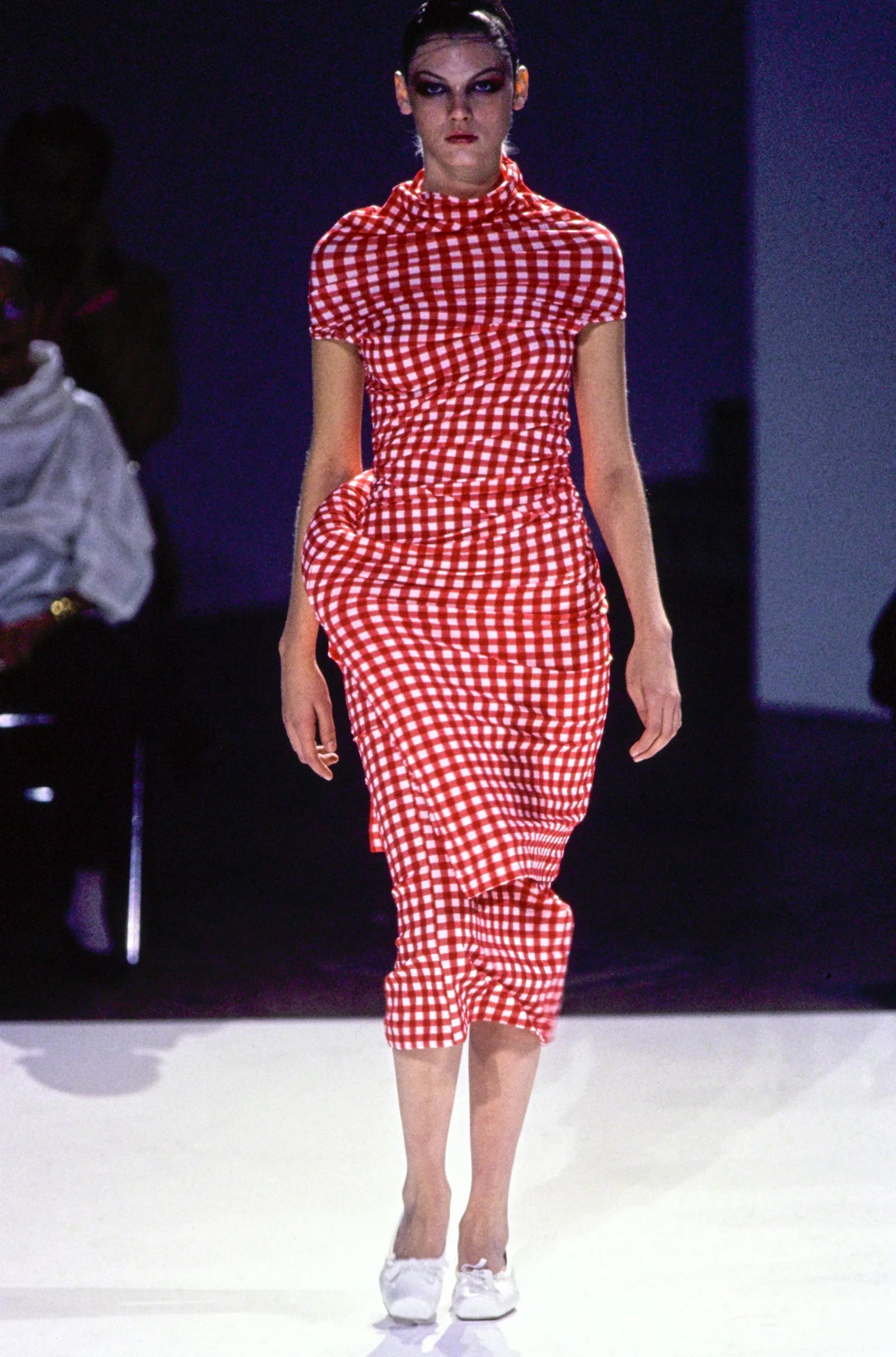
That collection, “Body Meets Dress, Dress Meets Body,” became one of the most talked-about in fashion history. Kawakubo sewed kidney-shaped down pillows into stretchy gingham and nylon dresses, so lumps bulged from the shoulders, hips, belly and back. The idea, she said, was that “the clothes could be the body and the body could be the clothes.” Critics nicknamed it “Lumps and Bumps,” and even the “Quasimodo collection.” Suzy Menkes admitted the pieces first struck her as “a disfigurement,” and some magazines photographed the clothes with the pads taken out.
For Scenario, Kawakubo turned those ideas into costumes: spandex stuffed with down to create humps on the back, chest, stomach and rear, in blue-and-white stripes and green-and-white gingham, then all black, then fire-engine red. Cunningham’s dancers normally performed in simple unitards, so the change was dramatic. “I was excited about the prospect of the shapes being broken down by movement and new forms being created,” Kawakubo said. Cunningham loved it too: “I like the way the shapes of the costumes change on the bodies.”
For the dancers, it was a challenge. One costume had no arms, so its wearer had to be carried across the stage. Another dancer compared hers to a hot, bulky parka that blocked her view of the others. Danced to Takehisa Kosugi’s electronic score Wave Code A-Z in a stark white room, the 40-minute piece became a classic of modern dance and fashion alike. The Walker Art Center now holds the costumes, and the Lumps and Bumps collection featured in the Met’s 2017 Rei Kawakubo exhibition.
Sources: Merce Cunningham: Scenario · Merce Cunningham Trust · Walker Art Center · AnOther Magazine · The Met · Walker Art Center
Answer: Cardigan, Raglan sleeve, Balaclava
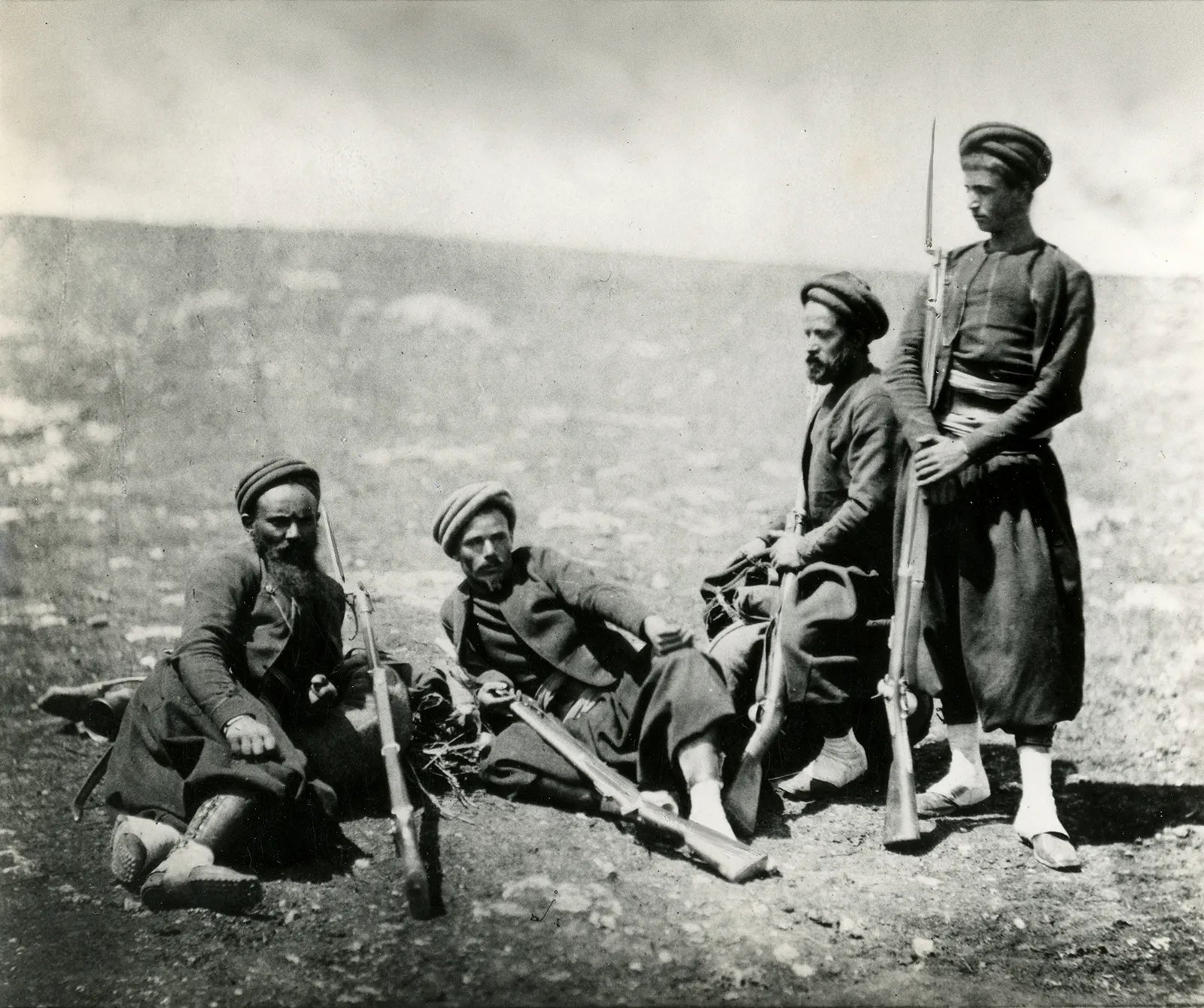
Three everyday menswear staples come straight out of the Crimean War, fought from 1853 to 1856 by Britain, France and the Ottoman Empire against Russia.
The cardigan is named after James Brudenell, the 7th Earl of Cardigan, who led the disastrous Charge of the Light Brigade at the Battle of Balaclava on October 25, 1854. He was widely considered a poor officer, but he championed warm clothing for his men. Officers wore long-sleeved knitted wool jackets under their tunics to survive the brutal Crimean winter, and the style took his name.
The raglan sleeve comes from FitzRoy Somerset, 1st Baron Raglan, the commander of British forces in Crimea. He had lost his right arm at Waterloo in 1815, and he favored a cape-like overcoat whose sleeves ran in one piece up to the neck instead of being set in at the shoulder. The roomier armhole made it easier to dress. A “Raglan Cape” was being advertised by a London tailor by March 1854, and the sleeve is still everywhere on sweatshirts and baseball tees. Lord Raglan himself died of illness in Crimea in 1855.
The balaclava is named after the port town of Balaclava, the British base during the war. Soldiers’ families back home knitted head coverings with openings for the face to protect them from the cold. The name caught on decades later; the earliest recorded “Balaclava cap” dates to 1878.
The other three have different origins. The blazer is usually traced to the bright red jackets of the Lady Margaret Boat Club, founded at Cambridge in 1825, so vivid they seemed to set the water ablaze. The Chesterfield coat is named after the 6th Earl of Chesterfield, a London fashion leader of the 1830s, and became popular around 1840, before the war began. The peacoat most likely comes from the Dutch pijjekker, after pij, the coarse wool worn by sailors.
Sources: Wordorigins · HistoryNet · Britannica · The Genealogist · V&A · Mental Floss
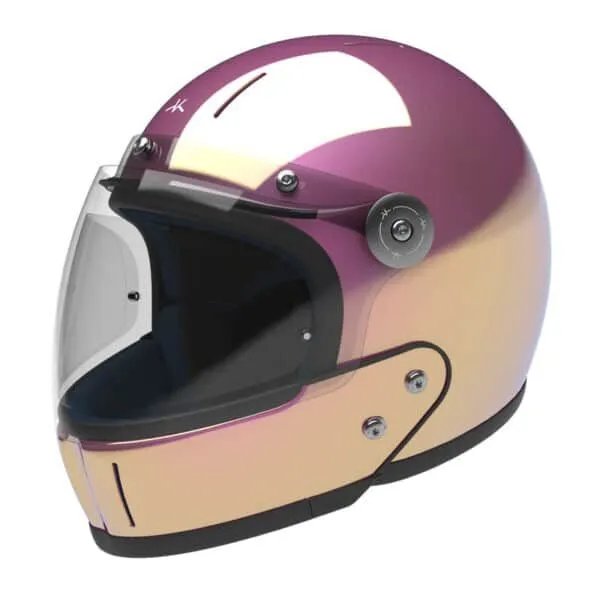
Veldt: Montlhery – Fullface – Iridescent Pearl Motorcycle Helmet