
October 11, 2026
The issue of October 11, 2026
Every question from this issue, with the answers, the hints and the reading behind them.
Play the October 11, 2026 issue

House: Carol Christian Poell · Designer: Carol Christian Poell · Season: Spring/Summer 2004 - Mainstream Downstream
In June 2003, Carol Christian Poell skipped the runway altogether. For his Spring/Summer 2004 collection, guests gathered along the Naviglio Grande, a centuries-old canal in southwest Milan, and waited. Then the models appeared far off in the distance, floating face-up down the dirty, polluted water. They lay motionless with their eyes closed and their arms outstretched like a crucifix, held up by hidden floats, their bodies stretched into a pose that echoed Leonardo da Vinci’s Vitruvian Man, a nod to da Vinci’s own work on Milan’s canals.
There was no catwalk, no seating and no security; anyone walking by could stop and watch. The clothes were luxurious, with rich leathers soaked in red dye and pristine white tailoring, and the canal ruined them. They came out heavy, warped, stained and wrinkled. Some onlookers said the floating figures looked like corpses, and fashion historian Caroline Evans compared the show to the “bonfire of the vanities.”
I saw dead bodies flowing down a river, countless souls and garments worn and washed away by the fashion industry. I initially thought it was a bit about sustainability and pollution, about how so many of our clothes end up in landfills and such. I also thought of the irony of clean clothes polluting the water, this idea that no one is innocent or has clean hands when it comes to our susceptibility to consumerism. With the stretched out arms of the models as they float down, the idea of sacrifice: that downstream of mainstream is all that came before that had to be destroyed, manipulated and bastardized so that a select few can profit and pride themselves, while leaving everyone else treading water, or even potentially drowning.
The title says it all. Poell positioned himself downstream, looking back at a mainstream fashion industry he felt was drifting unconsciously in one direction, swallowed by trends and corporate takeovers. “This collection and this presentation are my take on the state of fashion now,” he said. More than two decades later, it’s still remembered as one of the most radical statements in menswear history. Great show, a thinker for sure!



Sources: i-D · 713 Magazine · Grailed · Groupie
Answer: MGM
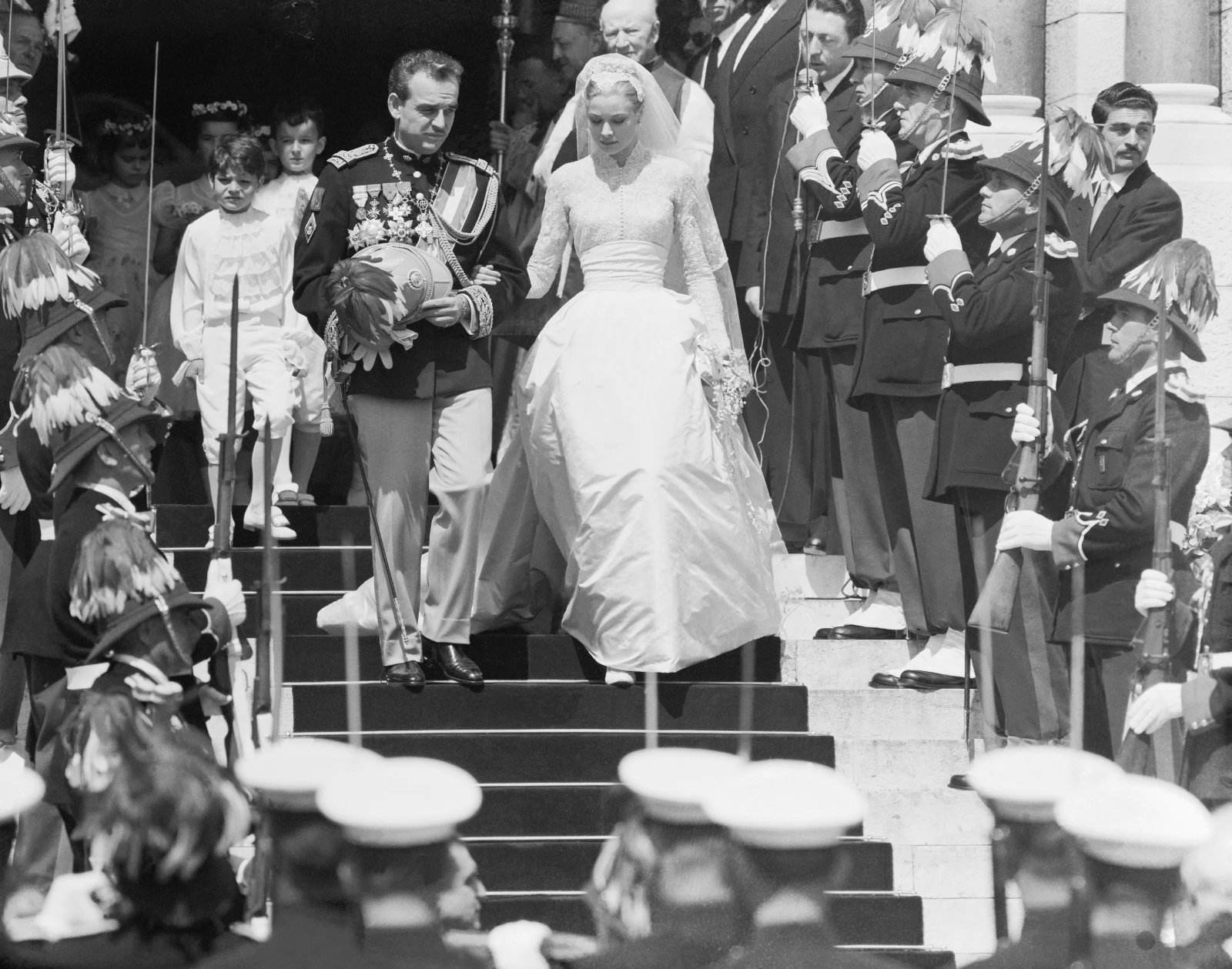
Grace Kelly met Prince Rainier III in May 1955, when a photo shoot at the palace in Monaco was arranged while she was in France for the Cannes Film Festival. Less than a year later, on April 19, 1956, the Hollywood star became Princess Grace of Monaco at St. Nicholas Cathedral. More than 30 million people watched on live television.
Her wedding dress was a gift from MGM, the studio she was under contract to. MGM reportedly released her from her contract in exchange for the rights to film the wedding, and its wardrobe department made the gown. Helen Rose, MGM’s Oscar-winning costume designer, had already dressed Kelly in The Swan and High Society. Kelly’s friend Edith Head, Paramount’s legendary costumer, had expected to get the job.
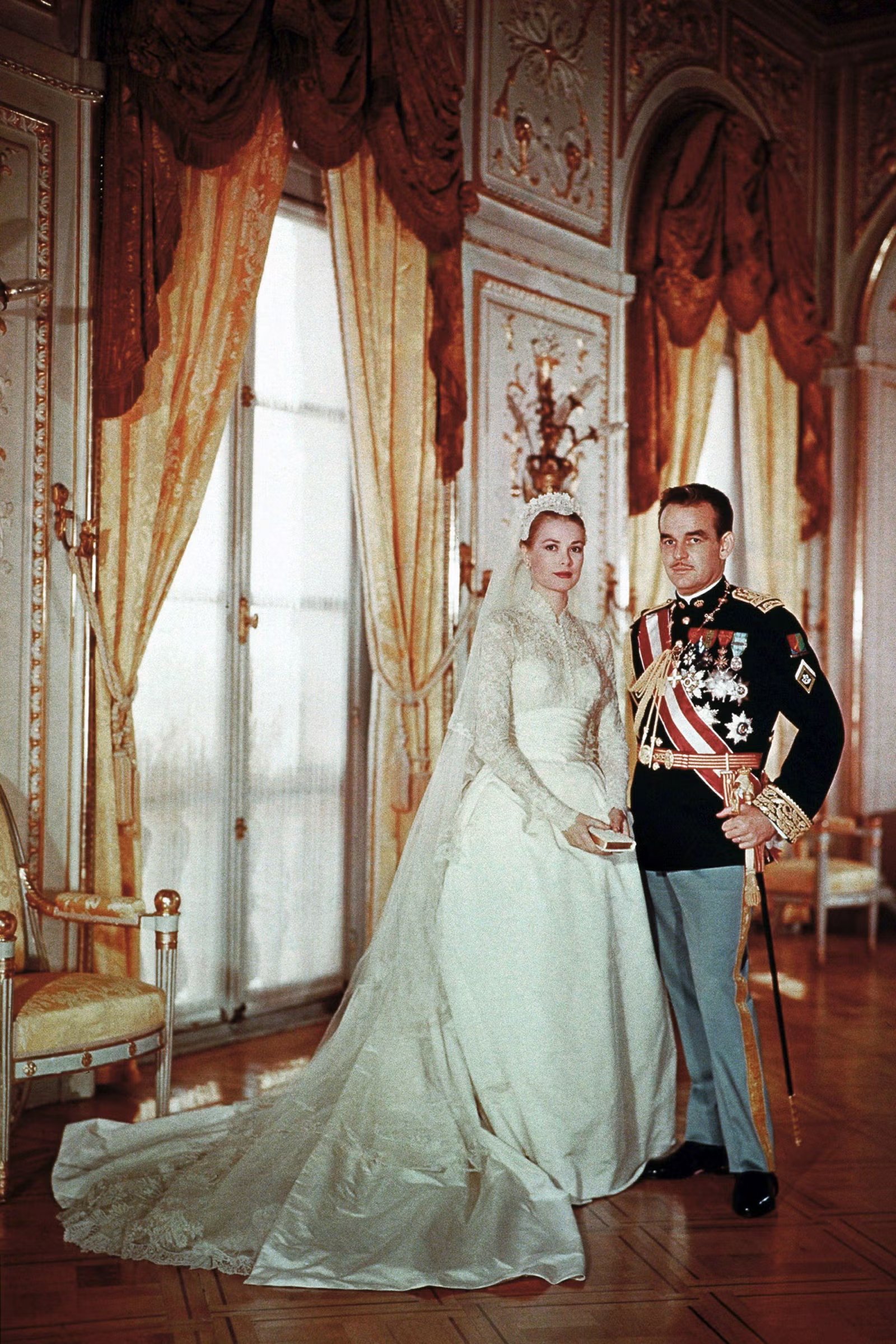
Rose’s design paired a high-necked bodice of 125-year-old Brussels rose point lace, re-embroidered so the seams disappeared and scattered with thousands of seed pearls, with a bell-shaped skirt of ivory silk held out by petticoats. A circular silk net veil was designed so the cameras could still see the bride’s face. More than 30 seamstresses spent about six weeks on the dress, which reportedly cost $65,200 in 1956. Rose called it “the most expensive wedding gown I had ever made.” She also designed Kelly’s pale pink lace and taffeta dress for the civil ceremony held the day before.
Soon after the wedding, Princess Grace donated the gown to the Philadelphia Museum of Art in her hometown, where it’s still kept. Its long sleeves and lace bodice have been a bridal blueprint ever since, and the dress is often cited as an inspiration for Kate Middleton’s 2011 Alexander McQueen wedding gown.
Sources: Vanity Fair · Good Housekeeping · Philadelphia Museum of Art · University of the Arts London · HISTORY · The Knot

Answer: 10000000000 zippers sold
YKK sells about 10 billion zippers a year, roughly half of all the zippers in the world. In its 2024 fiscal year, it passed the 10 billion mark for the third time, after doing it in 2018 and 2021. Laid end to end, that many zippers would stretch more than three million kilometers, about 80 trips around the world. The three letters on the pull stand for Yoshida Kogyo Kabushikikaisha, or Yoshida Manufacturing Corporation.
The company was founded in January 1934 in Tokyo’s Nihonbashi district by 31-year-old Tadao Yoshida, who wasn’t an engineer and didn’t come from a manufacturing family. He built the business on a philosophy he called the “Cycle of Goodness”: no one prospers unless they render benefit to others. In practice, that meant making zippers more reliable than anyone else’s. Yoshida insisted on making everything in-house so he could trace the cause of any failure. To this day, YKK smelts its own brass, produces its own polyester, weaves its own zipper tape, and even builds the machines that assemble its zippers.
YKK opened its first overseas affiliate in New Zealand in 1959 and was the world’s largest zipper maker by the 1970s. It’s now the go-to for premium outdoor gear, technical apparel and luggage. It’s still innovating, too: its AiryString, a tapeless zipper developed with sewing-machine maker JUKI, was picked up by The North Face for its Summit Series.
Sources: YKK · YKK Americas · Carryology · The Hustle · Kenyans.co.ke
Answer: Massimo Osti
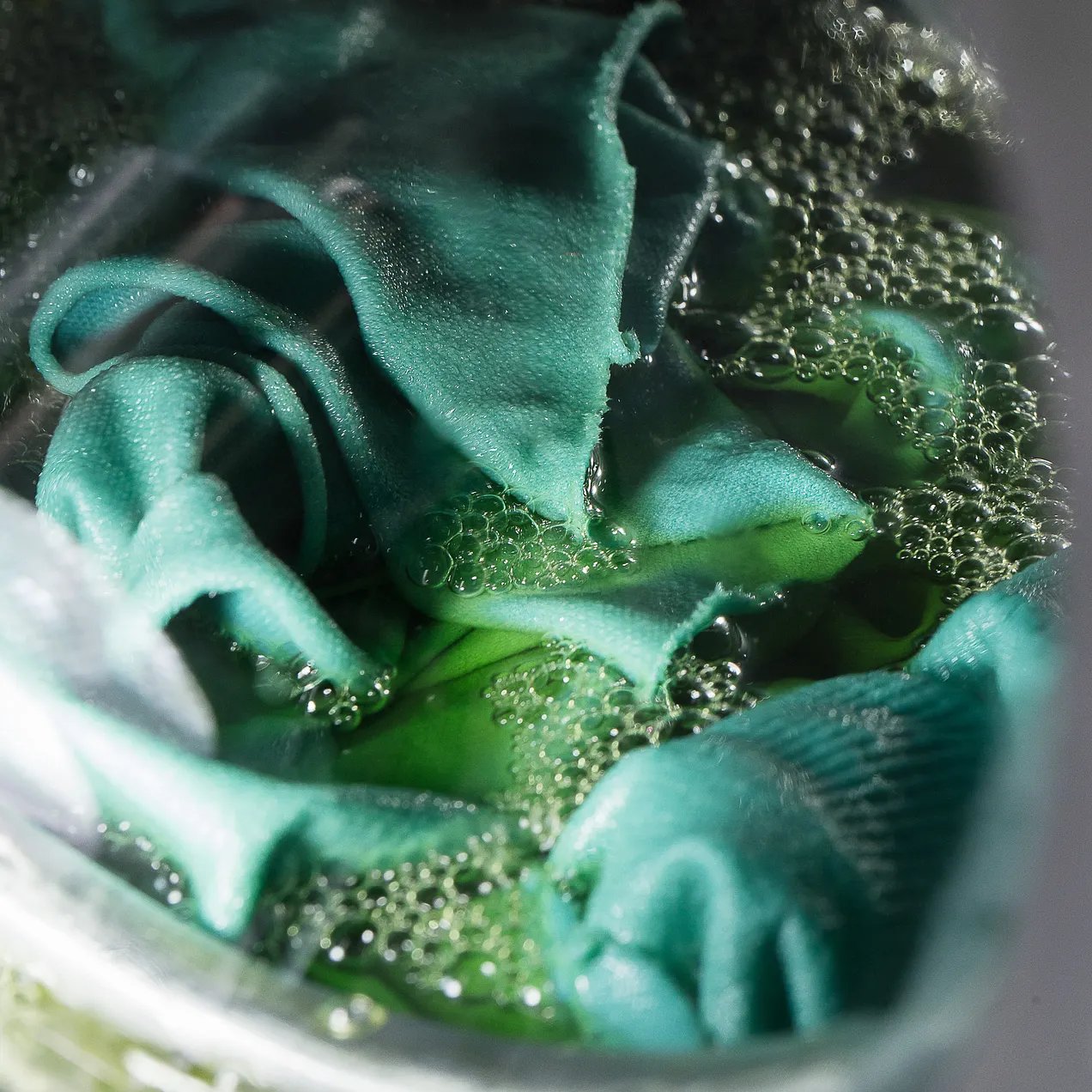
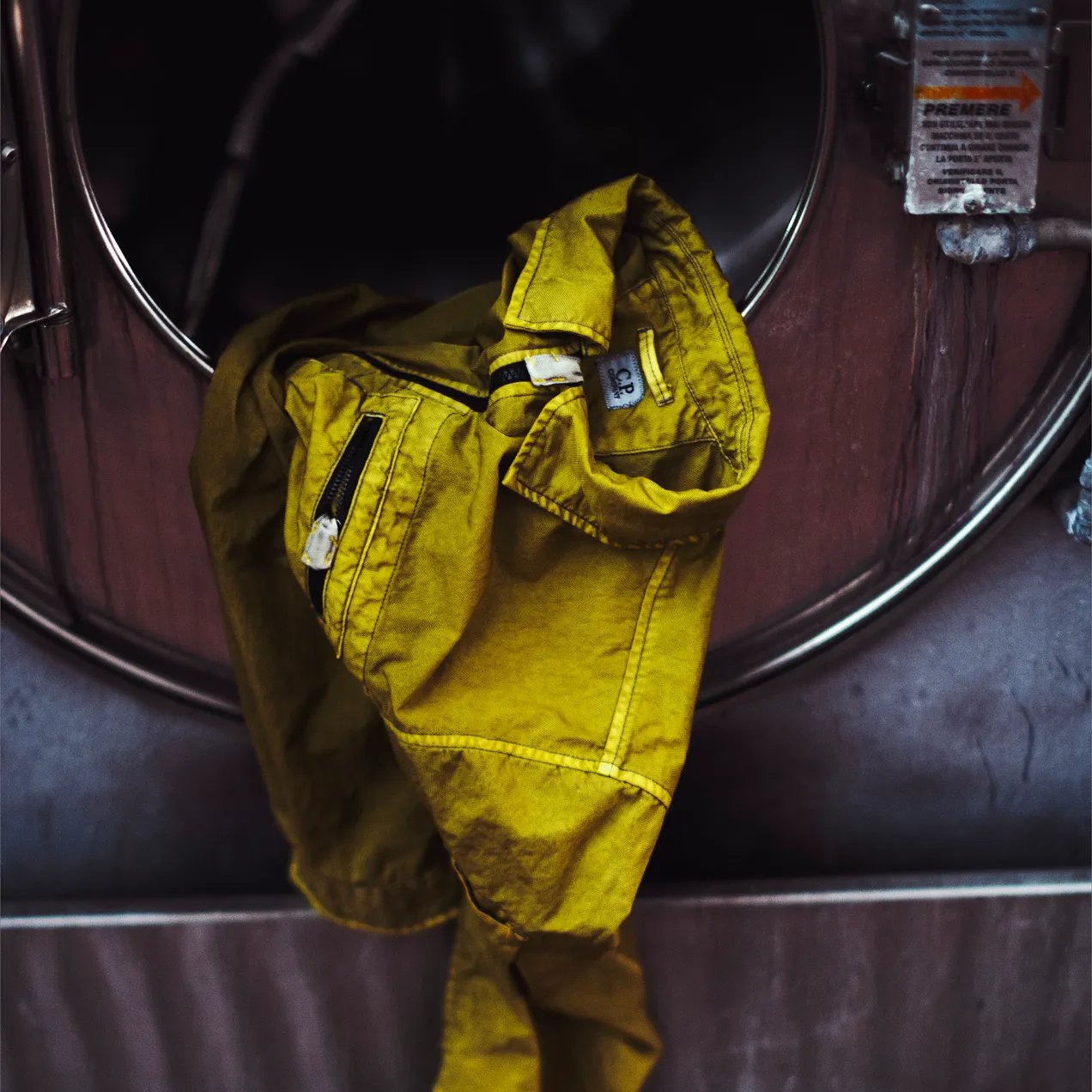
Massimo Osti changed how clothes are colored. Traditionally, fabric was dyed first and then cut and sewn. Garment dyeing flips that order: the piece is built from white or undyed fabric and dyed only once it’s fully constructed. The technique already existed, but in the early 1970s, Osti and his team at C.P. Company became the first to apply it to garments made from several different fabrics and fibers at once, embracing the unpredictable ways each material reacts to dye.
The breakthrough came through constant experimentation. In 1973, the team dipped a garment already printed in several colors into a dye bath. The prints stayed vibrant while the white background took on endless variations of the same design. They also found that cotton could be dyed one color and wool or nylon another, all in the same bath. Osti said the original goal was mostly aesthetic: he wanted new clothes to lose their stiffness, joking that the English disliked it so much they had their butlers break in new clothes to make them feel lived-in. Because every seam, fiber and component absorbs color differently, each garment-dyed piece comes out slightly different, with a depth and worn-in feel that pre-dyed fabric can’t match.
Osti was an unlikely pioneer. Born in Bologna in 1944, he had no fashion degree or tailoring background; he earned a graphic design diploma at night school and got his start screen-printing T-shirts. In 1971, he launched Chester Perry, renamed C.P. Company in 1978 after Fred Perry threatened legal action. In 1982, he founded Stone Island, starting with a military truck tarpaulin that he softened by stonewashing, which led to the fabric Tela Stella. His 1988 Mille Miglia jacket, built for drivers in the historic Italian car race with goggle lenses in the hood, became known as the Goggle Jacket and is still a C.P. Company signature. Osti died in 2005, but garment dyeing remains the backbone of both brands, and of much of menswear today.
Sources: A day in the life of Massimo Osti - 1995 · Domus · SSENSE · Motor Valley · C.P. Company
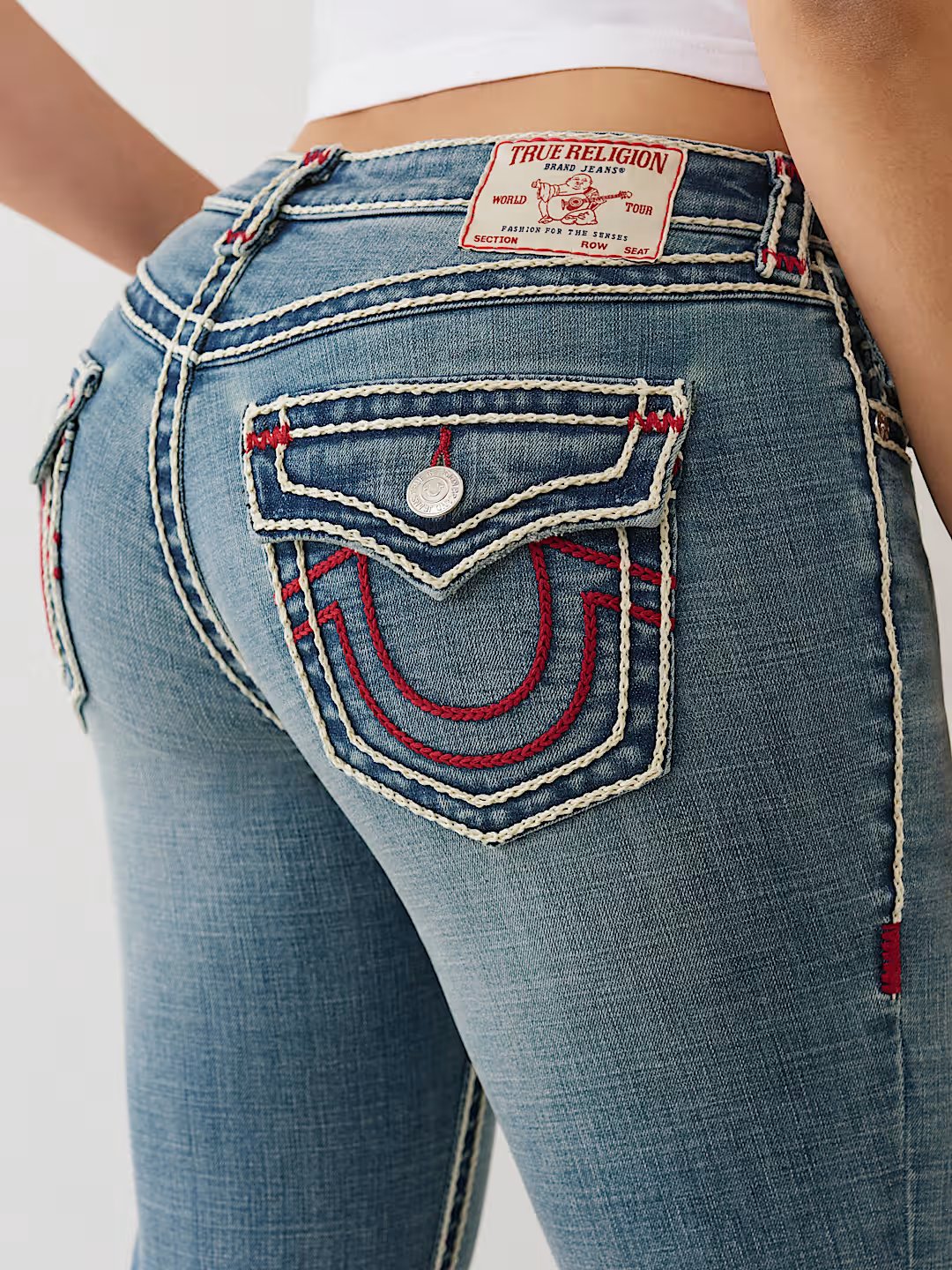
True Religion Billie Rope Stitch Straight Jean. Another brand that ruled the world in middle/early high school. It's coming back, tho. Fashion is cyclical.