
October 8, 2026
The issue of October 8, 2026
Every question from this issue, with the answers, the hints and the reading behind them.
Play the October 8, 2026 issue
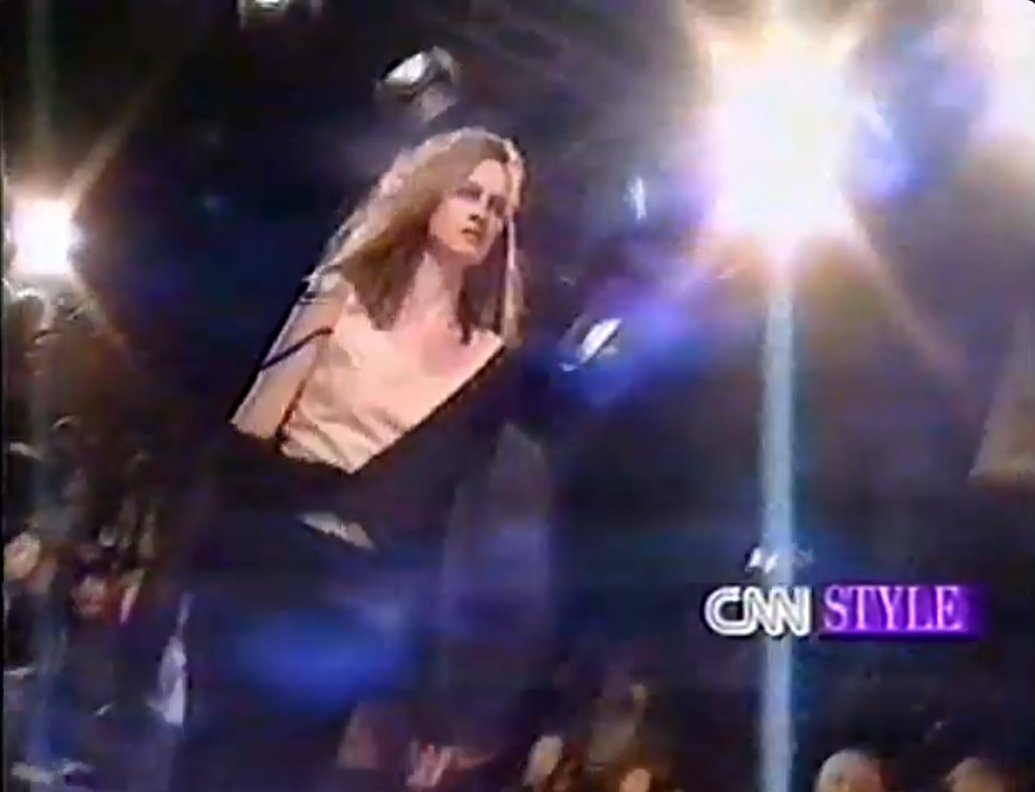
House: Ann Demeulemeester · Designer: Ann Demeulemeester · Season: Spring/Summer 1997
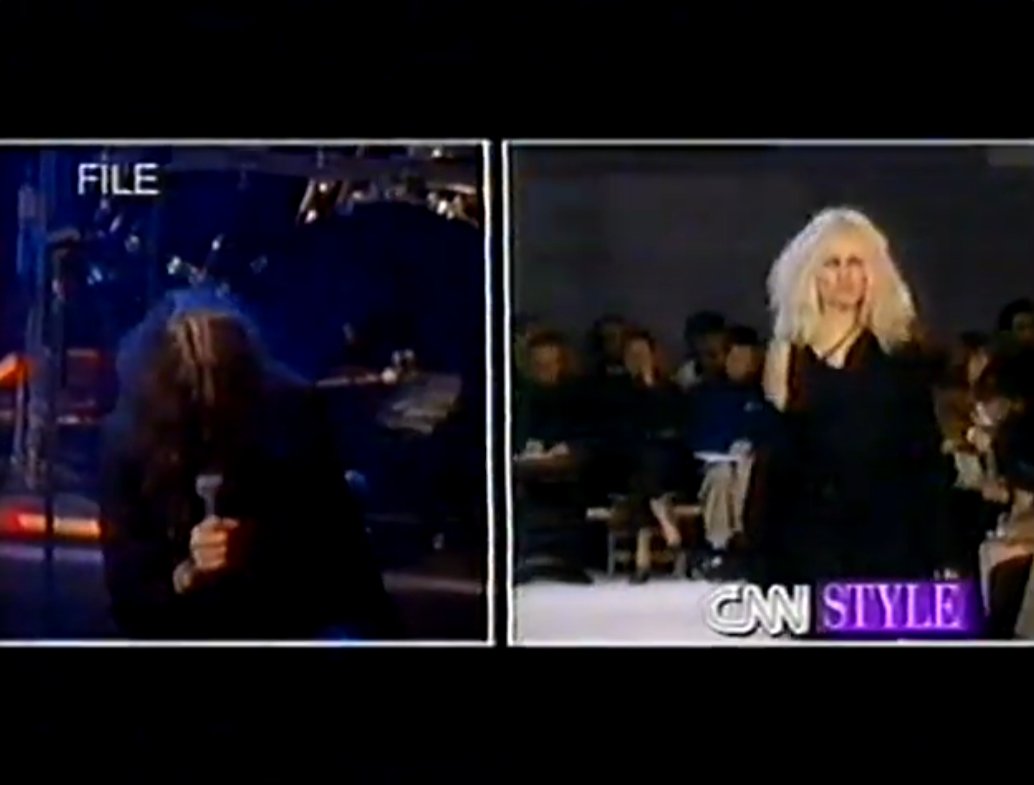
Ann Demeulemeester's Spring/Summer 1997 collection is often called the purest expression of her brand. After a stricter, more severe season, she softened into what critics called "déshabillé glamour": asymmetric pieces cut to look as if they were sliding off the body, one-shoulder silhouettes, draped satin, leather and devoré velvet, all at a time when tight, body-conscious clothes ruled fashion. A white shirt slipped off one shoulder over black trousers, a black satin menswear suit came with a T-shirt instead of a dress shirt, and a leather jacket was paired with a soft, fluid skirt. Models walked with deliberately tousled hair to the music of Patti Smith, the androgynous punk poet who had been Demeulemeester's muse since she discovered Smith's album Horses at 16. Vogue's Katherine Betts wrote that the crowd had moved on from "Gucci's fashion equivalent of a one-night stand" to Demeulemeester's romanticism, and the Metropolitan Museum of Art's Costume Institute acquired pieces from the collection. "I want to meet the woman, not the fashion designer who dresses her," Demeulemeester said.
She seems motivated by this theme of duality. The soundtrack is Patti Smith, who she considers dark and tender. Throughout the collection, she describes the balance between masculine and feminine, and between the structural integrity of the garment and the natural movement and flow of the body. It seems this collection is very much about balance, yin and yang. Do the two sides of us work together, or do they conspire against each other to rip us apart? Good show.


Sources: AnOther · Ava Korbman · Dazed · Fascinate · CFDA

Answer: Jean Paul Gaultier
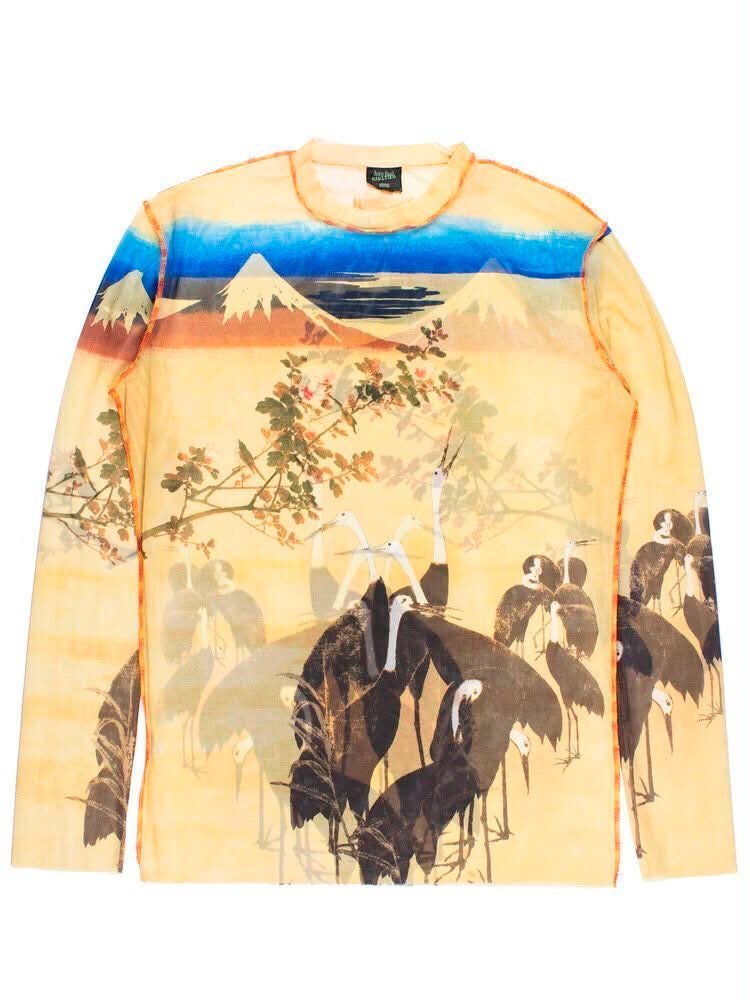
In X-Men (2000), Halle Berry's Storm is best remembered in costume designer Louise Mingenbach's black leatherette battle suit and silver cape. Out of uniform, though, she wears a piece straight from the runway: a Jean Paul Gaultier mesh top from his Spring/Summer 1999 collection. Made in Italy from Gaultier's signature lightweight stretch mesh, the top is printed with a Japanese-inspired landscape: a blue-capped Mount Fuji layered with clouds and wind motifs, red-crowned cranes in flight, flowering branches and calligraphic characters. It's finished with contrasting orange and red overlock stitching, which gives it a deliberately raw, deconstructed edge. Gaultier's printed mesh tops were among the most recognizable pieces of late-'90s fashion. Paired with Storm's white hair, this one turned a quiet scene into a fashion moment that fans still circulate today, and the original tops are now collectors' pieces on the vintage market.
Sources: 1stDibs · Bellevie Archive · Fashion in Film · Threads · Twitter
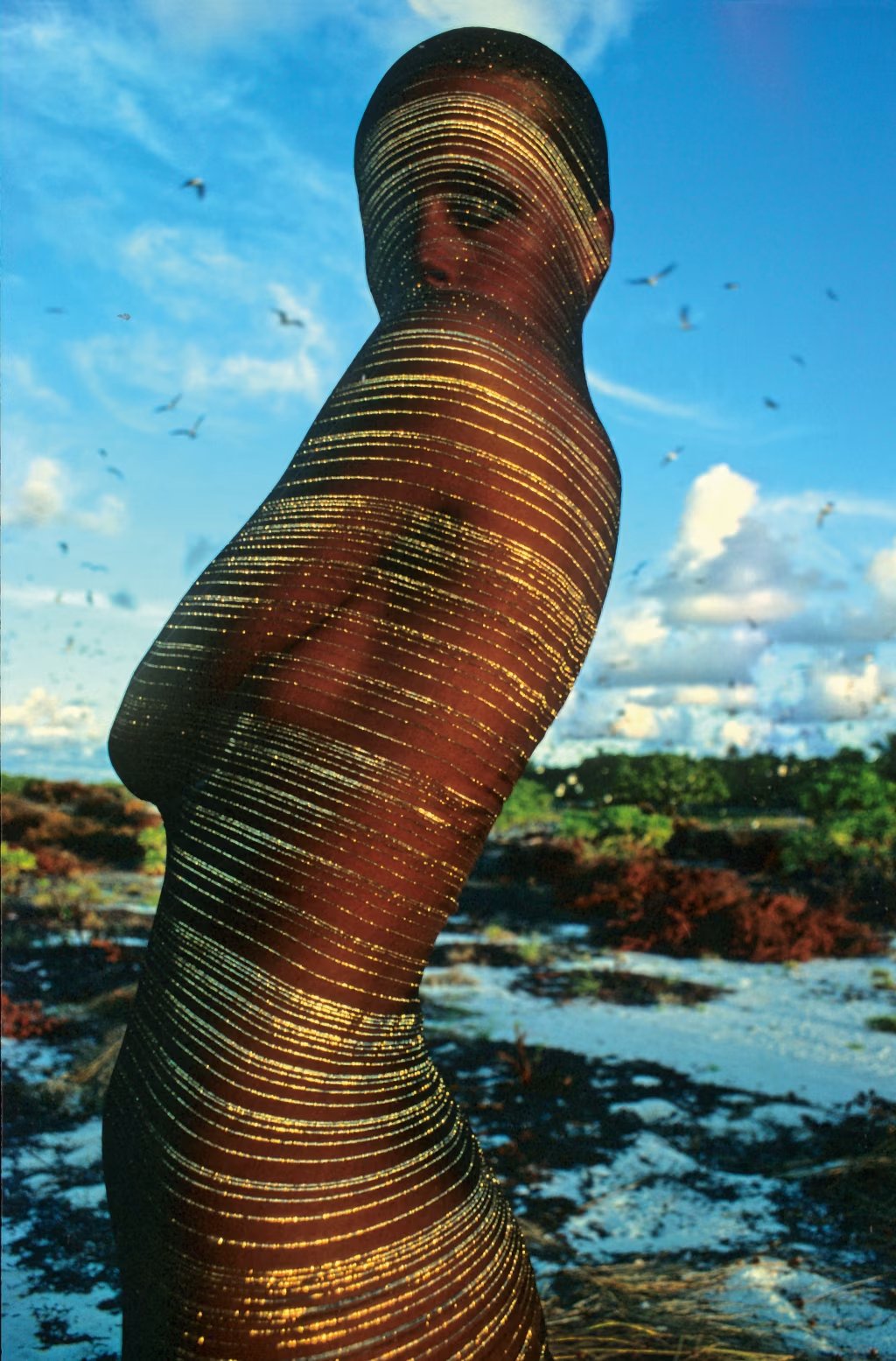
Answer: Hans Feurer
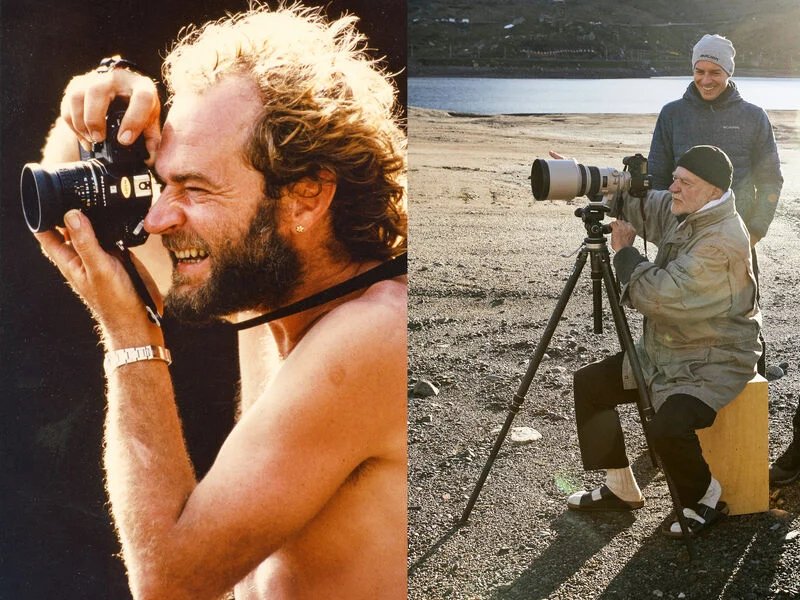
This image is by Swiss photographer Hans Feurer. Galleries list it as a 1976 portrait of model Eeva Ketola, shot on Bird Island in the Seychelles, although online it's often mislabeled as his Kenzo campaign with Iman. Feurer took photos from the age of nine, entered a Zurich art academy at 14, and worked as an illustrator before becoming an art director at J. Walter Thompson in Paris and London. In 1966 he quit, bought a Land Rover and spent two years crossing Africa, nearly being trampled by a hippo and spending ten days in a Malawi prison along the way. The trip changed how he saw light, and he came back to London to become a fashion photographer, shooting for British and French Vogue and the cult magazine Nova. His method was unusual: he avoided studios, artificial light and filters, worked with storms, tides, wind and lava fields, and used telephoto lenses, sometimes shooting models from up to 300 meters away and directing them by walkie-talkie. He worked only in color, explaining, "Life is colour, I see everything in colour." His best-known images include the 1974 Pirelli Calendar, shot in the Seychelles, and his 1983 Kenzo campaign starring Iman, which is still cited as having rewritten the rules of fashion advertising. Feurer summed up his work simply: behind fashion there is always a dream, and his job was to understand it and make it real. He died in January 2024.
Sources: Artsy · SSENSE · 032c · Oktana · PetaPixel · Bogner
Answer: American financier James Brown Potter was invited to the Prince of Wales's estate, Sandringham, in 1886 and brought a short evening jacket home., Griswold Lorillard, son of Tuxedo Park's founder, shocked the 1886 Autumn Ball by showing up in a tailless coat., Tuxedo Club founders had been customers of the jacket's original London tailor since the 1860s and adopted the style years earlier.
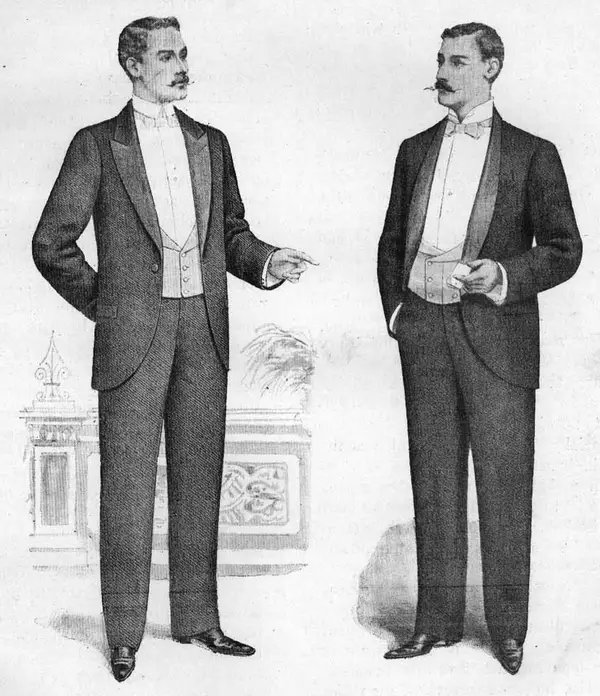
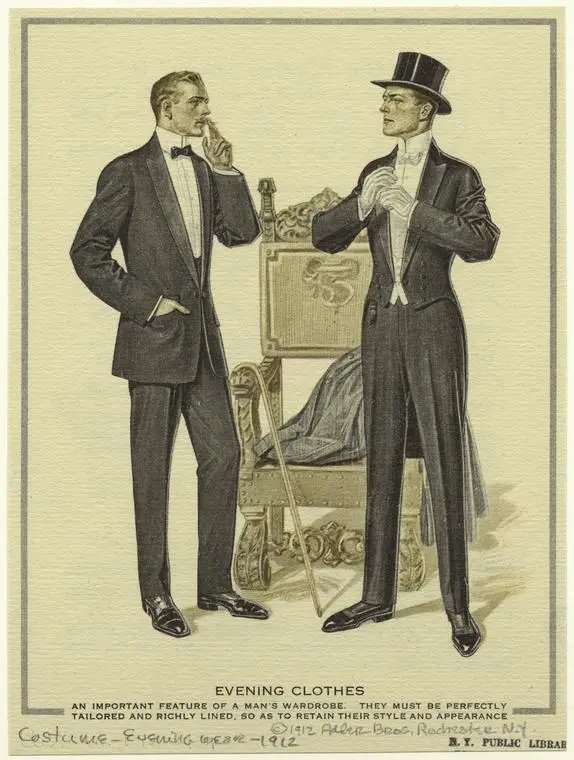
The short dinner jacket started in England: in 1865, the Savile Row tailor Henry Poole & Co. made the future King Edward VII, then Prince of Wales, a short blue evening coat to wear instead of tails at informal dinners at his Sandringham estate. The name "tuxedo," though, is American. It comes from Tuxedo Park, an exclusive private enclave in New York founded in 1886 by tobacco heir Pierre Lorillard IV. I have never heard of this place but from what I can see it's one of those super wealthy, private, google-maps-cars-can't-get-in-here, type of places, seems fitting I suppose. How the jacket got there is still debated, and there are three main stories. In the first, American financier James Brown Potter and his wife Cora met the Prince in 1886 and were invited to Sandringham. When Potter asked what to wear, he was sent to Henry Poole for a short evening jacket, and he brought the style back to New York. In the second, Lorillard's son Griswold showed up at the Tuxedo Park Autumn Ball that October in a tailless coat with a scarlet satin vest, and the society magazine Town Topics sniffed that he and his friends looked like "royal footmen." Some historians argue that coat was closer to a mess jacket than a true dinner jacket. The third comes from Henry Poole itself: it has no ledger record of Potter, but several Tuxedo Club founders had been its customers since the 1860s and likely adopted the jacket long before 1886. What's agreed is how the name stuck: club members wore the jackets to a bachelor dinner at Delmonico's in Manhattan, and when curious diners asked about them, they were told it was "what they wear for dinner up in Tuxedo." The word first appeared in print in 1889 and was capitalized as "Tuxedo" into the 1930s. In Britain, the same garment is still called a dinner jacket.
Sources: Business Insider · Tuxedo Park, NY · Henry Poole & Co. · Gentleman's Gazette
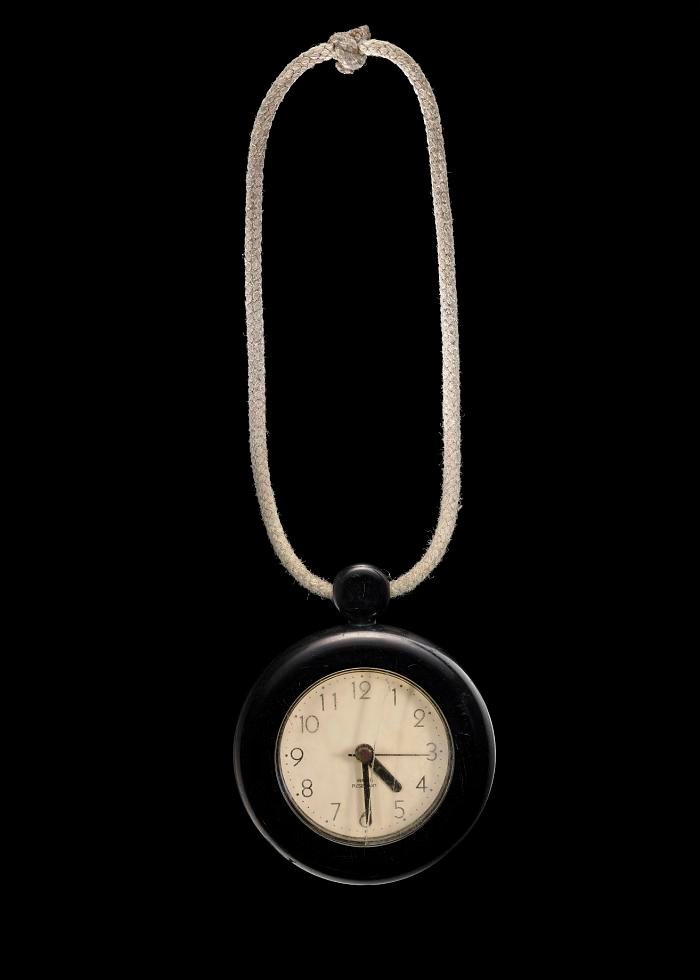
Flavor Flav Clock Chain. I remember watching Flavor of Love as a kid. New York was must-see TV! Flavor Flav, legendary rapper, legendary TV show, Water Polo sponsor. He's still doing well!