The issue of October 5, 2026
AVAVAV Fall/Winter 2023 - Fake It Till You Break It
Every question from this issue, with the answers, the hints and the reading behind them.
Play the October 5, 2026 issue
Round one — the runway
AVAVAV · Fall/Winter 2023 - Fake It Till You Break It
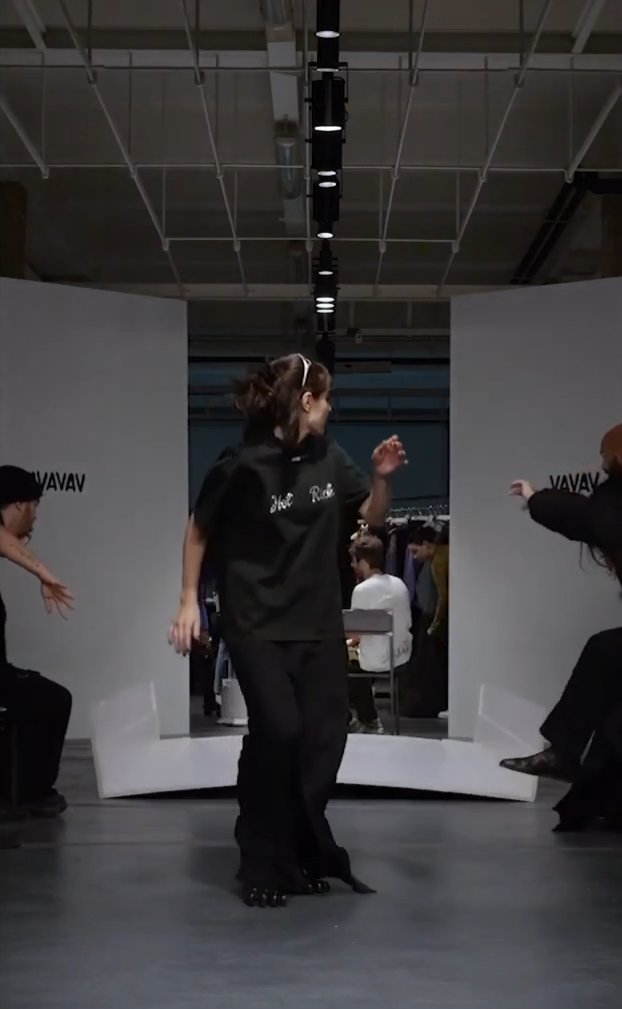
House: AVAVAV · Designer: Beate Karlsson · Season: Fall/Winter 2023 - Fake It Till You Break It
For Fall/Winter 2023, AVAVAV creative director Beate Karlsson asked herself one question: "What's the most embarrassing thing that can happen to a fashion house?" Her answer was a show where the clothes failed in front of everyone. Under the title "Fake It Till You Break It," models walked the Milan runway as their outfits fell apart: heels snapped mid-stride, bags broke open, visors fell off caps, trousers came unpinned and sleeves and dresses were pulled off their bodies. The garments themselves mixed oversized tracksuits, huge hoodies and streetwear outerwear with pinstriped dresses and cut-outs. The finale went furthest: as Karlsson stepped out for her bow, the step-and-repeat backdrop behind her collapsed. "I've been asking myself; why is luxury so serious? Is it because we strive to be perfect?" she said, pairing the show with questions like "Could bad quality still be luxurious?"
This brand, like Doublet (another brand I love!), plays into fashion's humor and absurdity. Fashion shows are supposed to be these highly coordinated events that take place in rooms of humorless people whose pretension is only exceeded by their narcissism. Shows like this cut through that and present a version of fashion that is closer to reality, as a chaotic mess of events and creativity that is a single stray thread away from falling apart. And when that facade comes crashing down, how wonderful!



Sources: Hypebeast · Hunger Magazine · Office Magazine · Fucking Young · PAPER · Jezebel
The questions
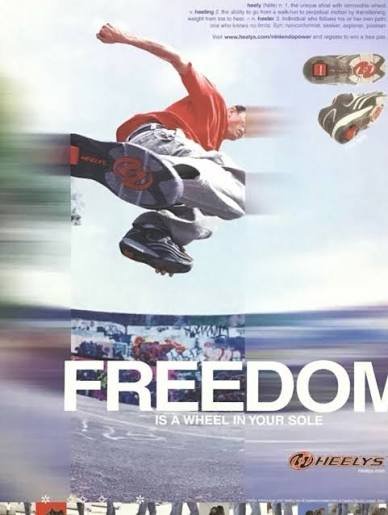
In what year did psychologist-turned-inventor Roger Adams file his first patent for the wheeled sneaker that became Heelys?
Answer: 1999
I had a pair of these as a kid. I think my mom bought them, and I outgrew them so quickly that most of the time they were a size too small, so they were arguably the least comfortable shoes I've ever worn. Still loved them tho :)
Heelys were invented by Roger Adams, a clinical psychologist who grew up in his parents' roller skating rink in Tacoma, Washington. On a 1998 vacation in Huntington Beach, in the middle of what he described as a midlife crisis, he watched kids on inline skates and pictured a shoe that could roll whenever you shifted your weight. He built his first prototype in a friend's garage by cutting into Nike sneakers and fitting them with skateboard wheel bearings. His first patent filing for the design dates to April 1, 1999. He launched the company in 2000, and at its first trade show, the first retailer sold out within hours. Priced between $50 and $100, Heelys sold more than 1.25 million pairs in its first year, reached more than 30 countries within three years, and got celebrity fans like Usher. They also drew criticism from doctors and safety groups over injuries in school hallways and elsewhere. Adams eventually sold his shares and left the company, and he died in March 2026 at age 71. What a legend!
The hints
- That year, Britney Spears released her debut album ...Baby One More Time, TLC had "No Scrubs" on the radio and Ricky Martin was "Livin' la Vida Loca."
- In theaters, Neo took the red pill in The Matrix, and Star Wars: Episode I – The Phantom Menace became the year's biggest box office event.
- On TV, SpongeBob SquarePants premiered on Nickelodeon, and Who Wants to Be a Millionaire was taking over American primetime.
- It was the last year before Y2K.
Sources: Google Patents · NBC News · Newser · SkateHut
Louis Réard introduced the bikini in 1946. Select every statement that is TRUE about its debut.
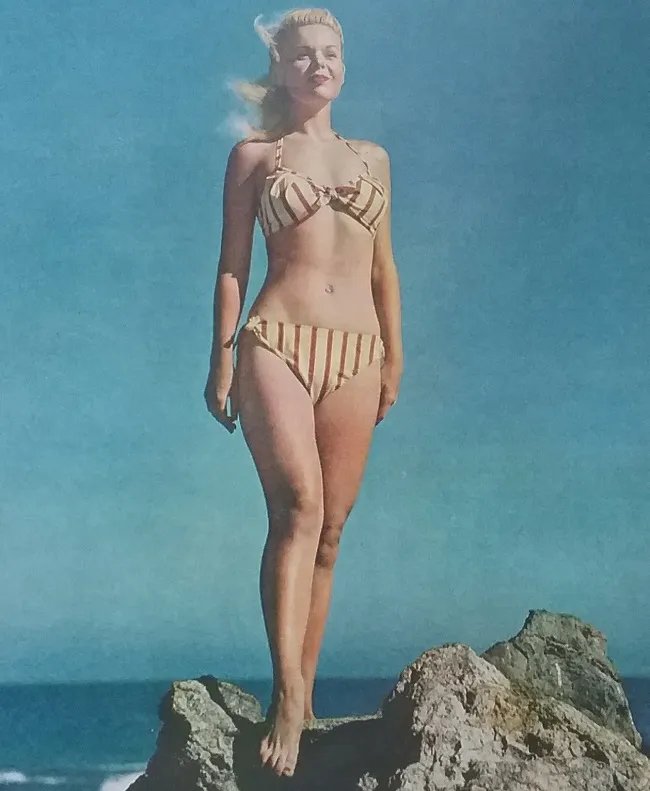
Answer: It was named after a U.S. nuclear test site., It debuted at a swimming pool in Paris., The first woman to wear it was a nightclub dancer.
On July 5, 1946, French engineer Louis Réard unveiled his new two-piece swimsuit at the Piscine Molitor, a fashionable swimming pool in Paris. He named it the "bikini" after Bikini Atoll in the Marshall Islands, where the U.S. military had tested an atomic bomb just four days earlier, because he hoped his design would be just as explosive. It was tiny: a bra top and two inverted triangles of fabric joined by string, made from about 30 inches of material and small enough to fit inside a matchbox. No professional model would wear it, so Réard hired Micheline Bernardini, an 18-year-old dancer at the Casino de Paris. The suit was printed with newspaper type, a nod to the headlines Réard expected it to make, and Bernardini reportedly received around 50,000 fan letters afterward. A rival designer, Jacques Heim, had launched a two-piece called the "Atome" and advertised it as "the world's smallest bathing suit," but Réard's was even smaller. The reaction was intense: the bikini was banned in countries including Spain, Italy, Belgium, and Australia, and the Vatican declared it sinful. It didn't catch on widely in America until the 1960s, helped along by films like Dr. No in 1962.
The hints
- Réard wanted his swimsuit to be "explosive," so he borrowed its name from a place that had been in the news just four days earlier.
- It didn't debut on a beach or a runway. It debuted poolside at the Piscine Molitor in Paris.
- Professional models refused to wear something so small, so Réard hired an 18-year-old dancer from the Casino de Paris.
- Instead of praise, the Vatican declared it sinful, and several countries banned it outright.
Sources: The Vintage Traveler · History · TIME · Museum of the Albemarle
On May 20, 1873, tailor Jacob Davis and Levi Strauss patented a way to strengthen work pants using what small metal hardware?
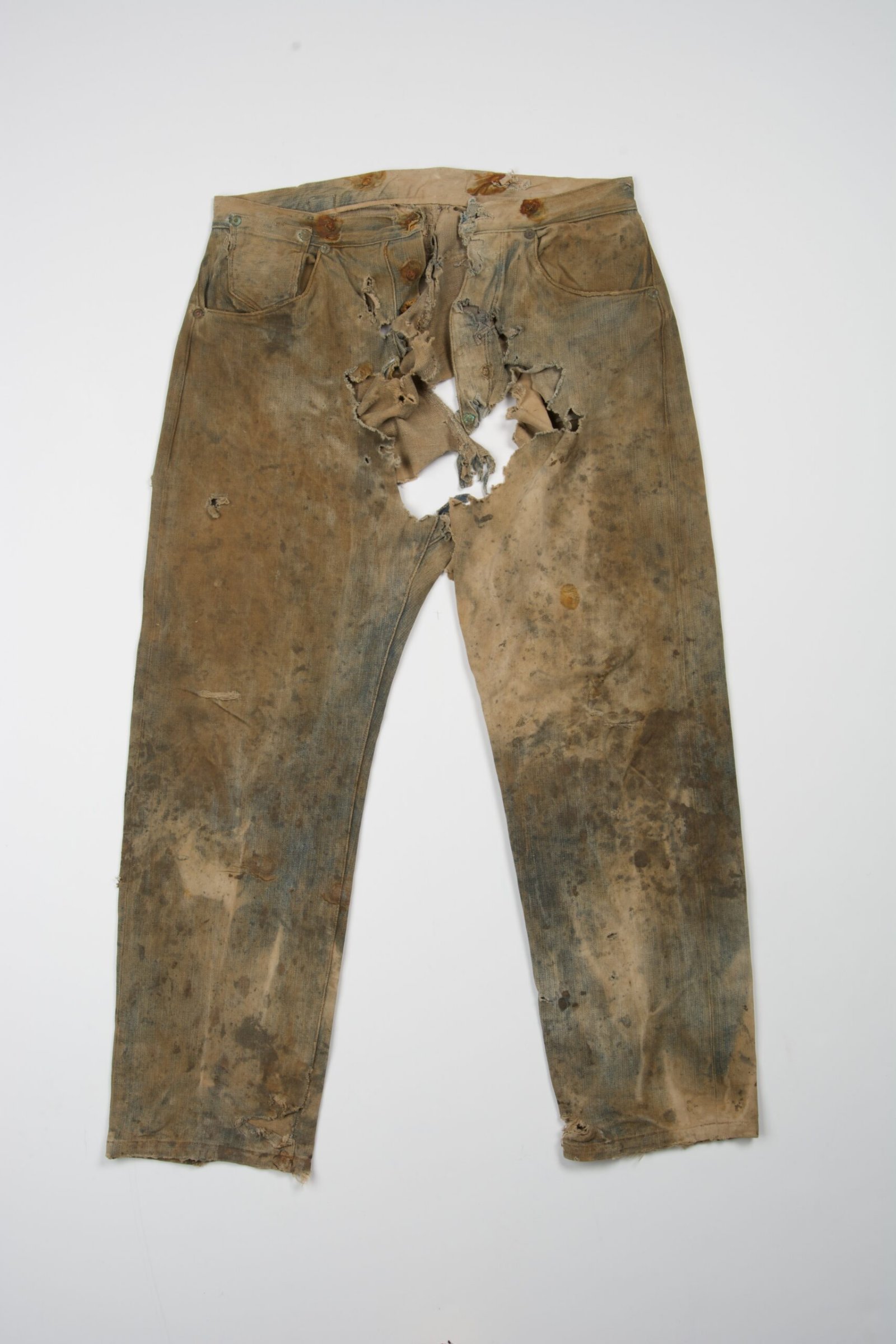
Answer: Rivets
Workers in the American West, from miners to ranchers to railroad crews, kept ripping their work pants at the pockets and seams. Jacob Davis, a tailor from Riga, Latvia, working in Reno, Nevada, who also made tents and wagon covers, came up with a fix: hammer copper rivets into the stress points, like the corners of the pockets and the base of the button fly. He didn't have the money to patent the idea himself, so he wrote to his fabric supplier, the San Francisco dry-goods merchant Levi Strauss, and proposed a partnership. On May 20, 1873, the two received U.S. Patent No. 139,121 for "an Improvement in Fastening Pocket Openings," the date now celebrated as the birthday of blue jeans. The pants were first known simply as "XX," then as "waist overalls," and in 1890 they became the 501 when Levi's introduced lot numbers. Davis stayed on as a factory manager at Levi Strauss & Co. for the rest of his career, and the rivets they patented are still on almost every pair of jeans made today.
The hints
- Miners, ranchers and railroad workers kept tearing their work pants at the pockets and seams, a failure known at the time as a "blowout."
- In Fallout 3, there was a city with the same name.
- The hardware was made of copper and hammered through the fabric at stress points like the corners of the pockets and the base of the button fly.
- You can still see them on the front pocket corners of almost every pair of jeans today, and they're the same kind of fastener used to hold together steel bridges and airplanes.
Sources: The Industry · Levi · Levi · History
Round three — sketch from memory
Stone Cold Steve Austin's leather vest
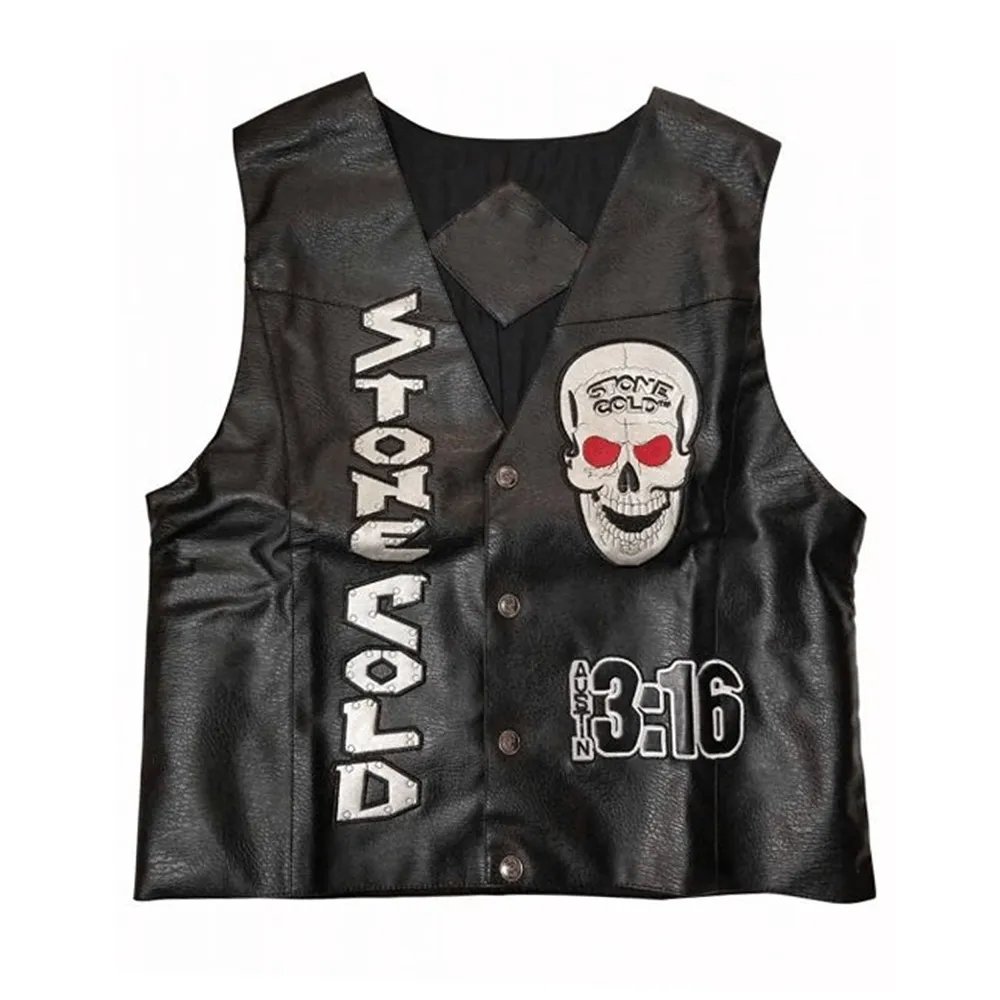
AND THAT'S THE BOTTOM LINE, BECAUSE Stone Cold Steve Austin's leather vest SAID SO!