October 1, 2026
The issue of October 1, 2026
Every question from this issue, with the answers, the hints and the reading behind them.
Play the October 1, 2026 issue
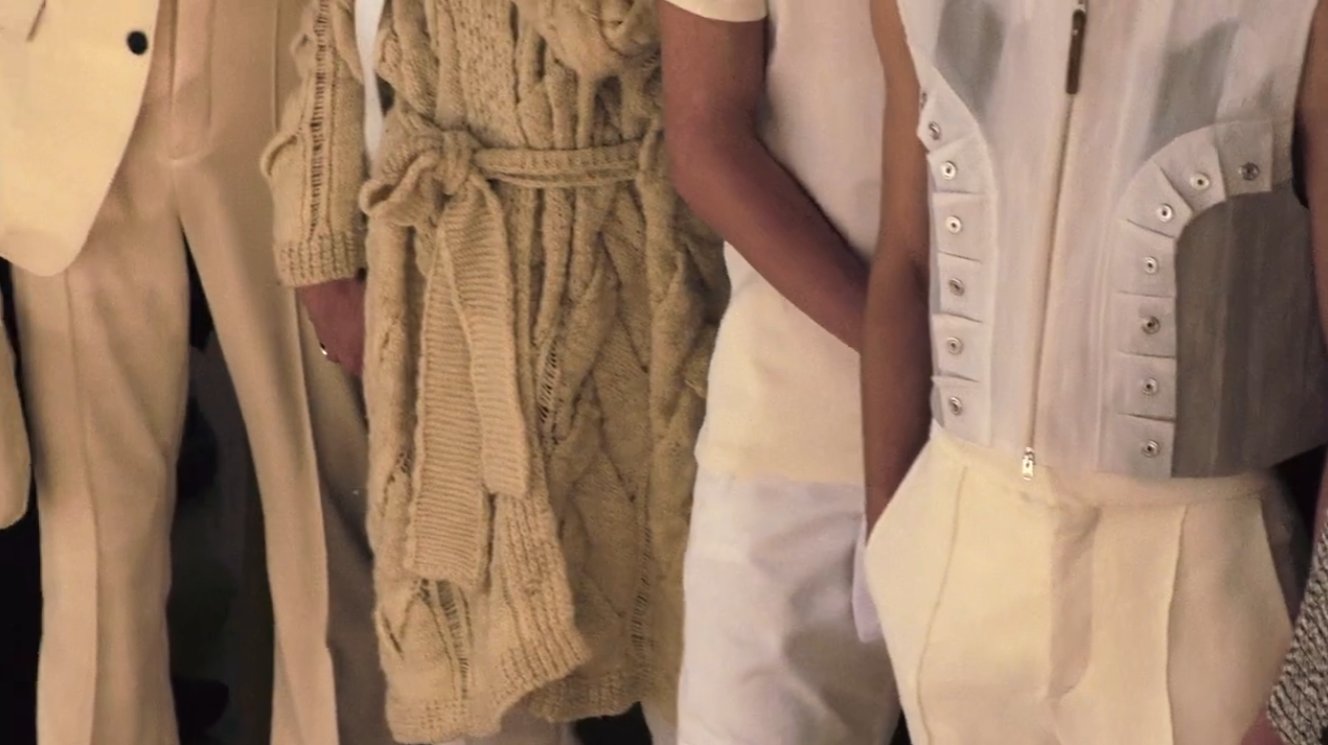
House: Acne Studios · Designer: Jonny Johansson · Season: Fall/Winter 2020
Acne Studios is one of my favorite brands to wear personally, and it's part of why I think this is an interesting show to look back on in terms of its AI integration. For Fall/Winter 2020, Jonny Johansson fed thousands of archived Acne pieces into a neural network built with generative artist Robbie Barrat, letting the algorithm reinterpret the brand's own back catalog into new silhouettes. AI made some mistakes in this show: the network didn't understand what buttons were for, so it rendered polo shirts with no fastenings at all, and the misreadings carried through into perforated, honeycomb-textured panels meant to echo digital glitches and snakeskin prints that came out visibly warped by the software's misinterpretation. Johansson leaned into the errors rather than smoothing them out, saying it was "amazing to see that artificial intelligence can be freeing as a creative tool."
Artificial intelligence has come so far since then, not only in its efficacy, but in how it's seemingly permeating almost all aspects, commodified and creative. I wonder if they revisited this idea, would the clothes show any "mistakes"? And I wonder if they would still think it good or bad depending on the answer. I am sure that if you hooked up a powerful enough AI agent with a 3D printer, it could aggregate something and produce it, no matter how good or bad. I guess this would be better than abusing underpaid, if paid at all, workers in sweatshops in the Global South, but the environmental damage may still leave them as the most vulnerable victims of climate change. Maybe Claude Code can style the guest at the funeral. For the data center, every terabyte draws blood; For the emperor has no clothes, because the wifi was down.

Sources: Hypebeast · Complex · Acne Studios Wikipedia · Hyperallergic · AIArtists
Answer: Contax G2
Juergen Teller's signature tool is the Contax G2, a 35mm autofocus rangefinder that Kyocera released in 1996 with Zeiss-made lenses. When asked directly about his gear, Teller answered simply, "Contax G2, with a flash on top," and that flash-lit, unpolished look became one of the defining aesthetics of 1990s and 2000s fashion photography. It's an easy camera to mix up with other cult objects from the same collector world, and the Olympus O-Product is a genuinely tempting wrong answer: a 1988 limited edition of just 20,000 units, designed by Naoki Sakai, with a boxy aluminum body built around a circle-and-square motif and zero manual controls, closer to a design object than a working photographer's tool. Teller's camera is the opposite of that, a real workhorse with interchangeable lenses that he leaned on for decades of campaigns, and Kyocera shut down the entire Contax line in 2005, meaning the camera behind some of the era's most recognizable fashion imagery has been out of production for two decades.

Sources: showSTUDIO · Contax G Series Wikipedia · Who'Studios :) · Mass Made Soul
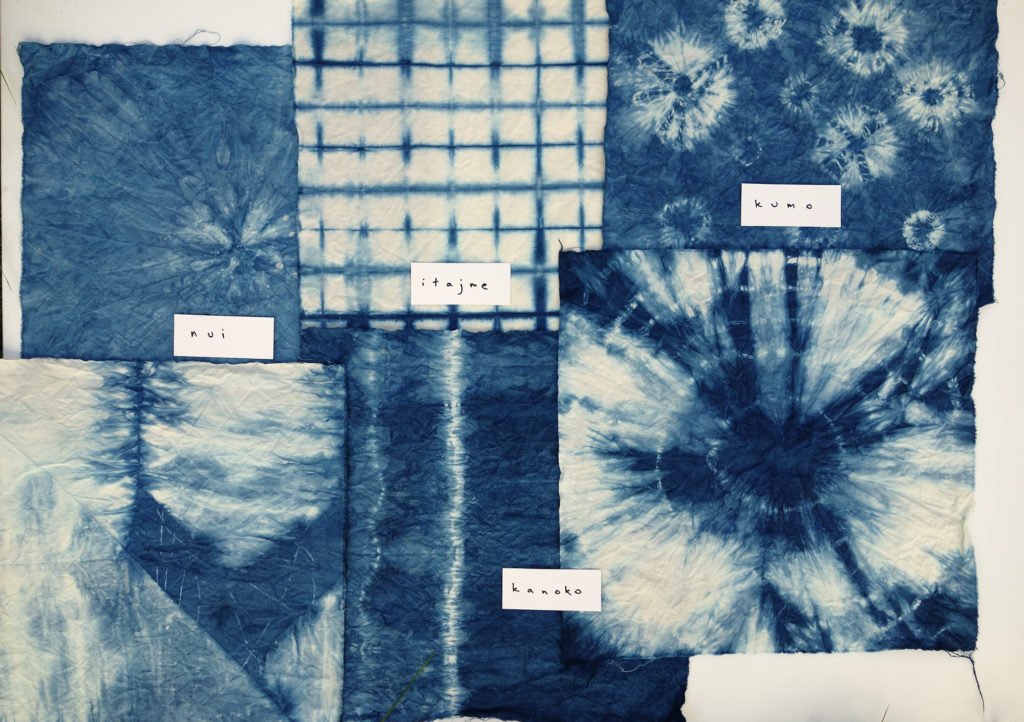
Answer: Kanoko shibori, Arashi shibori, Itajime shibori
Shibori dates back at least to 8th-century Japan, with surviving dyed textiles from 756 CE among the treasures gifted to the Tōdai-ji temple, and it developed into more than 100 distinct binding and folding methods in the village of Arimatsu alone during the Edo period. It's often confused with two other Japanese textile traditions that get grouped in with it culturally but work completely differently: sashiko, a decorative running stitch originally used to reinforce worn fabric, and boro, the practice of patching and layering old cloth into new, mended garments. Neither involves resist-dyeing at all.
The technique's most direct link to contemporary high fashion is Suzusan, founded in Düsseldorf in 2008 by Hiroyuki Murase, the fifth generation of a family that has run a shibori workshop in Arimatsu since the early 1900s. Murase originally left Japan wanting to be an artist, and it was only from Europe that he recognized how significant, and how endangered, his family's craft actually was. He taught himself the techniques his family had preserved for generations and built a genuinely new brand around them, applying centuries-old binding and dyeing methods to materials like cashmere and alpaca rather than traditional kimono silk. Suzusan has shown at Paris Fashion Week since 2012, supplied shibori-dyed fabric to Christian Dior, and collaborated directly with Yohji Yamamoto, carrying a regional Japanese craft most people have never heard of onto some of fashion's biggest runways.
Fun facts:
The oldest written reference to anything resembling shibori is even older than the surviving textiles: a 3rd-century Chinese document describes Japan's Queen Himiko gifting "spotted cloth" to a Chinese emperor.
Arimatsu, the town Suzusan's techniques come from, once had over 100 distinct named shibori methods in active use, developed by different family workshops along the old Tokaido road connecting Kyoto and Tokyo.
Sources: Seamwork · Kimono Yamato · Hikita Ya
Answer: Lettuce
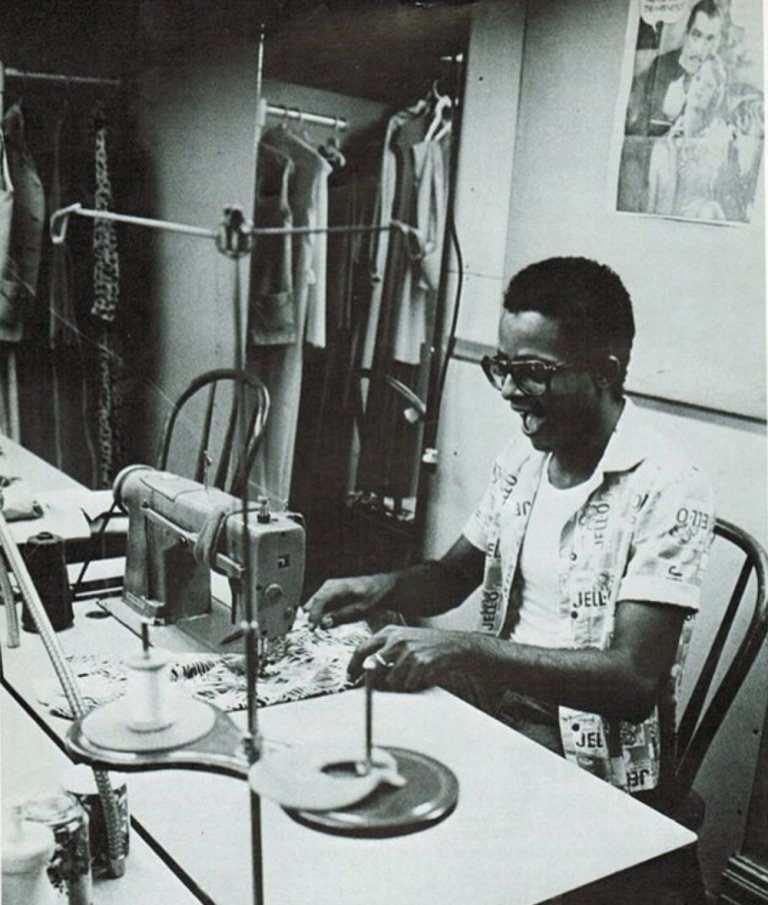
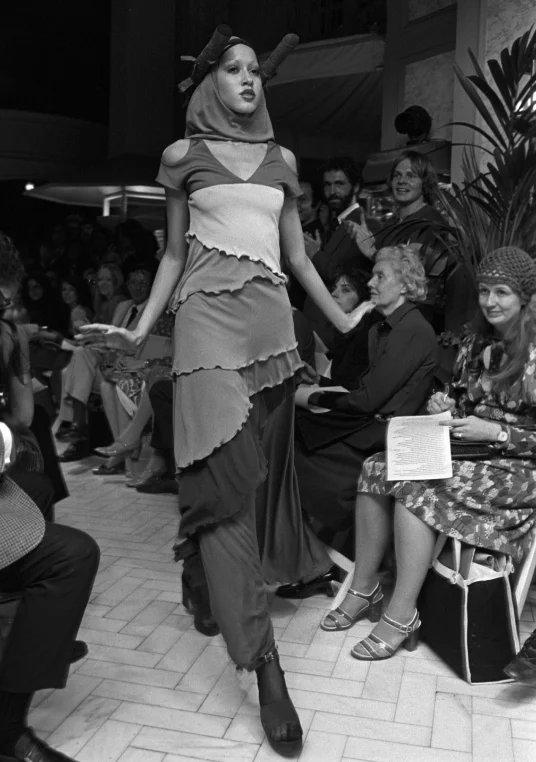
Stephen Burrows developed the lettuce-edge hem in 1972 after a sample maker accidentally overstretched a hem on a matte jersey dress, producing an unplanned wave effect. Rather than treat it as an error, Burrows recognized its potential and refined it, eventually partnering with Jasco Fabrics to source a lighter chiffon matte jersey that let the stretch ripple properly. The technique became one of his signatures just as his career was about to hit its biggest moment: the 1973 "Battle of Versailles," a fundraising fashion show at the Palace of Versailles that pitted five French couture houses (Yves Saint Laurent, Dior, Ungaro, Givenchy, Cardin) against five Americans (Halston, Oscar de la Renta, Bill Blass, Anne Klein, and Burrows). Burrows was the youngest designer on either side and the only Black designer in the show, and his unstructured, dance-influenced clothing, styled to music by muses like Pat Cleveland and Bethann Hardison, stood in sharp contrast to restrictive Parisian couture. Yves Saint Laurent himself reportedly called Burrows "the American designer" afterward. The lettuce hem has outlived the moment: designers including Marc Jacobs and Christopher John Rogers have referenced it directly in later collections.
Sources: WWD · Fashion and Grace · Fashion Sizzle

Yeezy x Mowalola 'KP-01-WHITE-FRONT'