
September 27, 2026
The issue of September 27, 2026
Every question from this issue, with the answers, the hints and the reading behind them.
Play the September 27, 2026 issue

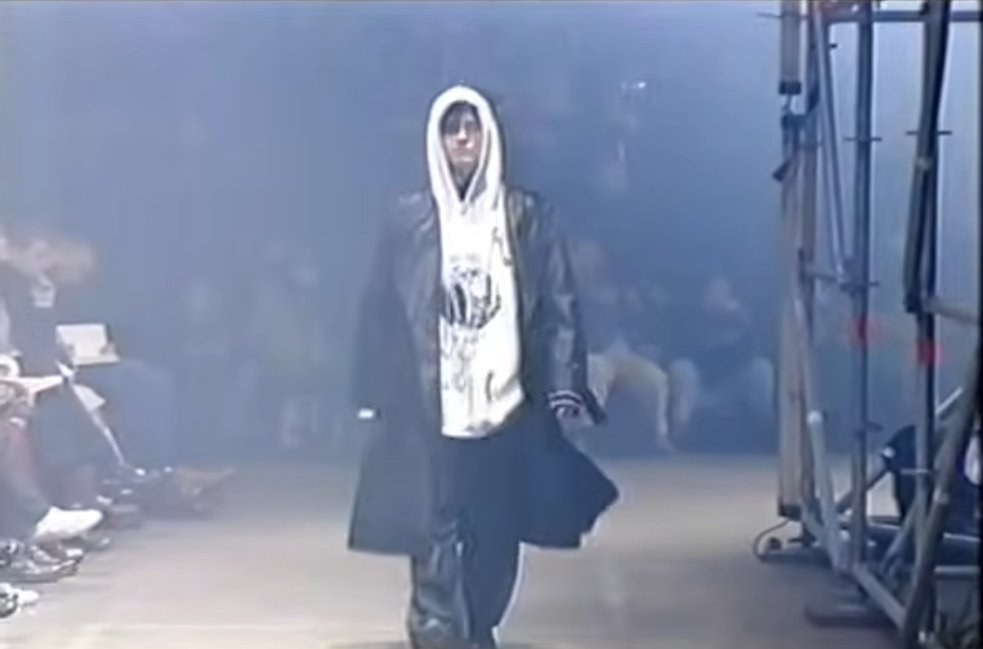
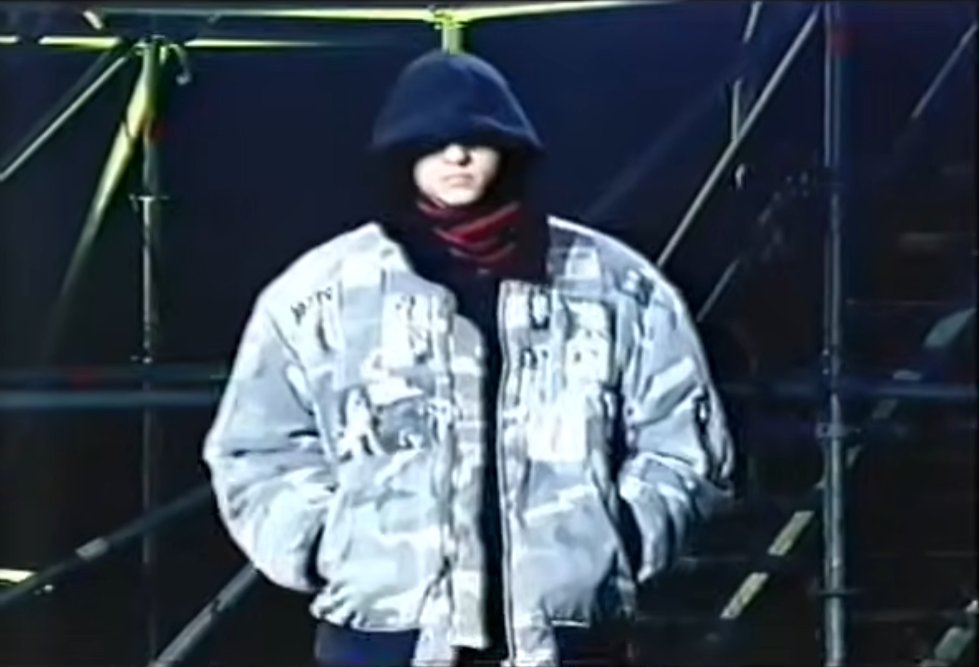
House: Raf Simons · Designer: Raf Simons · Season: Fall/Winter 2001-2002 "Riot! Riot! Riot!"
I've long said that we're in the midst of a great malaise. A time in history shaded grey, a perpetual drowsiness, a fatigue with no diagnosis. It's not the first "mehing" the world or society has experienced, but in the modern day it's spread, and its horde is more potent than ever. Often sparked by anger, then extinguished by apathy, this great malaise makes a cynic out of many, and Raf Simons's long-lost Fall 2001 show, aptly named "Riot Riot Riot," tries to tackle this.
Simons staged the show after a full year completely away from fashion. In March 2000, he'd walked away from his own growing label, spending the year teaching at a design school in Vienna and consulting a Belgian shipping magnate on an art collection. When he returned for Fall 2001, he abandoned the slim, gangly tailoring that had defined his earlier work in favor of something almost unrecognizable: oversized bomber jackets, hoods, and trousers, with models wrapped in scarves layered threefold around their faces. He told the Swiss paper Neue Zürcher Zeitung the idea came from watching young women from Ukraine and Romania at a Vienna flea market, layering garment after garment simply to survive the cold, building volume out of necessity rather than design. Flyers for Sonic Youth and Joy Division shows, Christiane F. movie posters, and photographs were tacked onto the garments the way a fan might DIY a concert tee. Among them were images of the Manic Street Preachers and a police report on the 1995 disappearance of the band's guitarist, Richey Edwards, a detail that stirred real controversy back in Wales.
A show named after an act of mass anguish and determination, direct action, the fundamental resource we have of kicking and screaming against perceived abuse, corruption, and mistreatment, and it's packaged as a fashion show where some guys briskly walk down an aisle (in this case, some stairs). Can fashion on this level really be populist in any way? I think so (check out "Discard Theory" by Thebe Magugu from a few issues ago), but it needs to clearly define what we're rioting against. And the origin of it all makes the naming even stranger to me: the whole concept traces back to Simons watching young women in Ukraine wrapping themselves in layer after layer just to survive the cold. Are we rioting against society for these women not having bigger, warmer coats? I genuinely wonder who's doing the rioting here, why the rioting is happening, and how we decide if it's worth it? Is it just the energy of it? Potential and Kinetic? And looking at what's actually been written about this show, nobody really answers that. Critics trace it back to Simons's own biography, a strict Catholic upbringing, a father who was a military man, and read it as one more step in his long fascination with youth culture and anti-establishment aesthetics, rather than a response to any named cause. Is it just capturing the veneer of those who would be rioting, without the show itself being in conflict with anything? I am not trying to be harsh, these are just some thoughts I had. It seems he would go on to answer of these questions and build on this theme with his next show in 2002, maybe I'll use that show at some point. I suppose highlighting over grey subtext can make it brighter nevertheless. I love the show regardless; the clothes look really cool.

Sources: YOURFASHIONARCHIVE · Archive · Hilite · Japonista
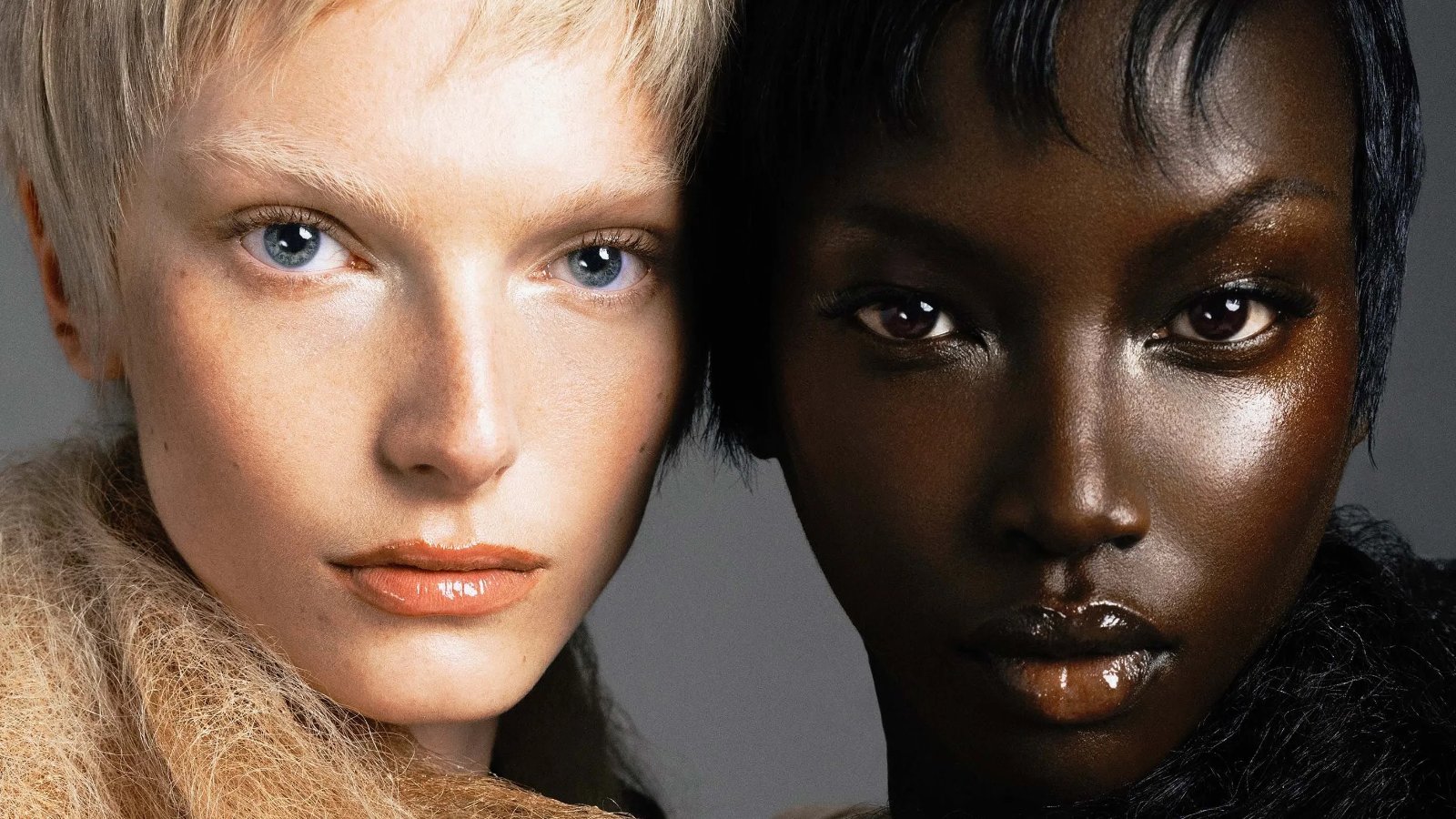
Answer: Anok Yai → 1 · Alex Consani → 2
Alex Consani and Anok Yai have been close friends throughout their careers, "hand in hand," as Yai has described it, supporting each other through the pressures of an industry that constantly tries to pit women against each other. That bond became public knowledge in an unexpected way: after Consani beat Yai for Model of the Year at the 2024 Fashion Awards, online rumors spun up a supposed feud between them. Both addressed it directly in a joint 2025 interview, confirming there was never any real tension; if anything, the incident brought them closer. Fittingly, Yai went on to win her own Model of the Year title the following year, at the 2025 Fashion Awards, becoming part of a run of winners that also included Paloma Elsesser (2023) and Consani (2024).
Just yesterday, on September 25, 2026, both women walked Gucci's Spring 2027 show in Milan, staged as "The Store Show" for Demna's sophomore collection at the house. Consani, who has become one of the most consistent faces of Demna's Gucci era (walking his debut, his Resort 2027 presentation in Times Square, and co-chairing this year's Met Gala in custom Gucci), wore a cut-out bodycon dress with a dramatic thigh slit. Yai closed out her look with a sparkling black mini dress, and an oversized plush coat, one of the show's most talked-about single looks.
Sources: Allure · WWD. · AOL · Fashion Sizzle · Fashion Times

Answer: Mathematics
Iniye Tokyo James, born and raised in London with Nigerian heritage, studied Mathematics at university before pivoting into fashion. His foray into fashion begun when he worked as a stylist and creative director on campaigns for brands like Brioni, Issey Miyake, and Puma Black Label. He later founded the digital magazine Rough UK, then relocated to Lagos to become editor-in-chief of MADE magazine, before finally launching his own label in 2015, debuting at South African Menswear Week. He's described his mathematics background as directly shaping his design process: "Mathematics trained me to think rationally, analytically and with nuance. It taught me structure, discipline and problem-solving, all of which are essential in design." His tailoring fuses Savile Row precision with Nigerian textiles, techniques, and motifs, and he was a finalist for the 2022 LVMH Prize.
Sources: Metal Magazine · Wallpaper · Okay Africa
Answer: 2
All four of these pieces come from designers known for a shared aesthetic language of dark, draped, avant-garde minimalism, which is exactly what makes them easy to mix up. Look 1 is by Yohji Yamamoto, an asymmetric-hem black short-sleeve T-shirt. Look 2 is the correct answer, designed by Rick Owens, a black jersey tee with his signature oversized, dropped-shoulder cut. Look 3 is by Ann Demeulemeester, a draped black cotton shirt with an asymmetric wrap closure. Look 4 is by Boris Bidjan Saberi, a ribbed black T-shirt from his signature techwear-influenced line.
sacai x Nike LDWaffle 'Varsity Blue'